
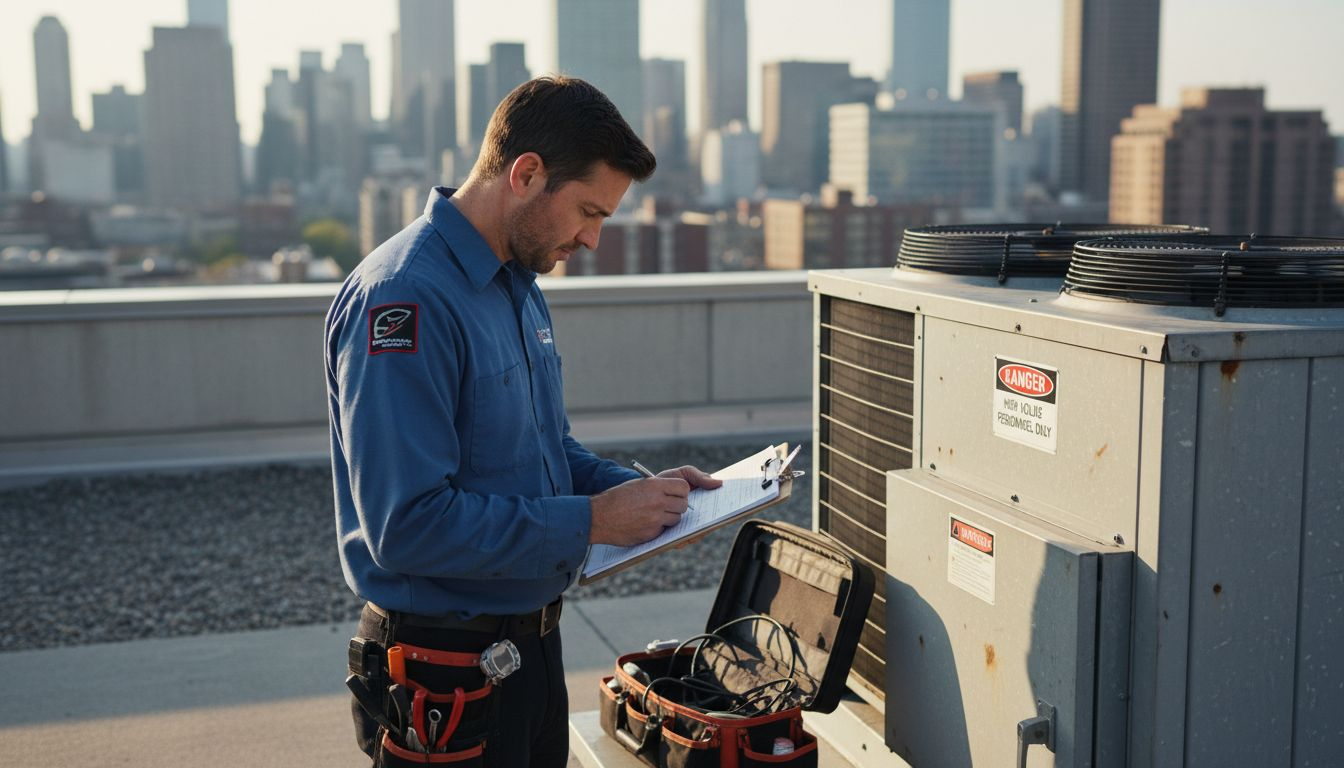
Most American property managers know that HVAC systems can account for nearly 40 percent of a commercial building’s energy use, yet upkeep often slips down the to-do list. In Central Florida’s demanding climate, overlooked maintenance exposes buildings to unwanted breakdowns, compliance issues, and rising operational costs. A clear and actionable HVAC maintenance checklist keeps systems running efficiently, ensures building reliability, and supports compliance with evolving industry standards.
Table of Contents
- Inspect Air Filters For Optimal Air Quality
- Check Thermostat Settings For Cost Efficiency
- Examine Ductwork For Leaks And Blockages
- Test Safety Controls And Electrical Connections
- Assess Refrigerant Levels And Inspect Coils
- Verify Proper Drainage And Clean Condensate Pans
- Review System Documentation And Schedule Maintenance
Quick Summary
| Takeaway | Explanation |
|---|---|
| 1. Regularly Inspect Air Filters | Systematic inspections every 30 to 90 days improve air quality and HVAC efficiency, preventing increased energy consumption. |
| 2. Optimize Thermostat Settings | Maintain temperatures between 68-72°F during work hours and adjust for energy savings when unoccupied. |
| 3. Test Ductwork for Leaks | Conduct biannual inspections to identify and repair leaks, preventing energy loss and operational inefficiency. |
| 4. Schedule Electrical System Tests | Regular inspections of electrical connections safeguard against potential hazards and extend HVAC system lifespan. |
| 5. Maintain Refrigerant Levels and Coils | Professional assessments ensure optimal refrigerant levels and clean coils, significantly enhancing system performance and reducing energy use. |
1. Inspect Air Filters for Optimal Air Quality
Maintaining high quality air filters is fundamental to ensuring healthy indoor environments in commercial spaces. Air filters play a critical role in trapping airborne contaminants, preventing dust, allergens, and particulate matter from circulating through your HVAC system and workspace.
Commercial buildings require systematic air filter inspection to comply with air filtration performance standards, which establish efficiency classifications for ventilation filters. These standards help facility managers understand how effectively their filters remove different sizes of particulate matter from circulating air.
During an inspection, you should systematically evaluate several key aspects of your air filters. First, check the filter’s physical condition looking for visible dirt accumulation, damage, or signs of wear. A clean filter should appear uniform and intact. Next, measure the filter’s air resistance using specialized testing equipment to confirm it maintains proper airflow while filtering effectively.
Regular filter maintenance prevents multiple potential issues. Dirty or clogged filters reduce HVAC system efficiency, increase energy consumption, and compromise indoor air quality. They can also strain your equipment, potentially leading to premature system failure and expensive repairs.
To maximize filter performance, establish a consistent inspection schedule. Most commercial systems require filter checks every 30 to 90 days, depending on your building’s specific environmental conditions and usage patterns.
Pro tip: Keep a detailed log of filter replacement dates and performance metrics to track your HVAC system’s health and identify potential maintenance trends.
2. Check Thermostat Settings for Cost Efficiency
Thermostat settings are a critical component of commercial HVAC management that directly impact operational expenses and energy consumption. Strategic temperature control can yield significant cost savings while maintaining comfortable workspace environments.
Understanding how to optimize thermostat settings requires analyzing risk-based HVAC management approaches that balance comfort with energy efficiency. Commercial facilities can dramatically reduce energy expenses by implementing intelligent temperature programming strategies.
The key is establishing temperature set points that minimize unnecessary heating and cooling cycles. During occupied hours, maintaining temperatures between 68 and 72 degrees provides optimal comfort. For unoccupied periods, adjusting temperatures 7 to 10 degrees higher in summer or lower in winter can generate substantial energy savings.
Modern digital thermostats offer programmable features allowing automatic temperature adjustments based on occupancy schedules. These smart systems can learn building usage patterns and optimize settings accordingly, reducing wasted energy during off peak hours.
Regular thermostat calibration is equally important. Inaccurate temperature readings can cause HVAC systems to work harder than necessary, consuming excess energy and increasing operational costs.
Pro tip: Consider installing smart thermostats with remote monitoring capabilities to enable real time temperature management and performance tracking across multiple commercial spaces.
3. Examine Ductwork for Leaks and Blockages
Ductwork represents the circulatory system of your commercial HVAC infrastructure, responsible for distributing conditioned air throughout your facility. Undetected leaks and blockages can significantly compromise your system’s performance and efficiency.
Duct leakage testing provides critical insights into the health of your HVAC system. Air leaks can cause substantial energy waste, with some studies indicating that poorly sealed ductwork might lose up to 30% of conditioned air before reaching intended spaces.
Identifying ductwork issues requires systematic examination. Visual inspections can reveal obvious problems like disconnected segments, visible gaps, or accumulated debris. However professional testing involves specialized equipment that pressurizes duct systems to measure airflow losses and pinpoint precise leak locations.
Blockages present another significant challenge. Accumulated dust, debris, or even minor obstructions can restrict airflow, forcing your HVAC system to work harder and consume more energy. This increased strain not only reduces efficiency but can also accelerate equipment wear and potentially lead to premature system failure.
Commercial facilities should schedule comprehensive ductwork assessments at least twice annually. These inspections help detect emerging issues before they escalate into costly repairs or system breakdowns. Pay special attention to areas like connections between duct segments, joints, and transition points where leaks most commonly occur.
Pro tip: Invest in infrared scanning technology during ductwork inspections to quickly identify temperature variations that might indicate potential air leakage areas.
4. Test Safety Controls and Electrical Connections
Electrical systems represent the nervous system of your commercial HVAC infrastructure critical for reliable and safe operation. Comprehensive testing of safety controls and electrical connections is fundamental to preventing potential system failures and ensuring workplace safety.
Understanding electrical safety standards for HVAC requires a methodical approach to inspection and maintenance. Safety controls like limit switches circuit breakers and emergency shutoff mechanisms protect your equipment and personnel from potential electrical hazards.
During electrical connection testing technicians should focus on several key areas. Visual inspections can reveal signs of wear such as frayed wires corroded terminals or loose connections. Using specialized testing equipment like multimeters helps verify proper voltage levels and identify potential electrical irregularities before they escalate into more significant problems.
Regular electrical testing provides multiple benefits beyond immediate safety. Proactive maintenance can help identify potential points of failure reduce unexpected downtime and extend the overall lifespan of your HVAC system. Most industry experts recommend comprehensive electrical system assessments at least twice annually or more frequently for older or high use systems.
Additionally commercial facilities must ensure all electrical testing follows established safety protocols. This includes proper lockout tagout procedures to de-energize equipment before inspection and using appropriately rated personal protective equipment during assessments.
Pro tip: Maintain a detailed log of all electrical connection tests including date findings and corrective actions to establish a comprehensive maintenance history.
5. Assess Refrigerant Levels and Inspect Coils
Refrigerant management represents a critical aspect of maintaining efficient commercial HVAC systems. Proper assessment of refrigerant levels and thorough coil inspections directly impact system performance energy consumption and overall operational reliability.
Understanding refrigerant leakage control methods is essential for commercial property managers. Refrigerant plays a fundamental role in heat transfer processes and any deviation from optimal levels can dramatically reduce system efficiency.
Coil inspections involve carefully examining both evaporator and condenser coils for signs of dirt accumulation damage or corrosion. Dirty or compromised coils significantly reduce heat transfer capabilities forcing your HVAC system to work harder and consume more energy. Professional technicians use specialized tools to measure coil cleanliness and assess their overall condition.
Refrigerant level assessment requires precision measuring techniques. Undercharged or overcharged systems can experience reduced cooling capacity increased energy consumption and potential compressor damage. Most commercial HVAC systems require professional calibration using specialized gauges and diagnostic equipment to ensure accurate refrigerant levels.
Additionally environmental regulations now mandate strict monitoring of refrigerant levels and preventing potential leaks. Modern refrigerant management goes beyond simple maintenance and represents a critical environmental responsibility for commercial facilities.
Pro tip: Schedule professional refrigerant and coil assessments during seasonal transitions to catch potential issues before they impact system performance.
6. Verify Proper Drainage and Clean Condensate Pans
Condensate drainage represents a hidden yet critical aspect of HVAC system maintenance that can prevent significant water damage and potential equipment failure. Improper drainage can lead to costly repairs and compromised indoor air quality.
Understanding condensate drainage management involves more than simple water removal. Condensate pans and drain lines collect moisture produced during cooling processes and must be carefully maintained to prevent microbial growth and potential structural damage.
Professional HVAC technicians recommend comprehensive drainage inspections that include several key assessment points. This involves checking the condensate pan for cracks or corrosion examining drain lines for proper slope and potential blockages and verifying that overflow protection mechanisms are fully functional.
Moisture accumulation can create multiple problems beyond immediate water damage. Stagnant water in condensate pans becomes a breeding ground for mold bacteria and other microorganisms that can compromise indoor air quality and potentially cause health risks for building occupants. Regular cleaning and maintenance interrupt these potential contamination cycles.
The drainage system must maintain consistent water flow with minimal resistance. Technicians often use specialized cleaning solutions and tools to remove biological buildup prevent algae growth and ensure unobstructed water movement through drain lines and pans.
Pro tip: Install a secondary condensate drain line with an automatic shutoff switch to provide an additional layer of protection against potential water damage during primary drain line failures.
7. Review System Documentation and Schedule Maintenance
Systematic documentation and proactive maintenance scheduling form the backbone of reliable commercial HVAC performance. Comprehensive record keeping transforms reactive repairs into strategic preventative management.
Understanding preventive maintenance documentation involves more than simple record keeping. Effective documentation provides a comprehensive historical overview of your HVAC system’s health performance and potential future maintenance requirements.
Your maintenance documentation should include detailed inspection reports equipment specifications manufacturer recommendations service history and upcoming scheduled maintenance dates. Digital documentation systems allow facility managers to track performance trends identify potential issues before they escalate and maintain compliance with industry standards.
Scheduling regular maintenance creates predictability and reduces unexpected system failures. Most commercial HVAC systems require quarterly professional inspections with more comprehensive annual evaluations. These scheduled assessments help identify potential problems early preventing costly emergency repairs and extending overall system lifespan.
Additionally comprehensive documentation supports multiple business objectives. Insurance providers often require detailed maintenance records warranty claims depend on proper service documentation and potential building sales or leases benefit from demonstrating consistent system care.
Pro tip: Implement a digital maintenance management system that automatically generates service reminders tracks equipment history and provides real time performance analytics.
Below is a comprehensive table summarizing the essential strategies for maintaining efficient commercial HVAC systems discussed in the article.
| Maintenance Area | Actions | Benefits |
|---|---|---|
| Inspect Air Filters | Regular inspection and maintenance; tracking replacement dates. | Improved indoor air quality; Reduced system strain. |
| Check Thermostat Settings | Optimize temperature set points; Install smart thermostats. | Enhanced energy efficiency; Cost savings. |
| Examine Ductwork | Conduct visual inspections; Test for leaks; Clear blockages. | Sustained airflow; Prevented energy loss. |
| Test Safety Controls | Assess electrical connections; Verify functioning of safety mechanisms. | Mitigated hazards; Extended system lifespan. |
| Assess Refrigerant Levels | Maintain optimal refrigerant levels; Inspect and clean coils. | Preserved system performance; Lowered energy usage. |
| Verify Drainage Systems | Check condensate pans; Ensure functionality of drain lines. | Avoided water damage; Reduced microbial growth risks. |
| Schedule Regular Maintenance | Document system details; Plan inspections and service intervals. | Predictable system management; Compliance with standards. |
Ensure Your Commercial HVAC System Runs Smoothly with Expert Care
Managing a commercial HVAC system means tackling challenges like maintaining clean air filters, checking thermostat settings, inspecting ductwork for leaks, and verifying refrigerant levels. These tasks are vital to prevent energy waste, costly repairs, and uncomfortable indoor environments. With so many essential checks outlined in the Ventilation Archives – Lucas Air Conditioning and Heating, it is easy to feel overwhelmed trying to keep up with maintenance on your own.
Partner with Lucas Air Conditioning and Heating for reliable, thorough commercial HVAC services that cover everything from inspections and repairs to preventative maintenance. Benefit from our veteran-owned local expertise and commitment to your comfort. Visit Lucas Air Conditioning and Heating today and schedule your appointment to protect your investment and ensure efficient HVAC performance all year long.
Frequently Asked Questions
What should I inspect in air filters during my commercial HVAC checklist?
Regularly inspect air filters for visible dirt, damage, and wear. Check their physical condition and measure air resistance using testing equipment to ensure effective airflow and filtering. Aim to perform these inspections every 30 to 90 days, depending on usage.
How can I optimize thermostat settings to save energy costs in my commercial space?
Adjust your thermostat set points to maintain temperatures between 68 and 72 degrees during occupied hours. For unoccupied periods, raise or lower temperatures by 7 to 10 degrees to improve energy efficiency. Implement programmable thermostats to automate these adjustments based on occupancy.
What steps should I take to examine ductwork for leaks and blockages?
Conduct visual inspections of ductwork to identify disconnected segments and visible gaps. Schedule comprehensive duct assessments at least twice a year and utilize professional testing to measure airflow losses. Address any issues promptly to improve system efficiency and prevent costly repairs.
How do I test electrical connections and safety controls in my HVAC system?
Perform visual inspections of electrical connections, looking for signs of wear and ensuring secure connections. Use testing equipment like multimeters to verify voltage levels. Regular testing every six months can help identify potential issues early and enhance system safety.
Why is it important to assess refrigerant levels and inspect coils?
Regularly assess refrigerant levels and inspect coils to ensure optimal heat transfer and efficient system operation. Undercharged or overcharged refrigerants can lead to increased energy use and potential compressor damage. Schedule these assessments during seasonal transitions to avoid performance issues.
What maintenance scheduling practices should I follow for my HVAC system?
Establish a consistent maintenance schedule, aiming for quarterly professional inspections and annual evaluations. Document all inspections and repairs to maintain a comprehensive maintenance history, which can help identify trends and prevent future issues. Use digital tools to automate scheduling and reminders.
Recommended
- Landing Page for Seasonal Specials – Lucas Air Conditioning and Heating
- Landing Page for Seasonal Specials – Online Booking – Lucas Air Conditioning and Heating
- Tune Up – Lucas Air Conditioning and Heating
- Commercial Boiler Servicing Checklist for Reliable Heating – Skan Plumbing & Heating
- Residential Air Conditioning Installation Eustis FL
- Commercial Air Conditioning Installation Eustis FL
