
TL;DR:
- Checking your thermostat settings, air filter, circuit breakers, outdoor unit, and indoor vents can prevent many common AC problems. Performing these simple steps before calling a technician can save you up to $200 in service fees and resolve issues quickly. Proper maintenance and documentation also help ensure efficient system operation and lower repair costs.
Knowing the right things to check before an AC repair call can save you $75 to $200 in unnecessary service fees. Most AC failures trace back to a short list of fixable problems: a misconfigured thermostat, a clogged air filter, a tripped circuit breaker, or a blocked outdoor unit. Performing a quick pre-check, what HVAC professionals call a pre-service inspection, takes less than 20 minutes and often resolves the issue entirely. When it does not, it gives your technician a head start that cuts diagnostic time and repair costs.
1. Check your thermostat settings first
The thermostat is the most commonly overlooked cause of AC problems. Before anything else, confirm it is set to COOL mode and that the target temperature is at least 3–5 degrees below the current room temperature. A thermostat left in HEAT or FAN ONLY mode will run the blower without cooling the air, which looks exactly like a broken compressor from the inside.
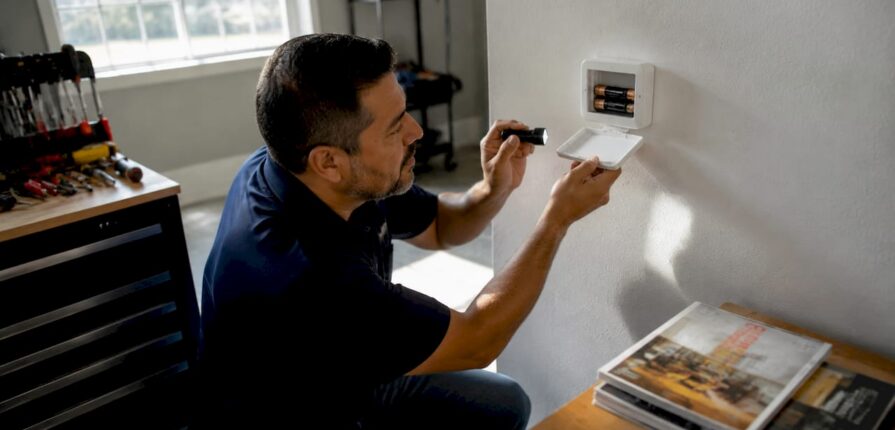
Battery failure is the second thermostat trap. Weak batteries can cause cooling failures without any obvious display issues, because the batteries power both the screen and the wireless signal to the air handler. Your display may look fine while the signal to the unit is too weak to trigger a cooling cycle.
- Set mode to COOL, not FAN or HEAT
- Set temperature 3–5 degrees below room temperature
- Replace batteries even if the display looks normal
- Check for a “hold” or “vacation” override that locks the temperature high
Pro Tip: Keep a four-pack of AA or AAA batteries taped to the inside of your thermostat cabinet. Replacing them takes 60 seconds and costs under $5.
2. Inspect and replace your air filter
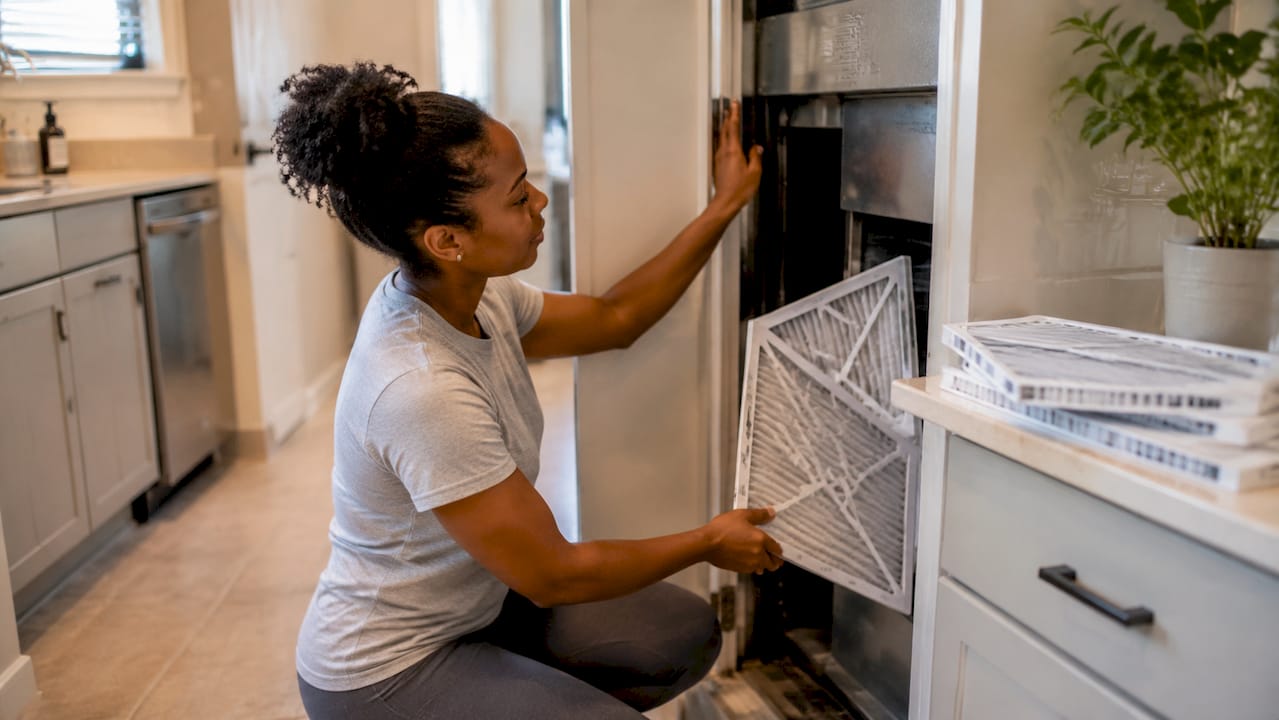
A dirty air filter is the single biggest cause of AC performance problems. About 90% of AC performance issues relate to dirty or clogged filters, and regular maintenance can prevent up to 85% of major breakdowns. Those numbers make filter inspection the highest-return step on any AC maintenance checklist.
Pull the filter out and hold it up to a light source. If you cannot see light through it, replace it immediately. A clogged filter restricts airflow to the evaporator coil, which causes the coil to freeze. When the coil freezes, the system blows warm air even though the compressor is running normally. That symptom sends thousands of homeowners to the phone every summer, when the fix costs $5 at a hardware store.
- Replace filters every 30 days for 1-inch fiberglass filters
- Replace every 60–90 days for pleated filters in average households
- Replace more frequently if you have pets, allergies, or dusty conditions
- Write the replacement date on the filter frame with a marker
Pro Tip: Buy a 6-pack of the correct filter size and store them near the air handler. Running out of filters is the most common reason people skip replacements.
3. Check your circuit breakers and electrical disconnects
AC systems use two separate circuits: one for the indoor air handler and one for the outdoor condenser. A tripped breaker on either circuit will shut down part or all of the system. Open your electrical panel and look for any breaker that sits in the middle position between ON and OFF. That is a tripped breaker.
To reset it safely, flip the breaker fully to OFF, wait 30 seconds, then flip it back to ON. Do not skip the wait. The pause allows residual current to clear before the circuit re-energizes. If the breaker trips a second time immediately after you reset it, stop. Resetting a tripped breaker multiple times risks electrical arcing and fire. That is the point where you call a professional.
- Locate your main electrical panel
- Find the breakers labeled AC, HVAC, air handler, or condenser
- Flip any tripped breaker fully to OFF, wait 30 seconds, then flip to ON
- If the breaker trips again immediately, do not reset it a third time
- Call a licensed technician to diagnose the underlying fault
Safety note: A breaker that trips twice in a row signals a serious electrical fault, not a random surge. Forcing it back on risks an arc flash or fire. Stop and call a pro.
The outdoor unit also has a local service disconnect, a small box mounted on the wall near the condenser. This switch is often accidentally turned off by lawn crews or previous technicians. Open the box and confirm the disconnect is in the ON position before assuming the unit has failed.
4. Inspect the outdoor unit for obstructions
The outdoor condenser unit needs clear airflow on all sides to reject heat from your home. Grass clippings, leaves, and dirt accumulate against the coil fins and block that airflow. Neglected maintenance like debris buildup can reduce system efficiency by more than 15% and push energy bills up by as much as 30%. That is a measurable cost you pay every month, not just on repair day.
Walk around the unit and clear any vegetation, mulch, or debris within 2 feet of the cabinet. Do not use a pressure washer on the fins. A garden hose on a gentle setting works fine. Also check the condensate drain line where it exits the house. Clogged drain lines can trigger a safety float switch that shuts the entire system down, which looks like a total AC failure.
- Clear all debris within a 2-foot radius of the outdoor unit
- Check that the unit sits level on its pad
- Look for ice on the refrigerant lines or the unit itself
- Check the condensate drain line for standing water or algae blockage
Pro Tip: If you see ice on the refrigerant lines, turn the system off and switch the thermostat to FAN ONLY. Running a frozen system risks permanent compressor damage, which is one of the most expensive AC repairs possible.
5. Check indoor vents and registers
Blocked supply or return vents reduce airflow across the evaporator coil and create the same freeze risk as a dirty filter. Walk through every room and confirm that supply registers are open and unobstructed. Furniture, rugs, curtains, and storage boxes are the most common blockers. A single closed register in a small room can create enough back pressure to stress the entire system.
Return air grilles deserve equal attention. These are the larger grilles, usually on walls or ceilings, that pull air back to the air handler. A return grille covered by a couch or blocked by a door left closed restricts the system’s ability to circulate air. Check the common AC repair issues that stem from airflow problems before assuming a mechanical failure.
6. Document symptoms before the technician arrives
Detailed symptom notes cut diagnostic time and reduce your repair bill. Preparing notes on sounds, odors, and visible issues helps technicians diagnose problems faster and reduces overall repair time. A technician who walks in knowing “the unit makes a grinding noise at startup and the drain pan has standing water” can go straight to the likely cause instead of spending 30 minutes on discovery.
Gather the following before you call:
- The age of the system and the model number (usually on a label on the outdoor unit)
- Warranty status, if you have the paperwork
- When the problem started and whether it is constant or intermittent
- Any unusual sounds: grinding, clicking, hissing, or banging
- Any unusual odors: burning, musty, or chemical smells
- Photos of ice buildup, water leaks, or visible damage
This information also helps you ask better questions for AC repair, which protects you from being upsold on parts or services you do not need. A homeowner who knows their system is 4 years old and under warranty is in a much stronger position than one who does not.
Key takeaways
Performing a pre-service inspection before calling an AC technician resolves many common failures and gives you the information needed to communicate clearly and control repair costs.
| Point | Details |
|---|---|
| Thermostat first | Check mode, temperature setting, and replace batteries before anything else. |
| Filter condition matters most | Dirty filters cause 90% of performance issues and are the cheapest fix available. |
| Breaker safety rule | Never reset a tripped breaker more than once. A second trip means call a pro. |
| Clear the outdoor unit | Keep 2 feet of clearance and check the condensate drain to prevent shutdowns. |
| Document everything | Notes on sounds, odors, and system age reduce diagnostic time and repair costs. |
What I have learned from watching homeowners skip these steps
The most expensive AC repair call I have ever seen was for a system that had a dead thermostat battery. The homeowner had already paid a $150 diagnostic fee before the technician found it. That story is not unusual. Thermostat batteries and clogged filters account for a disproportionate share of summer service calls, and both cost under $10 to fix yourself.
The electrical checks are where I urge the most caution. Homeowners are comfortable flipping a breaker, but most do not know that a breaker tripping twice is a fire warning, not a fluke. The step-by-step AC troubleshooting process exists precisely because the line between a safe DIY fix and a dangerous one is not always obvious.
My strongest recommendation is to keep a simple maintenance log. Write down every filter change, every service visit, and every symptom you notice. That log becomes your most valuable tool when a technician arrives. It also reveals patterns, like a system that needs a refrigerant top-off every spring, that point to a larger underlying problem worth addressing before it becomes a full replacement. Regular preventative care, as outlined in a solid HVAC preventative maintenance guide, extends system life and keeps those emergency calls rare.
— Lucasair
Ready to schedule your AC repair with Lucasair?
When your pre-checks are done and the system still is not cooling, Lucasair is ready to help. Founded by Army Veteran Cameron Lucas in Eustis, Florida, Lucasair serves homeowners and businesses across Central Florida with repairs, tune-ups, and preventative maintenance agreements built around honest diagnostics and fair pricing.

Lucasair’s technicians follow a structured residential repair workflow that picks up exactly where your pre-checks leave off. You bring the symptom notes and system details. They bring the tools and expertise. If your system is aging or the repair cost approaches replacement value, Lucasair also offers professional AC repair services and financing options to make the right decision easier. Schedule your visit online or call the Lucasair team directly.
FAQ
What should I check before calling an AC repair technician?
Check your thermostat settings, air filter condition, circuit breakers, outdoor unit disconnect, and indoor vents. Basic DIY checks like these resolve many common AC issues and can save you $75 to $200 in service fees.
Why is my AC running but not cooling the house?
A dirty air filter is the most likely cause. A clogged filter restricts airflow, freezes the evaporator coil, and causes the system to blow warm air even though the compressor is running. Replace the filter and let the coil thaw for 2–3 hours before restarting.
Is it safe to reset a tripped AC circuit breaker myself?
One reset is safe. Flip the breaker fully to OFF, wait 30 seconds, then flip it to ON. If it trips again immediately, stop and call a licensed technician, because a second trip signals a fault that carries a real risk of electrical arcing.
What information should I have ready when I call an AC repair company?
Have the system’s age, model number, warranty status, and a written list of symptoms including sounds, odors, and when the problem started. Photos of visible issues like ice or water leaks help technicians arrive prepared and diagnose faster.
How often should I replace my AC air filter?
Replace 1-inch filters monthly and pleated filters every 60–90 days under normal conditions. Homes with pets, allergies, or high dust levels need more frequent changes to prevent the airflow restrictions that lead to coil freezing and system stress.
Recommended
- Common AC Repair Issues Every Homeowner Should Know – Lucas Air Conditioning and Heating
- HVAC Repair Workflow Residential: Step-by-Step Guide
- Step-by-step air conditioner assessment guide for homeowners – Lucas Air Conditioning and Heating
- Step by Step AC Troubleshooting for Homeowners – Lucas Air Conditioning and Heating
