

TL;DR:
- Live-audit tools like Insites and BrightLocal outperform static databases for local-service prospects by providing real-time business data. For high-volume outbound teams, platforms like Apollo.io and Lead411 offer verified contact information and outreach sequences. Combining a live website audit tool with a verified contact database is the most effective approach for SMB and local ICP prospecting.
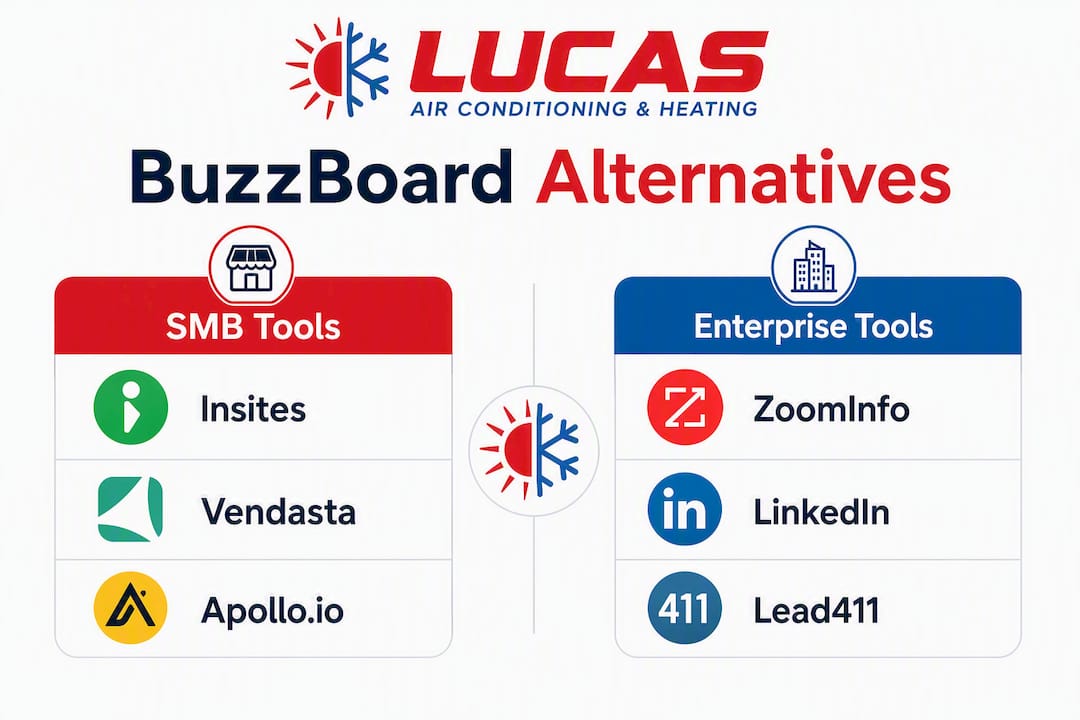
The strongest BuzzBoard alternatives for SMB and local-service prospecting are Insites, Apollo.io, Vendasta, and BrightLocal. For enterprise teams, ZoomInfo and LinkedIn Sales Navigator are the standard picks. Here is the shortlist with one-line reasons:
- Insites — Live website audits built for sales conversations, not static monthly snapshots
- Vendasta — Full agency stack: prospecting plus white-label client portals and proposals
- Apollo.io — Large contact database plus outreach sequences, with a free tier
- LinkedIn Sales Navigator — Real-time relationship mapping and job-change alerts for enterprise accounts
- BrightLocal — Local SEO audits, citation management, and review monitoring for brick-and-mortar SMBs
- Lead411 — Verified emails and phones with buyer-intent overlays at a mid-market price
- ZoomInfo / GTM Workspace — Enterprise-grade intent data and large-scale enrichment
- Datanyze — Technographic signals for tech-stack-based prospecting
TL;DR: Pick two vendors from the shortlist above, run a 20-account live coverage test against your real ICP, and let the hit rate decide. That single test reveals more than any feature comparison.
Table of Contents
- How do the top BuzzBoard alternatives compare side by side?
- Detailed profiles: which tool fits your sales motion?
- How do you choose the right BuzzBoard alternative?
- Why data freshness matters more than database size for local SMBs
- Key Takeaways
- The case for pairing tools rather than replacing one
- Lucasair serves the local-service ICP these tools are built to find
- Useful sources for further research
How do the top BuzzBoard alternatives compare side by side?
The table below maps each tool against the dimensions that matter most to GTM teams: coverage, freshness, enrichment depth, integration, and pricing transparency.
| Tool | Best for | Key prospecting features | Data freshness & local coverage | CRM integrations | Pricing & free trial | Onboarding time |
|---|---|---|---|---|---|---|
| Insites | Sales teams running live SMB audits | Live website audits, shareable reports | Live crawl; strong local coverage | Salesforce, HubSpot, custom | Paid plans; demo available | 1–3 days |
| Vendasta | Agencies needing full client-delivery stack | Audits, white-label reports, proposals, portals | Crawl-based; local business focus | CRM built-in; Salesforce | Tiered; free trial available | 1–2 weeks |
| Apollo.io | High-volume outbound SMB teams | Contact DB, sequences, enrichment | Proprietary DB; moderate local depth | Salesforce, HubSpot, Outreach | Free tier; paid plans available | 1–3 days |
| LinkedIn Sales Navigator | Enterprise relationship sellers | Lead Builder, job-change alerts, account maps | LinkedIn-native; real-time profiles | Salesforce, HubSpot, Dynamics | No free tier; paid plans available | 1–3 days |
| BrightLocal | Local SEO and citation management | Citation audits, review monitoring, rank tracking | Local-specific; updated regularly | Limited; API available | Free trial; paid plans available | 1–2 days |
| Lead411 | Mid-market verified contact data | Verified emails/phones, intent signals | Proprietary DB; regular refresh | Salesforce, HubSpot, Zoho | Free trial available | 1–3 days |
| ZoomInfo / GTM Workspace | Enterprise B2B intelligence | Intent data, enrichment, contact DB | Broad enterprise DB; weaker in trades | Salesforce, HubSpot, Marketo | Demo required; credit-based | 2–4 weeks |
| Datanyze | Technographic prospecting | Tech-stack detection, web signals | Web-crawled; tech-sector focus | Salesforce, HubSpot | Free tier; paid plans | 1–2 days |
| Leadsquared | Lead capture plus CRM automation | Lead workflows, scoring, CRM | Proprietary; mid-market focus | Native CRM; third-party APIs | Demo available | 1–2 weeks |
| Lead Genius | Niche vertical research | Human-verified lists, custom research | Human-curated; niche coverage | Flexible delivery | Custom pricing | 1–2 weeks |
| FullContact | API-driven enrichment at scale | Identity resolution, enrichment API | Proprietary identity graph | API-first; CRM connectors | Paid; API trial available | 3 days |
| Microsoft Power BI | Custom BI reporting | Dashboards, data modeling | Connects to your data sources | Microsoft 365, Salesforce | Free tier; paid from ~$10/mo | 1–2 weeks |
| Tableau | Visual analytics and exploration | Cross-dataset visualization | Connects to your data | Salesforce native; broad connectors | Free trial; paid plans | 1–2 weeks |
| Qlik Sense | Self-service associative analytics | Associative engine, dashboards | Connects to your data | Broad data connectors | Free trial available | 1–2 weeks |
| Zoho Analytics | Budget BI with Zoho CRM | Reports, dashboards, CRM sync | Zoho ecosystem data | Zoho CRM native; third-party | Free tier; paid plans available | 1–3 days |
| Looker | Governed embedded analytics | Data models, embedded reporting | Connects to your data | Salesforce, BigQuery, Snowflake | Demo required | 2–4 weeks |
| Sisense | Embedded analytics in apps | Embedded dashboards, developer APIs | Connects to your data | Broad APIs | Demo required | 2–4 weeks |
| DOMO | Executive dashboards | Out-of-the-box connectors, dashboards | Connects to your data | Numerous connectors | Demo required | 1–2 weeks |
| ThoughtSpot | Search-driven self-service analytics | Natural language queries, AI insights | Connects to your data | Snowflake, BigQuery, Salesforce | Free trial available | 1–2 weeks |
| SAP BusinessObjects | Enterprise governed reporting | Operational reports, governance | Enterprise data sources | SAP ecosystem; broad | Enterprise licensing | 4–8 weeks |
| Oracle Analytics Cloud | Oracle ecosystem analytics | End-to-end BI, AI augmentation | Oracle back-end native | Oracle suite; broad | Demo required | 4–8 weeks |
Pricing and credit notes:
- Credit-consumption pricing can dramatically increase effective costs for high-volume teams. ZoomInfo and Apollo.io both use credit or export-limit models — forecast your monthly volume before signing.
- BI tools (Power BI through Oracle Analytics Cloud) are reporting platforms, not prospect-discovery tools. Budget and evaluate them separately.
- “Free tier” means a functional free plan exists; “free trial” means a time-limited paid-tier trial.
Data source note: Live-crawl tools (Insites, BrightLocal) pull fresh data on demand. LinkedIn-derived tools reflect real-time profile updates. Proprietary database tools (Apollo.io, ZoomInfo, Lead411) rely on periodic refresh cycles, which affects local-business coverage.
Detailed profiles: which tool fits your sales motion?
Prospecting and SMB-focused tools
Insites is the most direct BuzzBoard replacement for sales teams that open conversations with a website audit. It runs a live crawl on demand, generates a shareable report in minutes, and is built for the rep-to-prospect conversation rather than back-office analysis. Integrations with Salesforce and HubSpot are straightforward, and onboarding typically takes a day or two. The tradeoff: it does not carry a contact database, so you will pair it with an enrichment tool for email and phone data.

Vendasta goes wider. Agencies and marketing service providers often outgrow prospecting-only tools when they need invoicing, proposals, and client portals alongside prospect discovery. Vendasta bundles all of that into one platform, which is its clearest advantage over BuzzBoard for agency resellers. The onboarding curve is steeper than a single-purpose tool, typically one to two weeks, but teams that need white-label reporting and client delivery alongside prospecting will recoup that time quickly.
Apollo.io is the go-to for high-volume outbound teams that need contact data and outreach sequences in one place. Its free tier is genuinely useful for small teams testing coverage before committing. Watch the credit limits on paid plans: export volume can push effective monthly costs well above the base subscription.
BrightLocal occupies a specific niche: local SEO audits, citation management, and review monitoring for brick-and-mortar SMBs. If your ICP is a local service business, BrightLocal’s data is more relevant than a generic B2B contact database. It is not an outbound prospecting tool in the traditional sense, but for agencies managing local clients, it fills a gap nothing else covers as cleanly.
Lead411 sits between Apollo.io and ZoomInfo on price and depth. Verified emails and direct-dial phones come with intent overlays, which helps mid-market teams prioritize outreach. Trial access is available, and the platform connects to Salesforce, HubSpot, and Zoho without heavy configuration.
Datanyze is narrow by design: it surfaces technographic signals and web-activity cues, making it most useful when your ICP is defined by the software stack a prospect runs. It is not a full prospecting platform, but as a signal layer on top of a contact database, it earns its place.
Leadsquared combines lead capture, scoring, and CRM workflow automation in one platform. It suits marketing teams that want to manage the full lead lifecycle without stitching together separate tools. The built-in CRM reduces integration overhead, though the prospecting data layer is thinner than Apollo.io or ZoomInfo.
Lead Genius takes a different approach entirely: human-verified research for niche verticals where automated databases fall short. Static database tools often show weaker or outdated data for traditional local industries like HVAC, construction, and manufacturing. For those ICPs, a human-curated list from Lead Genius can outperform a 50,000-record database export on actual deliverability.
FullContact is an API-first enrichment and identity-resolution platform. It is not a prospecting tool in the rep-facing sense; it is infrastructure for operations teams that need to clean, enrich, and deduplicate contact records at scale. If your problem is data hygiene rather than prospect discovery, FullContact belongs on the shortlist.
Enterprise intelligence tools
ZoomInfo and its GTM Workspace product are the enterprise standard for intent data and large-scale enrichment. Coverage is deep in software, SaaS, and professional services. For field-service verticals like HVAC or construction, database coverage is uneven and a live-audit tool will often outperform it. Onboarding takes two to four weeks, and the credit-based pricing model requires careful forecasting.

LinkedIn Sales Navigator is the right tool when the sale depends on relationship mapping rather than raw contact volume. Real-time job-change alerts, account maps, and LinkedIn-native engagement signals give enterprise account teams context that no static database can replicate. Top-performing sales teams commonly run it alongside Apollo.io: Sales Navigator for account research, Apollo.io for verified contact details and sequencing.
Analytics and BI tools
The remaining tools — Microsoft Power BI, Tableau, Qlik Sense, Zoho Analytics, Looker, Sisense, DOMO, ThoughtSpot, SAP BusinessObjects, and Oracle Analytics Cloud — are business intelligence platforms, not prospecting tools. They belong in a BuzzBoard comparison only when the use case is reporting and dashboarding on existing sales and marketing data, not prospect discovery.
Power BI and Zoho Analytics are the most accessible entry points: Power BI integrates tightly with Microsoft 365 and starts with a free tier; Zoho Analytics is the natural choice for teams already in the Zoho CRM ecosystem. Tableau and Qlik Sense offer more analytical depth for teams that need cross-dataset exploration. Looker suits teams that want governed, embedded analytics with a strong data-modeling layer. Sisense and DOMO lean toward embedded analytics and executive dashboards, respectively. ThoughtSpot is the pick for teams that want to ask ad-hoc questions in plain language across large datasets. SAP BusinessObjects and Oracle Analytics Cloud are enterprise-grade suites best suited to organizations already running those back-end ecosystems.
Pro Tip: If you are evaluating BI tools as a BuzzBoard replacement, clarify the actual gap first. BuzzBoard’s core value is prospect discovery and SMB audits. If what you actually need is better reporting on data you already have, a BI tool can solve that. If you need to find and qualify new prospects, it does not.
How do you choose the right BuzzBoard alternative?
The five dimensions that separate a good fit from a costly mistake are coverage, freshness, enrichment depth, integration, and pricing transparency. Here is a practical evaluation process:
- Define your ICP precisely. List 20 real target accounts before you open any vendor demo. You will use this list as a live test.
- Run a coverage test. Run an empirical 20-account coverage test across every shortlisted vendor. Check hit rate (how many accounts the tool finds), email deliverability, and data recency. This single test often changes vendor rankings more than any feature comparison.
- Check data freshness for your vertical. Ask vendors directly: when was the record for a named local business last refreshed? For SMB and local-service ICPs, the answer matters more than the database size.
- Test CRM sync end-to-end. Push 10 enriched records into your CRM during the trial. Check for duplicate creation, field mapping errors, and sync latency. A broken CRM integration costs more in cleanup time than the tool saves.
- Model the real cost. Get the credit or export limit in writing. Credit-consumption models can triple effective costs for active prospecting teams. Calculate your expected monthly volume and price it out before signing.
- Ask about onboarding support. Single-purpose tools like Insites and BrightLocal typically take one to three days. Full-stack platforms like Vendasta or ZoomInfo take one to four weeks. Factor that into your go-live timeline.
Questions to ask vendors in the demo:
- What is your primary data source: live crawl, proprietary database, or LinkedIn-derived?
- How often are local business records refreshed?
- How are credits consumed: per export, per enrichment call, or per sequence send?
- What is your SLA for enrichment accuracy, and how do you handle bounced emails?
- Do you offer white-label reporting, and at what plan tier?
Red flags to watch for:
- No trial or demo access before a contract
- Opaque credit systems with no per-action breakdown
- Inability to show a live audit on a named local business during the demo
- Reliance on scraped records with no stated refresh cadence
Pro Tip: For SMB-focused teams, simpler coverage-first tools reduce onboarding friction and get reps productive faster than enterprise platforms with broader feature sets but thinner local data.
Why data freshness matters more than database size for local SMBs
Live web-scraping approaches find significantly more relevant prospects in niche local service verticals than static databases. The reason is structural: large contact databases are built and monetized around software, SaaS, and professional services. A plumbing company, an HVAC contractor, or a local restaurant is a thin record in most enterprise databases, often missing a direct-dial number, a current owner name, or an accurate email.
For sales teams targeting local service businesses, the practical impact is direct: a stale or incomplete record means a bounced email, a wrong number, or an outreach to a business that closed six months ago. Live-audit tools crawl the business’s actual website and digital presence on demand, so the data reflects the current state of the business rather than a database entry from the last refresh cycle.
Stat callout: Industry practitioners consistently note that traditional local industries like HVAC, construction, and manufacturing tend to have weaker coverage in major B2B contact databases, making live-crawl tools a stronger starting point for those ICPs.
Simple tests to validate local coverage before committing:
- Pull 20 named local businesses from your target territory and check hit rate across vendors
- Verify at least five email addresses using a deliverability checker (NeverBounce, ZeroBounce) before counting them as usable
- Ask the vendor to show the audit recency timestamp on a specific local business record during the demo
- Compare the phone numbers returned against the business’s current Google Business Profile listing
The practical recommendation: if a substantial portion of your ICP is in field-service or non-digital local industries, start your evaluation with live-audit tools (Insites, BrightLocal) before testing database platforms. The coverage gap is real and it shows up immediately in your first outreach campaign.
Key Takeaways
The right BuzzBoard alternative depends on your sales motion: live-audit tools win for local SMB prospecting; contact-database platforms win for high-volume outbound; BI tools serve reporting needs, not prospect discovery.
| Point | Details |
|---|---|
| Match tool to sales motion | High-volume outbound needs Apollo.io or Lead411; enterprise relationship selling needs LinkedIn Sales Navigator. |
| Live audits beat static DBs for local ICPs | For HVAC, construction, and similar verticals, live-crawl tools like Insites find more usable prospects than large databases. |
| Credit pricing adds up fast | Model your monthly export volume before signing; credit-based plans can triple effective costs for active teams. |
| Run a 20-account coverage test | Test every shortlisted vendor against 20 real ICP accounts before committing to a contract. |
| Lucasair as a local-service reference | Lucasair serves Central Florida HVAC clients and illustrates exactly the local-service ICP where live-audit tools outperform static databases. |
The case for pairing tools rather than replacing one
The most common mistake in a BuzzBoard replacement search is looking for a single tool that does everything. The platforms that try to cover prospecting, enrichment, sequencing, reporting, and client delivery in one product almost always compromise on at least one of those layers.
The pattern that actually works for most SMB and mid-market sales teams: use a relationship or research tool for account context, and a contact-enrichment tool for verified outreach data. Top-performing sales teams commonly use LinkedIn Sales Navigator for account research and Apollo.io for verified contact details, running both in tandem. For local-service ICPs, swap LinkedIn Sales Navigator for Insites or BrightLocal, and the logic holds: one tool for discovery and context, one for contact data and sequencing.
The agencies that get the most out of this category are the ones that resist the all-in-one pitch and instead build a two-tool stack that matches their actual sales motion. Vendasta is the exception: it genuinely earns its broader scope for agencies that need client delivery infrastructure alongside prospecting, not just a bigger contact database.
Lucasair serves the local-service ICP these tools are built to find
The tools compared above are built to help sales and marketing teams find and reach businesses like the ones Lucasair serves every day. If you are a homeowner or property manager in Central Florida looking for reliable HVAC service rather than a sales platform, Lucasair is the direct answer.
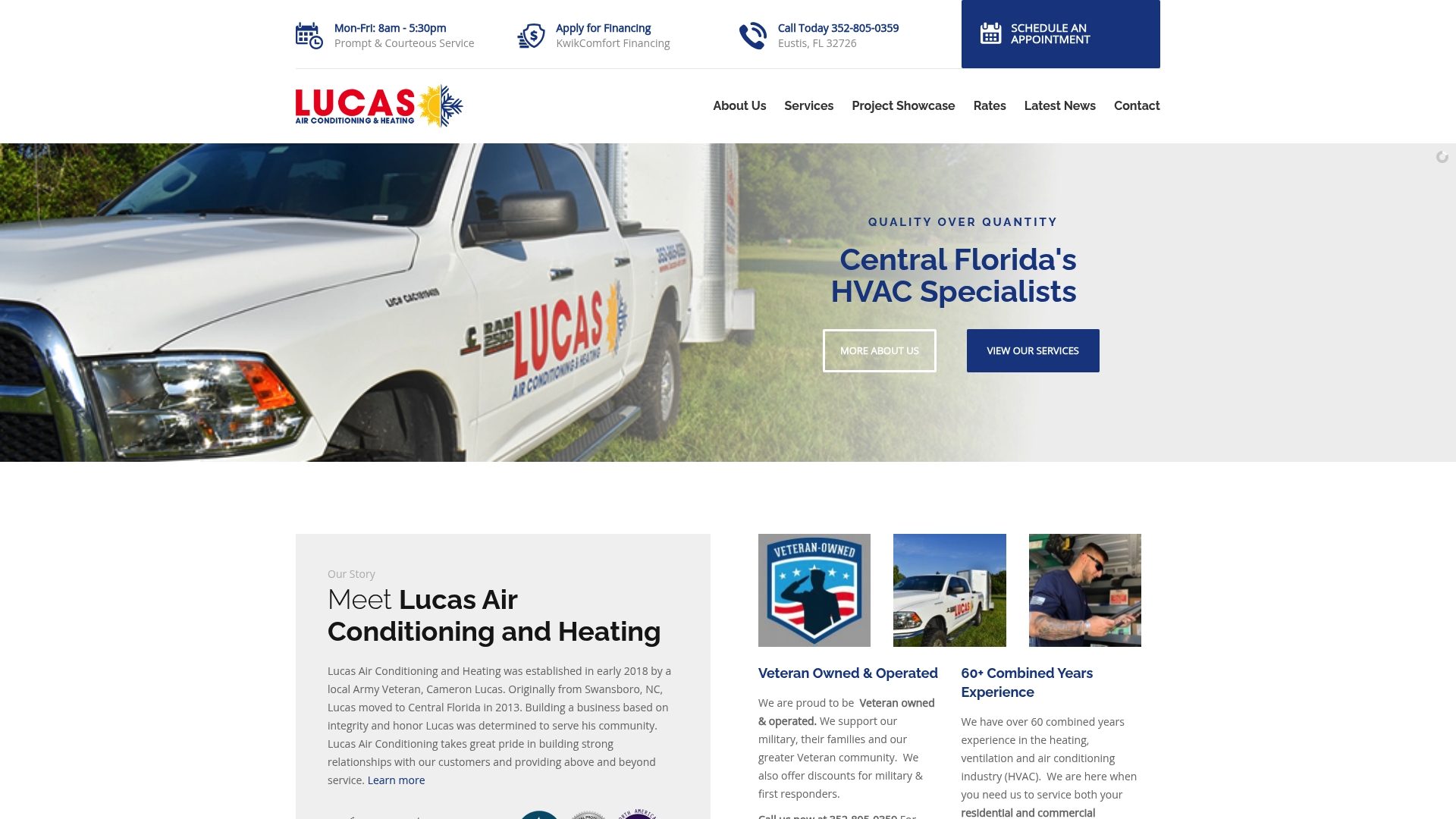
Luca Air handles residential and commercial HVAC installation, repairs, tune-ups, preventative maintenance agreements, duct cleaning, and pool heater repair across Eustis, The Villages, Mount Dora, and the surrounding Central Florida area. Founded in 2018 by Army Veteran Cameron Lucas, the company offers financing options and prioritizes fast scheduling over long wait times. No credit-consumption model, no onboarding timeline: you book a service call and a technician shows up.
Schedule your HVAC service or check current seasonal specials to get started.
Useful sources for further research
These are the primary sources used to build this comparison. Check publication dates before relying on any pricing figure, and always run a vendor trial before committing.
- Best AI Prospecting Tools for SDRs & Small Businesses 2026 — Origami’s editorial guide covering live-search tools and SMB-focused picks; strong on local-coverage arguments.
- Apollo vs LinkedIn Sales Navigator | The CRO Report — Sales-motion-based comparison of the two most common enterprise prospecting tools.
- LinkedIn Sales Navigator vs Apollo.io | Toolradar — Structured evaluation across the five key vendor-selection dimensions.
- LinkedIn Sales Navigator vs Apollo.io | Ektie — Practitioner perspective on running both tools in tandem for research and enrichment.
- 17 Best Sales Prospecting Tools in 2026 | Salesgenie — Broad roundup with useful notes on database coverage gaps by industry vertical.
- Top 8 Sales Prospecting Tools for Small Business Teams | Overloop — Practical warning on credit-consumption pricing and effective cost modeling.
- BuzzBoard Alternatives | ColdSaaS — Agency-focused critique of prospecting-only tools and the case for full-stack platforms.
- Top 10 BuzzBoard Ignite Alternatives | G2 — User-review-based alternatives list; useful for checking G2 ratings before shortlisting.
- 10 Best Sales Prospecting Tools in 2026 | ZoomInfo Pipeline — ZoomInfo’s own roundup; read with that context in mind, but useful for enterprise tool comparisons.
A note on review dates: Pricing changes frequently in this category. Treat any specific price figure as a starting point for your vendor conversation, not a final number. Prefer sources dated 2025 or later, and always confirm current pricing directly with the vendor during your trial or demo.
Recommended
- Best 4 HVAC Systems for Businesses 2026 – Lucas Air Conditioning and Heating
- Essential HVAC Features for Businesses: 2026 Guide – Lucas Air Conditioning and Heating
- Top 5 scottsair.com Alternatives HVAC Providers 2026 – Lucas Air Conditioning and Heating
- HVAC trends 2026: Smart solutions, efficiency, comfort – Lucas Air Conditioning and Heating
