
TL;DR:
- Controlling pollution sources at home and ensuring proper ventilation are the most effective ways to improve indoor air quality. Maintaining humidity between 30 and 50 percent and upgrading to MERV 13 filters significantly reduce airborne particles and mold risks. Simple steps like cross-ventilation, regular filter changes, and radon testing protect health without expensive equipment.
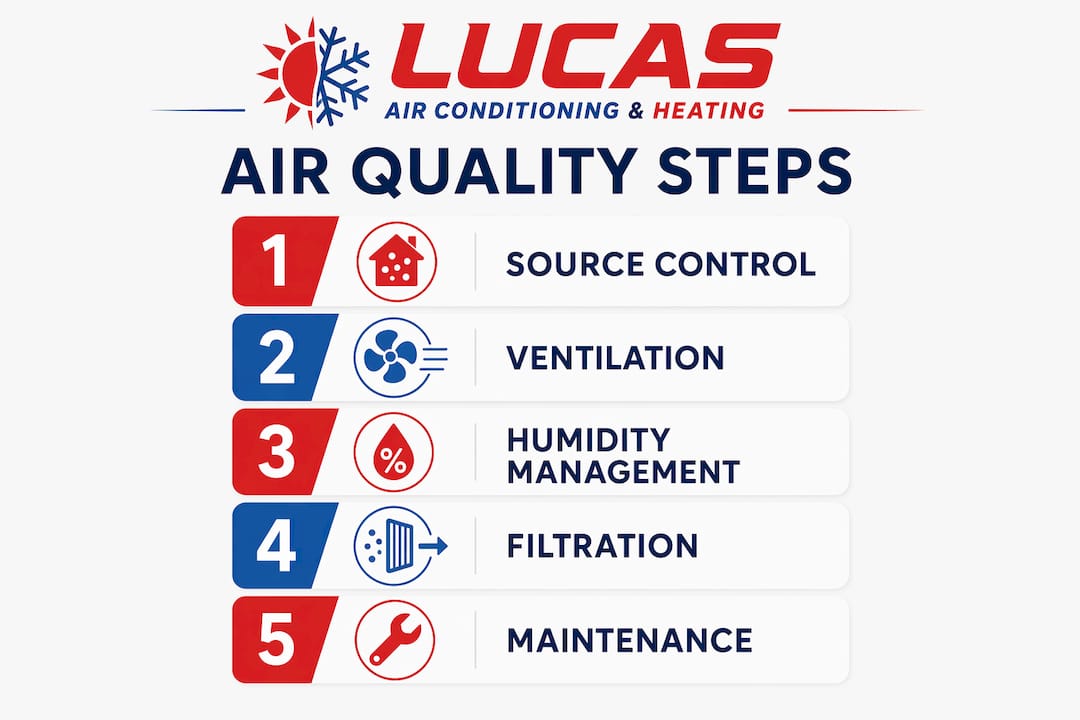
Indoor air quality (IAQ) is defined as the condition of the air inside your home as it relates to the health and comfort of everyone who breathes it. The most effective way to improve indoor air quality is to control pollution at its source, then layer in proper ventilation, humidity management, and filtration. Tools like MERV 13 HVAC filters, digital hygrometers, and energy recovery ventilators (ERVs) give you real, measurable results. This guide walks you through each strategy in order of impact, so you spend your time and money where it counts most.
How to improve indoor air quality: start with source control
Source control is the highest-impact IAQ intervention you can make. Filters and purifiers clean air that is already polluted. Removing the pollutant before it enters the air is always more effective.
Common indoor pollutants and where they come from
The main indoor air pollutants fall into four categories: volatile organic compounds (VOCs), biological contaminants, combustion byproducts, and particulate matter. VOCs come from paint, cleaning products, synthetic air fresheners, and furniture off-gassing. Biological contaminants include mold spores, dust mites, and pet dander. Combustion byproducts come from gas stoves, fireplaces, and tobacco smoke.
Here is where most homeowners make their first mistake. Synthetic air fresheners and aerosol sprays emit VOCs that actively degrade indoor air chemistry. Switching to unscented or naturally scented products is one of the fastest, cheapest air quality improvement tips you can act on today.
Key source control steps to take right now:
- Replace high-VOC cleaning products with fragrance-free or plant-based alternatives
- Stop using aerosol sprays and scented wax warmers indoors
- Service gas appliances annually to prevent combustion leaks
- Ban indoor smoking entirely, including near open windows
- Store paints, solvents, and pesticides in sealed containers outside the living space
Pro Tip: Damp microfiber cloths trap fine dust particles instead of scattering them. Pair this with a sealed HEPA vacuum used at least twice weekly, and you cut airborne particulate load significantly.
For a deeper look at how cleaning practices connect to indoor air quality at home, the link covers room-by-room strategies worth bookmarking.
How does ventilation reduce indoor pollutants?
Ventilation dilutes and removes pollutants that source control cannot fully eliminate. Without fresh air exchange, CO2, VOCs, and moisture accumulate to levels that cause headaches, fatigue, and respiratory irritation.
Natural ventilation done right
Most homeowners open one window and consider the job done. That approach recirculates stale air rather than flushing it. Cross-ventilation using two windows on opposite sides of a room for 10–15 minutes creates a pressure differential that actively pulls pollutants out. Time this for early morning or late evening in Central Florida, when outdoor ozone and pollen counts are lower.
Mechanical ventilation for consistent results
Natural ventilation depends on weather and outdoor air quality. Mechanical systems give you control year-round. Here are the most effective options, ranked by impact:
- Bathroom exhaust fans: Run them during and for 20 minutes after every shower to remove moisture and prevent mold growth.
- Range hoods vented outside: Recirculating range hoods do not remove humidity or combustion byproducts. Venting directly outside is the only option that actually works.
- Whole-house ERV or HRV systems: Energy recovery ventilators and heat recovery ventilators exchange stale indoor air for fresh outdoor air while recovering heating and cooling energy. ERV and HRV systems cost $2,000–$4,000 installed, but they solve the ventilation problem permanently without spiking your energy bill.
- Spot exhaust fans in laundry rooms: These spaces generate lint, moisture, and detergent VOCs that most homeowners ignore.
Pro Tip: If you cook with gas, run your range hood on high and crack a nearby window simultaneously. Gas burners produce nitrogen dioxide and carbon monoxide even when functioning correctly.
What humidity level is best for indoor air quality?
Humidity control is the most underrated air quality improvement tip in most guides. Get it wrong in either direction and you create problems that no filter can fix.
The EPA recommends keeping indoor relative humidity between 30–50%. Humidity above 60% accelerates mold growth and increases dust mite populations. Humidity below 35% dries out mucous membranes, which reduces your body’s natural ability to filter airborne particles.
| Humidity level | Risk | Recommended action |
|---|---|---|
| Below 30% | Dry airways, increased virus survival | Run a humidifier |
| 30–50% | Optimal range | Monitor with a hygrometer |
| 51–60% | Elevated dust mite activity | Increase ventilation |
| Above 60% | Mold growth, structural damage | Run a dehumidifier |
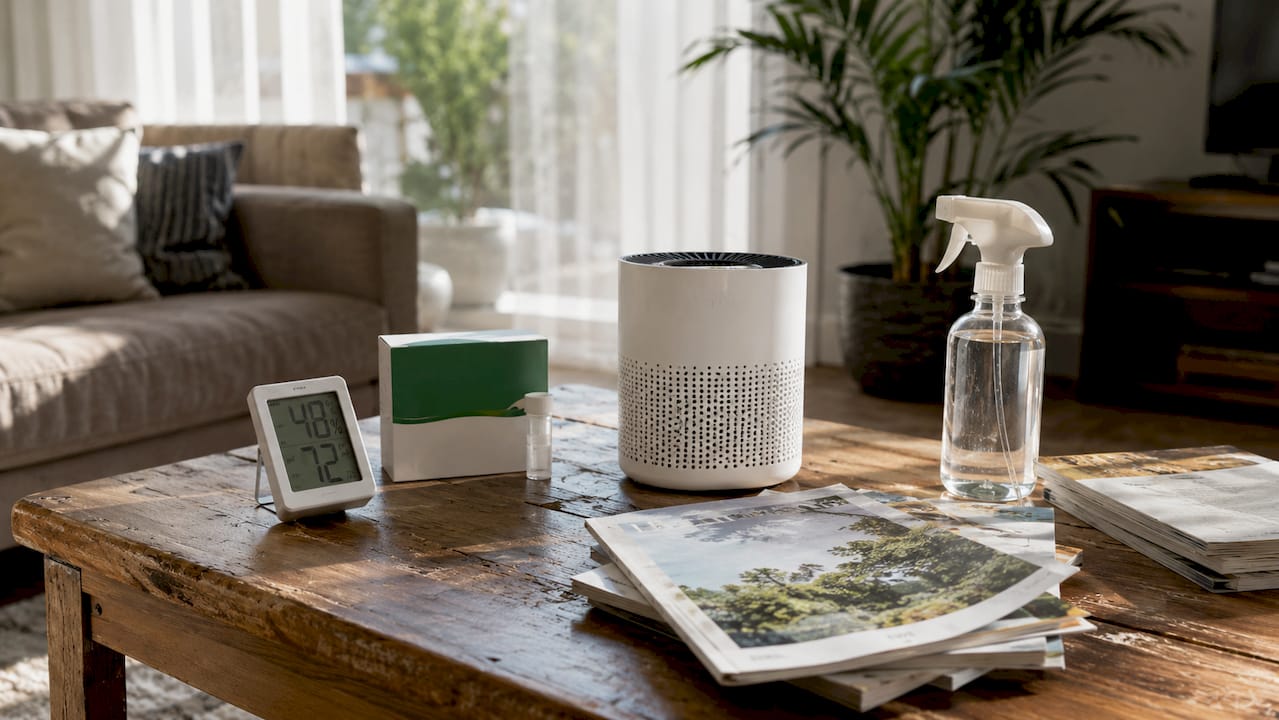
A digital hygrometer costs under $20 and gives you real-time readings in any room. Place one in your bedroom and one in the bathroom. Those two rooms drive the most humidity-related IAQ problems in Florida homes. Maintaining humidity in the 40–50% range is the sweet spot that protects both your respiratory health and your home’s structure.
Whole-house dehumidifiers run $1,500–$3,000 installed and are worth the investment in humid climates like Central Florida. Portable units work for single rooms but require daily emptying and do not address the whole home.
Which air filtration options actually work?
Filtration is a secondary measure. It cleans air that is already circulating through your system. That said, the right filter makes a real difference, and the wrong one gives you false confidence.
HVAC filter upgrades
MERV 13 filters capture 85% or more of airborne particles, including mold spores, pollen, and fine dust. They cost $15–$30 each. That is one of the best returns on investment in the entire category of indoor air quality solutions. Change them every 60–90 days, or monthly if you have pets or allergy sufferers in the home.
For a full breakdown of filter ratings and what each level captures, the MERV filter guide from Lucasair covers the details clearly.
Portable air purifiers and HEPA filters
HEPA filters remove 99.97% of particles as small as 0.3 microns. The catch is that most central HVAC systems cannot handle the airflow resistance of a true HEPA filter. Portable HEPA purifiers placed in bedrooms and living areas solve this without straining your system.
What to look for in a portable air purifier:
- True HEPA certification (not “HEPA-type” or “HEPA-like”)
- A CADR (Clean Air Delivery Rate) rating matched to your room size
- An activated carbon layer to capture VOCs and odors
- A filter replacement indicator so you do not run a clogged unit
One thing to skip: ionizing air cleaners and ozone generators marketed as air purifiers. Several models produce ozone as a byproduct, which is itself a respiratory irritant.
Regular HVAC maintenance keeps your filtration system working at full capacity. A clogged or poorly maintained system moves less air and captures fewer particles, regardless of filter rating.
What mistakes undermine indoor air quality improvements?
Most homeowners take the right steps but undercut them with a few common errors. Knowing what not to do is just as useful as knowing what to do.
- Single-window ventilation: Opening one window rarely creates enough airflow to flush pollutants. Use cross-ventilation with two openings on opposite sides of the space.
- Feather dusters and dry cloths: These move dust into the air rather than capturing it. Use damp microfiber cloths every time.
- Standard vacuums without HEPA filtration: Many vacuums exhaust fine particles back into the room. A sealed HEPA vacuum is not optional if you have carpet.
- Relying on air fresheners to “clean” the air: Synthetic fragrances mask odors while adding VOCs. They do not remove any pollutant.
- Skipping radon and CO testing: Radon is the second leading cause of lung cancer in the U.S. It is odorless and invisible. The EPA recommends testing every home, especially on lower floors. Carbon monoxide detectors are non-negotiable in any home with gas appliances or an attached garage.
Hidden pollutants like radon require a specific test kit, available at hardware stores for under $30. If levels come back elevated, a licensed mitigation contractor can install a sub-slab depressurization system that reduces radon to safe levels.
Key takeaways
The most effective approach to improving indoor air quality combines source control, consistent ventilation, humidity management in the 30–50% range, and proper filtration with MERV 13 or HEPA-rated equipment.
| Point | Details |
|---|---|
| Source control comes first | Remove or reduce pollutants before they enter the air for the highest impact. |
| Cross-ventilation beats single windows | Open two windows on opposite sides for 10–15 minutes to flush pollutants effectively. |
| Keep humidity at 30–50% | Use a digital hygrometer and dehumidifier or humidifier to stay in the safe range. |
| Upgrade to MERV 13 filters | These capture 85%+ of airborne particles and cost just $15–$30 per filter. |
| Test for invisible threats | Radon and carbon monoxide testing protects against the risks no filter can address. |
What I have learned after years of watching homeowners get this wrong
The most common mistake I see is homeowners spending hundreds of dollars on portable air purifiers while still using synthetic air fresheners, skipping filter changes, and running a recirculating range hood. The purifier becomes a feel-good purchase that does not move the needle.
Source control is unglamorous. Switching cleaning products and vacuuming more often does not feel like a tech upgrade. But HVAC industry experts consistently confirm that eliminating pollutant sources delivers larger IAQ gains than any filtration product you can buy.
The second thing I would push back on is the idea that air quality improvements have to be expensive. A $20 hygrometer, a $25 MERV 13 filter, and a $30 radon test kit address three of the biggest risks in most homes. The expensive interventions, like ERV systems and whole-house dehumidifiers, are worth it in the right circumstances. But they work best on top of a solid foundation of source control and basic maintenance.
Routine HVAC maintenance is the one investment that pays dividends across every category. A well-maintained system moves air efficiently, captures particles as designed, and does not become a source of contamination itself. Skip maintenance and every other improvement you make loses effectiveness.
Start with the free and cheap steps. Then build up.
— Lucasair
How Lucasair can help you breathe easier at home
If you are ready to move beyond the basics, Lucasair provides the professional services that make a whole-home difference. From upgrading your system to MERV 13 compatible filters to installing whole-house dehumidifiers, ventilation upgrades, and ERV systems, the team at Lucasair handles the work that delivers lasting results.

Lucasair serves homeowners across Central Florida, including Eustis and the surrounding counties. Whether you need a new HVAC installation or a tune-up to get your current system performing at its best, scheduling is straightforward and financing options are available. Call or book online to get an evaluation of your home’s current air quality setup and find out exactly where the biggest gains are hiding.
FAQ
What is the fastest way to improve air quality at home?
The fastest improvement comes from removing pollutant sources, such as synthetic air fresheners, VOC-heavy cleaning products, and unvented combustion appliances. Pair this with cross-ventilation for 10–15 minutes and you will notice a difference the same day.
How often should I change my HVAC filter for better air quality?
Change MERV 13 filters every 60–90 days under normal conditions. If you have pets, allergies, or live in a dusty environment, change them monthly for consistent particle capture.
Does opening windows actually improve indoor air quality?
Opening a single window often recirculates stale air without flushing it. Cross-ventilation using two windows on opposite sides of a room for at least 10 minutes is the method that actually reduces VOC and CO2 levels.
What humidity level should I maintain indoors?
The EPA recommends keeping indoor relative humidity between 30–50%. Levels above 60% promote mold and dust mites, while levels below 35% dry out airways and reduce your body’s natural filtration ability.
Do indoor plants improve air quality?
Indoor plants provide a minor benefit by absorbing some CO2 and trace VOCs, but the effect is too small to replace ventilation or filtration. They are a healthy addition to a home, not a substitute for the core strategies covered in this guide.
Recommended
- Air filters: your guide to cleaner, healthier indoor air – Lucas Air Conditioning and Heating
- The role of air quality management for Central Florida homes – Lucas Air Conditioning and Heating
- Indoor air quality: improve comfort and health at home – Lucas Air Conditioning and Heating
- Duct Cleaning & Indoor Air Quality: Evidence & Best Practices – Lucas Air Conditioning and Heating
