
TL;DR:
- In Central Florida, heat pump efficiency depends heavily on proper sizing, humidity control, and installation quality, not just rating numbers. The long cooling season emphasizes the importance of SEER2, while variable-speed technology improves comfort and energy savings in high-humidity conditions. Proper evaluation, installation, and ongoing maintenance are essential to achieve real-world performance and maximize long-term savings.
The highest-rated heat pump on the market is not automatically your best choice for a Central Florida home or commercial property. Florida’s long, punishing cooling season, high humidity, and unpredictable winter temperatures mean that efficiency numbers on a spec sheet can tell a very different story than what you actually experience and pay for every month. This guide breaks down exactly what heat pump efficiency means, how local conditions shape real-world performance, and the practical steps you can take to get the most out of your investment.
Table of Contents
- How heat pump efficiency is measured
- Why Florida’s climate changes the efficiency equation
- Comparing ratings to real-world performance
- Biggest mistakes and how to actually optimize heat pump efficiency
- Expert perspective: The truth about heat pump efficiency most advice skips
- Get expert help optimizing your heat pump efficiency
- Frequently asked questions
Key Takeaways
| Point | Details |
|---|---|
| Efficiency means smart use | True heat pump efficiency is how well your system turns energy into comfort, not just high ratings. |
| Florida needs special focus | Our long cooling season makes the right equipment sizing, humidity control, and installation even more important. |
| Ratings aren’t everything | SEER2 and HSPF2 are useful, but real savings require proper setup and controls. |
| Optimize for comfort and cost | Avoid common mistakes with sizing, controls, and maintenance to enjoy both efficiency and comfort. |
| Expert help pays off | Working with specialists ensures your system lives up to its potential and your investment pays dividends. |
How heat pump efficiency is measured
Before comparing units or reviewing quotes, you need to speak the language of efficiency ratings. These numbers are not arbitrary marketing figures; they are standardized measurements calculated under specific test conditions.
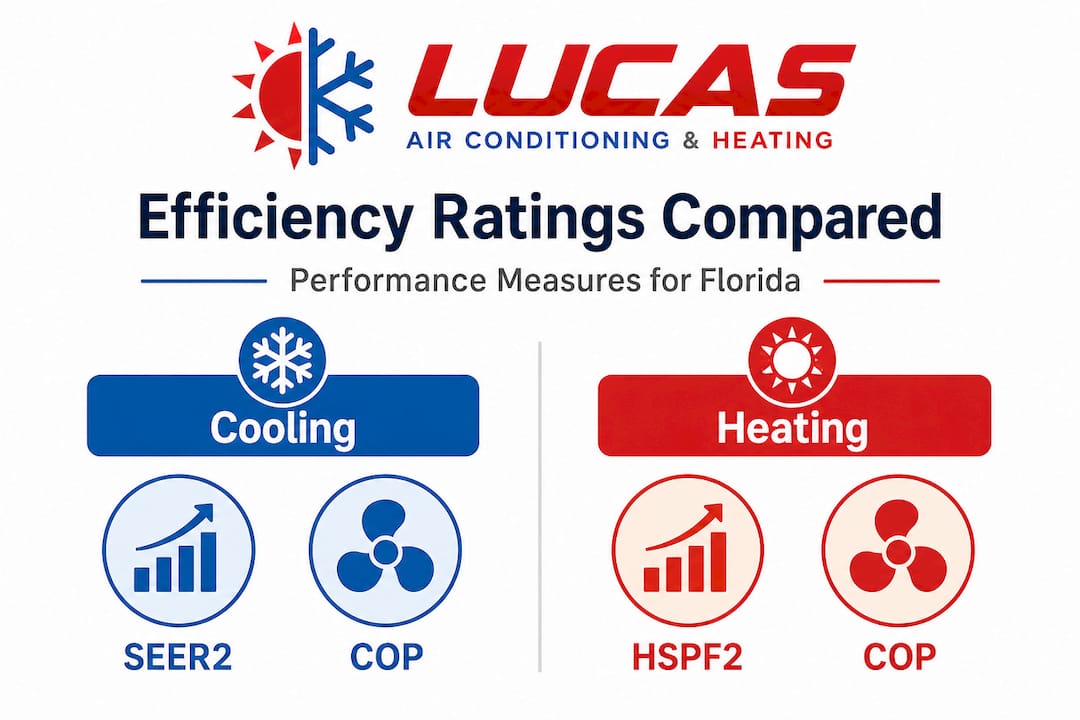
SEER2 stands for Seasonal Energy Efficiency Ratio 2, and it measures cooling performance across an entire season. HSPF2 stands for Heating Seasonal Performance Factor 2, which measures heating performance over a full heating season. SEER2 and HSPF2 are the seasonal efficiency ratings for heat pumps, and higher numbers mean more energy-efficient operation. A unit with SEER2 of 20 delivers measurably more cooling per dollar of electricity than a unit with SEER2 of 14.
COP, or Coefficient of Performance, is a different type of measurement. It tells you how efficiently a heat pump is operating at one specific outdoor temperature at one moment in time. A COP of 3.0 means the system delivers three units of heating or cooling energy for every one unit of electricity it consumes. COP fluctuates as outdoor temperatures change, which is why seasonal ratings like SEER2 and HSPF2 give you a more realistic picture for budgeting and comparison.
| Rating | What it measures | Higher = better? | Best use |
|---|---|---|---|
| SEER2 | Seasonal cooling efficiency | Yes | Comparing cooling cost estimates |
| HSPF2 | Seasonal heating efficiency | Yes | Comparing winter heating costs |
| COP | Efficiency at a specific temperature | Yes | Snapshot performance check |
Here’s what those ratings actually tell you and, importantly, what they leave out:
- SEER2 shows potential cooling efficiency under controlled test conditions, not your specific home’s layout or ductwork quality
- HSPF2 reflects heating potential but is less critical in Florida where heating hours are limited
- Neither rating accounts for installation quality, humidity loads, or part-load operation
- COP gives you a useful real-time check but does not capture seasonal variation
Pro Tip: Always check both SEER2 and HSPF2 when comparing heat pumps in quotes, not just the impressive headline number the salesperson highlights. A system with a great SEER2 but weak HSPF2 may still underperform during Florida’s occasional cold snaps. For a deeper look at what to prioritize, see our guide on choosing an energy-efficient HVAC system.
Why Florida’s climate changes the efficiency equation
Understanding the ratings is only step one. Central Florida’s climate means there is much more to the story, and treating efficiency like a simple numbers comparison will cost you real money and comfort.
Florida’s cooling season runs roughly nine to ten months of the year. That means heat pumps in Florida spend the overwhelming majority of their operating hours in cooling mode, making SEER2 by far the most financially important rating locally. Your heating system’s HSPF2 matters, but cooling is where you live and where your electricity bill is built.
This long cooling season creates two factors that most homeowners underestimate. First, equipment sizing matters enormously. An oversized unit will short-cycle, meaning it turns on, blasts cold air briefly, and shuts off before it fully dehumidifies your space. You end up with a cool but sticky, uncomfortable home and a system under unnecessary mechanical stress. An undersized unit struggles to keep up during peak summer heat. Neither scenario gives you the efficiency the spec sheet promises.
Second, humidity control is arguably more important in Florida than raw temperature management. Human comfort is closely tied to relative humidity. A properly sized, properly installed system that manages humidity well will feel far more comfortable at 76°F than a poorly managed system set to 72°F. Efficiency in Florida is directly influenced by equipment sizing, humidity management, installation quality, and whether the system can operate effectively under variable load conditions.
This is where variable-speed (inverter) heat pump technology makes a genuine difference. Unlike single-stage systems that are either fully on or fully off, variable-speed systems adjust their output continuously to match the home’s actual load. In Central Florida’s climate, this translates to longer, lower-intensity run cycles that keep humidity consistently low, maintain more stable temperatures, and operate closer to their rated efficiency more often.
| Feature | Single-stage system | Variable-speed system |
|---|---|---|
| Runtime behavior | Short cycles, on/off | Long, low-intensity cycles |
| Humidity control | Moderate | Superior |
| Part-load efficiency | Lower | Higher |
| Comfort consistency | Variable | Very consistent |
| Best fit for Florida | Adequate | Highly recommended |
Even a premium, high-SEER2 single-stage unit can underperform a mid-range variable-speed unit in actual Florida conditions. Our energy-saving HVAC tips and resources on energy-efficient heating in Florida dive deeper into why the technology inside the unit matters as much as the rating on the label.
Comparing ratings to real-world performance
Official efficiency numbers look good on paper. How do they play out in real Central Florida homes? There is often a noticeable gap between rated and actual performance, and knowing why helps you make smarter decisions before you sign any contract.
Field studies confirm that real-world efficiency regularly differs from lab-tested ratings, and that system configuration and operational factors are just as important as the equipment brand or model. That means the contractor who installs the system, the controls they program, the ductwork condition, and how the system is commissioned all directly shape whether you see rated efficiency or something significantly lower.
“The best way to compare efficiency when reviewing quotes is to check both seasonal ratings and understand that heating performance depends on outdoor temperature, not a single number.”
Use these numbered steps when evaluating any new system quote:
- Get both SEER2 and HSPF2 in writing from every contractor you invite to quote. Do not accept a quote that only highlights one rating.
- Ask about sizing methodology. A responsible contractor will perform a Manual J load calculation to properly size your equipment to your specific home. If they skip this and simply match your existing system’s size, that is a red flag.
- Inquire about controls and thermostat technology. A variable-speed system paired with an outdated thermostat cannot deliver its full efficiency potential. Smart controls that track humidity and optimize run cycles are part of the complete picture.
- Request references or past performance data for similar homes or commercial spaces in Central Florida. Contractors who know their work delivers real-world results will not hesitate to provide this.
- Ask how the system will handle humidity, not just temperature. If a contractor cannot clearly explain their dehumidification strategy for a Florida home, keep looking.
Pro Tip: A high SEER2 number in a quote is a starting point, not a finish line. Push your contractor to explain exactly how that system will deliver those ratings inside your specific home, accounting for your duct layout, your home’s insulation, and your family’s usage patterns. For guidance on upgrading home heating for better real-world performance, we have dedicated resources that walk through this in detail.
Biggest mistakes and how to actually optimize heat pump efficiency
Knowing how to measure and compare efficiency is essential. Avoiding the most common mistakes and actively optimizing your system is where you actually feel the difference on your comfort and your monthly bill.
Here are the most frequent problems we see in Central Florida homes and commercial properties:
- Oversizing the equipment. Bigger is not better. An oversized heat pump short-cycles, fails to dehumidify properly, and wears out components faster while never reaching its stated efficiency in real operating conditions.
- Undersizing the equipment. A unit too small for the space runs constantly under strain, raises your electricity bill, and still cannot keep up during peak summer afternoons.
- Neglected or poorly designed ductwork. Even a high-SEER2 system will underperform significantly if duct leaks, poor insulation, or unbalanced airflow bleed its efficiency before conditioned air ever reaches the room.
- Ignoring dehumidification as a priority. Many homeowners focus entirely on temperature and overlook humidity. Right-sizing and proper controls are inseparable from real efficiency and comfort in Florida’s part-load, high-humidity environment.
- Skipping regular maintenance. Dirty coils, clogged filters, and low refrigerant quietly erode efficiency month by month without triggering any obvious alarm.
Here is a practical checklist to optimize your heat pump’s efficiency for Central Florida conditions:
- Match equipment size to your actual space using a proper load calculation, not an estimate
- Insist on a quality installation with verified airflow and refrigerant charge
- Prioritize systems with strong humidity control capability, especially variable-speed models
- Schedule professional maintenance at least once per year, ideally before cooling season
- Replace air filters regularly, typically every one to three months depending on usage
- Invest in smart or programmable thermostat controls that support humidity management
- Have ductwork inspected and sealed if your system is being replaced or if you notice hot spots
Pro Tip: For Florida homeowners, variable-speed technology and smart humidity controls often pay for themselves within a few years through reduced electricity bills and fewer repair calls. The upfront cost is higher, but the delivered comfort is noticeably better. See our resources on cutting HVAC bills and the value of seasonal HVAC tune-ups to build these habits into your routine.
What most people miss entirely: comfort often matters more than the maximum cooling rating. A home that stays at a consistent temperature and humidity, even if the system’s peak SEER2 is modest, is a more livable and healthier space than one with an impressive-rated unit that allows the humidity to spike throughout the day.
Expert perspective: The truth about heat pump efficiency most advice skips
After years of working on heat pump systems across Central Florida, one thing stands out clearly: the efficiency gap between what a system is rated to do and what it actually delivers in a home almost always comes down to details that most quotes never mention.
Online guides and equipment sales pitches focus heavily on SEER2 and HSPF2 because those numbers are easy to compare and easy to advertise. But a system’s real-world efficiency is won or lost in the details homeowners rarely see: the quality of the load calculation, whether airflow was tested and balanced after installation, how the refrigerant charge was verified, and whether the contractor walked the homeowner through the controls.
Here is what we believe reliable contractors do that most quotes leave out:
- Thorough load calculation based on your actual square footage, insulation levels, window exposure, and occupancy patterns, not a rough estimate
- Airflow testing and balancing after installation to confirm conditioned air reaches every room effectively
- Verified refrigerant charge at startup, because even a small variance degrades efficiency and compressor life
- Humidity control verification, ensuring the system cycles long enough to pull moisture out of Central Florida’s air
- Controls setup and walkthrough, so you understand how to use your thermostat settings to maximize both comfort and savings
There is also an uncomfortable truth about service agreements that many homeowners do not hear until they are dealing with a preventable repair: the contractors who stand behind their work with ongoing maintenance plans are usually the ones who installed the system correctly in the first place. Ask about service agreements and ongoing support before you commit to any installation. A company that offers strong follow-up support has a financial and reputational reason to get the install right from day one.
We encourage you to learn more about why system upgrades matter for long-term efficiency and comfort, because the decision to invest in better technology is closely tied to how well that investment is maintained over time.
Get expert help optimizing your heat pump efficiency
Bridging the gap between impressive efficiency ratings and real-world comfort and savings takes more than picking the right equipment. It takes a contractor who understands Central Florida’s climate, sizes your system correctly, installs it with care, and supports it long after the job is done.

At Lucas Air Conditioning and Heating, we help Central Florida homeowners and property managers navigate every step of that process, from system evaluations and tailored recommendations to preventative maintenance agreements designed to keep your equipment running at its best year after year. Whether you are comparing systems for a new installation or wondering why your current unit is not delivering the efficiency you expected, our team brings honest, experienced guidance to every conversation. Reach out to your trusted HVAC contractor in the area, explore our HVAC maintenance services designed around your comfort, or learn how to upgrade your home heating for better long-term results.
Frequently asked questions
What is a good SEER2 rating for Florida homes?
A SEER2 rating of 16 or higher is generally considered strong for Florida, but Florida performance also depends heavily on proper sizing, installation quality, and humidity control strategies.
Does a higher HSPF2 always mean better comfort?
Not always. Comfort in Florida homes depends on matched sizing, controls, and humidity management just as much as a high HSPF2 rating on the specification sheet.
How often should heat pump systems be maintained for peak efficiency?
Professional service at least once a year combined with regular filter changes every one to three months is the recommended standard to preserve efficiency and prevent premature wear.
Can an older system achieve high efficiency with upgrades?
Some targeted upgrades can improve efficiency, but older systems often lack the inverter technology and modern controls that drive the highest savings; field studies confirm that efficiency gains are closely tied to newer system configurations and features.
Why does installation quality matter for heat pump efficiency?
Poor sizing, duct leaks, or improper refrigerant charge can dramatically cut delivered efficiency and comfort; even high-SEER2 units consistently underperform when installed with mismatched ductwork or without proper commissioning.
Recommended
- Energy-saving HVAC tips for Central Florida homeowners – Lucas Air Conditioning and Heating
- Energy saving HVAC tips for Central Florida: Cut bills 30% – Lucas Air Conditioning and Heating
- What is energy efficient heating: A homeowner’s guide – Lucas Air Conditioning and Heating
- Unlock Cost Savings with Energy-Efficient Industrial HVAC – Lucas Air Conditioning and Heating
