

TL;DR:
- HVAC quotes in Central Florida vary widely due to differences in equipment quality, scope, and hidden costs, making comparison challenging.
- Understanding bundled components like equipment, labor, permits, and ductwork repairs enables homeowners to evaluate proposals fairly and avoid unexpected expenses.
Getting an HVAC quote in Central Florida can feel like reading a foreign language. One contractor gives you a $6,000 number, another says $11,000, and both claim they’re offering the same thing. That gap isn’t random. It reflects real differences in equipment quality, labor standards, permits, and ductwork conditions that rarely show up as separate line items. Understanding what’s actually inside that quoted price gives you the power to compare proposals fairly, avoid costly surprises, and make a decision you won’t regret when the Florida heat hits in July.
Table of Contents
- How HVAC quotes are bundled: Understanding the scope
- Major HVAC cost factors: What really impacts your price
- Comparing cost breakdowns: Homeowner vs. business scenarios
- Tips to manage and optimize your HVAC costs
- The uncomfortable truth experts won’t tell you about HVAC pricing
- Get help decoding your HVAC quote: Next steps with Lucas Air
- Frequently asked questions
Key Takeaways
| Point | Details |
|---|---|
| Bundled quotes explained | HVAC quotes include equipment, labor, materials, permits, and ductwork in a single price. |
| Labor and ductwork impact | Labor and ductwork can be major contributors to overall HVAC cost, especially in complex installs. |
| Comparison is key | Comparing itemized vs. bundled quotes helps you understand and control where your money goes. |
| Optimize your spend | Asking for itemized estimates, negotiating labor, and using financing can lower your upfront costs. |
| Quality outlasts price | Investing in better installation and equipment may save more money in the long run than chasing the lowest quote. |
How HVAC quotes are bundled: Understanding the scope
Most homeowners assume a quote is a quote. You get a number, you pick the lowest one, and you move on. But HVAC pricing doesn’t work that way, and understanding why is the first step toward making a smarter decision.
HVAC quotes routinely bundle equipment, labor, refrigerant, permits, materials, and possible ductwork repairs into a single line item. That means when you’re looking at two proposals side by side, you’re often comparing apples to oranges without realizing it. One contractor might include ductwork sealing in their price. Another assumes your ducts are fine and skips it entirely. The bottom-line numbers might look similar, but the actual scope of work is completely different.
Here’s what a typical bundled HVAC quote usually includes:
- Equipment costs: The air handler, condenser unit, thermostat, and any smart controls or zoning hardware
- Labor: Installation hours, including setting up electrical connections, refrigerant lines, and system calibration
- Refrigerant: The charge needed to operate the system, which varies by unit size and refrigerant type
- Permits: Filed with your local city or county before work begins
- Materials: Copper line sets, drain lines, insulation, mounting hardware, and electrical components
- Ductwork repairs or modifications: Sealing leaks, replacing damaged sections, or reconfiguring runs for a new system
“When you’re comparing quotes, the most important question you can ask is: ‘What exactly is included?’ A $1,500 difference in price might simply mean one contractor left ductwork repairs off the estimate entirely.”
Permits and materials also vary significantly depending on where you live. Lake County has different fee schedules than Orange County, and municipalities within those counties add their own layer of requirements. A permit that costs $150 in one city might run $400 in another. These aren’t negotiable, but knowing about them in advance prevents sticker shock.
If you’re weighing how to pay for a new system, looking into HVAC financing options early in the process can help you set a realistic budget before you even request your first quote. Understanding the full scope of installation cost factors gives you a framework so no contractor can obscure what you’re actually paying for.
Major HVAC cost factors: What really impacts your price
Now that you understand how bundling works, let’s look at each cost driver individually and how much influence it actually has on your total.
Equipment type and capacity
The system itself is often the biggest single cost. A standard 3-ton split system from a mid-tier brand might cost $1,800 to $2,500 for the equipment alone. A high-efficiency variable-speed system from a premium brand could push $4,500 or more just for the hardware. SEER (Seasonal Energy Efficiency Ratio) ratings are a major factor here. Florida requires a minimum SEER of 15 for new installations, but systems rated at 18 to 22 SEER carry a higher upfront price while delivering lower monthly energy bills. Higher-tier modern HVAC features like variable-speed compressors, two-stage cooling, and Wi-Fi thermostats add value but also add cost.
Labor
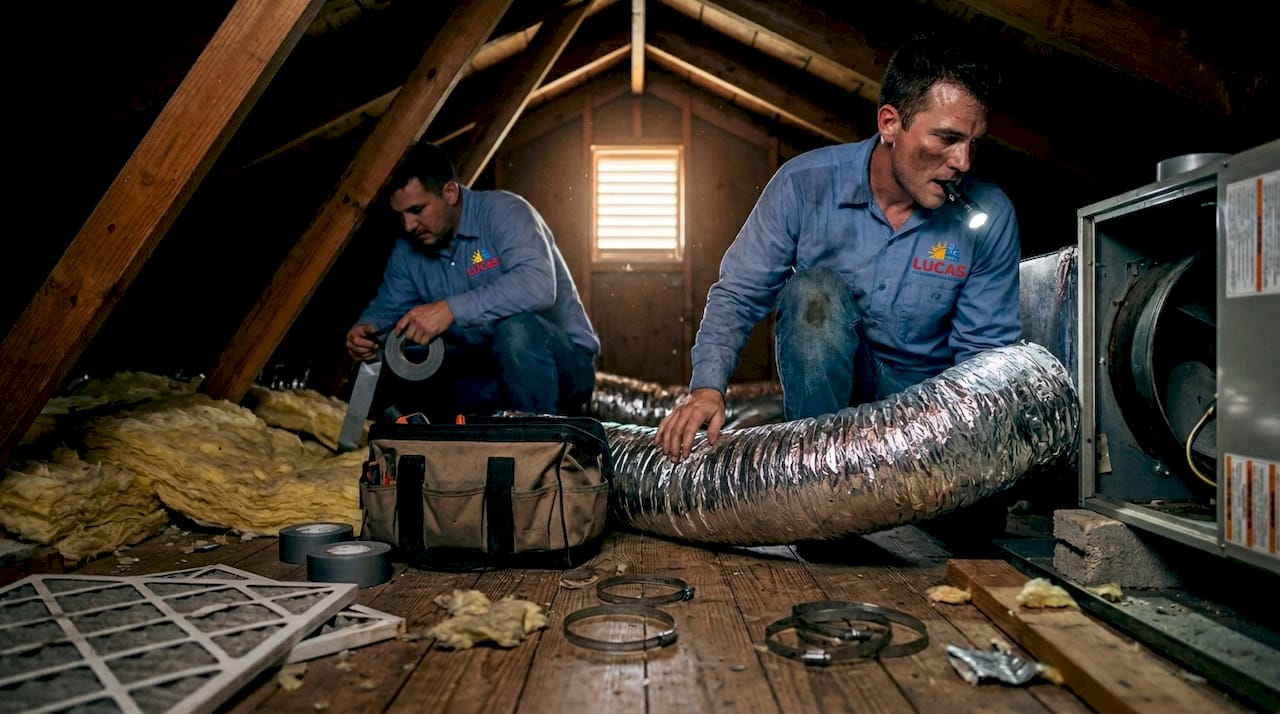
Labor and ductwork repairs are meaningful portions of the total HVAC cost, and labor is the factor most homeowners underestimate. A straightforward swap-out on a well-maintained home might take 6 to 8 hours. A complex installation involving new ductwork, attic access, or electrical upgrades could run 12 to 20 hours. Licensed HVAC technicians in Central Florida typically bill $75 to $150 per hour depending on specialty and demand. The residential repair workflow for a complex install can look very different from a simple equipment swap.
Refrigerant
R-410A has been the standard refrigerant for years, but the industry is transitioning to R-454B and R-32 refrigerants due to federal environmental regulations. The cost of refrigerant varies by type and quantity. Some older homes with existing systems using R-22 (now phased out) face much higher refrigerant costs if repair, rather than replacement, is the path chosen.
Permits
In Florida, HVAC work almost always requires a permit. This protects you as the homeowner and ensures the work passes a third-party inspection. Permit costs in Central Florida typically range from $100 to $500 depending on the county and project scope.
Here’s a general breakdown of how these cost factors typically compare:
| Cost factor | Residential estimate | Commercial estimate |
|---|---|---|
| Equipment | $1,800 to $5,000+ | $5,000 to $25,000+ |
| Labor | $800 to $2,500 | $2,500 to $10,000+ |
| Refrigerant | $150 to $600 | $400 to $1,500+ |
| Permits | $100 to $500 | $300 to $1,500+ |
| Ductwork/materials | $300 to $2,000 | $1,000 to $8,000+ |
Pro Tip: Ask your contractor to separate equipment cost from labor cost in any written quote. This one request tells you immediately whether their pricing is competitive or padded in one specific area.
Comparing cost breakdowns: Homeowner vs. business scenarios
The cost factors are the same for residential and commercial projects, but the scale, complexity, and regulatory requirements are completely different. Let’s look at how a typical quote breaks down in each context.
Residential example
A 1,800 square foot home in Eustis with a single-zone system needing a full replacement might look like this. Equipment runs $2,400 for a 16 SEER system. Labor clocks in at around $1,200 for a clean swap on an accessible unit. Refrigerant adds $250. The permit comes in at $175. Minor ductwork sealing runs $300. Total: roughly $4,325. That’s a solid, complete job for a mid-range home.
Commercial example
A small retail space with 4,000 square feet, multiple zones, and a rooftop unit tells a very different story. Equipment alone might run $12,000 to $18,000 depending on tonnage and brand. Labor jumps to $4,500 or more because rooftop installations require cranes, specialized tools, and multiple technicians. Ductwork repairs often constitute a significant portion of a bundled HVAC quote in commercial settings, easily adding $3,000 to $6,000 to the total. Permits for commercial work in Lake or Orange County can run $800 or more.
Here’s a side-by-side comparison of how the cost emphasis shifts:
| Component | Residential weight | Commercial weight |
|---|---|---|
| Equipment | High | Very high |
| Labor | Moderate | High |
| Ductwork/materials | Low to moderate | High |
| Permits | Low | Moderate to high |
| Complexity/specialty | Low | High |
What drives the commercial cost up most? Complexity and code compliance. Commercial HVAC systems often serve mixed occupancy spaces, must meet stricter ventilation standards, and require licensed mechanical contractors in addition to HVAC technicians. If you want to compare service pricing before requesting a full project quote, checking HVAC rates for your project type is a helpful first step.
A few things to keep in mind when reviewing any quote:
- Always confirm whether the ductwork has been inspected before installation begins, not after.
- Ask whether the permit is pulled in your name or the contractor’s name. Both are legal, but the implications differ.
- Verify that refrigerant testing and system calibration are included in the labor price, not billed separately.
- Confirm disposal of the old unit is part of the job. Refrigerant disposal requires licensed handling.
- Request the model numbers of all equipment before signing anything so you can verify pricing independently.
Tips to manage and optimize your HVAC costs
Knowing what drives pricing is useful. Knowing how to act on that knowledge is what actually saves money. Here are the most effective strategies for managing your HVAC investment.
Request itemized quotes
This is the single most valuable thing you can do. A bundled quote protects the contractor. An itemized quote protects you. When you can see that one company charges $1,800 for labor and another charges $3,200 for the exact same equipment and job scope, you have real information to work with. Knowing which parts of your quote are negotiable or adjustable can help reduce project costs significantly.
Explore financing and rebates
Many homeowners pay out of pocket when they don’t have to. Florida Power & Light and Duke Energy both offer rebates for qualifying high-efficiency systems. Federal tax credits for HVAC equipment can also offset costs, particularly for systems meeting ENERGY STAR requirements. Before you commit to paying full price, exploring HVAC upgrade financing options could save you hundreds over the life of the loan compared to putting it on a high-interest credit card.
Investigate permit costs for your specific location
Don’t wait for your contractor to surprise you with permit fees at the end of a job. Call your city or county building department before you get quotes. Ask what a residential or commercial HVAC permit costs for your project size. This lets you verify that what the contractor charges for permits aligns with actual fees.
Negotiate labor during off-peak seasons
HVAC demand in Central Florida peaks hard during the summer months. Contractors are booked solid from May through September. If your timeline allows, scheduling installation or major repairs in late fall or winter can give you negotiating leverage on labor rates. Some companies offer discounts of 10 to 15 percent for off-season scheduling.
Invest in preventative maintenance
A well-maintained system lasts longer, runs more efficiently, and avoids the emergency repair costs that come from neglect. Annual tune-ups typically run $80 to $150 in Central Florida. That small annual investment can prevent $800 compressor failures and extend system life by three to five years. Consider what that does to the long-term value your HVAC system adds to your home. Research confirms that properly maintained systems support the HVAC property value impact that buyers and appraisers actually notice.
Pro Tip: Schedule your maintenance tune-up in March or April before summer demand spikes. You’ll get faster scheduling, more attention from the technician, and sometimes promotional pricing.
The uncomfortable truth experts won’t tell you about HVAC pricing
Here’s what we’ve seen after years of quoting jobs across Central Florida: most people choose the wrong system for the wrong reasons, and they don’t find out until two summers later.
Bundled pricing makes it easy to compare proposals without understanding what you’re comparing. A company that loads your system with cut-rate equipment and inexperienced labor can produce a quote that looks competitive right up until the compressor fails in year four. At that point, the savings you thought you locked in are gone, replaced by repair bills and the hassle of another installation.
The real cost of an HVAC system isn’t the installation price. It’s the 15-year cost of ownership. That includes energy bills, repair frequency, refrigerant charges, and eventually replacement. A system that costs $1,500 more upfront but runs at a higher SEER and lasts five years longer saves thousands over its lifespan.
We also want to be honest about something: labor standards vary enormously in this industry, and price is a terrible proxy for quality. The best protection you have is asking the right questions. Demand to know how many years of experience the lead technician has. Ask whether they’ll pull the permit themselves. Request the specific model numbers in writing. Get familiar with basic HVAC terminology explained so that jargon doesn’t obscure what you’re actually agreeing to.
The homeowners and business managers who consistently get the best outcomes are the ones who slow down the process, ask questions freely, and prioritize long-term performance over short-term savings. That’s not a comfortable message when you’re sweating through a Florida summer with a failed unit. But it’s the truth.
Get help decoding your HVAC quote: Next steps with Lucas Air
Navigating HVAC pricing doesn’t have to mean going in blind every time you need a repair or replacement.
At Lucas Air Conditioning and Heating, we believe transparent pricing builds better relationships than bundled mystery quotes. Whether you’re replacing a residential unit or outgoing a full commercial installation, our team provides clear, itemized estimates so you know exactly what you’re paying for. The installation guide on our site walks you through each phase of the process, and our residential and commercial installation services are designed around your comfort and your budget. If you’re dealing with an existing system issue, our repair guide gives you a clear picture of what to expect. Reach out to schedule your free consultation and get pricing that actually makes sense.
Frequently asked questions
What are the biggest drivers of HVAC installation cost in Central Florida?
Equipment, labor, refrigerant, permits, materials, and possible ductwork repairs all contribute meaningfully to your final quote, with equipment and labor typically carrying the most weight in residential projects.
How can homeowners lower their HVAC costs without sacrificing quality?
Requesting itemized quotes, negotiating labor during off-peak seasons, and exploring financing or rebates are your strongest levers. Knowing which parts of your quote are adjustable helps you negotiate without compromising on equipment or installation standards.
Are ductwork repairs always included in HVAC replacement quotes?
Not automatically. Ductwork repairs often constitute a significant portion of a bundled quote, but some contractors exclude them, so always ask for confirmation of what the quote covers before signing.
Why are permits required for HVAC projects?
Permit costs are factored into project estimates because permits ensure the work meets Florida building codes and requires a third-party inspection, protecting you legally and financially as the property owner.
Recommended
- HVAC considerations for real estate in Central Florida – Lucas Air Conditioning and Heating
- HVAC tips for landlords in Central Florida: cut costs – Lucas Air Conditioning and Heating
- HVAC load calculation guide for Florida homes – Lucas Air Conditioning and Heating
- HVAC Lifespan Factors – What Florida Homeowners Need – Lucas Air Conditioning and Heating
