
TL;DR:
- Choosing an HVAC system in Florida requires prioritizing high SEER2 ratings, variable-speed technology, and proper installation to maximize energy savings and comfort. Zoning and humidity control further enhance efficiency, with installation quality and duct sealing being critical for optimal performance. Incentives, rebates, and understanding the real ROI make professional help essential for long-term satisfaction.
Choosing an HVAC system in Florida is nothing like shopping for one up north. The heat runs nine months out of the year, humidity never really quits, and your electricity bill tells the whole story. Whether you own a home in Lake County or manage a commercial space near The Villages, picking the right system means understanding what technology actually does the work, which certifications matter, and where your dollars go the furthest. This article breaks down the features that define modern HVAC systems, shows you how to compare them honestly, and explains why the right installation is just as important as the equipment itself.
Table of Contents
- How to evaluate modern HVAC systems: What matters most
- Variable-speed technology: Efficiency and personalized comfort
- Advanced zoning and humidity control: Tailored comfort for every space
- Installation excellence: Why duct sealing and sizing make or break efficiency
- Comparing modern HVAC features: Which upgrades deliver the best ROI?
- Our take: Most buyers underestimate the hidden value of installation and zoning
- Upgrade your comfort: Professional HVAC solutions in Central Florida
- Frequently asked questions
Key Takeaways
| Point | Details |
|---|---|
| Choose high-SEER2 systems | Systems rated SEER2 16+ deliver maximum energy savings and optimize comfort for Florida homes and businesses. |
| Prioritize variable-speed upgrades | Variable-speed compressors cut energy use up to 30% and enable precise climate control. |
| Zoning and humidity control matter | Features like zoning and humidity management provide tailored comfort and reduce costs in Florida’s climate. |
| Installation quality is critical | Proper duct sealing and accurate sizing can boost HVAC efficiency by 30% compared to poor installation. |
| Leverage rebates and incentives | Federal and local programs can significantly lower upfront costs for eligible HVAC upgrades. |
How to evaluate modern HVAC systems: What matters most
Before you start comparing brand names or calling for quotes, you need a baseline. The HVAC market has changed significantly in recent years, and what was considered a top-tier system five years ago may already be outdated by current standards.
Start with SEER2 ratings. SEER2 (Seasonal Energy Efficiency Ratio 2) is the updated federal standard for measuring how efficiently an air conditioner or heat pump cools your space over a season. Florida’s Department of Energy requires a minimum SEER2 of 14.3 for split systems, which is equivalent to the old 15 SEER rating. However, systems rated at 16 SEER2 or higher are what really move the needle, cutting energy costs by 20 to 40 percent compared to older low-efficiency units. If your current system is more than ten years old and rated below 13 SEER, you are likely leaving real money on the table every single month.
Key criteria to check when evaluating any system:
- SEER2 rating (minimum 14.3, recommend 16+ for Florida)
- Variable-speed compressor technology
- ENERGY STAR certification
- Compatible smart thermostat support
- Warranty terms, including parts and labor
Proper sizing is another factor buyers frequently underestimate. An oversized unit cycles on and off too frequently, never running long enough to pull humidity out of the air. An undersized unit runs constantly and still can’t keep up on the hottest afternoons. Load calculations, which account for square footage, insulation, window exposure, and occupancy, are the only reliable way to size a system correctly.
When you explore upgrading HVAC systems, you quickly realize the upfront cost is just one part of the equation. The comfort and cost benefits of a properly matched, high-efficiency system typically outweigh the price difference within a few years.
Pro Tip: Ask any contractor to show you the load calculation worksheet before they recommend a unit size. If they quote a system without doing one, find someone else.
Variable-speed technology: Efficiency and personalized comfort
Single-stage air conditioners work like a light switch. They’re either fully on or fully off. That approach made sense decades ago when efficiency standards were low and electricity was cheap. Today, it’s a costly limitation.
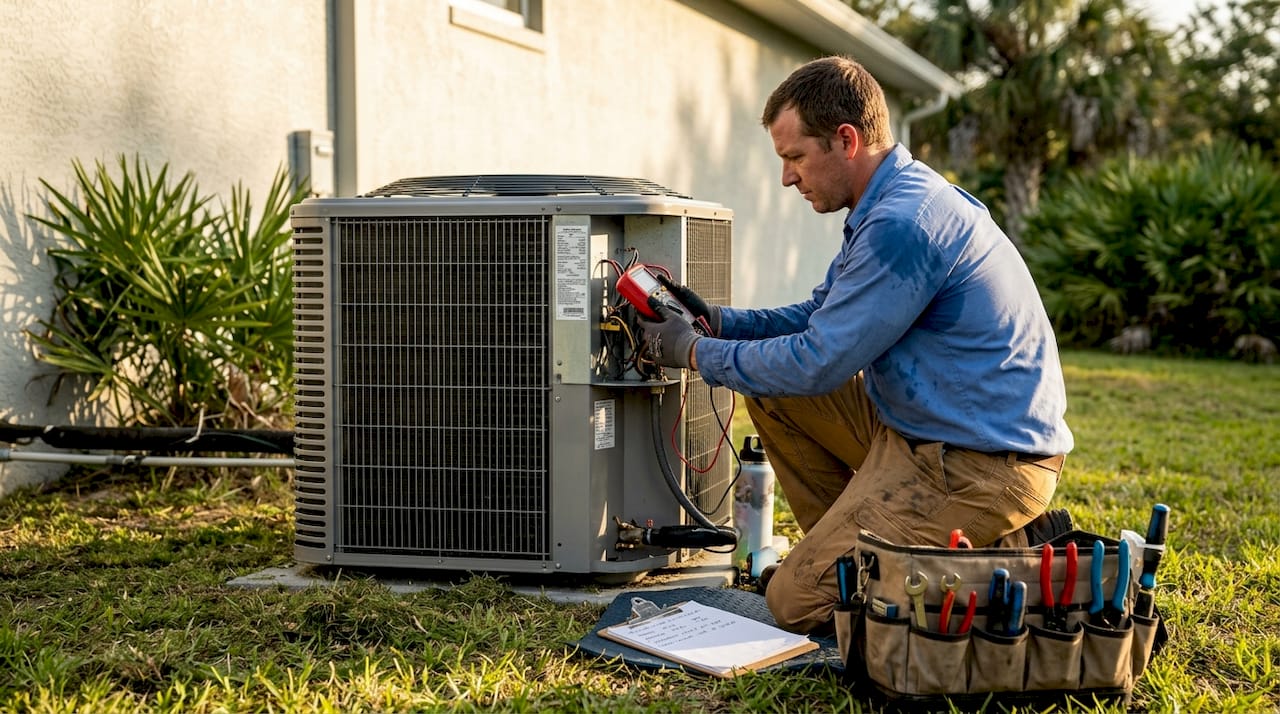
Variable-speed compressors adjust output continuously to match demand. On a mild morning, the system might run at 40 percent capacity. On a brutal July afternoon, it ramps up to full power. This constant modulation means the system runs longer cycles at lower intensity, which does two things really well: it keeps temperatures stable without the temperature swings of traditional on/off cycling, and it runs long enough to pull moisture out of the air, which is critical in Florida.
The efficiency gains are substantial. Variable-speed technology reduces energy use by up to 30 percent compared to traditional single-stage systems. ENERGY STAR requires heat pumps to hit a minimum SEER2 of 15.2 and HSPF2 of 8.1 to earn certification, a threshold that effectively requires variable-speed technology to achieve.
Here is a quick comparison of what you experience differently with variable-speed:
- Fewer temperature swings: The thermostat reads within one degree of your set point rather than swinging two to four degrees up or down
- Lower humidity: Longer run times mean consistent dehumidification, which is the real comfort factor in Florida summers
- Quieter operation: Lower-speed operation is noticeably quieter than a system blasting at full capacity
- Longer equipment life: Starting at full capacity stresses compressors. Variable-speed units start gradually, reducing wear significantly
For HVAC and home comfort, variable-speed technology is not a luxury upgrade anymore. It is quickly becoming the standard, especially in high-use climates like Central Florida. Understanding HVAC system types helps you see why variable-speed heat pumps now dominate new installations in the region.
Pro Tip: If you’re comparing quotes and one contractor only offers single-stage systems, ask specifically why. In Florida’s climate, a variable-speed system almost always delivers a better long-term return.
Advanced zoning and humidity control: Tailored comfort for every space
Zoning is one of those features that people appreciate most after they’ve lived with it for a summer. The concept is simple: instead of treating your entire home or building as one space, zoning divides it into independently controlled areas. A two-story home might have one zone for upstairs bedrooms and another for the main living areas. A commercial space might separate customer areas from back-office or kitchen zones.
“Prioritizing SEER2 16+ variable-speed heat pumps with zoning for humidity control delivers a 3 to 6 year payback through 20 to 40 percent bill reductions and available rebates, making it the smart choice for Central Florida properties.” University of Florida EDIS
For comfort and efficiency in Florida homes, zoning solves two real problems: uneven temperatures and wasted energy. If three of your five bedrooms sit empty during the day, why condition them to the same level as your main living space? Zoning lets you dial back those rooms and redirect capacity where it’s actually needed.
Humidity control deserves its own conversation. Florida averages relative humidity above 70 percent for much of the year. At those levels, a room that feels comfortable at 72 degrees with 45 percent humidity will feel stuffy and warm at the same temperature with 65 percent humidity. Modern systems with dedicated humidity control, sometimes called dehumidification mode, can run the air handler without cooling aggressively, just pulling moisture out of the air. This keeps your home comfortable at slightly higher thermostat settings, which means lower energy use.
Benefits of pairing zoning with humidity control:
- Targeted comfort without conditioning unused rooms
- Lower energy bills from reduced overall run time
- Improved indoor air quality by keeping humidity in the 40 to 55 percent range
- Reduced risk of mold growth, which is a serious concern in Florida’s climate
- Better guest and occupant satisfaction in commercial settings
Pro Tip: A whole-home dehumidifier can work alongside your HVAC system for maximum humidity control, especially in larger homes where the AC alone can’t maintain ideal moisture levels during mild weather.
Installation excellence: Why duct sealing and sizing make or break efficiency
You can buy the most efficient variable-speed system on the market and still end up with high bills and uneven comfort. The reason is almost always installation. This is not a minor point. It is arguably the most important factor in real-world performance.
Duct leaks can reduce efficiency by up to 30 percent. That means a 16 SEER2 system effectively performing like an 11 SEER system because conditioned air is escaping into your attic before it reaches your living space. Florida attics routinely hit 130 to 150 degrees Fahrenheit in summer. Any air leaking into that environment is completely wasted.
Here are the key installation steps that separate a quality job from a mediocre one:
- Manual J load calculation to size the equipment correctly
- Manual D duct design to ensure proper airflow to every room
- Duct sealing with mastic or UL-listed tape at all joints and connections
- Proper refrigerant charge verified by measurement, not guesswork
- Airflow testing after installation to confirm design targets are met
- Thermostat calibration and system commissioning before sign-off
The table below shows how installation quality affects real-world system performance:
| Installation factor | Poor quality result | Professional result |
|---|---|---|
| Duct sealing | Up to 30% efficiency loss | Near-zero leakage |
| Equipment sizing | Short cycling or constant running | Proper runtime and dehumidification |
| Refrigerant charge | Reduced capacity, compressor wear | Full rated efficiency |
| Airflow balance | Hot/cold spots throughout home | Even temperatures in all zones |
A thorough HVAC installation guide helps you understand exactly what to expect from a quality contractor. Getting a professional HVAC inspection before or after installation can confirm that everything is performing as it should.
Comparing modern HVAC features: Which upgrades deliver the best ROI?
With all the features on the table, let’s talk about where your money actually goes and what comes back to you.
Federal and state incentives significantly change the math on HVAC upgrades. The federal 25C tax credit allows homeowners to claim up to $2,000 for qualifying heat pump installations. Florida utilities including FPL and Duke Energy offer additional rebates for high-SEER2 systems, which can range from $100 to $500 depending on the equipment and program. Checking available HVAC incentives before you buy can meaningfully reduce your out-of-pocket cost.
Here is how the main upgrade features stack up in terms of return on investment:
| Feature | Energy savings | Comfort impact | Typical payback |
|---|---|---|---|
| SEER2 16+ variable-speed | 20 to 40% vs. old system | Very high | 3 to 6 years |
| Zoning system | 15 to 25% in multi-zone homes | High | 4 to 7 years |
| Humidity control | 5 to 15% via setpoint adjustment | Very high in Florida | 3 to 5 years |
| Professional installation | Up to 30% prevented loss | High (consistent comfort) | Immediate |
Key takeaways on ROI for Florida properties:
- Upgrading from a pre-2010 system typically pays back within 4 years from energy savings alone
- Adding zoning to a new install is far cheaper than retrofitting it later
- Federal tax credits apply in the year of installation, improving cash flow immediately
- Utility rebates stack with federal credits and do not affect your tax liability
Our take: Most buyers underestimate the hidden value of installation and zoning
Here is something we see regularly at Lucas Air that most articles won’t tell you plainly: buyers obsess over SEER ratings while barely asking a single question about installation quality or duct condition. It’s understandable. SEER2 is a number you can compare easily. Installation quality requires trust and knowledge, and most homeowners don’t know what questions to ask.
But the uncomfortable truth is that a 16 SEER2 system in leaky ducts will cost you more to run than a 14 SEER2 system installed properly in tight, well-designed ductwork. The rating on the equipment label assumes ideal conditions. Your attic is not ideal conditions.
Zoning gets similarly overlooked. Most buyers treat it as a luxury because it adds to the upfront cost. But in Florida, where you are paying to condition space year-round, not just for a few summer months, the math on zoning shifts dramatically. A household that spends $250 a month on cooling can realistically drop that by $40 to $60 with a well-designed two-zone system. Over five years, that is $2,400 to $3,600 back in your pocket.
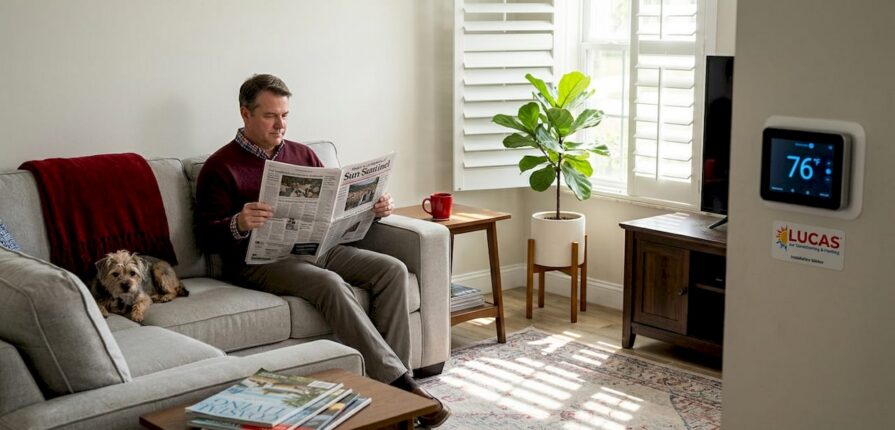
The other thing worth saying directly: humidity matters more than temperature in Florida. People often tell us they keep their thermostat at 74 but the house still feels hot. Almost every time, it’s a humidity problem, not a temperature problem. A system that manages humidity well will make you more comfortable at 76 degrees than a cheaper system pushing you to set the thermostat at 72, which is exactly where your energy bills start climbing.
Working with a knowledgeable installer who runs actual calculations, verifies duct condition, and commissions the system correctly is the single highest-value decision you can make. That expertise is what actually translates specs on paper into upgrading for comfort and savings in real life.
Upgrade your comfort: Professional HVAC solutions in Central Florida
If this article gave you a clearer picture of what to look for, the next step is working with a team that puts all of it into practice. Lucas Air Conditioning and Heating has served Central Florida homeowners and businesses since 2018, bringing veteran-grade discipline to every installation, tune-up, and repair.
Whether you need a fully new system or want to evaluate what your current setup can do, Lucas Air handles every step, from load calculations to duct sealing to system commissioning. As a trusted HVAC contractor in The Villages area, the team knows exactly how Central Florida’s climate demands performance from every component. Explore what step-by-step HVAC installation looks like when it’s done right, or request a quote for residential and commercial HVAC installation today.
Frequently asked questions
What is SEER2 and why does it matter for Florida HVAC systems?
SEER2 is the updated federal efficiency rating for air conditioners and heat pumps; Florida requires a minimum SEER2 of 14.3 for split systems, though 16+ is recommended to capture 20 to 40 percent savings on cooling costs.
How does variable-speed technology improve comfort and efficiency?
Variable-speed compressors run at lower speeds for longer cycles, delivering precise temperature control and consistent dehumidification while cutting energy use by up to 30 percent compared to single-stage systems.
What rebates and incentives are available for upgrading HVAC systems in Florida?
The federal 25C tax credit covers up to $2,000 for qualifying heat pump installations, and Florida utilities like FPL and Duke Energy offer additional rebates for high-SEER2 equipment.
How important is professional installation for energy efficiency?
Proper installation and duct sealing can prevent up to 30 percent efficiency loss from leaky ductwork, while correct load calculations ensure the system is sized to perform at its rated efficiency.
What’s the typical payback period for upgrading to modern HVAC features?
Most Central Florida homeowners see a 3 to 6 year payback when upgrading to variable-speed systems with zoning, driven by 20 to 40 percent bill reductions and available federal and utility incentives.
