
Florida’s relentless humidity and blazing summers can make indoor comfort a daily challenge. For Central Florida homeowners, finding an HVAC system that truly handles heat, moisture, and air quality is more than just a luxury—it directly affects your health, energy bills, and peace of mind. A properly designed HVAC system delivers good indoor air quality through adequate ventilation and filtration while keeping your home comfortable year-round. This guide explains how the right upgrades and regular maintenance keep every room fresh and your family breathing easier.
Table of Contents
- What HVAC Systems Do for Indoor Comfort
- Types and Features of Residential and Commercial HVAC
- How Heating, Ventilation, and Air Conditioning Work Together
- Energy Efficiency and Cost Impacts in Florida
- Maintenance Needs and Common Mistakes to Avoid
Key Takeaways
| Point | Details |
|---|---|
| HVAC System Functions | HVAC systems manage temperature, humidity, and air quality simultaneously to enhance indoor comfort and health. Regular maintenance is vital for optimal performance and efficiency. |
| Importance of Humidity Control | In humid climates like Florida, managing moisture is crucial to prevent discomfort and costly damage to the home. Excess humidity can lead to mold and mildew growth. |
| Energy Efficiency Matters | Upgrading to energy-efficient HVAC systems can significantly reduce utility bills and provide better comfort. Rebates and incentives often make these upgrades more affordable. |
| Regular Maintenance is Essential | Homeowners should prioritize regular maintenance tasks like filter replacements and annual tune-ups to prolong the lifespan of their HVAC systems and avoid costly repairs. |
What HVAC Systems Do for Indoor Comfort
Your HVAC system does far more than just cool your home when Florida’s heat becomes unbearable. Modern HVAC systems work as a complete climate control solution, managing temperature, humidity, and air quality simultaneously to create an environment where you and your family actually want to spend time. When functioning properly, these systems maintain good indoor air quality through adequate ventilation and filtration, ensuring you’re breathing clean air while enjoying consistent comfort year-round. Think of it like this: your system isn’t just pushing cold air around. It’s carefully regulating moisture levels so your home doesn’t feel sticky, filtering out dust and allergens that trigger respiratory issues, and maintaining steady temperatures in every room so you’re not shivering in one area and sweating in another.
Central Florida’s humidity is the real challenge. Unlike dry climates, our air-conditioned homes need systems that specifically handle moisture removal. A properly functioning HVAC system removes excess humidity before it creates that clammy feeling and, worse, the mold and mildew that thrive in damp environments. This is where many homeowners make mistakes. They think their system is working fine because it’s cooling the air, but humidity levels are still too high. The connection matters because excess moisture doesn’t just feel uncomfortable. It damages drywall, creates respiratory problems, and makes your home feel hotter than the thermostat actually reads. Energy-efficient options like heat pump systems transfer heat rather than generate it, providing comfortable temperatures while using significantly less electricity and delivering superior dehumidification compared to traditional units. For Florida homes specifically, this means lower utility bills during our intense cooling season without sacrificing comfort.
Beyond temperature and humidity control, your HVAC system contributes to overall health and productivity. Poor indoor air quality affects concentration, causes headaches, and worsens allergies. When your system includes proper filtration and ventilation, you notice the difference. Family members stop complaining about stuffy air. Allergy symptoms improve. The home simply feels fresher and more inviting. This is why seasonal HVAC maintenance becomes critical. A well-maintained system operates at peak efficiency while delivering consistent comfort. A neglected one works harder to achieve the same results, driving up your energy costs and reducing its lifespan. The goal isn’t just reaching a temperature target. It’s creating a living space where your family is comfortable, healthy, and not stressed about energy bills.
Pro tip: _Have your HVAC system’s humidity levels checked during your next tune-up. Your system should maintain indoor humidity between 30-50 percent. If levels are consistently higher, your system may need recalibration or duct cleaning to function at full efficiency.
Types and Features of Residential and Commercial HVAC
Residential and commercial HVAC systems operate on fundamentally different scales and complexities, though both solve the same core problem: keeping spaces comfortable. Your residential system in a Central Florida home typically consists of a furnace or heat pump paired with a central air conditioning unit, ductwork running through your walls and attic, and a thermostat controlling everything. These systems are designed for simplicity and affordability. You flip a switch, set a temperature, and the system handles it. Commercial systems are a different beast entirely. They’re engineered for large office buildings, retail spaces, warehouses, and industrial facilities where dozens or hundreds of people occupy the space simultaneously. Commercial HVAC systems often include rooftop units, chillers, large boilers, and advanced control systems that manage complex loads, multiple zones, and integration with building automation software. Think about it this way: your home’s HVAC adjusts for one family’s comfort preferences. A commercial system balances comfort across an entire building while managing energy costs, occupancy patterns, and equipment that’s running around the clock.
Within residential options, you have choices that impact both comfort and efficiency. Central air conditioning and furnaces remain the standard, moving conditioned air through ductwork to every room. Ductless mini-split systems offer flexibility, letting you condition specific rooms without extensive ductwork. Heat pumps provide year-round comfort by moving heat rather than generating it, making them increasingly popular in Florida’s mild winters. HVAC equipment includes heating, cooling, air distribution, ventilation, and control components that work together as an integrated system. Commercial systems scale these concepts dramatically. Variable refrigerant flow (VRF) systems allow individual control of multiple indoor units from a single outdoor condenser. Rooftop packaged units combine heating and cooling in one self-contained box sitting on the building’s roof. Building automation systems monitor and adjust temperature, humidity, and ventilation in real-time across hundreds of zones. These aren’t luxury features. They’re necessary for managing energy costs in large buildings and ensuring consistent comfort across varying occupancy levels.
The real distinction goes beyond equipment types. Residential HVAC is designed around simplicity and personal control. You own the system, maintain it yourself or hire someone for basic service, and your decisions directly affect your comfort and bills. Commercial HVAC demands coordination between building managers, maintenance teams, vendors, and sometimes energy management consultants. Downtime costs money. An air conditioning failure in a 20-story office building during summer isn’t just uncomfortable. It’s a business disruption. Commercial systems include redundancy, multiple control layers, and preventative maintenance protocols that residential homeowners rarely consider. When upgrading commercial HVAC systems, business owners evaluate efficiency gains, capacity requirements, and long-term operational costs across the entire building’s lifecycle. For residential homeowners, the calculation is simpler but no less important. Your system’s efficiency directly impacts your monthly utility bills and your family’s day-to-day comfort.
Here’s a summary comparing residential and commercial HVAC systems:
| Aspect | Residential HVAC | Commercial HVAC |
|---|---|---|
| Typical Components | Furnace, A/C, thermostat | Rooftop unit, chiller, controls |
| Scale | One home, small spaces | Large buildings, multiple zones |
| Control Complexity | Simple, single thermostat | Advanced, automated software |
| Maintenance Approach | Owner or small service | Team-based, scheduled protocols |
Pro tip: If you own a commercial property or manage a significant residential development, request a comprehensive system audit that evaluates your current equipment against your actual usage patterns and climate control needs, then prioritize upgrades based on the equipment reaching end of life rather than upgrading everything simultaneously.
How Heating, Ventilation, and Air Conditioning Work Together
Your HVAC system isn’t three separate functions fighting each other. It’s one coordinated system where heating, ventilation, and air conditioning work as an integrated team to maintain your home’s comfort and air quality. Understanding how these three components interact reveals why a single failure can compromise your entire system’s performance. Heating compensates for temperature losses during Florida’s cooler months, especially overnight when heat naturally escapes through your walls, windows, and roof. Ventilation continuously exchanges stale indoor air with fresh outdoor air, removing odors, carbon dioxide, and indoor pollutants that accumulate when your home is sealed tight. Air conditioning removes heat and moisture from indoor air, cooling your space while simultaneously dehumidifying it. When these three work together harmoniously, you get consistent comfort year-round. When one component fails or operates inefficiently, the others can’t compensate, and your entire system suffers.
The integration happens through your system’s ductwork, controls, and air handler. Think of it like this: your air handler is the central hub that moves conditioned air throughout your home. During cooling season, your air conditioning unit cools refrigerant, which passes through an evaporator coil. Warm air from your home passes over this cold coil, gets cooled, and has moisture removed before the air handler pushes it through ducts to every room. Simultaneously, your ventilation system introduces fresh outdoor air into this circulation, diluting indoor pollutants. Your thermostat acts as the orchestrator, monitoring temperature and humidity levels, then signaling components to activate or deactivate. HVAC systems work as integrated units to control temperature, humidity, and indoor air quality through coordinated heating, ventilation, and air conditioning functions that maintain thermal comfort while balancing energy consumption. In winter, this same system reverses roles. Your heating component warms air instead of cooling it, ventilation still introduces fresh air, and air conditioning cycles on periodically to manage humidity. The beauty of integration is that each component supports the others. Proper ventilation reduces strain on cooling by bringing in cooler outdoor air at night. Efficient heating means your AC doesn’t work overtime compensating for heat loss. A well-maintained air handler ensures balanced airflow so ventilation reaches every corner of your home.
One critical aspect many homeowners miss is that these components only work together if they’re properly sized and installed. An oversized air conditioning unit cools your home so quickly that your heating and ventilation components never get a chance to balance humidity and air quality effectively. An undersized system runs constantly, cycling on and off inefficiently while struggling to maintain comfort. Poor ductwork design means ventilation air doesn’t circulate evenly, creating dead zones where air quality suffers. Proper ventilation replaces indoor air with outdoor air to reduce pollutants while heating compensates for heat losses and cooling removes heat gains and moisture, but this balance requires expert design and installation. This is why scheduling regular AC tune-ups matters so much. During a tune-up, technicians verify that all three components are operating at peak efficiency, airflow is balanced, and controls are responding correctly. A simple recalibration of your thermostat or cleaning clogged filters can restore the harmony between heating, ventilation, and cooling that your system depends on.
Pro tip: Set your thermostat’s fan to “auto” rather than “on” to allow your ventilation system to operate as designed, pulling fresh air and cycling stale air out only when your heating or cooling is actively running, which reduces energy waste while maintaining consistent air quality.
Energy Efficiency and Cost Impacts in Florida
Florida’s cooling season dominates your annual energy costs. Unlike northern states where heating and cooling demands balance throughout the year, Central Florida homeowners run their air conditioning almost constantly from May through September, with extended cooling needs stretching into spring and fall. This creates a unique challenge: even small inefficiencies in your HVAC system compound into significant expenses over time. Research from the Florida Solar Energy Center reveals that residential air conditioners degrade in performance by an average of 5% per year, meaning a system running at full capacity this year will cost you noticeably more to operate next year if left unmaintained. That 5% annual decline isn’t just a number on a chart. It translates directly into higher monthly utility bills, reduced comfort, and accelerated wear on your equipment. A system that costs $150 monthly to cool your home this summer could cost $158 next summer simply due to natural degradation. Over a decade, that compounds into thousands of dollars in unnecessary expenses.
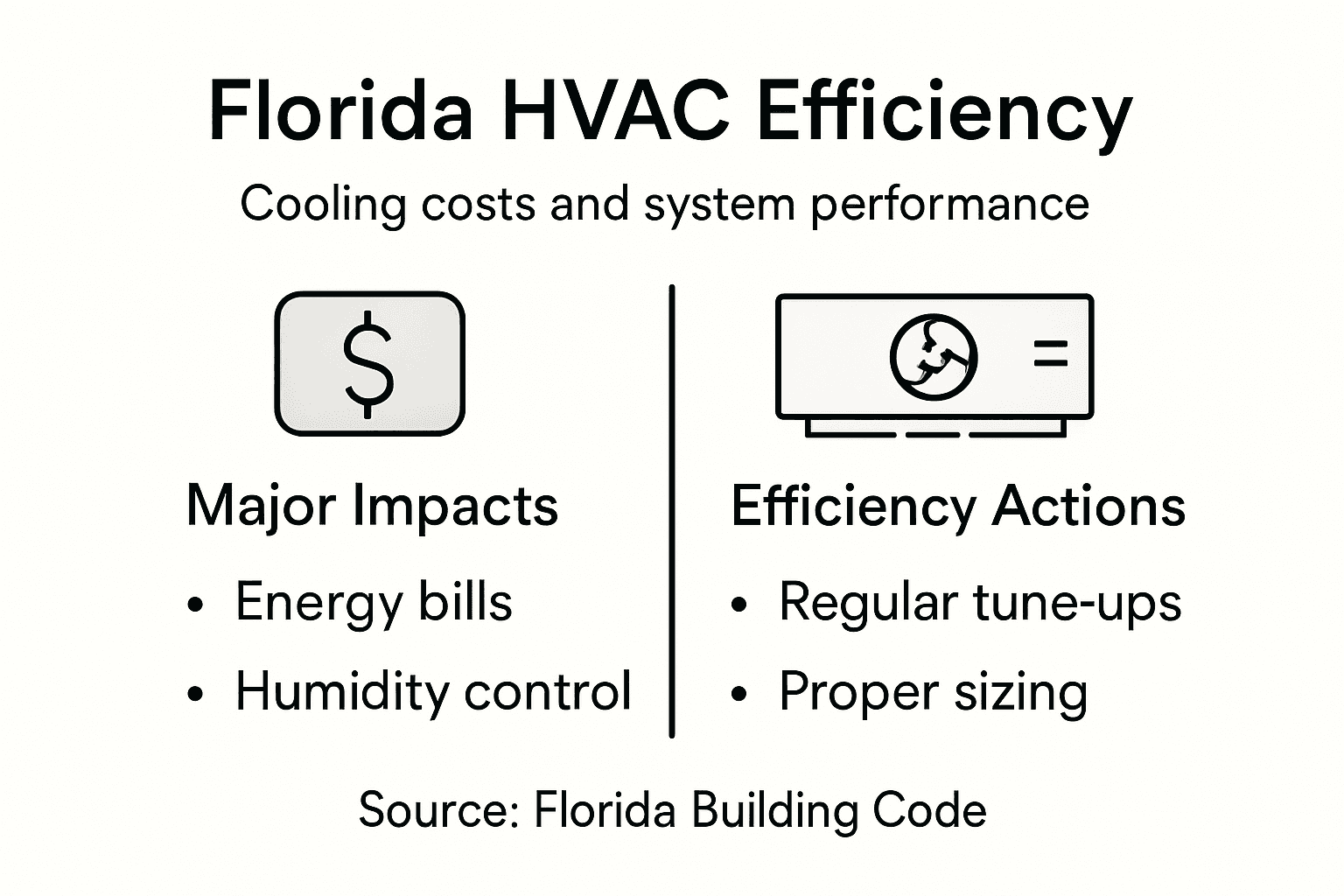
The cost impact extends beyond monthly utility bills. HVAC equipment performance degradation increases cooling costs significantly, making replacement or proper maintenance essential for energy savings. When your system loses efficiency, it doesn’t just cost more to run. It also triggers more frequent repair calls, shortens the equipment’s lifespan, and forces earlier replacement than properly maintained systems require. A well-maintained air conditioner can operate reliably for 15 to 20 years. A neglected one might fail after 10 years, forcing an unexpected replacement expense when you’re least prepared. Florida utilities recognize this problem so acutely that they actively support HVAC replacement programs, offering rebates and incentives to help homeowners upgrade to efficient equipment. Why? Because reducing peak cooling demand during summer protects the entire electrical grid from strain. When thousands of homeowners simultaneously run inefficient, struggling systems during extreme heat, it strains grid capacity. Modern, efficient systems operate smoothly without creating those demand spikes.
FloridaBuilding Code updates require that new HVAC installations meet enhanced efficiency standards aligned with current industry benchmarks. Enhanced HVAC equipment efficiency requirements and improved ventilation controls reduce energy consumption and operational costs in Florida homes. For existing homes, this means older systems installed five or more years ago operate below current efficiency standards. Upgrading to a high-efficiency HVAC system often qualifies you for utility rebates that offset 20 to 40 percent of installation costs, making the upgrade more affordable than you might expect. Beyond rebates, the monthly savings quickly add up. Many homeowners see 15 to 25 percent reductions in cooling costs after upgrading, which translates into savings of $30 to $75 monthly depending on your home’s size and current system efficiency. Calculate that over five years, and you’re looking at $1,800 to $4,500 in direct savings, often exceeding the upgrade cost within the equipment’s first decade of operation.
Pro tip: Request a free energy audit from your HVAC provider before investing in a new system; this assessment reveals exactly where your current system is losing efficiency and helps calculate your specific payback timeline for an upgrade based on your usage patterns and local utility rates.
Maintenance Needs and Common Mistakes to Avoid
Your HVAC system is like a vehicle. You wouldn’t drive 50,000 miles without an oil change, yet countless homeowners run their systems year after year without basic maintenance. The result is predictable: declining performance, higher energy costs, and premature failure. Regular filter replacement is the simplest maintenance task, yet it’s neglected more often than you’d think. A clogged filter forces your system to work harder, reducing airflow and efficiency while straining your equipment. Replace your filter every 30 to 90 days depending on your home’s dust levels and whether you have pets. Refrigerant charge checks ensure your system has the correct amount of coolant. Low refrigerant doesn’t just reduce cooling capacity. It causes your compressor to work harder and hotter, accelerating wear and potentially triggering catastrophic failure. Coil cleaning removes dirt and debris that accumulate on your evaporator and condenser coils, restoring heat transfer efficiency. Electrical connection inspections catch loose wires and corrosion before they cause system failures. These aren’t optional tasks. Compliance with Florida HVAC codes requires regular filter replacement, refrigerant checks, coil cleaning, and electrical inspections to maintain system efficiency and safety. Skipping these steps violates code requirements and voids your equipment warranty.
Common mistakes compound maintenance neglect into serious problems. Many homeowners wait until their system fails completely before calling for service. By then, damage is done and repair costs skyrocket. Others ignore warning signs like unusual noises, reduced airflow, or longer run times, assuming the system will eventually normalize on its own. It won’t. Early detection prevents small issues from becoming expensive repairs. Another frequent mistake is improper system sizing during replacement. A system that’s too large cycles on and off constantly, wasting energy and failing to dehumidify properly. An undersized system runs continuously without ever reaching your target temperature. Only qualified technicians can properly calculate your home’s cooling and heating load based on square footage, insulation, window area, and local climate conditions. Homeowners who choose contractors based solely on price often end up with incorrectly sized systems that cost more to operate than properly sized equipment. Predictive maintenance and control system calibration prevent performance degradation and ensure reliable operation, yet many homeowners skip these professional evaluations entirely.
Seasonal maintenance is your system’s insurance policy. Before summer, have your air conditioning serviced to ensure it’s operating at peak efficiency before you need it most. Before winter, check your heating system. This isn’t just about comfort. It’s about safety and cost control. A poorly functioning heating system uses significantly more energy to reach your target temperature. A failing air conditioner on the hottest day of summer doesn’t just leave you uncomfortable. It creates dangerous conditions, especially for elderly family members or those with respiratory issues. Professional technicians know what to look for. They can identify refrigerant leaks, worn bearings, capacitor degradation, and control system issues that homeowners would never notice. They also understand Florida’s specific challenges. Our humidity and salt air accelerate corrosion. Our intense cooling season creates wear patterns different from northern climates. A technician familiar with Central Florida conditions knows exactly how to maintain your system for optimal performance in our environment.
This table highlights key HVAC maintenance tasks and their impact:
| Maintenance Task | Purpose | Result of Neglect |
|---|---|---|
| Filter Replacement | Maintains airflow and quality | Higher costs, poor air |
| Refrigerant Check | Ensures cooling efficiency | Overworked compressor |
| Coil Cleaning | Improves heat transfer | Reduced system efficiency |
| Electrical Inspection | Prevents failures and hazards | Unexpected breakdowns |
Pro tip: Mark your calendar for seasonal maintenance appointments before peak demand hits. Schedule your air conditioning service in April and your heating check in October, giving you plenty of time before emergencies strike and technicians are booked solid.
Enhance Your Florida Home’s Comfort and Efficiency with Expert HVAC Solutions
Florida homeowners know that managing temperature, humidity, and indoor air quality is not just about cooling your home. The real challenge lies in balancing these factors to prevent discomfort, reduce energy costs, and avoid issues like mold and poor air quality described in the article. If you are concerned about maintaining ideal humidity levels, improving ventilation, or upgrading to energy-efficient systems like heat pumps, Lucas Air Conditioning and Heating has the local expertise you need.
Explore our Ventilation Archives to learn more about smart airflow solutions and preventative maintenance strategies that keep your system running smoothly. Take advantage of our current Special Offers designed to make upgrading or maintaining your HVAC system affordable and hassle-free.
Don’t wait for discomfort or high energy bills to force your hand. Visit Lucas Air Conditioning and Heating today to schedule a consultation or tune-up. Our veteran-owned company offers reliable service dedicated to your family’s comfort and health in Central Florida. Act now to experience consistent year-round comfort while saving on energy costs and protecting your home investment.
Frequently Asked Questions
What are the main functions of an HVAC system?
An HVAC system regulates temperature, humidity, and air quality in your home to ensure a comfortable living environment. It manages heating, ventilation, and cooling to create consistent indoor comfort.
How does humidity impact HVAC efficiency in my home?
Excess humidity can make your home feel uncomfortable and can lead to mold and mildew growth. A well-functioning HVAC system removes excess moisture, enhancing comfort and preventing damage to your home.
How can I improve the energy efficiency of my HVAC system?
Regular maintenance, including filter replacements and coil cleaning, is essential for keeping your HVAC system efficient. Additionally, upgrading to energy-efficient systems and ensuring proper system sizing during installation can also help reduce energy costs.
Why is regular HVAC maintenance important?
Regular maintenance helps ensure that your HVAC system operates at peak efficiency, prolongs its lifespan, and reduces repair costs. Neglecting maintenance can lead to decreased performance, higher energy bills, and unexpected system failures.
