
TL;DR:
- Scheduling professional pool heater service in Florida ensures warranty compliance, safety, and long-term performance.
- Homeowners should gather detailed heater information and hire licensed, insured contractors familiar with local regulations and their specific heater type.
- Working with qualified technicians prevents costly callbacks, code violations, and insurance issues while maintaining optimal pool comfort.
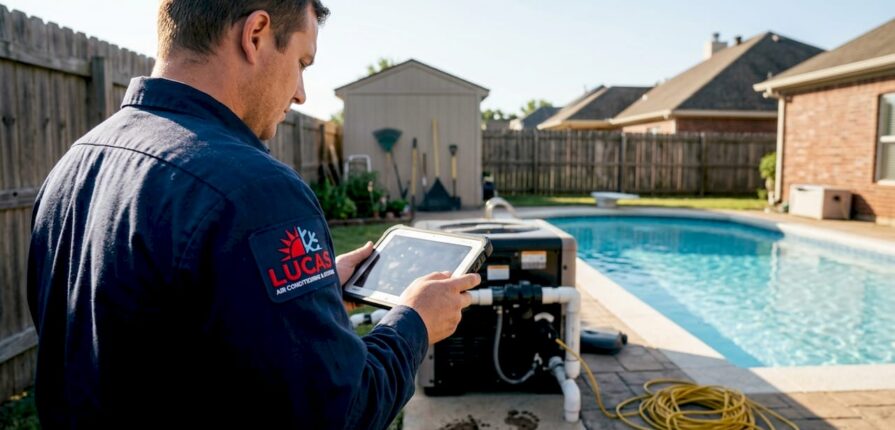
Nothing kills the mood faster than stepping into a pool that’s 10 degrees colder than it should be. If your pool heater has been acting up, producing inconsistent temperatures, flashing error codes, or simply refusing to kick on, you already know how frustrating it is to troubleshoot without knowing where to start. Scheduling professional pool heater service doesn’t have to be complicated, but doing it right the first time protects your equipment warranty, keeps you compliant with Florida regulations, and saves you from a far more expensive repair down the road.
Table of Contents
- What you need before scheduling service
- How to choose the right pool heater service professional
- Step-by-step: Scheduling your pool heater service
- What to expect during and after service
- The truth about scheduling pool heater service in Central Florida
- Trust a licensed team for stress-free pool heater service
- Frequently asked questions
Key Takeaways
| Point | Details |
|---|---|
| Licensed service required | Hiring licensed professionals keeps your pool heater warranty and insurance intact. |
| Prepare essential info | Gather heater details and documents before scheduling for a faster experience. |
| Average cost awareness | Expect to pay $100–$250 per service call, with repairs taking up to five hours. |
| Central Florida regulations | Permits or HOA approval may be required for certain repairs or installations. |
What you need before scheduling service
After understanding why service matters, let’s look at what you’ll need before you even make the call.
The type of heater you own determines a lot about who should work on it and what the service will involve. Central Florida homeowners typically have one of three options: a gas heater, a heat pump, or a solar system. Gas heaters heat water quickly but require a licensed contractor for fuel line work. Heat pumps are energy-efficient in Florida’s mild winters but involve refrigerant, which falls under EPA 608 regulations. Solar systems are the most weather-dependent of the three and need a technician familiar with collector panels and circulation pumps.
Before picking up the phone, gather the following items:
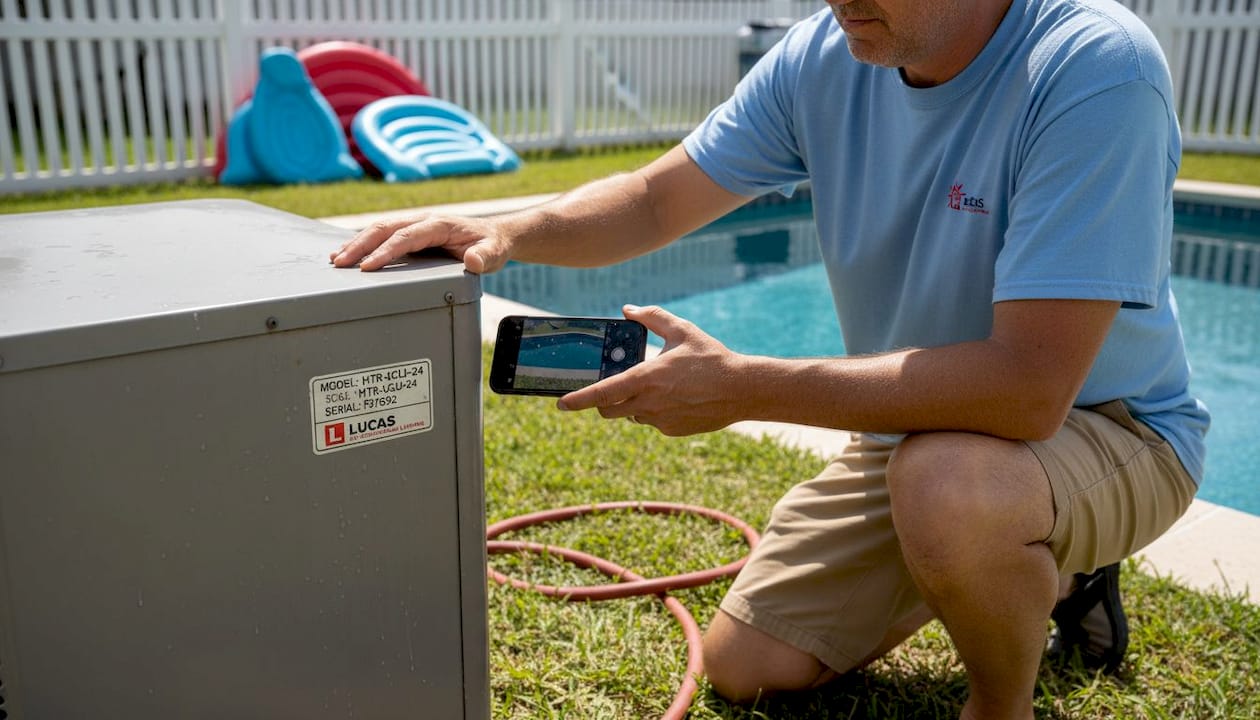
- Heater brand, model number, and serial number (usually on a label near the front panel)
- Purchase receipts and current warranty documentation
- Records from any prior service visits
- A list of symptoms, including error codes displayed, sounds, or temperature inconsistencies
- HOA or CDD (Community Development District) community guidelines, if applicable
- Your county permit requirements for pool equipment work
Many homeowners skip the symptom list and then struggle to describe the problem during the service call. Writing it down saves time and helps the technician arrive with the right tools and parts.
Here’s a general cost and time reference to set your budget expectations:
| Service type | Estimated cost | Typical time on-site |
|---|---|---|
| Diagnostic service call | $100 to $250 | 1 to 2 hours |
| Component repair | $250 to $600+ | 2 to 5 hours |
| Full replacement | $1,500 to $4,000+ | 4 to 8 hours |
| Annual maintenance tune-up | $100 to $200 | 1 to 2 hours |
As noted in industry guidance, service call costs typically run $100 to $250, with repairs taking 2 to 5 hours on-site. Licensed pros are required for gas and refrigerant work to comply with DBPR and EPA 608 regulations, and skipping this step can void your warranty or insurance coverage.
When you work with licensed pool heater repair technicians, you’re not just paying for the fix. You’re paying for compliance, documentation, and the kind of accountability that protects you legally and financially.
Pro Tip: Build a simple checklist in your phone’s notes app with your heater’s make, model, and last service date. When you’re ready to call, you’ll have everything at your fingertips without digging through a drawer of old paperwork.
Comparing leading repair services in your area before the issue becomes an emergency also gives you more leverage when it comes to scheduling and pricing. Don’t wait until you have a party planned to discover your heater is down.
How to choose the right pool heater service professional
Once you’re prepared with the right details, it’s critical to choose the best professional for the job.
Florida’s pool equipment service industry is regulated by the Department of Business and Professional Regulation (DBPR). Any contractor performing gas or refrigerant work must hold a valid DBPR CPC (Certified Pool Contractor) license or the appropriate specialty license. This isn’t a suggestion. It’s the law, and it matters to your insurance company too.
“Using unlicensed pros can void your heater warranty and home insurance.”
Here’s what to look for when vetting a pool heater service provider:
- Valid Florida DBPR CPC license (searchable on the DBPR website)
- Proof of general liability insurance and worker’s compensation
- Manufacturer warranty authorization, especially for newer heaters still under coverage
- Verifiable online reviews from local customers in your area
- Clear experience with your specific heater type (gas, heat pump, or solar)
- Willingness to discuss permit requirements upfront, especially for full replacements
According to local compliance guidelines, licensed contractors are essential for all pool heater installations and replacements. Permits must be pulled through the county’s Authority Having Jurisdiction (AHJ), and communities like Lake Nona and Oviedo often add an extra layer with HOA or CDD approval requirements before any work can legally begin.
Here’s a quick side-by-side comparison to help you evaluate contractors:
| Factor | Qualified contractor | Red flags |
|---|---|---|
| Licensing | DBPR CPC license verified | “Doesn’t need a license for this job” |
| Insurance | Provides certificate on request | Refuses to share proof |
| Permit handling | Pulls permits and manages AHJ process | Says permits “aren’t necessary” |
| References | Provides local, verifiable reviews | Only offers generic testimonials |
| Warranty compliance | Knows your heater brand requirements | Unfamiliar with your heater type |
You can explore professional pool heater repair providers who check all these boxes in Central Florida. If a contractor dismisses your questions about licensing or permits, that’s your cue to move on. The best technicians welcome the questions because they know their credentials back them up.
Don’t overlook pool heater service options that include preventative maintenance contracts either. A one-time repair is fine, but a service agreement means someone catches problems before they become emergencies.
Step-by-step: Scheduling your pool heater service
With the right professional selected, it’s time to actually get your appointment on the calendar.
Follow these steps to make the scheduling process smooth and reduce the chance of a wasted visit:
- Contact at least 2 to 3 local providers. Get quotes and availability from multiple companies. This not only gives you a price comparison but also tells you how responsive each company is before you’ve even hired them.
- Describe your heater problem clearly. Share the brand, model, symptoms, error codes, and any recent changes (like new pool chemicals or added equipment). The more detail you provide, the more accurately a technician can diagnose remotely or arrive prepared.
- Confirm their license and insurance. Ask directly for their DBPR license number and a copy of their current insurance certificate. Reputable companies provide this without hesitation.
- Verify their experience with your heater type. A technician who primarily works on gas heaters may not be the best choice for a heat pump repair, and vice versa.
- Schedule a time that works for access. Pool equipment is often behind locked gates or inside utility rooms. Give the technician full details about access and make sure someone is available to let them in.
- Prepare the area before the visit. Clear any clutter around the equipment pad, unlock any access panels, and have your documentation ready. The technician should be able to start work immediately upon arrival.
- Confirm the appointment 24 hours ahead. A quick confirmation call or text ensures no miscommunication and gives you a chance to ask any last-minute questions.
The service call pricing range of $100 to $250 covers the diagnostic portion of the visit. Knowing this in advance helps you budget appropriately and avoid sticker shock when the technician arrives.
Pro Tip: Use your phone camera to photograph the model number label, any visible error codes on the display, and the overall equipment setup. Text these photos to the service provider before your appointment so they can research parts in advance and potentially resolve the issue in a single visit.
For homeowners who haven’t had recent work done, reading up on preparing for a tune-up is a great way to understand what the technician will check and how to get the most from that first visit.
What to expect during and after service
Once you’ve booked and prepared, here’s what happens when the technician arrives and what you can look for afterward.
Most pool heater service visits follow a predictable pattern. The technician starts with a visual inspection, then moves into operational testing, and finishes with any needed repairs or recommendations. The full visit can take anywhere from two to five hours depending on the complexity of the issue.
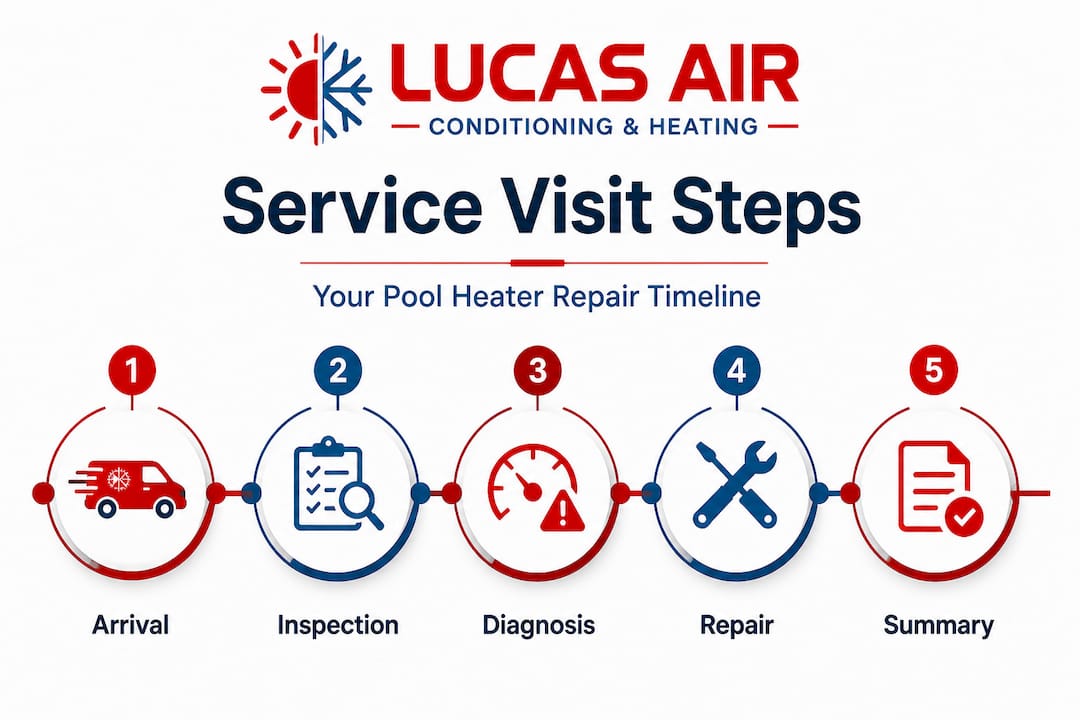
Here’s what’s typically included in a professional service call:
| Service task | Purpose |
|---|---|
| Operational test and temperature check | Verifies baseline heater performance |
| Burner or heat exchanger inspection | Identifies corrosion, clogs, or damage |
| Thermostat and control board check | Diagnoses electrical and sensor issues |
| Refrigerant level test (heat pumps) | Ensures EPA-compliant refrigerant levels |
| Filter and flow rate verification | Confirms adequate water flow to the heater |
| Safety valve and pressure test | Validates safe operating conditions |
After the service visit, watch for these positive signs that the repair was successful:
- Water reaches the set temperature consistently within the expected time frame
- No error codes appear on the control panel
- The heater cycles on and off normally without overheating
- Your energy bills don’t spike unexpectedly
- You hear steady, normal operating sounds without banging or hissing
Understanding your heater type also matters for what to expect long-term. Florida’s climate makes all three heater types viable, but each has trade-offs. As one resource on heater selection in Florida explains, gas heaters heat water quickly but carry higher fuel costs, while heat pumps are efficient above 50 degrees Fahrenheit but struggle in colder snaps. Solar heaters work well for 8 to 10 months a year in Florida’s sunny climate, making them a strong long-term investment.
Most pool heater problems can be resolved in a single visit when the appointment is scheduled correctly and the technician arrives with proper preparation. The key is giving your service provider enough advance information to come ready.
To maximize comfort and efficiency after your repair, ask the technician for a written summary of what was done and any recommendations for future maintenance. If the heater is older or the repairs are becoming more frequent, it may be time to consider upgrading your pool heater to a more efficient model.
The truth about scheduling pool heater service in Central Florida
With realistic expectations set, it’s worth considering why each step in this process matters more than most homeowners realize.
Here at Lucas Air, we’ve seen what happens when homeowners try to cut corners. Someone finds a handyman who “knows pool equipment,” pays a lower upfront price, and then discovers six months later that the work voided their manufacturer warranty or failed a county inspection. The follow-up repairs often cost two or three times what a licensed contractor would have charged originally. That’s not speculation. It’s a pattern we see repeatedly across Lake County and Orange County.
Central Florida’s regulatory environment is genuinely strict compared to other states. The DBPR actively enforces licensing requirements, and county AHJs in Seminole, Orange, and Lake counties do inspect pool equipment work. HOA/CDD requirements in Lake Nona and Oviedo add another approval layer that unlicensed workers typically aren’t even aware of, let alone equipped to navigate.
What surprises many homeowners is that even “simple” service calls can trigger permit requirements if they involve gas line adjustments, refrigerant work, or electrical modifications. A licensed contractor knows where that line is. An unlicensed one doesn’t, and you’re the one who faces code violations or insurance claim denials when things go wrong.
The most expensive service calls we encounter are callbacks on work done by someone who wasn’t qualified. Protecting your budget starts with making the right hire the first time. Think of licensing and permit documentation the same way you’d think about a contractor’s tool belt. You wouldn’t hire someone who showed up without tools. Don’t hire one who can’t show you their credentials either.
Understanding HVAC’s role in pool comfort also gives you a broader picture of how your outdoor comfort systems connect, especially if you’re managing both an indoor air system and pool heating equipment on your property.
Pro Tip: Always request written documentation of the contractor’s license number, insurance certificate, and any permits pulled before they start work. Store these in the same file as your warranty paperwork.
Trust a licensed team for stress-free pool heater service
Knowing what’s at stake makes the next step straightforward: work with a team that already has the credentials, the experience, and the Central Florida knowledge to handle your pool heater correctly.
Lucas Air Conditioning and Heating, founded by Army Veteran Cameron Lucas, brings that same discipline and attention to detail from military service into every job. We handle pool heater repair across Central Florida with fully licensed technicians, proper documentation, and a commitment to protecting your warranty and your investment. Whether you need a diagnostic visit, a component repair, or help deciding if a new system is the right move, we make the process simple. You can also explore installation solutions if your current heater has reached the end of its reliable service life. Contact our team today to schedule your appointment and get your pool back to the temperature it’s supposed to be.
Frequently asked questions
How often should pool heater service be scheduled in Florida?
Most experts recommend scheduling annual professional service to keep your pool heater running efficiently and catch minor issues before they grow into costly repairs.
Why is a licensed contractor required for pool heater repair?
Licensed contractors ensure all work complies with Florida DBPR rules and EPA regulations, which protects your equipment warranty and keeps your homeowner’s insurance valid. As county AHJ compliance guidelines make clear, unlicensed work on pool heating systems can trigger permit violations and insurance claim denials.
What is the average cost of a pool heater service call?
A typical service visit runs between $100 and $250 before any parts or repair labor, as confirmed by industry service benchmarks for Central Florida pool equipment.
How long does a pool heater repair usually take?
Most pool heater repairs are completed within 2 to 5 hours on-site, though more complex issues involving gas lines or refrigerant systems may take longer.
Do all repairs require a permit or HOA approval?
Not every repair requires a permit, but installations and replacements typically do require county permits and, in communities like Lake Nona or Oviedo, HOA or CDD approval before work begins.
Recommended
- Pool Heater Repair: Ensuring Year-Round Comfort in Eustis – Lucas Air Conditioning and Heating
- Pool Heater Repair – Lucas Air Conditioning and Heating
- Top 6 Pool Heater Repair Services Comparison 2026 – Lucas Air Conditioning and Heating
- How to Schedule HVAC Service: A Central Florida Guide – Lucas Air Conditioning and Heating
