
TL;DR:
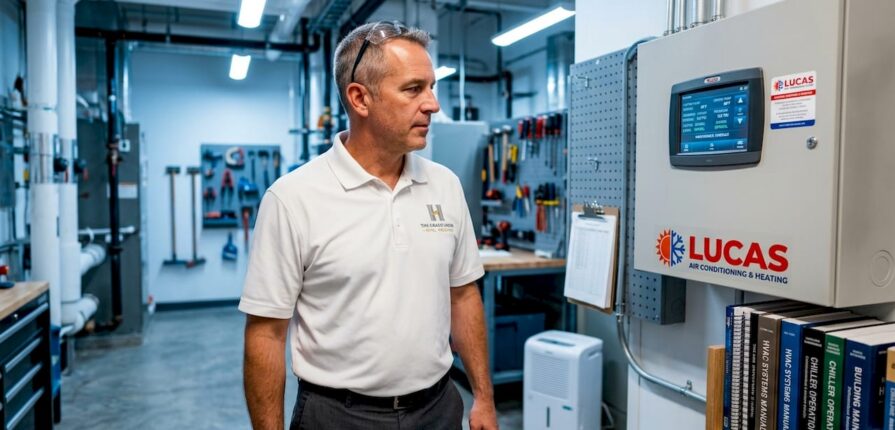
- Hotel HVAC efficiency significantly impacts guest comfort, reviews, and operational costs, representing up to 60% of energy expenditure. Proper maintenance, smart technology, and strategic system choices can reduce energy costs and improve reliability, ensuring guest satisfaction. Regular inspections and targeted upgrades based on performance data are essential for maximizing system performance and longevity.
Your guests will forgive a slow check-in. They will not forgive a sweltering room at midnight. Hotel air conditioning tips are not just operational housekeeping. They directly affect your reviews, your repeat bookings, and a budget line that, for most properties, represents 40 to 60% of total energy spend. With energy costs climbing and guest expectations rising in tandem, the margin for HVAC inefficiency is narrower than ever. This guide gives you the specific, field-tested strategies your maintenance team can act on today.
Table of Contents
- Key takeaways
- Key criteria for effective hotel air conditioning management
- Top practical maintenance tips to improve hotel AC performance
- 1. Replace and clean filters on a fixed schedule
- 2. Inspect condensate drain pans and lines monthly
- 3. Check fan motors and belts for early wear signs
- 4. Calibrate thermostats and verify sensor accuracy
- 5. Clean ductwork on a documented schedule
- 6. Build a clear escalation protocol for faulty room units
- 7. Innovative technologies boosting hotel AC efficiency
- 8. Comparing HVAC system types for hotels
- 9. Situational recommendations for hotel AC optimization
- My honest take on hotel HVAC optimization
- How Lucasair helps hotels stay cool and efficient
- FAQ
Key takeaways
| Point | Details |
|---|---|
| HVAC is your biggest energy cost | Air conditioning typically accounts for 40 to 60% of hotel energy bills, making optimization a direct profit lever. |
| Basic maintenance prevents most complaints | 80% of guest HVAC complaints stem from dirty filters, blocked drains, and worn fan motors. |
| Thermostat setbacks cut cooling bills | Setting vacant rooms 7 to 10°F warmer than occupied rooms saves roughly 10% on annual cooling costs. |
| AI systems deliver measurable savings | AI-powered HVAC management can cut energy costs by up to 30% while improving guest comfort through smarter humidity and temperature control. |
| System selection is not one-size-fits-all | No single HVAC system suits every hotel. Climate, budget, and brand standards must drive the decision. |
Key criteria for effective hotel air conditioning management
Before you fix anything, you need a clear framework for what “good” actually looks like in a hotel HVAC context. These are the five pillars every manager should evaluate.
Energy efficiency and cost control. Your HVAC system is the single largest energy consumer on the property. Tracking kilowatt-hours per occupied room night gives you a benchmark that your utility bills alone cannot provide. Set a target and measure against it monthly.
Maintenance and system reliability. A unit that fails on a sold-out Friday night costs you far more than a service visit. Reliability is not an accident. It is the result of scheduled inspections, documented findings, and prompt corrective action before small issues become breakdowns.
Guest comfort factors: temperature, humidity, and noise. Temperature gets all the attention, but humidity is what guests actually feel. A room at 74°F with 70% relative humidity feels worse than one at 76°F with 50% humidity. Noise matters too. That persistent hum from a failing fan motor will end up in your reviews faster than you think.
Technology integration. Modern building management systems and AI controls do more than automate setpoints. They identify performance drift, flag anomalies, and allow your team to respond before a guest notices anything wrong. If your property is still running purely manual controls, you are leaving both money and comfort on the table.
Regulatory compliance and indoor air quality. State and local codes govern refrigerant types, ventilation rates, and filter standards. Guest room air quality tips go beyond comfort. They touch liability. Stay current on ASHRAE standards and ensure your duct system is not circulating allergens through every room.
Pro Tip: Create a simple one-page HVAC scorecard for your property. Rate each of these five pillars monthly on a 1 to 5 scale. Patterns in that data will tell you where your next dollar of maintenance spend will do the most good.
Top practical maintenance tips to improve hotel AC performance
These are the actions your team can take right now. Not next quarter. This week.
1. Replace and clean filters on a fixed schedule
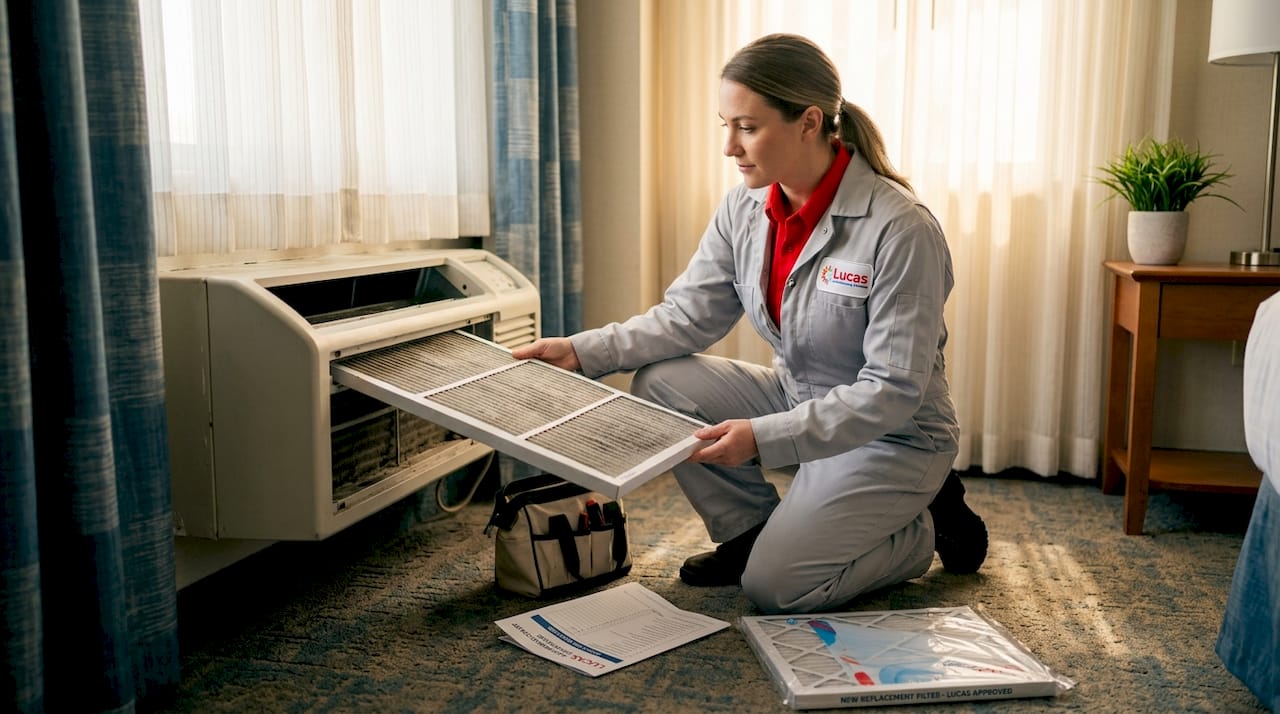
Dirty filters are the number one cause of reduced airflow, higher energy draw, and guest complaints about musty smells. In a high-occupancy hotel, monthly filter checks are the minimum standard, not the premium option. Use a detailed maintenance checklist to track every unit by room number and log filter condition at each inspection.
2. Inspect condensate drain pans and lines monthly
A blocked condensate drain will overflow the pan, create moisture in the wall cavity, and grow mold before you smell it. Check drain pans for standing water and biological growth. Flush lines with a diluted bleach solution during each service visit. This single step prevents a category of damage that is expensive and slow to remediate.
3. Check fan motors and belts for early wear signs
Fan noise is not just annoying. A failing PTAC unit in an occupied room generates more guest complaints than almost any other single maintenance issue. Listen for squealing or grinding during inspections. Feel for unusual vibration. A worn belt costs under $20 to replace. A negative review costs considerably more.
4. Calibrate thermostats and verify sensor accuracy
A thermostat that reads two degrees warmer than actual room temperature will have guests calling the front desk all night. Verify calibration with an independent thermometer during every quarterly inspection. Sensors near windows or above ceiling tiles will give false readings and drive unnecessary cooling cycles.
5. Clean ductwork on a documented schedule
Neglected ductwork accumulates allergens and particulates, forcing units to work harder and compounding guest air quality complaints. Schedule professional duct cleaning at least once per year for high-occupancy properties, and twice per year for properties in humid climates like Central Florida. This is one of the most overlooked hotel air quality tips in the industry.
6. Build a clear escalation protocol for faulty room units
When a guest reports a unit problem, your front desk needs a defined response path: confirm the issue, offer a room change immediately, and trigger a maintenance work order before the room is reassigned. Tracking which units generate repeat complaints lets you prioritize replacement before the unit fails entirely during a peak period.
Pro Tip: In hot-climate markets, increase your maintenance frequency during peak summer months rather than sticking to a calendar-based quarterly schedule. Efficiency monitoring that catches performance drift outperforms rigid manufacturer schedules every time.
7. Innovative technologies boosting hotel AC efficiency
The gap between properties running legacy controls and those using modern systems is widening fast. Here is where the best hotel cooling methods are heading in 2026.
AI-powered HVAC management. These systems analyze occupancy data, outdoor temperature, and historical usage patterns to adjust setpoints in real time. The result is up to 30% reduction in energy costs without any sacrifice in guest comfort. Several platforms now integrate directly with your property management system, so cooling adjusts automatically at check-in and check-out.
Occupancy-based controls. Sensors detect whether a room is occupied and adjust the unit accordingly. This technology pays for itself quickly in large hotels with variable occupancy. The key is proper sensor placement and integration testing before rollout so you do not end up cooling empty rooms or leaving guests uncomfortable.
Humidity control as a standalone metric. Most hotel HVAC systems are set to control temperature. The best hotel comfort climate tips focus on relative humidity as an equally important variable. Target 45 to 55% relative humidity in guest rooms year-round. This range is where most guests are comfortable regardless of ambient temperature.
Hidden VIP thermostat modes. Many modern hotel thermostats have a hidden VIP mode that unlocks a wider temperature range and disables occupancy sensors. Your maintenance team should know how to activate this when a guest has a persistent comfort issue that standard thermostat settings cannot resolve. Use it selectively. It is a troubleshooting tool, not a default setting.
“The best energy saving hotel HVAC programs treat guest comfort and operational efficiency as the same goal, not competing priorities. When your system is working correctly, you do not have to choose between them.”
Building management system integration. If your property has a BMS, your HVAC controls should be feeding data into it. You should be able to see real-time system status, energy consumption by zone, and alarm history from a single dashboard. If you cannot, your BMS is not earning its keep.
8. Comparing HVAC system types for hotels
Choosing the right system type is a foundational decision. Here is a direct comparison of the most common configurations in hospitality settings.
| System type | Best for | Key advantage | Key trade-off |
|---|---|---|---|
| Water-cooled chiller | Large, full-service hotels | Lower lifecycle operating cost | Requires cooling tower and water supply |
| Air-cooled chiller | Smaller properties, constrained sites | Simpler installation, no water system | Higher energy cost at scale |
| PTAC units | Midscale and limited-service hotels | Low upfront cost, room-level control | Noise, higher long-term maintenance |
| VRF/VRV systems | Boutique hotels, mixed-use buildings | High efficiency, quiet operation | Higher installation cost |
| Central plant with fan coils | Resort-scale properties | Centralized control, excellent redundancy | Complex commissioning and maintenance |
As system selection guidance confirms, water-cooled chillers deliver better lifecycle value in large properties, but air-cooled systems make more sense where water availability or rooftop space is limited. Your climate matters too. A property in Florida’s humidity will have different priorities than one in Arizona’s dry heat. Explore how best hotel HVAC systems compare on comfort, cost, and efficiency for properties in your market.
VRF and VRV systems are gaining ground in boutique and select-service hotels because of their quiet operation and room-level control without the acoustic footprint of PTAC units. If noise is a documented complaint driver on your property, this is worth serious budget consideration.
9. Situational recommendations for hotel AC optimization
Not every property has the same needs. These hotel temperature control tips are designed to flex by situation.
Occupied vs. vacant room setpoints. Keep occupied rooms near 74 to 78°F and raise setpoints by 7 to 10°F in vacant rooms. This approach saves approximately 10% annually on cooling costs and stays well within the humidity safety range that prevents mold formation.
Seasonal maintenance adjustments. In Central Florida and similar climates, your system works hardest from May through September. Schedule full system inspections before peak season, not during it. Increase filter check frequency to monthly during summer months. Inspect outdoor condenser coils for debris after storms.
Budget versus premium solutions. If you cannot fund a full BMS integration this year, start with programmable thermostats with setback capability in every room. The ROI is fast and measurable. Then build toward smarter controls as your capital budget allows.
Automation versus manual control trade-offs. Automation reduces human error and saves energy, but it requires proper setup and ongoing calibration. A poorly programmed automated system can frustrate guests faster than a manual one. Always pilot new control strategies in a block of rooms before property-wide rollout.
Planning for upgrades. Do not wait for a system failure to plan your next HVAC upgrade. Track unit age, service history, and repair frequency. When a unit hits its third major repair in 24 months, the replacement conversation should already be happening. Learn more about how preventative HVAC maintenance extends system life and defers replacement costs.
My honest take on hotel HVAC optimization
I’ve watched a lot of hotel maintenance programs operate on two modes: reactive crisis management and blind calendar adherence. Neither actually works.
The properties that consistently score well on guest comfort are not the ones with the newest equipment. They are the ones with maintenance teams that know their systems intimately. They monitor performance metrics, not just service dates. They notice when a unit’s runtime is climbing even before a guest reports a problem. Efficiency monitoring that detects performance drift consistently outperforms calendar-based schedules.
The AI and automation conversation is real, but I’ve seen properties over-invest in smart controls while under-investing in the basics. A $50,000 BMS integration will not fix a building with clogged ducts and uncalibrated thermostats. Get the fundamentals right first. Then add technology on top of a solid foundation, not instead of one.
Guest comfort and energy savings are not actually in conflict when your system is well-maintained. The conflict only appears when systems are neglected and you are forced to overcool just to mask underlying problems.
— Lucasair
How Lucasair helps hotels stay cool and efficient
If you manage a hotel property in Central Florida and your HVAC system is costing you more than it should, or generating more complaints than you can manage, Lucasair is built for exactly this kind of challenge. Cameron Lucas and the Lucasair team specialize in commercial HVAC for hospitality environments, including full system installation, preventative maintenance programs, and emergency repairs that minimize guest disruption.
From seasonal tune-ups before peak summer demand to full system assessments and duct cleaning, Lucasair delivers the kind of service that actually shows up in your review scores. Contact a trusted HVAC contractor serving Central Florida hotels and start a conversation about what your property specifically needs. You can also explore Lucasair’s full range of commercial HVAC services to find the right fit for your operation.
FAQ
What temperature should hotel guest rooms be set to?
Most guests are comfortable between 68 and 74°F. Set occupied room thermostats near 74 to 78°F for energy efficiency, and raise setpoints by 7 to 10°F in vacant rooms to save approximately 10% annually on cooling costs.
How often should hotel HVAC filters be replaced?
In high-occupancy hotels, filter inspection should happen monthly, with replacement based on condition rather than a fixed interval. During peak summer months, filters in heavily used units may need replacement more frequently than the manufacturer’s standard schedule suggests.
What causes the most guest HVAC complaints in hotels?
80% of guest HVAC complaints trace back to dirty filters, blocked condensate drains, and worn fan motors. A failing or noisy PTAC unit in an occupied room generates more complaints than almost any other single maintenance issue.
Can AI-powered HVAC systems actually save money in hotels?
Yes. AI-powered HVAC management systems can reduce hotel energy costs by up to 30% by using occupancy data, outdoor conditions, and historical usage patterns to adjust cooling in real time rather than relying on fixed schedules.
What is the best HVAC system type for a hotel?
There is no universal answer. Water-cooled chillers offer better lifecycle value for large full-service hotels, while VRF systems suit boutique properties where quiet operation matters. The right choice depends on your property’s size, climate, water availability, and budget.
Recommended
- Hotel HVAC energy-saving tips: cut costs 45% in 2026 – Lucas Air Conditioning and Heating
- HVAC trends 2026: Smart solutions, efficiency, comfort – Lucas Air Conditioning and Heating
- Top 4 Air Conditioning Units for Hotels 2026 – Lucas Air Conditioning and Heating
- Top 7 Heating and Cooling Solutions for Property Managers 2026 – Lucas Air Conditioning and Heating
