
TL;DR:
- You can still buy recycled R-22 refrigerant legally but only from limited, shrinking supplies that cost more. The phaseout aimed to protect the ozone layer by banning new production of R-22 in 2020, requiring replacement with alternative refrigerants. Maintenance and careful planning are essential for prolonging old R-22 system life and avoiding expensive emergency repairs.
Can you still buy old R-22 Freon, and what does it cost?
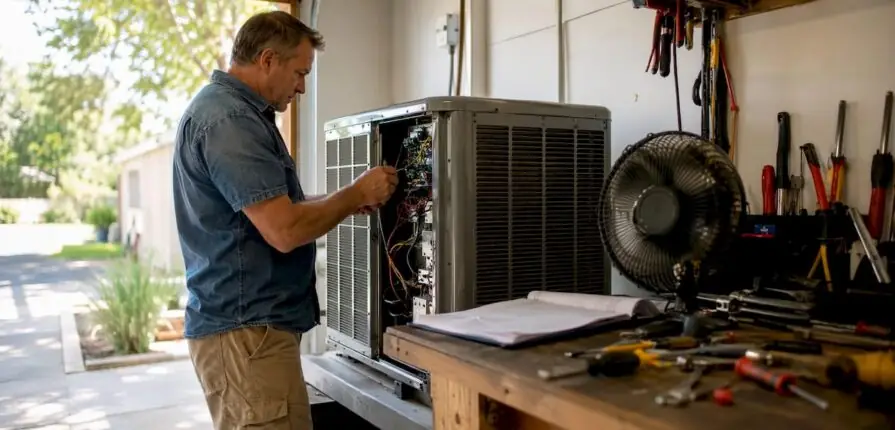
R-22 refrigerant, the chemical formally known as HCFC-22 and colloquially called “old Freon,” has not been produced or imported in the United States since January 1, 2020. That date was the hard stop under EPA regulations. What remains on the market is recycled, reclaimed, or previously stockpiled supply only.
The practical result: you can still legally buy R-22 to service an existing system, but you are buying from a shrinking pool. Prices have surged as supply restrictions tightened, and a single service call requiring refrigerant can cost significantly more than it would have a decade ago. For context, modern refrigerants like R-410A are far cheaper and widely available.
Key facts about current R-22 availability:
- Legal to use: No federal law requires you to stop using an R-22 system or replace it immediately.
- Legal to service: Technicians may still add recycled R-22 to existing equipment.
- Illegal to produce or import: No new R-22 has been manufactured domestically or brought in from abroad since 2020.
- Price driven by scarcity: As reclaimed stocks deplete, costs will keep climbing.
- Not a drop-in swap: Modern refrigerants cannot simply replace R-22 in an existing system without major modifications.
Table of Contents
- Why was R-22 banned, and when did the phaseout happen?
- What can replace R-22, and will it work in your old system?
- Should you repair your R-22 system or replace it?
- How to keep an R-22 system running longer without breaking the bank
- How to safely handle and dispose of R-22 refrigerant
- Are there government rebates for replacing R-22 equipment?
- What makes R-22 so damaging to the environment?
- What does retrofitting an R-22 system actually involve?
- Key Takeaways
- The case for acting before your system forces your hand
- Lucasair serves Central Florida homeowners navigating the R-22 transition
Why was R-22 banned, and when did the phaseout happen?
The phaseout did not happen overnight. It followed a decades-long regulatory process tied to both U.S. law and an international treaty.
- R-22 is an HCFC. Hydrochlorofluorocarbons like R-22 release chlorine into the stratosphere, where it catalytically destroys ozone molecules. The ozone layer blocks ultraviolet radiation; its depletion raises skin cancer risk and harms ecosystems.
- The Montreal Protocol. The United States signed this international agreement to phase out ozone-depleting substances. R-22 fell under its controls, with phaseout dates tied to production and import, not continued use of existing refrigerant.
- CFCs went first. Chlorofluorocarbons (CFCs) were banned from production in the U.S. in 1996. HCFCs like R-22 were given a longer runway because they have a lower ozone-depletion potential than CFCs, but they were never considered a permanent solution.
- R-22 production limits tightened in 2010. The EPA further restricted how much R-22 could be produced or imported, pushing the industry to begin transitioning to alternatives.
- Full production ban took effect January 1, 2020. After that date, only recovered, recycled, or reclaimed R-22 could legally supply the service market.
- Servicing existing equipment remains legal. The ban targets production and import, not use. Your existing R-22 system can keep running and be serviced indefinitely, as long as recycled refrigerant is available and affordable.
What can replace R-22, and will it work in your old system?
There is no single-compound refrigerant that directly replaces R-22. That is not a technicality; it is a genuine engineering constraint.
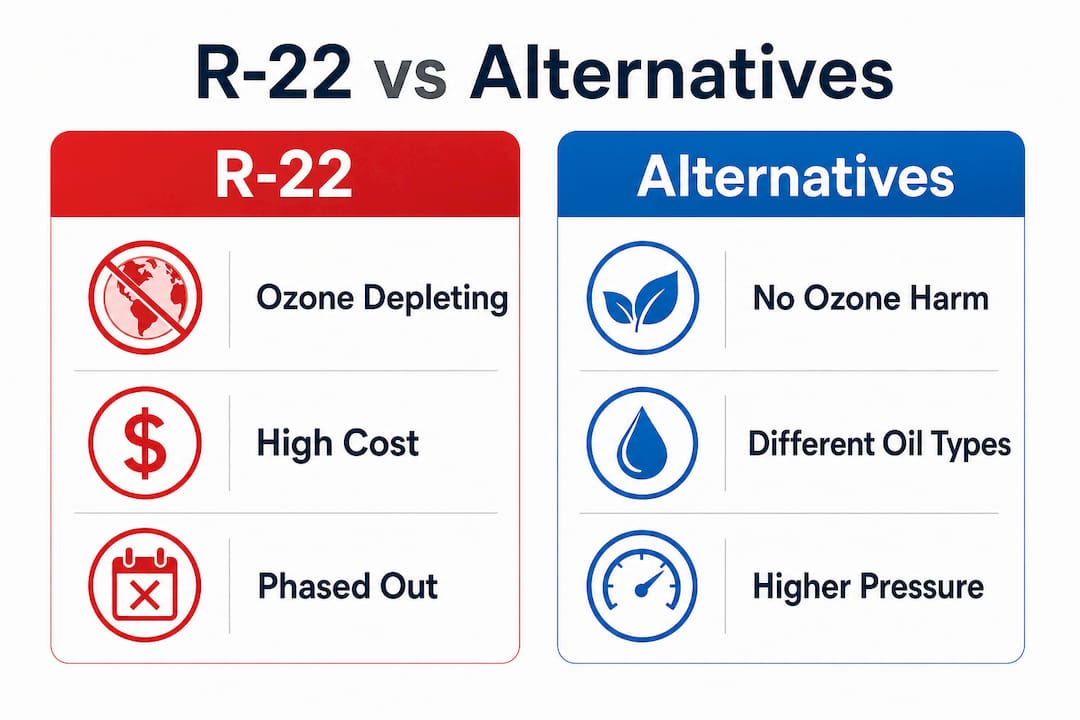
R-410A became the dominant replacement for new residential AC equipment. It does not deplete the ozone layer, and it operates at significantly higher pressures than R-22. That pressure difference is the core problem for legacy systems: components designed for R-22 are not built to handle R-410A’s operating range. Compressors, coils, and expansion valves would all need replacement, which effectively means buying a new system anyway.
Beyond R-410A, the industry is actively moving toward refrigerants with even lower global warming potential. The AIM Act, enacted in 2020, is driving a phasedown of hydrofluorocarbons (HFCs) including R-410A itself, pushing manufacturers toward next-generation options. Homeowners replacing equipment today should ask specifically about the refrigerant type and its long-term regulatory outlook.
A few critical points on compatibility and safety:
- EPA-approved retrofit refrigerants exist for some R-22 systems, listed under the agency’s Significant New Alternatives Policy (SNAP) program. These are blends designed to work in retrofitted equipment with appropriate conversions.
- R-22a is not one of them. Products marketed as “R-22a” or “22a” are hydrocarbon blends containing propane and butane. They are highly flammable and not approved for residential AC use. Avoid any technician who suggests them.
- Retrofitting is rarely simple. Even with an approved alternative, legacy systems require component changes to handle new pressure specifications safely.
Should you repair your R-22 system or replace it?
This is the question most homeowners with aging AC equipment actually need answered. The honest answer depends on a few specific variables.
Pro Tip: Use the 50% rule as your starting point: if the estimated repair cost is significant compared to the price of a new system, replacement is often the smarter financial move over the medium term.
When repair makes sense:
- The system is relatively young (under 10–12 years old) and otherwise in good condition.
- The repair is minor, such as fixing a small refrigerant leak rather than replacing a compressor.
- You have a confirmed, accurate diagnosis from a certified technician, not a guess.
When replacement is the better call:
- The compressor has failed. Replacing the entire condensing unit is generally recommended over a compressor-only swap in an R-22 system, since future serviceability becomes increasingly difficult.
- R-22 costs have made a single refrigerant recharge more expensive than the system’s remaining useful value.
- The unit is fairly old, typically past the expected lifespan for residential central AC.
- Modern equipment with current refrigerants offers meaningfully better energy efficiency, which translates to lower monthly utility bills.
Running the numbers honestly matters here. A repair that costs $800 today might seem cheaper than a $5,000 replacement, but if that system needs another $600 in R-22 next summer, the math shifts fast. Property managers especially should factor in the real cost of running old AC equipment when budgeting for multiple units.
How to keep an R-22 system running longer without breaking the bank
If replacement is not in the budget right now, disciplined maintenance is your best tool for stretching the life of an older system while keeping refrigerant costs under control.
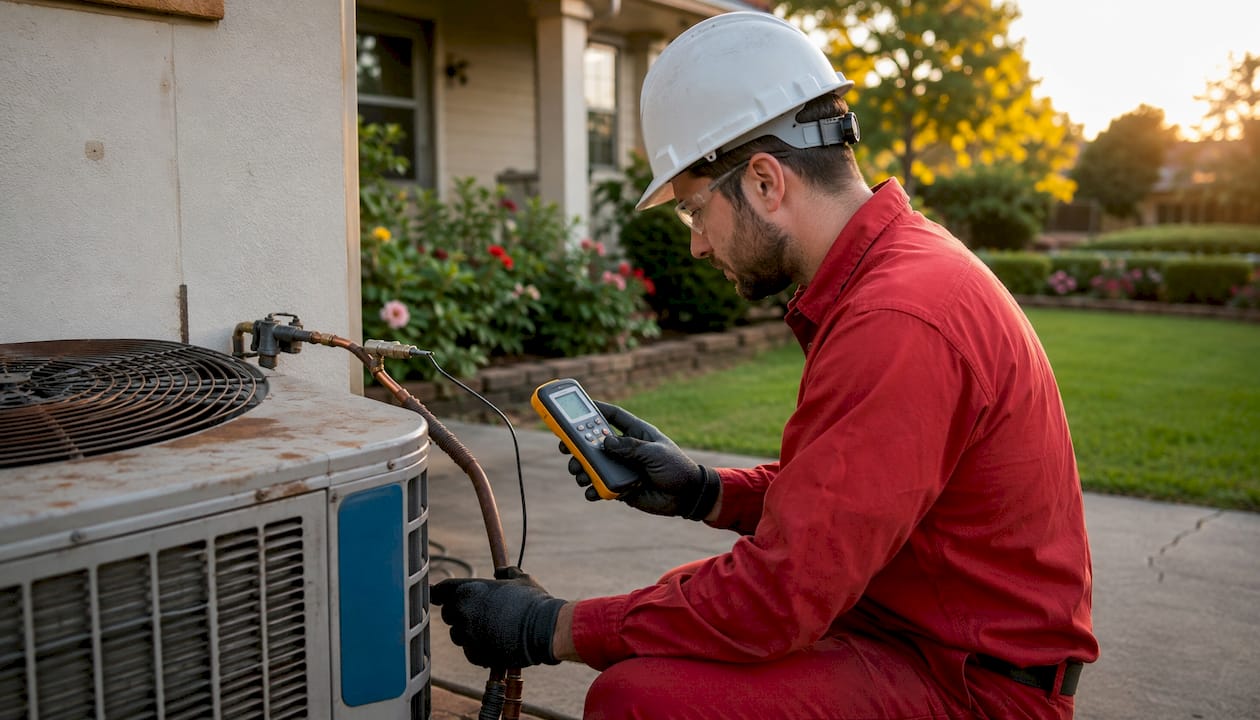
- Schedule annual leak inspections. Small leaks are the primary reason homeowners end up buying expensive recycled R-22. A certified technician can find and seal leaks before they drain the system. Preventative maintenance is the single most cost-effective strategy for R-22 systems.
- Get a full system tune-up each season. Coil cleaning, filter replacement, and electrical checks keep the system running at its designed efficiency. A dirty condenser coil forces the compressor to work harder, accelerating wear.
- Verify refrigerant charge accurately. Undercharge or overcharge both reduce efficiency and shorten equipment life. Proper diagnosis using temperature split and pressure tests is non-negotiable before adding any refrigerant.
- Use only EPA Section 608-certified technicians. Certification under Section 608 of the Clean Air Act is legally required for anyone handling R-22 or its alternatives. Hiring an uncertified technician exposes you to liability and risks improper handling.
- Keep records of every service call. Documenting refrigerant additions, leak repairs, and part replacements helps you spot a pattern of declining performance and make a well-timed replacement decision rather than a reactive one.
- Check the HVAC maintenance checklist for your system to make sure nothing gets missed between professional visits.
How to safely handle and dispose of R-22 refrigerant
R-22 cannot legally be vented into the atmosphere. Under Section 608 of the Clean Air Act, knowingly releasing refrigerant during servicing, maintenance, or disposal of any AC system is a federal violation. This applies to R-22 and its alternatives alike.
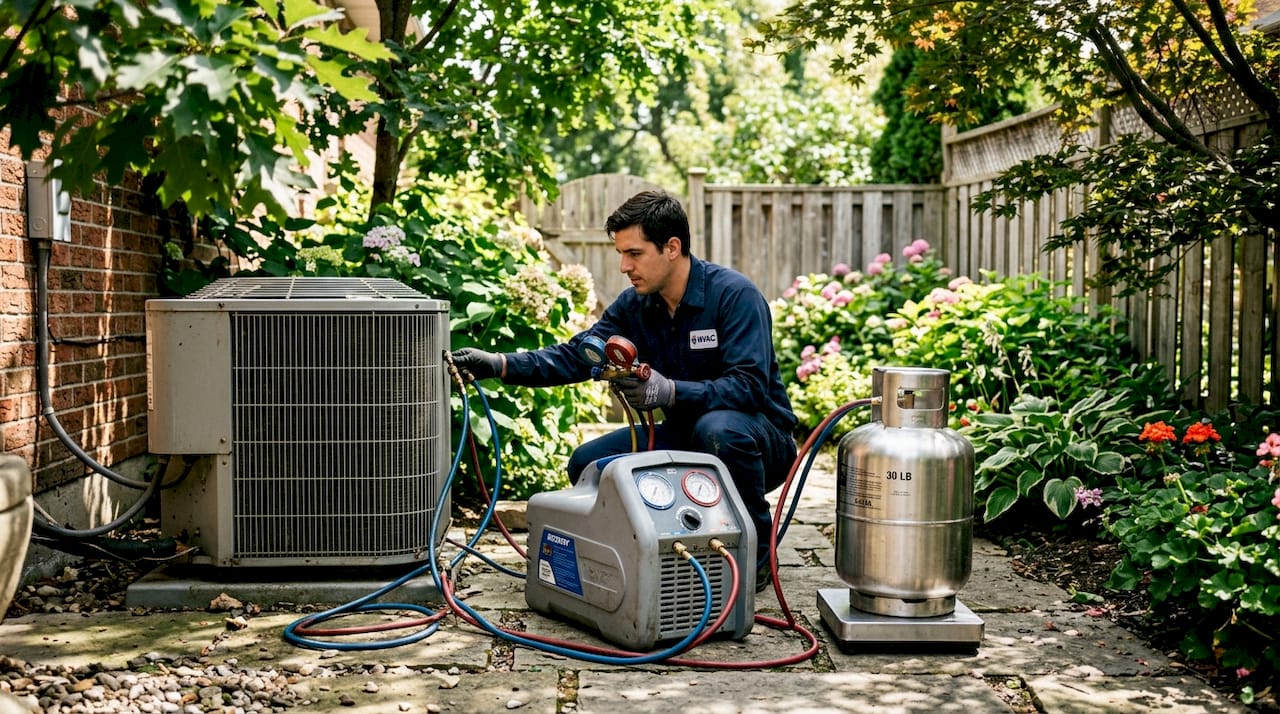
When a system is decommissioned or retrofitted, a certified technician must use recovery equipment to capture the remaining refrigerant before any work begins. That recovered R-22 can then be sent to a reclamation facility, where it is purified and returned to the service market. This is the source of the recycled supply that keeps older systems running today.
For homeowners, the practical rule is simple: never let anyone work on your AC refrigerant circuit without proper recovery equipment on-site. If a technician shows up without it, that is a red flag. Proper disposal of old refrigerants also means not discarding appliances containing refrigerant with regular trash. Retailers and certified HVAC companies are required to accept old equipment for proper refrigerant recovery under EPA rules.
Are there government rebates for replacing R-22 equipment?
Yes, and they are worth pursuing before you write a check for a new system. The federal Inflation Reduction Act created the High-Efficiency Electric Home Rebate Act (HEEHRA) program, which offers rebates for qualifying high-efficiency HVAC equipment. Availability and amounts depend on household income and state program implementation, so check with your state energy office for current figures.
The federal tax credit under Section 25C also applies to qualifying energy-efficient central air conditioning systems. Homeowners may claim a credit of up to 30% of the cost of eligible equipment and installation, subject to annual caps. This credit applies to systems meeting specific efficiency thresholds, so confirm the equipment qualifies before purchasing.
Florida residents should also check with their local utility provider. Many Florida utilities offer rebates for replacing older, inefficient AC systems with high-SEER units, and these can stack with federal incentives. Ask your HVAC contractor to pull current rebate information before finalizing any replacement decision.
What makes R-22 so damaging to the environment?
R-22 carries an ozone depletion potential (ODP) that makes even small releases environmentally significant. When R-22 escapes into the atmosphere through leaks or improper disposal, its chlorine atoms reach the stratosphere and break down ozone molecules in a chain reaction. One chlorine atom can destroy thousands of ozone molecules before it is deactivated.
Beyond ozone depletion, R-22 is also a greenhouse gas with a global warming potential (GWP) far higher than carbon dioxide. A pound of R-22 released into the atmosphere traps substantially more heat than a pound of CO2 over a 100-year period. This dual impact, ozone depletion plus climate forcing, is why the phaseout was treated as urgent under both the Montreal Protocol and the Clean Air Act.
The refrigerants replacing R-22 are not perfect either. R-410A does not deplete ozone, but it carries a high GWP, which is why the AIM Act is now driving a further transition to lower-GWP alternatives across the HVAC industry.
What does retrofitting an R-22 system actually involve?
A retrofit is not a refrigerant swap. That distinction matters because some contractors and online guides make it sound simpler than it is.
A true retrofit of an R-22 system to an EPA-approved alternative refrigerant requires the technician to first recover all existing R-22, then flush the system to remove residual oil (R-22 systems use mineral oil, which is incompatible with many alternatives), replace the expansion valve, and in many cases replace the compressor and coils. The technician must then follow the refrigerant manufacturer’s specific conversion guidelines and document the change.
For most residential systems, the cost of a full retrofit approaches or exceeds the cost of a new system. That is why most HVAC professionals recommend replacement over retrofit for older residential equipment. The exception might be a relatively new system that suffered a catastrophic refrigerant loss, where the equipment itself is still in good condition. Even then, get a detailed cost comparison before committing. Signs that a rental property’s HVAC may need replacement rather than retrofit are worth reviewing before making that call, particularly for aging rental equipment.
Key Takeaways
R-22 is no longer produced in the U.S., recycled supplies are expensive and shrinking, and most homeowners with aging R-22 systems will face a replacement decision within the next few years.
| Point | Details |
|---|---|
| R-22 production ended in 2020 | Only recycled or reclaimed R-22 is legally available; costs have risen sharply as supplies shrink. |
| Servicing existing systems is still legal | No federal law requires immediate replacement; you may continue using and repairing R-22 equipment. |
| Modern refrigerants are not direct replacements | R-410A and other alternatives require major component changes due to pressure differences with R-22 systems. |
| Maintenance extends system life and cuts costs | Regular maintenance such as leak checks and tune-ups help reduce refrigerant loss and can delay costly replacement decisions. |
| Lucasair handles R-22 service and system upgrades | Lucasair’s licensed technicians in Central Florida provide safe R-22 servicing, maintenance agreements, and replacement options. |
The case for acting before your system forces your hand
The homeowners who handle R-22 systems best are not the ones who wait for a breakdown. They are the ones who get a professional assessment now, understand what their system is worth, and make a planned decision rather than an emergency one.
Here is what most articles on this topic miss: the real risk with an aging R-22 system is not the refrigerant itself. It is the compressor. When a compressor fails on an R-22 unit, you lose negotiating leverage entirely. You are either paying whatever the emergency repair costs, or you are replacing the system on a rushed timeline with no time to compare options, apply for rebates, or plan financing. The homeowners who end up overpaying are almost always the ones who deferred the conversation until the system quit on a 95-degree July afternoon.
Proactive maintenance does more than extend equipment life. It gives you information. A good technician will tell you the condition of your coils, the refrigerant charge status, and a realistic estimate of remaining useful life. That is the data you need to make a smart decision, not a panicked one. The investment in a preventative maintenance agreement pays for itself in avoided emergency calls alone.
Lucasair serves Central Florida homeowners navigating the R-22 transition
When your R-22 system needs attention, the difference between a good outcome and an expensive mistake usually comes down to who you call. Lucasair’s licensed technicians handle R-22 refrigerant safely and legally, diagnose systems accurately before recommending repairs, and give you an honest assessment of whether servicing or replacing makes more financial sense for your situation.
Founded by Army Veteran Cameron Lucas in Tavares, Florida, Lucas Air has built its reputation on straight answers and reliable work across Central Florida. Whether you need a leak repaired, a full system replacement, or a preventative maintenance plan that keeps an older unit running efficiently, the team brings the same expertise to every job. Financing options are available for homeowners ready to upgrade but not ready to pay out of pocket all at once.
If your system runs on R-22 and you have not had it inspected recently, schedule a service call with Lucasair in The Villages and surrounding Central Florida before the next cooling season puts it to the test.
Need a hand? Lucas Air Conditioning and Heating offers refrigerant leak repair in Tavares, FL for homes and businesses across Lake County.
Recommended
- Common AC Repair Issues Every Homeowner Should Know – Lucas Air Conditioning and Heating
- Air Conditioning Terminology: A Homeowner’s Guide – Lucas Air Conditioning and Heating
- AC Unit Sounds: What Every Homeowner Needs to Know – Lucas Air Conditioning and Heating
- Step-by-Step AC Maintenance: Keep Your Florida Home Cool – Lucas Air Conditioning and Heating