
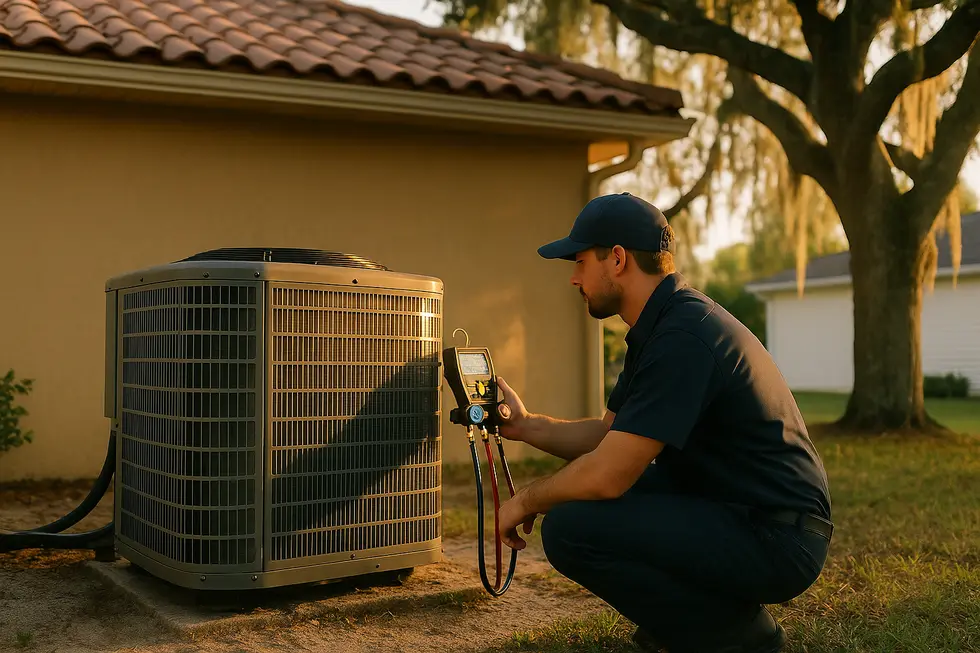
TL;DR: For most Tavares-area homeowners who would book a yearly tune-up anyway, an HVAC maintenance plan is worth it. The Lucas Air Conditioning and Heating plan costs $129 a year, which is $4 more than a single $125 tune-up, and it adds 15% off parts and priority scheduling. It makes the least sense if you plan to replace your system very soon.
Is an HVAC maintenance plan worth it? For most Tavares homeowners, yes, as long as you would book a yearly tune-up anyway. At Lucas Air Conditioning and Heating, a Preventative Maintenance Agreement costs $129 a year and includes a tune-up that costs $125 on its own. For the extra $4, you get 15% off parts and priority scheduling.
If you never service your system and don’t plan to start, a plan will feel like one more bill. But in Lake County the AC runs most of the year, and skipped maintenance tends to show up later as higher power bills, clogged drain lines and repairs you didn’t see coming. Here is how the math works, and who gets the most out of a plan.
What does an HVAC maintenance plan actually include?
An HVAC maintenance plan is a yearly agreement. You pay one set fee, and your contractor services your system on a schedule. Most plans pair a tune-up with perks like repair discounts or faster scheduling. Plans vary a lot from company to company, so read exactly what you’re getting.
The Lucas Air Conditioning and Heating Preventative Maintenance Agreement includes three things:
- One precision tune-up per year
- 15% off parts for repairs
- Priority scheduling
The tune-up is the heart of the plan. ENERGY STAR’s maintenance checklist says a typical check-up should cover thermostat settings, electrical connections, moving parts, the condensate drain and coil cleaning. ENERGY STAR’s energy-saving checklist also says a maintenance contract makes sure your pre-season tune-ups actually happen. For the step-by-step list of what we check, see what a precision AC tune-up includes.
Is an HVAC maintenance plan worth it compared to paying per visit?
Yes, if you get at least one tune-up a year. The plan costs $4 more than a single $125 tune-up. The parts discount covers that $4 the first time a repair needs about $27 or more in parts, because 15% of $27 is roughly $4.
Priority scheduling is the perk that’s hard to put a price on. When a July heat wave hits Tavares and AC companies are swamped, plan members get priority on the schedule. Here is how the main options compare:
| Option | Yearly cost | What you get | Best fit |
|---|---|---|---|
| No professional maintenance | $0 up front | Nothing until something breaks, then repairs at full price | Owners already planning to replace the system soon |
| DIY care only | Cost of filters | Clean filters and a clear outdoor unit, but no electrical, refrigerant or indoor coil checks | A good habit for everyone, but it can’t replace a pro visit |
| Pay-per-visit tune-up | $125 | One precision tune-up, with parts at regular price | Owners with newer systems who rarely need repairs |
| Preventative Maintenance Agreement | $129 | One tune-up, 15% off parts and priority scheduling | Most full-time residents, landlords and seasonal residents |
One note on timing: ENERGY STAR suggests checking the cooling system in spring and the heating system in fall, before contractors get busy. In Central Florida, where cooling does most of the work, spring is usually the visit that matters most.
Why does maintenance matter more in Central Florida?
Because Florida homes rely on air conditioning more than almost anywhere else. The U.S. Energy Information Administration reports that nearly all Florida households use electricity for air conditioning. In 2023, Florida homes used 54% of the state’s electricity, the largest residential share of any state. EIA survey data also shows that 96% of Florida households used AC in 2020, and 90% used central systems.
More run time means more wear. Around Tavares and Zellwood, our long, humid season is also hard on the condensate drain. Your AC pulls water out of the air and sends it out through a small drain pipe. ENERGY STAR warns that a plugged drain can cause water damage and affect indoor humidity. Algae builds up quickly in warm, wet lines, so checking the drain every year matters here.
Coils are the other big item. ENERGY STAR says dirty coils make the system run longer, which raises energy costs and shortens equipment life. Pollen, grass clippings and dust land on outdoor coils all year. Coil and drain problems can also affect the air you breathe. Our guide on how your HVAC system affects indoor air quality and allergies covers that side.
Who gets the most from a maintenance plan, and who can skip it?
Most people who plan to keep their system for more than a year or two come out ahead. Here are both sides.
Pros
- Costs only $4 more than one standalone tune-up
- 15% off parts when a repair comes up
- Priority scheduling during peak heat
- The yearly visit happens on schedule instead of slipping your mind
- A service record that helps if you ever file a warranty claim or sell the home
Cons
- Covers one tune-up a year, so a second visit (such as a fall heating check) is billed separately
- The discount applies to parts, so repairs still cost money
- Little value if you’re replacing the system within a few months
Seasonal residents get a lot out of a plan. If you split the year between Grand Island and somewhere up north, a yearly visit catches drain clogs and worn parts before your system runs for months while the house sits empty. Landlords and property managers get a paper trail that shows the system was maintained. If you have a newer system, read your warranty paperwork for any maintenance terms, and keep every service receipt.
What should you still do between visits?
Check your air filter every month. ENERGY STAR recommends a monthly check and a new filter at least every three months. The U.S. Department of Energy says replacing a dirty, clogged filter can cut an air conditioner’s energy use by 5 to 15 percent (DOE Home Cooling 101).
- Check the filter monthly, and more often if you have pets or ongoing construction nearby.
- Keep shrubs, grass clippings and leaves away from the outdoor unit.
- Look near the indoor air handler for standing water or a wet drain pan.
- Leave refrigerant, electrical and indoor coil work to a licensed technician.
A plan doesn’t replace these habits. It covers the work that takes tools, training and a license.
Why Tavares homeowners call Lucas Air Conditioning and Heating
- We are veteran-owned, founded in 2018 by U.S. Army veteran Cameron Lucas of the 82nd Airborne Division.
- We are based at 15800 Old US Hwy 441 in Tavares and serve Lake and Orange counties.
- We hold Florida licenses CAC1819409 and CAC1819837.
- We have a 5.0-star Google rating.
- Style Magazine named us Best of the Best 2025, and Nextdoor has named us a Neighborhood Favorite four times.
- Emergency service is available outside our regular hours of Mon–Fri, 8:00 AM–5:30 PM.
We’ll tell you honestly whether a plan makes sense for your system, with no upselling. You can learn more about our HVAC contractor services in Tavares, FL.
Want to talk through whether a maintenance plan fits your home? Call (352) 805-0359 or schedule an appointment online.
Frequently Asked Questions
Does the $129 maintenance plan include both a cooling and a heating check?
The Preventative Maintenance Agreement includes one tune-up per year. If you want a spring cooling visit and a fall heating visit, ask about booking the second one as a separate tune-up.
Is an HVAC maintenance plan the same as a home warranty?
No. A maintenance plan pays for preventive service and discounts parts from your HVAC contractor. A home warranty is a separate contract that may help pay for covered repairs, and many expect the system to be maintained, so read your terms.
Is a maintenance plan worth it on a brand-new AC system?
Usually, yes. ENERGY STAR notes that even a new system loses performance without regular maintenance. Keeping service records while your equipment is under warranty is also a smart habit.
When should I schedule my yearly tune-up in Central Florida?
Spring is the best time, before the long cooling season. ENERGY STAR points out that contractors get busy once summer arrives, so booking early is easier.
Recommended Reads
- HVAC Contractor in Tavares, FL
- Why Your New AC Installation in Florida Requires a Permit — and What Happens If It Doesn’t
- Do UV Light Air Purifiers for HVAC Systems Actually Work?