
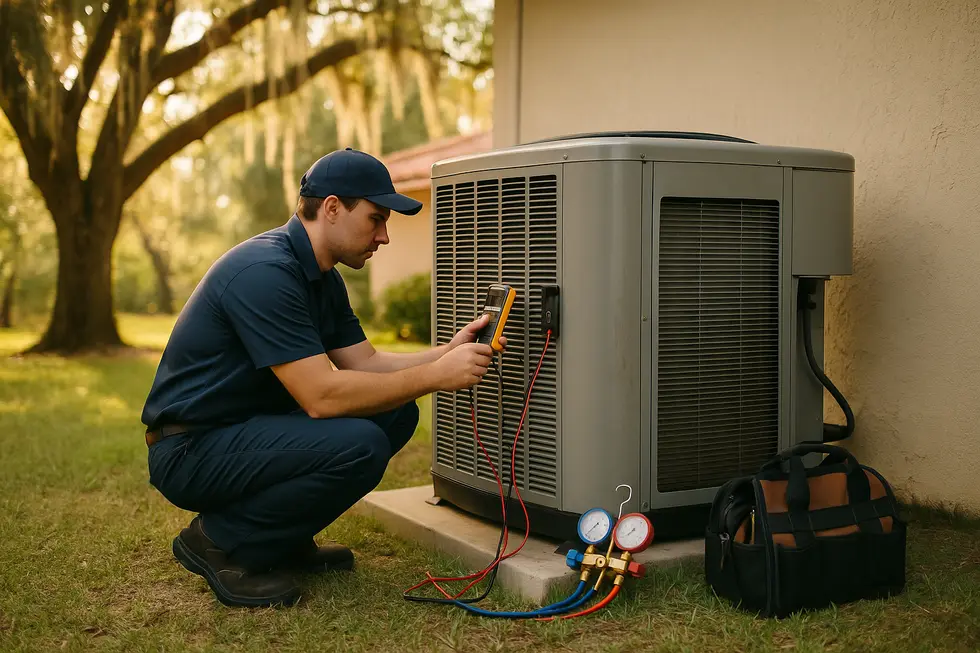
TL;DR: A fall heating tune-up still matters in Florida, because inland Central Florida averages several freezing nights each winter and heating parts sit unused for months. A good fall visit tests heat mode, the reversing valve, the heat strips, refrigerant charge, electrical parts, the drain line, the thermostat, and airflow before the first cold front.
Yes. A fall heating tune-up in Florida still matters, even if you only run the heat a handful of nights each winter. The visit tests heat mode, the backup heat strips, and the parts that switch your system from cooling to heating. That way a weak part shows up on a mild October day instead of a 30-degree night.
ENERGY STAR recommends checking the cooling system in spring and the heating system in fall, because contractors get busy once the weather turns. In Tavares the heating season is short, but the first cold front can show up with little warning. Here is what a fall check should cover.
What Goes on a Fall Heating Tune-Up Checklist in Florida?
A solid fall checklist covers seven items: heat mode, heat strips, refrigerant charge, electrical parts, the drain line, the thermostat, and airflow. Many Central Florida homes heat with a heat pump, electric heat strips in the air handler, or both, so this list is built around those systems.
1. Run a full cycle in heat mode
A heat pump makes heat by running its refrigerant cycle in reverse. A part called the reversing valve makes that switch, and it may have sat in one position since March. The tech switches the system to heat, checks for warm air at the supply vents, and makes sure it switches back to cooling cleanly. The U.S. Department of Energy puts this on its heat pump service list: heating should be locked out when the thermostat calls for cooling, and the other way around. On heat pumps, the tech should also check the defrost controls. They keep the outdoor coil from icing up on cold, damp mornings.
2. Inspect the heat strips and safety switches
Electric heat strips are coils inside the air handler that act as backup heat. The tech checks the elements, the high-limit safety switches, and the wiring. Dust settles on the strips all summer, so a faint burning-dust smell for the first few minutes is common. A smell that lingers, or smells like hot plastic, is not normal. Strips also cost more to run. The Department of Energy says electric resistance heat is inefficient and should be used as little as possible. If your strips kick on when they shouldn’t, you will see it on your bill.
3. Measure the refrigerant charge
Low refrigerant hurts heating just as much as cooling. The Department of Energy recommends checking refrigerant charge with gauges and testing for leaks, not guessing by feel. Refrigerant does not get used up, so a low reading usually means there is a leak. On an older system, that finding is often where the repair vs. replacement decision for Florida systems starts.
4. Test capacitors, contactors, and wiring
Months of long run times in Central Florida heat wear down electrical parts. ENERGY STAR’s checklist calls for tightening all electrical connections and measuring voltage and current on motors. Loose connections can make a system unsafe and shorten the life of major parts. A weak capacitor caught in October is a quick repair. The same capacitor failing on a cold January night turns into an emergency call.
5. Clear the condensate drain line
Fall in Florida is not dry. Most systems here still run in cooling mode through October, and often into November. Algae keeps growing in the drain line, and a clog can back water up into the air handler or the ceiling. The tech flushes the line and checks the safety float switch if your system has one.
6. Set up the thermostat for winter
The tech makes sure the thermostat switches to heat, reads room temperature correctly, and only turns on backup heat when it should. Swap the batteries if your model uses them. If you are a seasonal resident coming back for the winter, this is also a good time to reset schedules you set for an empty house.
7. Change the filter and check airflow
ENERGY STAR recommends checking your filter every month and changing it when it is dirty. A clogged filter starves a heat pump of air in winter just like it does in summer. The tech should also look at the blower and measure airflow, which is another item on the Department of Energy list.
Pool owners: fall is also when pool and spa heaters start working hard. Lucas Air Conditioning and Heating, LLC repairs pool and spa heaters, so mention it when you book if yours has been acting up.
Does It Get Cold Enough Around Tavares to Bother?
Yes, often enough to count. The National Weather Service says long-term averages show three to six days of freezing temperatures each winter across inland Central Florida. Last winter showed how cold it can get. On February 1, 2026, the National Weather Service reported record lows across the region, including at Leesburg, and Orlando dropped to 24 degrees.
Those are the nights when a system that sat idle all summer has to run nonstop. That’s true whether you live near Lake Dora in Tavares or out in Zellwood or Astor. Retirees, families with young kids, and landlords with tenants have the most to lose from a cold night with no heat.
How Is a Fall Tune-Up Different From a Spring Tune-Up?
A fall tune-up focuses on heat mode and backup heat. A spring tune-up focuses on cooling and humidity control. Many tasks overlap, but the tests run in a different mode. Our spring AC tune-up checklist covers the summer side in detail.
| Item | Spring tune-up focus | Fall tune-up focus |
|---|---|---|
| Main mode tested | Cooling, including temperature drop across the coil | Heating, including warm air at the vents |
| Reversing valve (heat pumps) | Confirms it holds in cooling | Confirms it shifts into heat and back |
| Electric heat strips | Usually a quick look | Elements, limit switches, and wiring inspected |
| Refrigerant charge | Measured before peak cooling load | Measured and leak-checked before cold weather |
| Condensate drain | Top priority before peak humidity | Still flushed, since cooling runs into fall |
A Preventative Maintenance Agreement includes one tune-up a year. Ask us which season makes more sense for your system, especially if you have a heat pump doing double duty.
Signs You Should Call a Pro Before the First Cold Night
Call a licensed tech if you notice any of these when you test your heat:
- Cool or room-temperature air coming from the vents in heat mode
- A burning smell that lasts more than a few minutes, or smells like plastic or wiring
- The breaker trips when the heat turns on
- The auxiliary or emergency heat light stays on most of the time
- The outdoor unit stays coated in ice instead of clearing after a defrost cycle
- Loud buzzing, banging, or grinding at startup
- Your electric bill jumps during a cold week far more than in past winters
The easiest way to catch these early is to test your heat on a cool evening in October.
Why Tavares Homeowners Call Lucas Air Conditioning and Heating, LLC
- We are a veteran-owned company, founded in 2018 by U.S. Army veteran Cameron Lucas of the 82nd Airborne Division.
- Our shop is at 15800 Old US Hwy 441 in Tavares.
- We hold Florida licenses CAC1819409 and CAC1819837.
- A Precision Tune-Up costs $125.
- Our Preventative Maintenance Agreement costs $129 a year and includes one tune-up, 15% off parts, and priority scheduling.
- We repair heat pumps and air conditioners.
- Emergency service is available outside our regular hours of Monday through Friday, 8:00 AM to 5:30 PM.
- We carry a 5.0-star Google rating.
You can also check our current seasonal specials before you book.
Want your heat checked before the next cold front? Call (352) 805-0359 or book your tune-up online.
Frequently Asked Questions
When should I schedule a fall heating tune-up in Central Florida?
Aim for October or early November, before the first real cold front. ENERGY STAR suggests tying seasonal check-ups to the fall time change so they’re easy to remember.
How much does a fall tune-up cost with Lucas Air Conditioning and Heating?
A Precision Tune-Up is $125. The Preventative Maintenance Agreement is $129 a year and includes one tune-up, 15% off parts, and priority scheduling.
Should I switch to emergency heat during a Florida freeze?
Usually not. Emergency heat runs only the electric heat strips, which cost more to run than a heat pump. Use it only if the heat pump itself has stopped working, then call for service.
I’m a snowbird. Should I get a tune-up when I arrive or before I leave?
Getting a tune-up soon after you come back in the fall lets the tech test heat mode and reset the thermostat for an occupied home. If the system sat idle all summer, the drain line and electrical parts are worth checking too.
Recommended Reads
- Spring AC Tune-Up Checklist: 9 Steps Before Florida Summer
- Landing Page for Seasonal Specials – Online Booking – Lucas Air Conditioning and Heating
- Landing Page for Seasonal Specials – Lucas Air Conditioning and Heating