
TL;DR:
- Regular HVAC inspections help prevent costly system failures, improve efficiency, and ensure safe air quality. Skipping these checks increases risks of breakdowns, higher energy bills, and safety hazards. Modern digital tools and routine maintenance are essential for protecting your investment and maintaining system reliability.
Most homeowners and property managers think of HVAC inspections the same way they think of going to the dentist: something to put off until something hurts. That mindset is exactly why so many systems fail prematurely, run inefficiently for years, or create safety risks that never get caught until they become expensive emergencies. The importance of system inspections is not about ticking a box. It is about protecting one of the most expensive systems in your home or property, keeping your energy bills in check, and making sure the air your family or tenants breathe is actually clean. This article breaks down what inspections do, what happens when you skip them, and how to get the most out of every service visit.
Table of Contents
- Key takeaways
- What HVAC system inspections actually do
- What happens when you skip inspections
- How modern inspection technology raises the bar
- Getting the most out of your HVAC inspections
- My honest take on why inspections keep getting skipped
- Schedule your HVAC inspection with Lucasair
- FAQ
Key takeaways
| Point | Details |
|---|---|
| Inspections prevent costly failures | Catching small issues early costs far less than emergency repairs or full system replacements. |
| Skipping inspections raises real risks | Neglected systems can cause poor air quality, higher energy bills, and even fire hazards. |
| Technology improves inspection quality | Digital tools capture three times more detail than manual methods, making findings more reliable. |
| Frequency matters | HVAC systems should be inspected at least once a year, ideally twice, in spring and fall. |
| Act on what you find | An inspection that sits in a drawer without follow-up action delivers no real benefit. |
What HVAC system inspections actually do
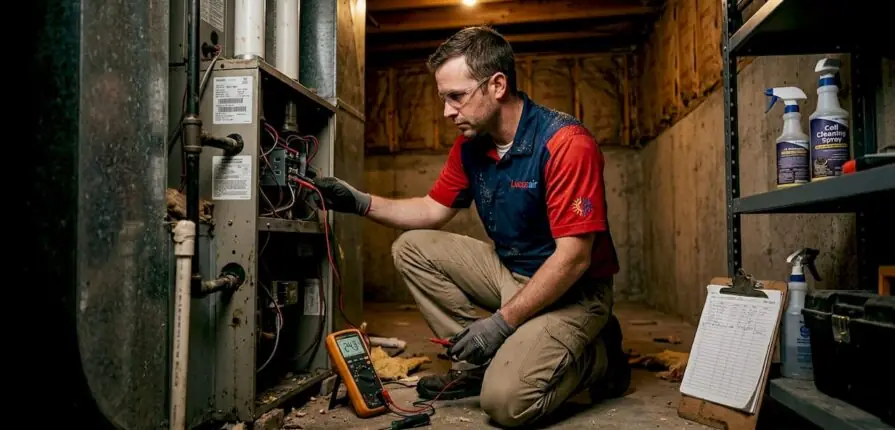
A lot of people picture a technician poking around for ten minutes and handing over a bill. A real HVAC inspection is much more specific than that. A qualified technician checks refrigerant levels, electrical connections, coil condition, drain lines, thermostat calibration, air filter status, and airflow across every zone in your system. They look for wear on belts and motors, signs of corrosion, and anything that suggests the system is working harder than it should be.
That last part matters more than most people realize. When an HVAC system compensates for a partially blocked filter or a failing capacitor, it draws more electricity and puts extra strain on components that were never designed to carry that load. Over time, a small problem becomes a chain of problems.
The benefits of system inspections extend well beyond comfort. Regular inspections:
- Catch refrigerant leaks before they damage the compressor (the most expensive component in any system)
- Identify electrical issues that could become fire hazards
- Verify that drain lines are clear, preventing water damage to ceilings and walls
- Confirm that the heat exchanger in gas systems is not cracked, which is a carbon monoxide risk
- Assess whether your system is sized correctly for your current duct configuration
Pro Tip: Schedule your inspection in early spring before the Florida heat kicks in. Technicians are less busy, appointments are easier to book, and you will catch any issues before your system faces its heaviest workload of the year.
Research consistently shows that inspection-driven maintenance costs a fraction of emergency fixes or full system replacements. For HVAC systems specifically, a seasonal tune-up runs far less than a compressor replacement, which can cost anywhere from $1,200 to $2,500 on a mid-range residential unit.
What happens when you skip inspections
The consequences of neglecting regular system checks rarely announce themselves early. They build quietly until they cannot be ignored anymore.
Consider this sequence: a dirty evaporator coil reduces airflow. Reduced airflow causes the system to run longer cycles. Longer cycles stress the compressor. A stressed compressor fails, usually on the hottest day of August, when HVAC technicians are completely booked out. That is a $2,000 repair that a $150 inspection would almost certainly have prevented.
Here are the most common consequences of skipping scheduled HVAC inspections:
- System breakdown at peak demand. Components fail under stress. Systems that run through summer in Florida without a prior inspection are rolling the dice every day.
- Higher energy bills. A dirty or failing system uses more electricity to deliver the same cooling. According to the Department of Energy, a poorly maintained HVAC system can use up to 15% more energy than a well-maintained one.
- Degraded air quality. Mold growth in drain pans, dirty coils, and clogged filters all push contaminants directly into your living space. This is particularly serious for anyone with asthma or allergies.
- Health and safety hazards. A cracked heat exchanger on a gas furnace leaks carbon monoxide. Frayed electrical wiring creates fire risk. Both are detectable during a standard inspection and both are invisible to the untrained eye.
- Reduced property value. Property managers especially need to think about this. A system that has no maintenance history will raise flags during a real estate inspection and can directly affect sale price or tenant negotiations.
Facilities with overdue inspections above 15% experience roughly three times the unplanned outages compared to those that stay below a 5% overdue rate. That is not a subtle difference. It is the difference between a manageable maintenance budget and a reactive spending nightmare.
A failing system also poses direct health risks to occupants, particularly when leaks or malfunctions go undetected for extended periods. For property managers with legal obligations to tenants, that exposure is both a health risk and a liability risk.
How modern inspection technology raises the bar
The inspection your grandfather’s HVAC technician did with a notepad looks nothing like what a well-equipped technician does today. Modern inspection methods have changed what is possible to find, document, and act on.
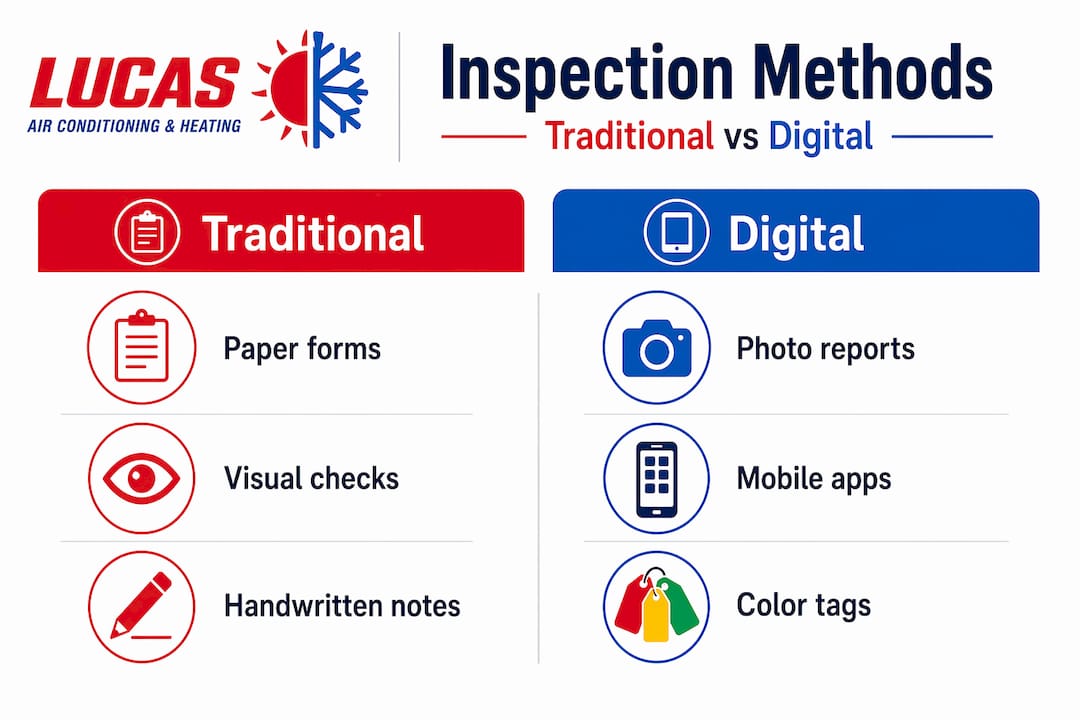
Here is how traditional and modern inspection approaches compare:
| Feature | Traditional methods | Modern digital methods |
|---|---|---|
| Documentation | Paper forms, handwritten notes | Digital reports with photos and timestamps |
| Coverage consistency | Varies by technician memory | Zone-based protocols prevent gaps |
| Photo evidence | Rare or informal | Geotagged, timestamped photos for legal protection |
| Inspection speed | Slower, more prone to error | Up to 45% faster with more detail captured |
| Long-term tracking | Difficult to reference past findings | Digital records enable trend analysis over time |
| Priority classification | Judgment-based | Color-coded tags for immediate vs. monitored issues |
Digital inspection tools reduce inspection time by up to 45% while capturing three times more detail than manual methods. For property managers overseeing multiple units, that efficiency difference is significant. You get better reports in less time, and those reports actually hold up if a dispute arises over the condition of a system.
Color-coded inspection tags are another practical tool that separates professional-grade inspections from basic checkups. Red tags indicate issues requiring immediate action. Yellow tags signal items to monitor. That clear prioritization helps you allocate your maintenance budget and schedule repairs without guessing what is urgent.
Pro Tip: Ask your HVAC technician whether they use digital reporting. A technician who sends you a photo-documented report after each visit gives you a permanent maintenance record. That record protects you during home sales, tenant disputes, and warranty claims.
Getting the most out of your HVAC inspections
Knowing why system inspections matter is one thing. Building a routine that actually delivers consistent results takes a bit more structure. Here is what works in practice:
- Set inspection frequency before you need it. For most residential HVAC systems in Florida’s climate, twice a year is the right target. Spring before cooling season and fall before any heating demand covers both operational modes. At a minimum, once a year is non-negotiable.
- Choose inspectors based on credentials, not price. Look for technicians certified by NATE (North American Technician Excellence) or those operating under a licensed HVAC contractor. A cheap inspection that misses a failing capacitor is not a deal. It is a delayed expense.
- Ask the right questions during the visit. Before the technician leaves, ask directly: what is the current condition of the compressor, what is the age and remaining life expectancy of this unit, and are there any repairs I should prioritize in the next 90 days? These questions convert a general checkup into a prioritized action plan.
- Integrate inspections into a preventative maintenance agreement. A preventative maintenance program formalizes the inspection schedule so it does not slip through the cracks during a busy season. Most agreements include priority scheduling, which matters a lot when August hits and everyone in Central Florida is calling for emergency service at the same time.
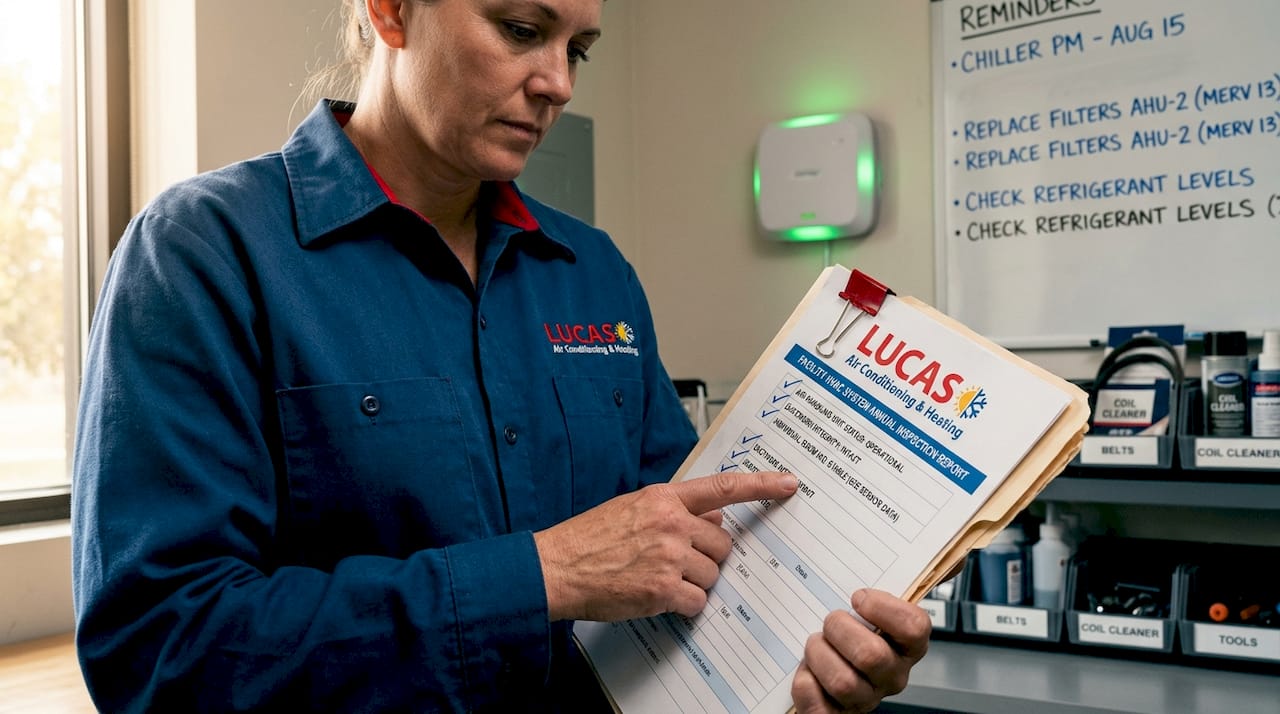
- Act on the findings. This sounds obvious, but it is the step most homeowners skip. An inspection report that sits unread on your kitchen counter for six months accomplished nothing. When a technician identifies a developing issue, schedule the repair within 30 days, or sooner if the item is flagged urgent.
My honest take on why inspections keep getting skipped
I have worked with enough homeowners and property managers to recognize a pattern. Inspections get skipped not because people think they are unimportant, but because nothing bad has happened yet. The system is running, the house is cool, so the inspection feels optional.
What I have seen change that thinking is usually a $3,000 emergency repair on a Sunday afternoon in July. At that point, the homeowner asks the technician how they could have avoided this, and the answer is almost always “a routine inspection six months ago.”
The other thing I have observed is that inspections fail not because technicians do a poor job, but because management and homeowner follow-through never materializes. A technician can identify every problem in your system. But if inspection findings sit without action, the inspection was theater, not maintenance. The real commitment is not scheduling the inspection. It is deciding in advance that you will act on what you learn.
— Lucasair
Schedule your HVAC inspection with Lucasair
If you are ready to stop guessing about your system’s condition and start protecting your investment, Lucasair is the right call. Cameron Lucas and his team have been serving Eustis, Florida and the surrounding Central Florida area since 2018, with a veteran-owned approach that treats every client’s home like their own.
Lucasair offers preventative maintenance agreements that include a yearly tune-up, 15% off parts, and priority scheduling so you always know where your system stands. Whether you manage a single home or multiple rental properties, that kind of consistent documentation and proactive care directly protects your budget and your tenants’ comfort. Lucasair also handles all follow-up repairs when inspections turn up issues, so you are not coordinating multiple contractors. Contact Lucasair today to schedule your inspection and find out exactly what your system needs before the next Florida summer arrives.
FAQ
How often should an HVAC system be inspected?
Most HVAC systems should be inspected at least once a year, though twice a year (spring and fall) is the standard recommendation for Florida’s climate. Consistent scheduling helps catch developing issues before peak demand seasons.
What does a standard HVAC inspection include?
A qualified technician checks refrigerant levels, electrical connections, coil condition, drain lines, thermostat calibration, airflow, and the condition of key components like the compressor and motor. The full HVAC inspection process covers both mechanical and safety-related items.
Can skipping inspections void my HVAC warranty?
Many manufacturer warranties require documented proof of regular maintenance. Skipping scheduled inspections may give the manufacturer grounds to deny a warranty claim, leaving you responsible for the full repair or replacement cost.
How do system inspections improve reliability?
Regular inspections catch small issues before they compound into major failures. How system inspections improve reliability comes down to one principle: a technician who finds a failing part during a scheduled visit replaces it on your schedule, not during an emergency breakdown.
What is the cost difference between inspection and emergency repair?
A routine HVAC inspection typically costs between $75 and $200. Emergency repairs, especially compressor or coil replacements, routinely run $1,000 to $3,000 or more. Regular inspections prevent the kind of cascading failures that turn small problems into large bills.
Recommended
- What Is HVAC Inspection and Why It Matters
- How to Inspect HVAC Systems for Homeowners and Managers – Lucas Air Conditioning and Heating
- 7 Must-Check Items for Your HVAC Inspection Checklist – Lucas Air Conditioning and Heating
- How to Maintain Industrial HVAC for Peak Performance – Lucas Air Conditioning and Heating