
TL;DR:
- Air conditioning works by transferring heat from indoors to outdoors using a vapor-compression cycle rather than creating cold air directly. Its efficiency depends on heat transfer performance, measured by the COP, which is affected by temperature differences and system maintenance. Proper coil cleanliness, correct sizing, and leak repairs are essential to maintaining optimal thermodynamic performance and reducing energy costs.
The thermodynamics of air conditioning is the science of how heat energy moves through a system to produce indoor cooling. Your AC unit does not create cold air. It transfers heat from inside your home to the outdoors by running refrigerant through a continuous vapor-compression cycle. Understanding this process explains why your system’s efficiency, sizing, and maintenance choices matter far more than most homeowners realize. The key performance metric is the Coefficient of Performance, or COP, which measures how much cooling you get per unit of electricity consumed.
How does the vapor-compression refrigeration cycle work?
The vapor-compression refrigeration cycle is the engine behind every residential and commercial air conditioner. It moves heat against its natural direction, from a cool space to a warm one, by adding mechanical work. That is exactly what the Second Law of Thermodynamics requires: heat will not flow uphill on its own, so you must supply energy to force it.
The cycle runs through four components in sequence:
- Compressor: The refrigerant enters as a low-pressure vapor. The compressor squeezes it, raising both pressure and temperature. Compressor outlet temperatures can reach 70°C to 90°C under normal operating conditions. That heat concentration is what allows the condenser to dump energy outdoors.
- Condenser coil: Hot, high-pressure refrigerant flows into the outdoor coil. It releases heat to the outside air and condenses into a liquid. The condenser must reject both the heat absorbed from your indoor air and the additional heat generated by the compressor motor itself.
- Expansion valve: The liquid refrigerant passes through a metering device that drops its pressure sharply. This pressure drop causes the refrigerant temperature to fall well below indoor air temperature, preparing it to absorb heat.
- Evaporator coil: Cold, low-pressure refrigerant flows through the indoor coil. Warm indoor air passes over it, and the refrigerant absorbs that heat as it evaporates back into a vapor. The cycle then repeats.
The phase changes, liquid to vapor and back again, are what make this system so effective. Refrigerants absorb enormous amounts of heat during evaporation without a large temperature change. That property is called latent heat, and it is the physical reason an AC can cool a room far more efficiently than a simple fan or resistive cooling element.
Pro Tip: If your system is running but the indoor air feels humid and only slightly cool, the evaporator coil may not be completing a full phase change. That usually points to low refrigerant charge or a restricted metering device, not a thermostat problem.
What thermodynamic metrics define air conditioner efficiency?
The Coefficient of Performance is the single most useful number for evaluating an air conditioner’s thermodynamic efficiency. COP is defined as the ratio of cooling output to electrical energy input. A COP range of 2 to 6 covers most residential AC units, meaning every watt of electricity delivers 2 to 6 watts of cooling effect. A COP of 4 is a solid benchmark for a well-maintained central system in a moderate climate.
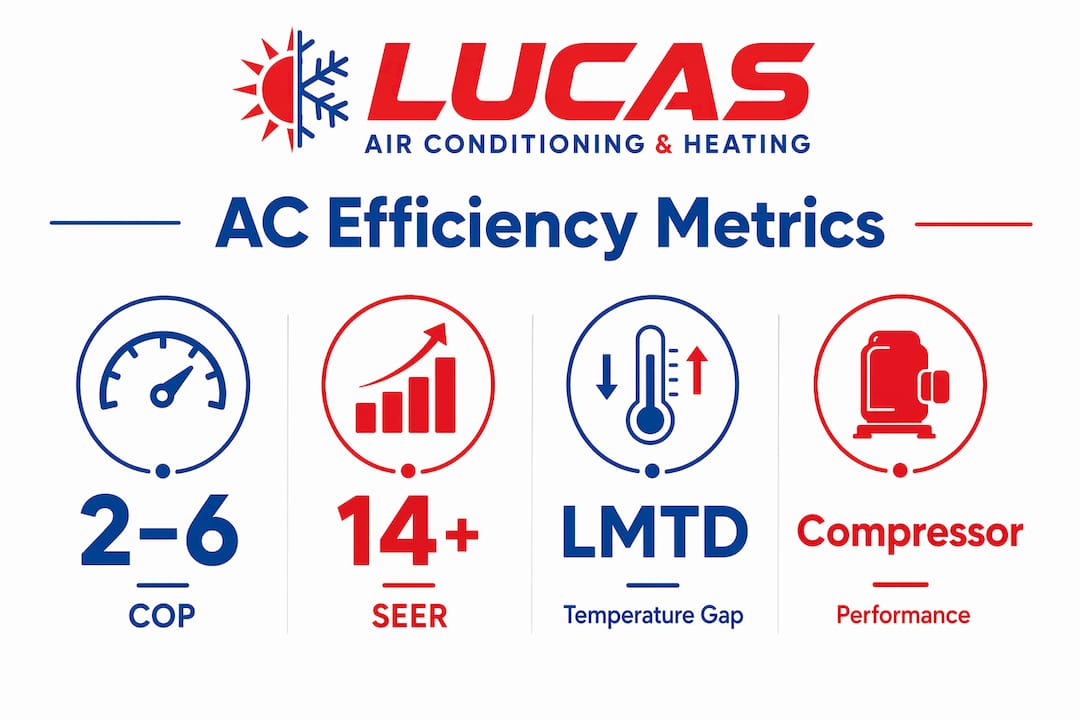
| Metric | Definition | Typical Range |
|---|---|---|
| COP | Cooling output divided by electrical input | 2–6 for residential units |
| SEER | Seasonal efficiency over a full cooling season | 14–20+ for modern systems |
| EER | Efficiency at a single rated condition | 10–14 for standard units |
| Temperature Differential | Difference between condensing and evaporating temps | Key driver of COP loss |
Temperature differential between the condenser and evaporator is the primary variable you can influence through maintenance. Each 5°C rise in condensing temperature relative to evaporating temperature cuts COP by roughly 8–12%. In Florida’s summer heat, that gap widens fast if your condenser coil is dirty or the outdoor unit is blocked.
Compressor and expansion valve performance also shape overall efficiency directly. A worn compressor that cannot reach design pressure ratios forces the system to run longer cycles to deliver the same cooling load. An obstructed expansion valve restricts refrigerant flow and starves the evaporator, dropping both capacity and COP simultaneously.
Pro Tip: Check your system’s SEER rating on the nameplate before calling for a tune-up. If the unit is rated SEER 14 but your energy bills suggest otherwise, the gap between rated and actual performance is your diagnostic starting point.
How do evaporator and condenser coils function thermodynamically?
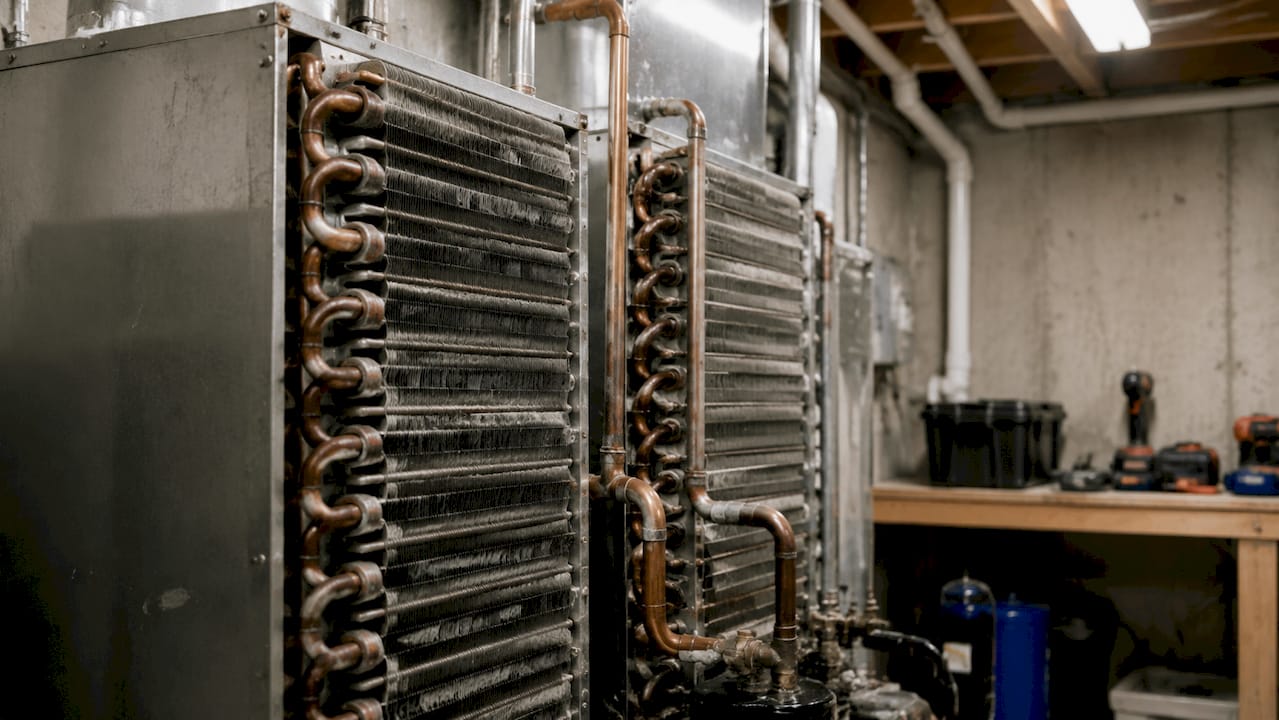
The evaporator and condenser coils are where the actual heat transfer in AC systems happens. Every efficiency gain or loss in the refrigeration cycle traces back to how well these two components exchange heat with their respective air streams.
Evaporator coil: absorbing indoor heat
The evaporator coil sits inside your air handler. Warm return air from your living space blows across it continuously. The refrigerant inside the coil is at low pressure and low temperature, so heat flows naturally from the air into the refrigerant. A properly functioning evaporator coil drops indoor air temperature by 15–20°F as it passes over the coil surface. HVAC technicians use this temperature split as a field benchmark for system health.
Common failure modes that reduce evaporator performance include:
- Dirty coil surface: Dust and debris act as insulation, reducing heat transfer area.
- Frozen coil: Ice buildup blocks airflow entirely and can damage the compressor if left unchecked.
- Low refrigerant charge: Less refrigerant means less heat absorption capacity per cycle.
- Restricted airflow: A clogged filter or blocked return vent reduces the volume of warm air reaching the coil.
Condenser coil: rejecting heat outdoors
The condenser coil carries the full thermal load of the system. It must reject both indoor heat and compressor-generated heat to the outdoor air. That combined load is called Total Heat Rejection, or THR, and it is always larger than the cooling capacity listed on the equipment label.
Accurate condenser sizing uses the Log Mean Temperature Difference, or LMTD, rather than a simple average of inlet and outlet temperatures. LMTD accounts for the exponential nature of heat transfer across the coil surface. Using an arithmetic average instead of LMTD leads to undersized condensers that run hot, compress efficiency, and shorten compressor life.
What inefficiencies affect air conditioning thermodynamics?
Real-world AC systems never reach their theoretical COP. Several mechanical and operational factors pull performance below the nameplate rating, and thermodynamics explains exactly why each one matters.
- Short-cycling from oversized units: An oversized air conditioner cycles on and off too frequently. Each startup draws peak electrical current, and the system shuts down before completing a full dehumidification pass. You get higher energy use and a clammy indoor environment despite a lower thermostat setting.
- Frozen evaporator coils: Frozen coils are caused by restricted airflow or low refrigerant charge, not cold weather. Ice acts as a thermal barrier, blocking heat transfer and forcing the compressor to work harder. Left unaddressed, ice buildup leads to compressor failure.
- Refrigerant leaks: In a closed-loop system, refrigerant is never consumed. If you are recharging refrigerant frequently, you have a leak. Topping off without finding and fixing the source degrades performance progressively and eventually destroys the compressor.
- Dirty condenser coils: Outdoor coils caked with debris raise the condensing temperature. That widens the temperature differential and cuts COP directly, as the 8–12% efficiency loss per 5°C rise makes clear.
- Compressor wear: A compressor that cannot maintain design pressure ratios reduces the refrigerant’s ability to absorb and release heat at the correct temperatures. The entire thermodynamic cycle shifts toward lower efficiency.
Pro Tip: Before any refrigerant recharge, ask your technician to perform a leak test first. Skipping that step is the most common way a minor refrigerant issue turns into a full compressor replacement.
You can explore common HVAC repair myths that lead homeowners to misdiagnose these exact problems and spend money on the wrong fixes.
Key takeaways
Air conditioning efficiency is determined by how well the vapor-compression cycle transfers heat across the evaporator and condenser coils, and COP is the clearest measure of that performance.
| Point | Details |
|---|---|
| AC moves heat, not cold | Air conditioners transfer heat from indoors to outdoors; they do not generate cold air. |
| COP measures real efficiency | Residential COP ranges from 2 to 6; higher values mean less electricity per unit of cooling. |
| Temperature differential drives losses | Each 5°C rise in condensing temperature cuts COP by 8–12%, making coil cleanliness critical. |
| Oversizing hurts performance | Units too large for the space short-cycle, raising energy use and reducing dehumidification. |
| Refrigerant leaks signal mechanical failure | Frequent recharging without leak repair degrades the system and leads to compressor damage. |
The metric most technicians ignore in the field
After years of working with HVAC systems across Central Florida, the gap between what thermodynamics predicts and what technicians actually measure in the field comes down to one overlooked number: Total Heat Rejection. Most service calls focus on supply air temperature or refrigerant pressure. Very few technicians calculate whether the condenser is actually rejecting the full combined load of indoor heat plus compressor heat.
That matters because a condenser running at 95°F ambient in a Florida summer is already fighting a steep uphill battle. If the coil is even partially fouled, the condensing temperature climbs, the COP drops, and the homeowner gets a higher electric bill with no obvious symptom except “it just doesn’t cool like it used to.” The fix is not a refrigerant top-off. The fix is a condenser coil cleaning and an airflow check.
The other misconception worth addressing directly: bigger is not better when it comes to choosing the right HVAC system. An oversized unit is a thermodynamic liability. It never runs long enough to pull latent heat out of the air, so the space feels cool but sticky. Proper Manual J load calculations exist for a reason, and skipping them costs you in comfort and energy bills every month.
Thermodynamics does not lie. If your system is underperforming, the physics will tell you exactly where the problem is. You just need to know which numbers to look at.
— Lucasair
How Lucasair applies these principles to every job

Knowing the thermodynamics of air conditioning is one thing. Applying it correctly during installation and maintenance is where the real difference shows up on your energy bill. Lucasair’s team in Eustis, Florida, uses load calculations, coil inspection, and refrigerant leak testing on every service visit because those steps directly protect your system’s COP and lifespan.
Whether you need a new system sized correctly from the start or a repair that addresses the root cause rather than the symptom, Lucasair brings the technical depth to get it right. Explore the HVAC installation process Lucasair follows to see how thermodynamic principles guide every sizing and component decision. For existing systems that are underperforming, the residential repair service covers everything from frozen coils to refrigerant leaks with a diagnostic-first approach.
FAQ
What is the coefficient of performance in AC systems?
COP is the ratio of cooling output to electrical energy input. Residential air conditioners typically achieve a COP between 2 and 6, meaning each unit of electricity delivers 2 to 6 units of cooling.
Why does my AC feel less efficient on hot days?
Higher outdoor temperatures raise the condensing temperature, which widens the gap between the condenser and evaporator. That temperature differential directly reduces COP, so your system consumes more electricity to deliver the same cooling output.
Does an air conditioner create cold air?
No. An AC operates as a heat pump in reverse, moving heat from a cooler indoor space to a warmer outdoor environment using mechanical work. It removes heat rather than producing cold.
What causes frozen coils on an air conditioner?
Frozen coils result from restricted airflow or low refrigerant charge, not outdoor temperature. Ice buildup on coils blocks heat transfer and can cause compressor failure if the underlying cause is not corrected.
How often should refrigerant be recharged?
Refrigerant should never need regular recharging in a properly sealed system. Frequent recharging signals a leak that requires professional repair before any refrigerant is added.
Recommended
- Forced Air Heating and Cooling Systems: 2026 Guide – Lucas Air Conditioning and Heating
- Air Conditioning Terminology: A Homeowner’s Guide – Lucas Air Conditioning and Heating
- How to Choose HVAC System for Energy-Efficient Comfort – Lucas Air Conditioning and Heating
- Air Conditioner Invention History: A Complete Timeline – Lucas Air Conditioning and Heating
