
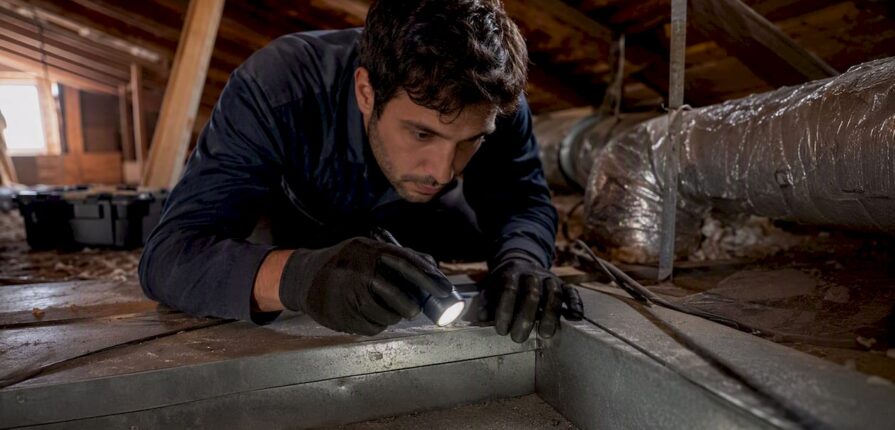
Routine duct cleaning is usually not worth it. The U.S. EPA’s guidance is direct: clean your ducts only when there is a specific, visible reason to do so, not on a calendar schedule. For most homes with no contamination event, the money is better spent elsewhere. That said, there are real situations where skipping a cleaning is the wrong call.
Cleaning is justified when you can confirm one of these:
- Visible mold growing inside the ducts or on any HVAC component (not just surface dust)
- Rodent or insect infestation, including droppings or nesting material in the ductwork
- Post-flood, post-fire, or water-intrusion damage where moisture reached the duct interior
- Heavy construction debris or post-renovation dust actively discharging from registers
- Persistent, foul odors that originate from the duct system and do not clear after filter changes
If none of those apply, inspect first and document what you find before spending anything. A photo of your registers and a look inside the air handler will tell you more than any sales pitch.
Key Takeaways
Routine duct cleaning is not worth it for most homes; it pays only when visible contamination, mold, pests, or post-construction debris is confirmed in the duct system.
| Point | Details |
|---|---|
| Cleaning is conditional | The EPA and NIH both state that routine cleaning is not recommended; clean only when mold, pests, water damage, or heavy debris is confirmed. |
| Cost range to expect | A legitimate NADCA-complete job runs $450–$1,000; quotes below $150 are almost always bait-and-switch. |
| Air handler must be included | Cleaning ducts without servicing the coil and blower leads to rapid recontamination; always confirm the air handler is in scope. |
| Better alternatives exist | Duct sealing and annual coil cleaning typically deliver more measurable benefit than routine cleaning. |
| Lucasair for Central Florida | Lucasair provides NADCA-aligned cleanings with written scope, pre/post photos, and transparent pricing across Central Florida. |
Table of Contents
- When is duct cleaning actually worth doing?
- What the evidence actually says about health and energy benefits
- How to inspect your own ducts before calling anyone
- What a proper duct cleaning includes and what it costs
- Risks of poor duct cleaning and the scams to watch for
- How to choose a duct cleaning contractor
- Prevention and alternatives that often beat routine duct cleaning
- What Lucasair does on a duct cleaning job
- An honest take on when to spend the money
- Lucasair serves Central Florida homeowners with honest HVAC service
- Sources
When is duct cleaning actually worth doing?
The triggers above are not arbitrary. Each one represents a situation where the duct system itself has become a contamination source, not just a passive carrier of ordinary household dust.
Visible mold is the clearest case. Mold inside metal or flex ducts can spread spores every time the system runs. The threshold here is actual fungal growth confirmed by a professional, not dark discoloration that turns out to be dust. If you see fuzzy growth on the interior duct surface or on the air handler coil, that warrants action.
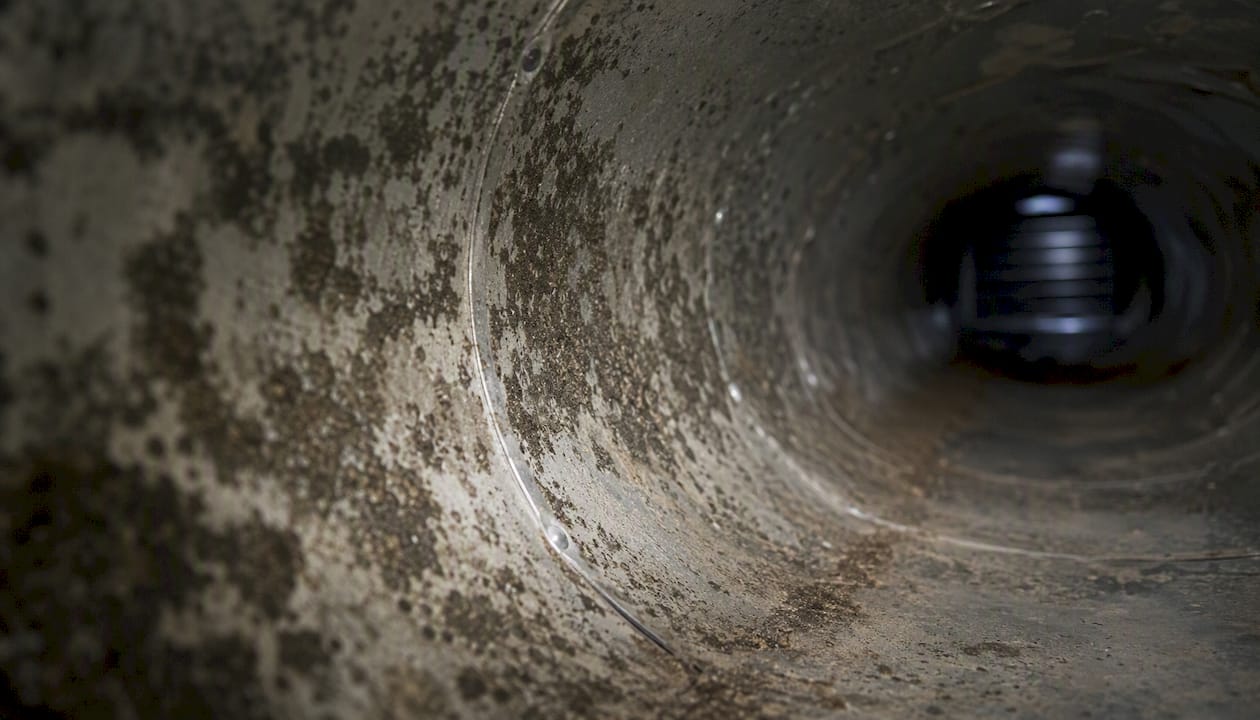
Rodent and insect infestations leave behind droppings, urine, and nesting debris that no filter will address. The contamination is biological, and it recirculates. A Central Florida home with a history of pest activity in the attic or crawlspace is a legitimate candidate for cleaning after the infestation is resolved.
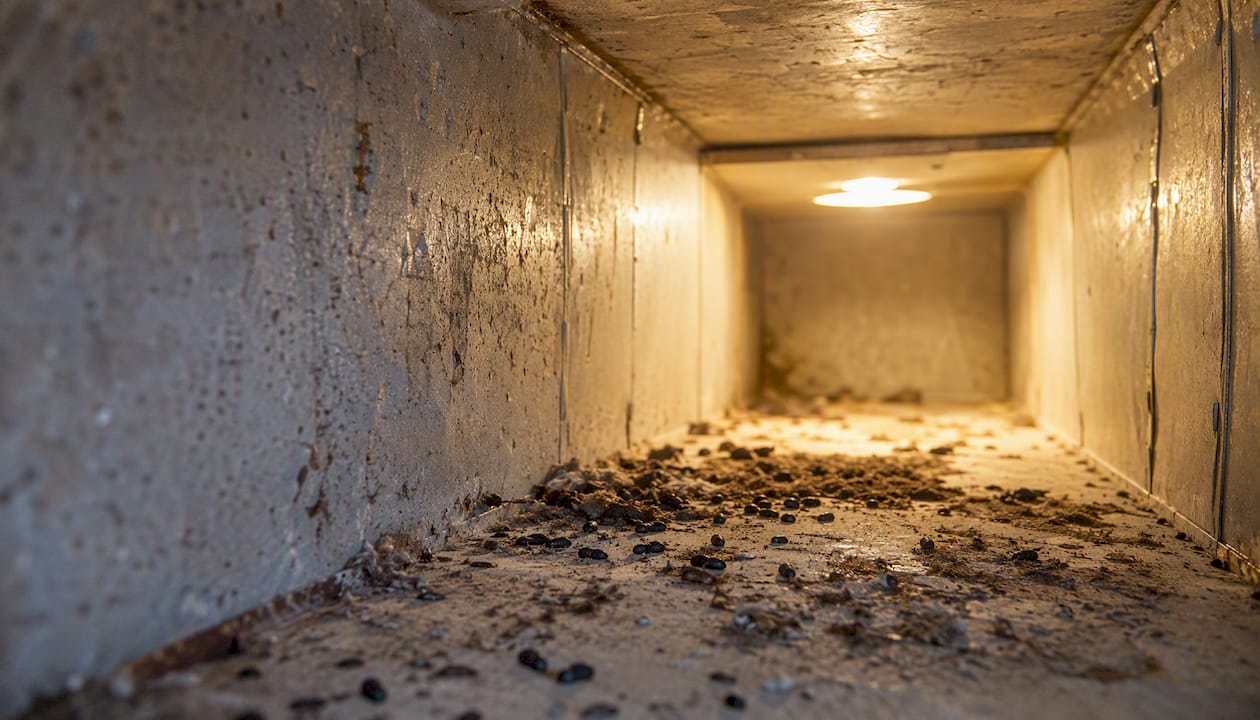
Post-flood and water-intrusion events are serious. Moisture inside ductwork creates conditions for mold within 24–48 hours. If a plumbing leak, roof leak, or flood reached the duct interior, cleaning (and in some cases replacement) is not optional.
Post-construction dust is a common and underappreciated trigger. A kitchen renovation or whole-home remodel generates fine particulate that settles inside supply and return ducts. If the system ran during construction without proper register covers, the debris load can be substantial enough to restrict airflow and coat the air handler coil.
Persistent odors that survive filter changes and coil cleaning and clearly originate from the duct system are worth investigating. Musty, smoky, or animal smells that intensify when the fan runs point to the duct interior as the source.
Normal dust accumulation, by contrast, does not meet this bar. Dust in ducts is nearly universal and does not, on its own, indicate a cleaning is needed.
What the evidence actually says about health and energy benefits
The science here is more limited than most duct cleaning companies will tell you. A peer-reviewed review of the scientific literature found insufficient and inconsistent evidence that routine duct cleaning measurably improves indoor air quality or occupant health. The NIH/DOHS fact sheet reaches the same conclusion: IAQ benefits of routine cleaning are inconclusive, and cleaning is appropriate only in specific circumstances such as water damage, microbial growth, pest infestation, or debris obstructing airflow.
Energy savings claims are similarly overstated for routine cleaning. The efficiency gains that matter come from coil cleaning, duct sealing, and air handler maintenance, not from wiping down duct walls. NADCA’s guidance makes this explicit: cleaning ducts without servicing the air handler and coils often leads to rapid recontamination, because the dirty components upstream simply re-deposit debris into the freshly cleaned ductwork.
The NADCA ACR Standard defines what a complete cleaning actually requires: supply ducts, return ducts, and the air handler (coils, blower, drain pan) must all be addressed for the job to be considered complete. A company that cleans only the duct runs and leaves the air handler untouched has not done a complete job by any professional standard.
If you have respiratory symptoms, allergy concerns, or suspect mold, discuss those with a clinician and get a professional inspection before spending money on cleaning. Duct cleaning is not a medical treatment.
How to inspect your own ducts before calling anyone
A basic DIY inspection takes about 30 minutes and can save you from an unnecessary service call or, more importantly, catch a real problem early. Here is how to do it:
- Turn off the system. Cut power at the thermostat before removing any registers.
- Remove two or three supply registers in different parts of the house. Use a screwdriver; most are held by two screws. Shine a flashlight inside and look at the first 12–18 inches of duct.
- Check for visible debris. A light coating of dust is normal. Heavy clumps of debris, insulation fragments, or construction material are not.
- Look for moisture or discoloration. Dark streaking, rust staining, or visible wet spots inside the duct indicate a moisture problem.
- Smell the duct interior. Musty, smoky, or animal odors are red flags.
- Inspect the return air grille. This is the large grille that pulls air back to the air handler, usually in a hallway or central room. Heavy dust buildup here is common and usually addressed by filter changes, not duct cleaning.
- Check the air handler cabinet. Open the access panel (power off first) and look at the evaporator coil and blower wheel. A coil caked in gray dust or a blower wheel with thick debris buildup is a maintenance problem that cleaning the ducts alone will not fix.
- Photograph everything. Date-stamp your photos. These images are useful when getting contractor quotes and serve as a baseline for future comparisons.
- Inspect accessible flex duct runs in the attic or crawlspace if you can safely reach them. Look for disconnected sections, crushed duct, or visible pest damage.
- Stop and call a pro if you find suspected mold (fuzzy growth, not just dark dust), rodent droppings, or evidence of standing water inside the system.
Pro Tip: Use a cheap USB borescope camera (available for under $30 on Amazon) to photograph inside duct runs beyond the first bend. The images give you hard evidence for contractor conversations and help you spot debris or moisture that a flashlight alone would miss.
What a proper duct cleaning includes and what it costs
A complete cleaning per NADCA standards covers the entire air distribution system: supply ducts, return ducts, all registers and grilles, the air handler cabinet, evaporator coil, blower wheel, and drain pan. Skipping the air handler is not a minor omission. The coil and blower are the dirtiest components in most systems, and leaving them contaminated means the cleaned duct runs will pick up debris again within weeks.
Equipment you should expect to see
- Negative-pressure vacuum system: Either a truck-mounted unit (more powerful) or a large portable HEPA-filtered vacuum. The technician connects this to the duct system to create negative pressure, so debris is pulled out rather than pushed into the living space.
- Rotary brushes or air whips: Mechanical agitation tools that dislodge debris from duct walls before the vacuum pulls it out.
- HEPA filtration: Required to capture fine particulate at the vacuum exhaust. A company using a shop vac is not doing a real cleaning.
- Hand tools and inspection camera: For register cleaning, air handler access, and post-cleaning verification.
What does it cost?
Reputable residential jobs typically run $450–$1,000 for a NADCA-standard cleaning of a single-family home. A separate consumer cost guide puts the typical range at $300–$700, with per-vent pricing around $25–$50. The spread reflects home size, duct complexity, and whether the air handler service is included.
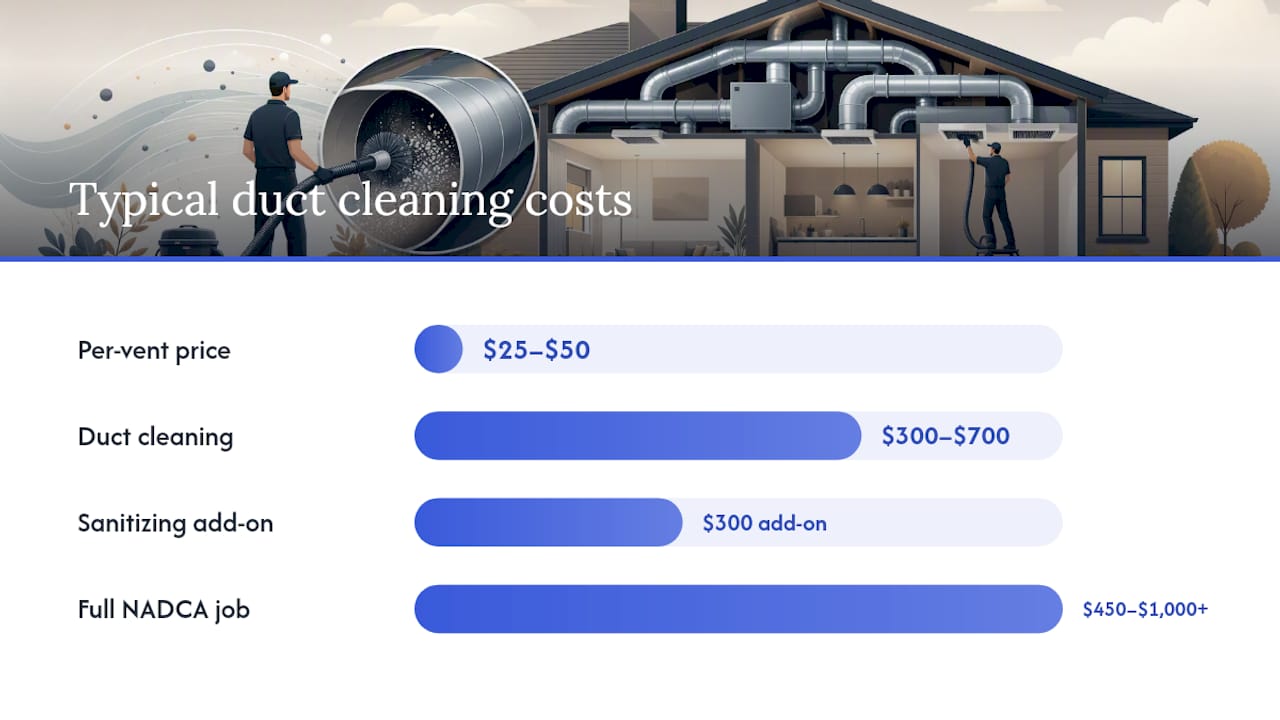
| Service component | Typical cost range | Notes |
|---|---|---|
| Duct cleaning only (supply + return) | $300–$700 | Per NADCA scope, single-family home |
| Per-vent pricing | $25–$50 per vent | Common pricing model; verify total vent count upfront |
| Air handler / coil cleaning | Often billed separately | Critical for a complete job; ask if it is included |
| Sanitizing / antimicrobial fogging | $300 add-on | Rarely necessary; see risks section |
| Full NADCA-complete job (ducts + air handler) | $450–$1,000+ | Most honest providers in this range |
Time on site for a thorough job on a typical home runs two to four hours. A crew that finishes in 45 minutes has not done a complete cleaning.
Risks of poor duct cleaning and the scams to watch for
A bad duct cleaning can leave your system in worse shape than before. These are the real risks:
- Disturbed mold spores: Cleaning mold without proper containment spreads spores throughout the home. If mold is suspected, the contractor must follow remediation protocols, not standard cleaning procedures.
- Torn or disconnected flex duct: Aggressive brushing or improper tool use can puncture flexible ductwork, creating air leaks that reduce system efficiency and allow unconditioned air into the living space.
- Damaged coil fins: Improper coil cleaning can bend the delicate aluminum fins on the evaporator coil, reducing heat transfer efficiency.
- Increased airborne dust during cleaning: Without proper negative-pressure containment, cleaning can push debris into the living space rather than removing it.
The scam patterns are well-documented. A $99 “whole-house special” is almost always a bait-and-switch. The technician arrives, “discovers” mold or severe contamination, and the price climbs to $600–$1,500 before any real work begins. The original $99 covers nothing close to a complete cleaning.
Watch for these specific red flags:
- Advertised prices below $150 for a whole-house cleaning
- No mention of negative-pressure equipment in the quote
- Pressure to add antimicrobial fogging on every job (it is rarely indicated)
- No written scope of work before the job starts
- Technicians who cannot name the equipment they are using
- No camera inspection offered before or after the cleaning
On-site verification: ask the technician to show you the vacuum equipment before work begins, request pre-cleaning photos of the air handler and two or three duct runs, and ask for a post-cleaning visual or surface comparison test per NADCA’s ACR Standard.
How to choose a duct cleaning contractor
The credential that matters most is NADCA membership, specifically technicians who hold the Air Systems Cleaning Specialist (ASCS) certification. NADCA members are bound by the ACR Standard and can be verified on the NADCA website. That does not guarantee a perfect job, but it sets a floor.
Questions to ask before booking:
- Are your technicians NADCA-certified (ASCS)?
- What vacuum equipment do you use, and is it truck-mounted or portable HEPA?
- Does your quote include the air handler, coil, and blower, or just the duct runs?
- How do you verify cleanliness after the job? (Look for mention of a surface comparison test or vacuum test.)
- Can you provide pre- and post-cleaning photos?
- Do you carry liability insurance and workers’ compensation?
- What is your policy if I find damage after the cleaning?
What must appear in the written estimate:
- Complete scope of work (every component to be cleaned, listed by name)
- All-in total price with no vague “per register” language that allows the final bill to balloon
- Pre- and post-cleaning verification method
- Any add-ons (sanitizing, coil cleaning) listed separately with individual prices
- Cancellation policy and what happens if additional work is “discovered” on-site
Pro Tip: Get at least two written quotes from NADCA-member companies before booking. If one quote is dramatically lower than the others, ask exactly what it excludes. The gap usually explains itself.
Quick go / no-go checklist before signing:
- The written scope includes the air handler, coil, and blower (not just duct runs)
- The technician can name the negative-pressure vacuum equipment and show it to you on arrival
- The total price is fixed and all-in, with any add-ons listed separately and optional
If all three are yes, you are likely dealing with a legitimate provider. If any are no, keep looking.
Prevention and alternatives that often beat routine duct cleaning
For most homeowners, the highest-return investments in air quality and system efficiency are not duct cleanings. They are the maintenance steps that prevent contamination from building up in the first place.
Maintenance checklist that actually moves the needle
- Change filters on schedule. A MERV 8–13 filter changed every 60–90 days catches the particulate that would otherwise coat the coil and duct interior. MERV 13 is the sweet spot for most residential systems: it captures fine particles without restricting airflow the way MERV 16+ filters can on undersized systems.
- Clean the evaporator coil annually. A dirty coil is the single biggest driver of reduced system efficiency and indoor air quality degradation. Annual AC maintenance that includes coil cleaning delivers more measurable benefit than a duct cleaning in most homes.
- Seal duct leaks. ENERGY STAR estimates that duct sealing can improve HVAC efficiency by up to approximately 20% in some homes. Leaky return ducts pull unconditioned attic air (and its dust and humidity) directly into the system. Sealing those leaks reduces contamination load and cuts energy bills.
- Schedule a professional tune-up annually. A tune-up covers coil cleaning, blower inspection, refrigerant check, and drain pan treatment. It addresses the components most likely to affect air quality and efficiency.
Alternatives worth comparing
Consumer Reports and most IAQ specialists consistently rank source control and filtration above duct cleaning as primary health strategies. Here is how the main options stack up:
Duct sealing and a filtration upgrade together often cost less than a single duct cleaning and deliver measurable efficiency gains that a cleaning alone cannot match. If your ducts do not meet the contamination triggers listed earlier, start here.
What Lucasair does on a duct cleaning job
Lucasair follows a NADCA-aligned workflow on every residential cleaning. Here is what that looks like in practice:
- Pre-job inspection and documentation: A technician inspects the air handler, coil, and accessible duct runs before touching anything. Photos are taken of the air handler, blower, coil, and two or three representative duct sections. You get copies.
- Negative-pressure setup: The vacuum system (HEPA-filtered) is connected to the main trunk line before any agitation begins. This creates negative pressure in the duct system so that loosened debris moves toward the vacuum, not into your living space.
- Mechanical agitation: Rotary brushes or air whips are run through supply and return duct runs to dislodge debris from duct walls.
- Air handler service: The blower wheel, evaporator coil, and drain pan are cleaned as part of the job, not as a separate upsell. Cleaning the ducts without servicing the air handler is not a complete job.
- Register and grille cleaning: All supply and return registers are removed, cleaned, and reinstalled.
- Post-cleaning verification: A visual inspection and surface comparison test confirm cleanliness per NADCA ACR methods. Post-cleaning photos are taken of the same components documented before the job.
- Written documentation: You receive a written scope of work, before-and-after photos, and a clear invoice with no surprise line items.
Lucasair is veteran-owned, established in 2018 by Army Veteran Cameron Lucas, and serves residential and commercial customers across Central Florida. Financing options are available for larger jobs. For homes where the inspection does not reveal a contamination trigger, Lucasair will tell you that directly rather than sell you a cleaning you do not need.
An honest take on when to spend the money
Most homeowners asking whether duct cleaning is worth it have been targeted by a $99 mailer or a neighbor’s recommendation. The honest answer is that for a home with no contamination event, no mold, no pests, and no post-construction debris, a duct cleaning is not the highest-value use of $500. A preventative maintenance agreement that includes annual coil cleaning, filter changes, and a system tune-up will do more for your air quality and energy bills over five years than a single duct cleaning.
That said, when the triggers are real, skipping the cleaning is also the wrong call. Mold in the duct system does not resolve itself. Rodent debris does not filter out. Post-flood contamination requires professional remediation, not just a filter change.
The approach worth taking: inspect first, document what you find, and get a written quote from a NADCA-certified provider before spending anything. If the inspection turns up nothing concerning, redirect that budget toward a tune-up and a filtration upgrade. If it turns up mold, pests, or significant debris, book the cleaning and make sure the air handler is included in the scope.
Lucasair serves Central Florida homeowners with honest HVAC service
If your inspection turns up a real contamination trigger, or if you want a professional set of eyes on your system before deciding, Lucas Air offers full-system inspections, NADCA-aligned duct cleanings, coil and air handler service, and duct sealing for residential and commercial properties across Central Florida.
Every job comes with a written scope, pre- and post-cleaning photos, and transparent pricing. No $99 bait-and-switch. No pressure to add services you do not need. Lucasair is veteran-owned and has served Central Florida homeowners since 2018, with financing available for larger projects.
Ready to know what is actually in your ducts? Schedule a duct cleaning inspection with Lucasair, or explore the full range of HVAC services to find the right starting point for your home.
Sources
- Should You Have the Air Ducts in Your Home Cleaned? | US EPA
- Proper cleaning methods for homeowners | NADCA
- DOHS Fact Sheet On HVAC Duct Cleaning
- Complete Guide to HVAC Duct Cleaning Costs and Standards
- Air Duct Cleaning Cost in 2026: Real Prices and When to Skip It | Home Energy Decisions
- PubMed reference (review of duct-cleaning studies)
- ENERGY STAR
- Consumer Reports
This article is general information, not a substitute for advice from a qualified doctor. Consult a qualified healthcare professional about your own circumstances before acting on anything here.
Recommended
- When does duct cleaning really help Florida homes? – Lucas Air Conditioning and Heating
- Why Regular Duct Cleaning Boosts Air Quality and Efficiency – Lucas Air Conditioning and Heating
- Duct Cleaning & Indoor Air Quality: Evidence & Best Practices – Lucas Air Conditioning and Heating
- Step by Step Duct Cleaning: Home Guide for 2026 – Lucas Air Conditioning and Heating
