
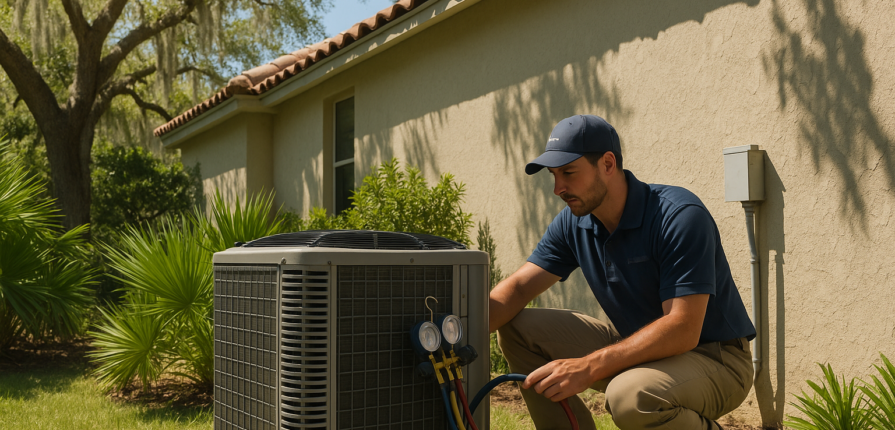
TL;DR: Most air conditioners last 10-15 years nationally, but Florida’s heat, humidity, and nearly year-round runtime typically push that number toward the lower end of the range. Coastal salt exposure, skipped maintenance, and oversized or undersized units can shorten lifespan even further, while consistent tune-ups and proper installation can extend it.
If you live in Lake or Orange County, your air conditioner works harder than almost any appliance in your home. Florida’s heat and humidity mean your system runs longer hours, more days a year, than an AC unit in Ohio or Colorado ever will. So it’s a fair question: how long should your unit actually last before you’re shopping for a replacement?
The Short Answer: 10-15 Years, Often Less in Florida
Nationally, an AC lasts between 10 to 15 years on average. That figure comes from typical use across all climates, including states with mild summers and cold winters where the system gets a seasonal break.
Florida doesn’t offer that break. Air conditioners in Florida typically operate year-round, particularly in the southern and coastal regions, and daily use in both summer and winter means more run cycles and longer operation times. That extra workload is why even well-maintained systems can exhibit signs of stress due to nonstop workload, resulting in an average lifespan of around 10 years instead of 15.
For homes closer to the coast, the number can drop further. Because half of the unit is located outside, air conditioners installed in salty coastal areas may give out after just seven to 12 years. Central Florida communities like Tavares, Eustis, and Mount Dora are inland, which helps, but Gulf and Atlantic breezes still carry enough salt to matter for homes closer to the coastline.
How an AC’s Lifespan Is Actually Measured
When manufacturers and government agencies calculate “average lifespan,” they’re often working from long-term modeling rather than a single number. The U.S. Department of Energy’s guidance for federal purchasing decisions uses an average residential central air conditioner life of 18 years in some of its lifecycle cost models, while other DOE calculations reference an average residential central air conditioner life of 25 years for higher-efficiency equipment. These are engineering estimates under ideal conditions — not a guarantee for a unit running nonstop in Central Florida humidity.
ENERGY STAR takes a more practical, homeowner-facing approach. Its guidance says a heat pump or air conditioner more than 10 years old should be considered for replacement with an ENERGY STAR labeled unit, which can save up to 20 percent on heating and cooling costs when installed correctly. That 10-year mark is a useful checkpoint for Florida homeowners, even if your system is still technically running.
What Shortens an AC’s Life in Florida
Heat and Humidity
Florida’s humid subtropical climate places significant stress on HVAC systems, with summer temperatures regularly exceeding 90°F and humidity levels around 70-80%. That combination forces the compressor and fan motor to run longer cycles just to keep up.
Salt Air and Coastal Corrosion
Excess moisture can cause metal components to rust, promote mold growth in coils, and prematurely wear out electrical systems, and in coastal areas the presence of salt in the air adds another layer of risk, especially for outdoor condenser units. Even inland communities can see accelerated wear if the condenser sits in a shaded, damp spot with poor airflow.
Skipped Maintenance
Neglect is one of the most preventable causes of early failure. Industry guidance consistently points to the same fix: the easiest, most affordable way to increase the lifespan of your home’s AC is with routine maintenance services by a certified professional, performed at least once every year before the summer. Our $125 precision tune-up and $129/year Preventative Maintenance Agreement exist for exactly this reason.
Incorrect Sizing or Installation
An oversized unit short-cycles and never properly dehumidifies your home; an undersized one runs constantly and burns out prematurely. This is why installation quality matters as much as the equipment itself — and why it’s worth understanding when a repair still makes sense versus when replacement is the smarter long-term move.
Ignoring Early Warning Signs
Small problems compound quickly in Florida’s climate. A failing capacitor, a clogged condensate line, or an unusual burning smell are all signals your system is under strain before a full breakdown happens. If you’ve noticed a burning odor from your vents, water pooling near your air handler from a clogged condensate drain line, or symptoms of a failing AC capacitor, addressing it quickly can add real years to your system’s life.
Pros and Cons of Pushing an Older Unit to Its Limit
Pros of Keeping an Aging AC Running
- Delays the upfront cost of replacement
- Makes sense if the unit is under 10 years old and problems are minor
- Buys time to plan and budget for a future upgrade
Cons of Keeping an Aging AC Running
- Older units are less efficient, so equipment that needs frequent repairs and comes with rising energy bills usually signals declining efficiency
- Refrigerant and parts availability shrinks as systems age, especially with the ongoing refrigerant transition — see our guide on the R-454B refrigerant switch
- Breakdown risk rises sharply once a unit passes 12-15 years in Florida’s climate
- Repeated repair bills can eventually exceed the cost of a new, warrantied system
When It’s Time to Start Planning for Replacement
You don’t need to wait for a total breakdown. Consider starting the replacement conversation when:
- Your system is 10+ years old and needs a repair
- Energy bills are climbing without an obvious cause
- Some rooms are noticeably hotter or more humid than others
- Your unit needs R-22 refrigerant, which is being phased out
- You’re facing a second major repair within 12 months
ENERGY STAR notes that beyond age, the clearest signs it’s time to replace are equipment needing frequent repairs, rising energy bills, and some rooms in the home running too hot or too cold.
How to Get More Years Out of Your Florida AC
- Schedule annual tune-ups — ideally before peak summer heat arrives
- Change or clean filters monthly during heavy-use months
- Keep the outdoor condenser clear of debris, vegetation, and standing water
- Seal ducts and add smart thermostat controls to reduce unnecessary run time — a smart or programmable thermostat allows you to set temperature schedules, reducing wear on the unit and helping it stay in top condition longer
- Address small issues immediately rather than waiting for a breakdown
The Bottom Line for Lake and Orange County Homeowners
Plan for a 10-to-15-year lifespan, lean toward the lower end if you’re near water or skip maintenance, and treat the 10-year mark as your checkpoint to start evaluating your system’s condition rather than waiting for it to fail. A well-maintained, correctly sized system installed by a licensed contractor will always outlast one that’s neglected or was undersized from day one.
Lucas Air Conditioning and Heating is a veteran-owned, locally based company serving Tavares, Eustis, Leesburg, Mount Dora, The Villages, and surrounding communities. Whether you need a straightforward tune-up or you’re weighing a full system replacement, we’ll give you an honest answer — no upselling, just straight talk from a team that treats your home like our own.
Recommended Reads
- AC Repair vs. Replacement: How to Make the Right Call in Florida
- Why Does My AC Smell Like Burning? Common Causes and When to Worry
- The R-454B Refrigerant Switch: What Florida Homeowners Need to Know
