
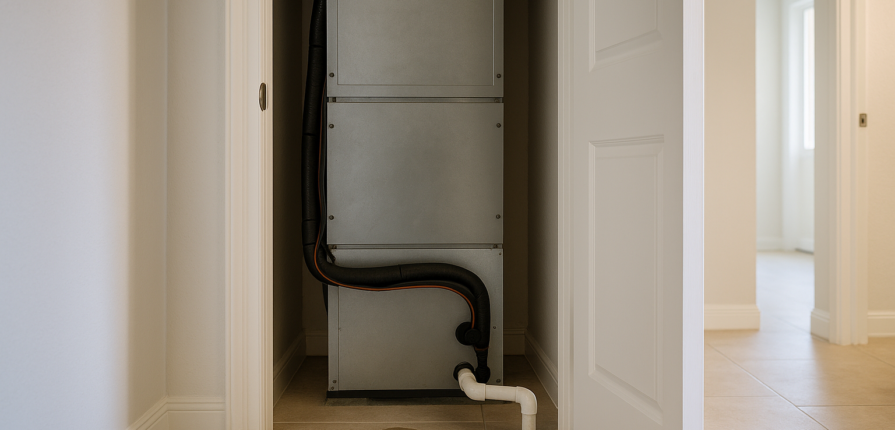
TL;DR: Your AC pulls gallons of moisture out of Florida’s humid air every day, and all of it flows through one small PVC pipe. When that pipe clogs with algae, biofilm, or debris, water backs up into the drain pan and can flood your home, trip a safety switch, or quietly grow mold. Catching it early — and flushing the line regularly — prevents most of the expensive damage.
A puddle under your air handler is one of those problems that looks minor right up until it isn’t. By the time water is dripping on the floor, the drain pan has already overflowed — and whatever is above it (drywall, insulation, flooring) has been absorbing moisture for a while.
Nine times out of ten, the cause is a clogged condensate drain line. Here’s what that means, why it happens so often in Lake County and Central Florida, and what you can do about it.
What Is a Condensate Drain Line?
Your air conditioner does two things at once: it cools your home and it acts as a dehumidifier. When warm household air passes over the cold evaporator coil inside your air handler, water vapor condenses on the coil the same way beads form on a glass of iced tea.
That condensate drips into a drain pan and flows through a drain line — typically a ¾-inch PVC pipe — to an exterior discharge point. That little pipe is quietly carrying a significant volume of water every single day.
In Florida’s summer humidity, often 80 to 90 percent outdoors, a typical residential AC system produces 5 to 20 gallons of condensate per day. Over a full cooling season — and in Lake County, that season runs most of the year — your AC may drain 1,500 to 3,000 gallons of water through that single small pipe.
What Causes a Condensate Drain Line to Clog?
Given that volume of warm, dark, slow-moving water, clogs are almost predictable without regular maintenance. The main culprits:
Algae and Mold Growth
The dark, damp environment inside the drain line is a perfect breeding ground for mold and algae. This growth can create a thick sludge that clogs the pipe.
Algae and mold growth is the most frequent cause of clogs. The drain line is consistently moist and dark — conditions well-suited to biological growth. Over time, algae, mold, and slime build up inside the line and restrict or fully block water flow. Because this happens gradually, it often goes unnoticed until water has already backed up into the pan.
Dust, Dirt, and Debris
As your system circulates indoor air through the evaporator coil, it naturally collects dust and airborne particles. When these particles mix with the moisture your AC removes from the air, they create a sludge. Over time, this debris can travel into your condensate drain line, causing a blockage.
High Humidity Overwhelms the Line
During periods of high humidity, your AC system produces more condensation. This can overwhelm the drain line and accelerate the growth of blockages. In Central Florida, that means the problem peaks in June through September — exactly when you need your AC most.
Other Causes
Improper slopes or disconnected lines can prevent water from draining correctly even when the line itself is clear. Insects and spiders can also find their way into the open outdoor end of the pipe. A clog may also be due to general dust, dirt, dander, or debris entering the drain line — it could even be caused by a spider building a web.
Warning Signs Your Condensate Drain Line Is Clogged
Some of these are obvious. Others are easy to miss until the damage is done.
- Water pooling near the air handler. A clogged condensate line will cause your drain pan to fill up, and the water sitting in the drain pan will eventually overflow and trickle down the walls. Water damage near an AC is a clear indication of a clog in the AC drain pipe.
- Your AC shuts off unexpectedly. Modern systems often have a safety float switch. If a clog causes the drain pan to fill with water, this switch triggers the system to shut down completely to prevent water damage to your ceilings or floors. If your AC cut off suddenly on a hot afternoon, a clogged line may have tripped that switch — not a failing compressor.
- Musty or moldy smell from vents. Musty, moldy smells coming from the indoor unit or air vents are a classic sign. Standing water in the pan grows mold fast, and your blower fan circulates that air straight into your living space.
- Your home feels more humid than usual. If your AC is not removing moisture from the air, it is another indication of a clogged AC drain line. The water sitting in a drain pan, because of a clog, can evaporate back into the air, causing humidity levels to soar.
- No drip from the outdoor drain pipe. If the AC is running but no water is dripping from the drain pipe, you likely have a clogged condensate drain line, a frozen evaporator coil, or a disconnected pipe.
- Rust on the drain pan. Rust on the drain pan can develop when there is water damage from a clogged drain line — a sign the problem has been building for some time.
If you’re also noticing that your system isn’t cooling effectively alongside these symptoms, read our guide on 8 reasons your AC isn’t cooling enough — a clog is one of several possible causes worth checking.
What Happens If You Ignore It
A clogged condensate drain line isn’t a wait-and-see problem.
If the pan overflows, water can damage floors and drywall, and potentially cause mold and mildew issues. In addition, if moisture is not moved away from the unit, it can cause rust and other issues that can shorten your AC system’s life.
If the condensate line becomes clogged, this excess water can overflow, leading to severe water damage in ceilings and walls within just a few hours. In attic-mounted systems — very common in Central Florida homes — that means water damage you may not see until it’s already soaked through the drywall below.
Standing water provides the perfect habitat for molds and algae to grow, which then become an indoor air quality problem, not just a plumbing one. The EPA recommends keeping indoor humidity below 60 percent to limit mold growth — a target that’s hard to hit when your drain pan is overflowing back into your living space.
The Float Switch: Your Safety Net (Not a Permanent Fix)
A condensate safety switch (also called a float switch) is a small device that automatically shuts your air conditioner off when water backs up in the drain pan. It prevents a clogged condensate line from overflowing and flooding your ceilings, walls, and floors.
If you have a condensate drain switch and your air conditioner or heat pump suddenly shuts off in the heat of the day, a clogged condensate line or clogged condensate pan may be to blame.
The float switch is a great protector — but it’s not a fix. It just stops the flooding. The clog still needs to be cleared before your system will cool your home again. Condensate safety switches are typically required by building codes and regulations to ensure the safe and proper operation of HVAC systems, especially in areas where water damage is a concern. If your system doesn’t have one, ask your tech about adding one at your next service visit.
How to Clear a Clogged Condensate Drain Line (DIY Steps)
If you’re comfortable doing basic maintenance, a simple clog can sometimes be cleared at home. Here’s how:
- Turn off your AC. Switch the thermostat to OFF. Don’t try to clear the line while the system is running.
- Find the access point. The AC drain line is typically a PVC pipe connected to the indoor air handler, running to a nearby floor drain or outside wall. Look near the indoor unit — usually in the attic, basement, or utility closet — for a small white PVC pipe exiting the evaporator coil housing. It may have a removable cap for cleaning.
- Use a wet/dry vacuum at the outdoor end. Turn off power to the unit and use a wet/dry vacuum at the outdoor drain exit to suction out the debris. Seal the hose tightly against the pipe opening for best suction.
- Flush with distilled white vinegar. Pouring a quarter cup of distilled white vinegar into the access tee every two to three months during the cooling season is ideal to stop biofilm before it hardens into a plug. Let it sit for 30 minutes, then flush with clean water.
- Confirm the line is clear. After removing all the clogs, flush your drain line out with water to ensure that it is working properly. You should have clean, clear water flowing out of the drain line’s discharge.
A note on bleach: Some folks will tell you to pour bleach down your condensate drain. It’s usually unnecessary — bleach may kill your plants and damage the siding on your home. Distilled white vinegar is a safer and equally effective option for routine flushing.
When to Skip the DIY and Call a Pro
Some situations call for a licensed technician:
- The clog won’t clear with vacuuming and flushing
- You see standing water in the drain pan repeatedly — within days of clearing it
- There’s visible water damage on ceilings, walls, or flooring near the air handler
- The drain pan has rust or cracks
- You notice a musty smell even after clearing the line
- Your system tripped the float switch and won’t restart after clearing
A clogged AC drain line is a fairly common cause of system malfunction, and is often an easy issue to fix for a qualified HVAC service tech. A tech will also check your coil condition, inspect the pan for damage, and verify the float switch is working — things a DIY flush can’t confirm.
If your system is also making unusual sounds or smells off alongside this problem, those are separate issues worth addressing. Our article on what different AC noises mean can help you sort out what else might be going on.
How to Prevent Condensate Drain Clogs in Central Florida
Because Florida’s AC season is essentially year-round, preventive maintenance here matters more than almost anywhere else in the country. A few habits make a big difference:
- Flush with vinegar every 2–3 months. Pouring distilled white vinegar through the access tee every couple of months during heavy cooling use is the single most effective homeowner habit for keeping this line clear, since it stops biofilm from taking hold before it hardens into a plug.
- Change your air filter regularly. A clean air filter means less dust reaches the coil and the pan, which means less material to bind up into a clog. A neglected filter feeds the very debris that plugs the line.
- Use drain pan tablets. Use drain pan tablets to prevent growth in the first place. Drain pan tablets sit inside of your air handler’s drain pan and will neutralize organic growth before it starts.
- Schedule annual professional maintenance. During an annual AC maintenance tune-up, technicians typically inspect and clear this debris. Without this regular service, you are more likely to experience an AC drain line clogged with sludge or mold.
- Check the outdoor drain termination. Glance at the pipe end periodically. A steady drip during a cooling cycle means it’s flowing. No drip on a humid day is a red flag.
How Lucas Air Handles It
At Lucas Air Conditioning and Heating, every precision tune-up includes a condensate drain inspection and flush — because in Lake County’s climate, we’ve seen firsthand what a neglected drain line can do to a ceiling.
Our Preventative Maintenance Agreement ($129/year) includes one full tune-up with drain line service, 15% off parts if something does need repair, and priority scheduling so you’re not waiting when the line backs up in July. It’s the simplest way to keep a common, avoidable problem from becoming an expensive one.
If you’ve already got water under your air handler, don’t wait. Call us at (352) 508-1005 — we offer emergency service outside regular business hours and serve homeowners throughout Tavares, Eustis, Leesburg, Mount Dora, The Villages, Lady Lake, Apopka, and surrounding Lake and Orange County communities.
Recommended Reads
- 8 Reasons Your AC Isn’t Cooling Enough (And What to Do About Each)
- What Different AC Noises Mean — and When to Call a Tech
- Why Does My AC Smell Like Burning? Common Causes and When to Worry
