
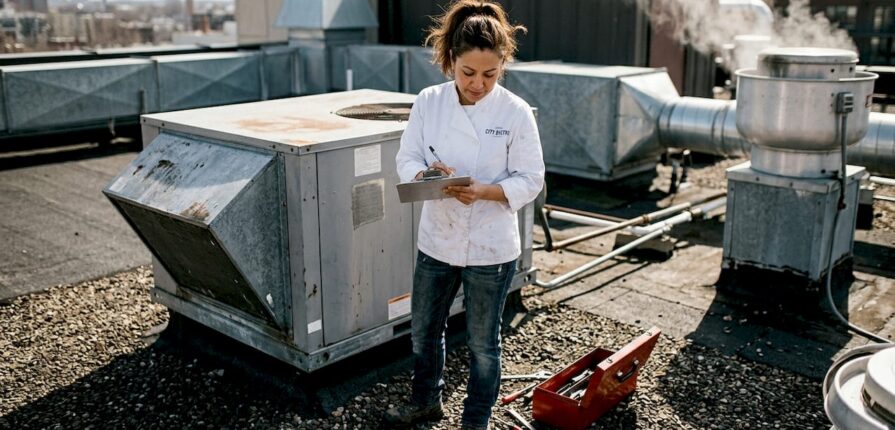
Picture this: it’s a packed Friday night in July, your dining room is full, the kitchen is firing on all cylinders, and then your HVAC system goes silent. Within minutes, the temperature climbs, guests start fanning themselves with menus, and your kitchen staff is sweating through their uniforms. In Central Florida, where summer heat and humidity are relentless, HVAC downtime can turn a profitable evening into a disaster. A structured restaurant HVAC preventative maintenance workflow is not optional. It is the operational backbone that keeps your guests comfortable, your food safe, and your energy bills manageable.
Table of Contents
- Why preventative HVAC maintenance matters for restaurants
- What you need before you start: Tools, schedules, and digital tracking
- Step-by-step: Restaurant HVAC preventative maintenance workflow
- Florida-specific challenges: Grease, humidity, mold, and airflow
- Troubleshooting and verifying your maintenance workflow
- Next steps: Partner with HVAC pros for restaurant reliability
- Frequently asked questions
Key Takeaways
| Point | Details |
|---|---|
| Maintenance saves money | Consistent preventative workflows can cut restaurant HVAC energy bills by up to 30%. |
| Frequency is critical | Regular monthly and quarterly maintenance avoids breakdowns and ensures compliance. |
| Florida needs special care | Grease and humidity pose extra risks in Central Florida—clean coils and check airflow often. |
| Leverage digital tools | Scheduling apps and digital logs streamline your HVAC workflow, especially across multiple locations. |
Why preventative HVAC maintenance matters for restaurants
Restaurants are among the most energy-intensive commercial buildings in the country. Your HVAC system works harder than almost any other piece of equipment you own, running through brutal Florida summers while managing heat from ovens, fryers, and a full house of guests. The stakes are high on every front.
Consider the numbers: HVAC accounts for 40-60% of commercial building energy use, and a well-maintained system can lower your bills by 15-30%. That is real money back in your pocket every month. Skipping maintenance does not save you anything. It just moves the cost to a more painful moment, usually an emergency repair during your busiest shift.
Here is what consistent preventative maintenance actually protects:
- Food safety: A failing system can push temperatures above safe holding ranges, putting your inventory and your health inspection score at risk.
- Guest experience: Nobody returns to a restaurant that felt like a sauna.
- Equipment lifespan: Neglected systems fail years ahead of schedule, forcing costly replacements.
- Compliance: Florida health codes require proper ventilation and temperature control.
“Quarterly maintenance is recommended for restaurants due to the high demand placed on HVAC systems in Florida’s humid climate.”
Our HVAC maintenance guide breaks down the fundamentals of keeping any system running efficiently, and those principles apply directly to your restaurant environment.
What you need before you start: Tools, schedules, and digital tracking
Before you run a single maintenance check, you need the right supplies and a system to track everything. Walking into a maintenance task without preparation is how steps get skipped and problems get missed.
Essential tools and supplies to have on hand:
- Replacement air filters (sized for each unit)
- Coil cleaning solution and a soft brush
- Lubricant for fan motors and belts
- A digital thermometer and humidity gauge
- Drain pan tablets to prevent algae buildup
- A flashlight and inspection mirror for tight spaces
Once you have your supplies, build your schedule. Here is a sample framework:
| Frequency | Task |
|---|---|
| Monthly | Replace or inspect air filters, check thermostat settings, clear drain lines |
| Quarterly | Clean evaporator and condenser coils, inspect belts and motors, check refrigerant levels |
| Biannual | Full system inspection, duct cleaning assessment, electrical connection check |
Digital tracking is where most restaurant operators fall short. Paper checklists get lost, and memory is unreliable. Implement digital scheduling tools like ServiceChannel to assign tasks, set reminders, and log completed work across multiple locations. This creates an audit trail that protects you during health inspections and insurance claims.
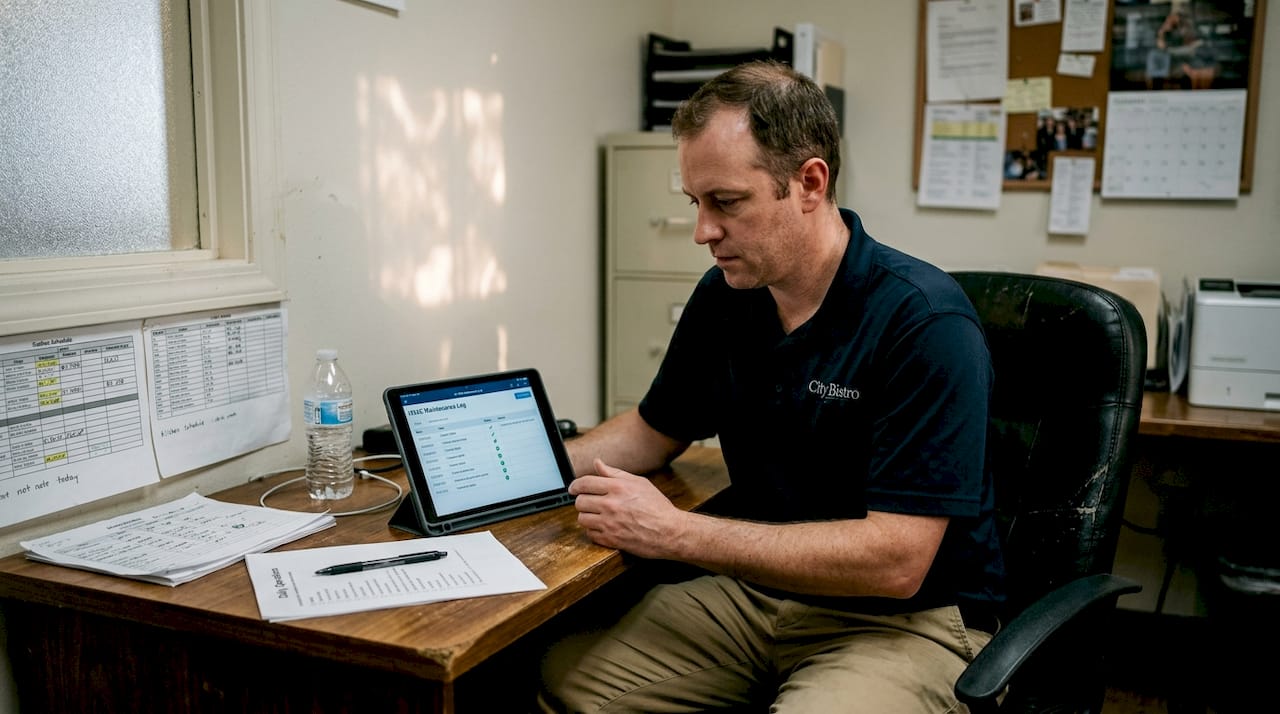
Pro Tip: Assign a specific staff member as your HVAC maintenance point of contact. They do not need to be a technician. They just need to own the schedule, confirm tasks are completed, and flag anything unusual to your service provider.
If you want to streamline your repair workflow alongside your preventative schedule, having a documented process for both keeps your operation running without gaps.
Step-by-step: Restaurant HVAC preventative maintenance workflow
With your tools, schedule, and digital system ready, it is time to run through each phase step by step. Think of this as your repeating operational loop, not a one-time project.
Monthly tasks:
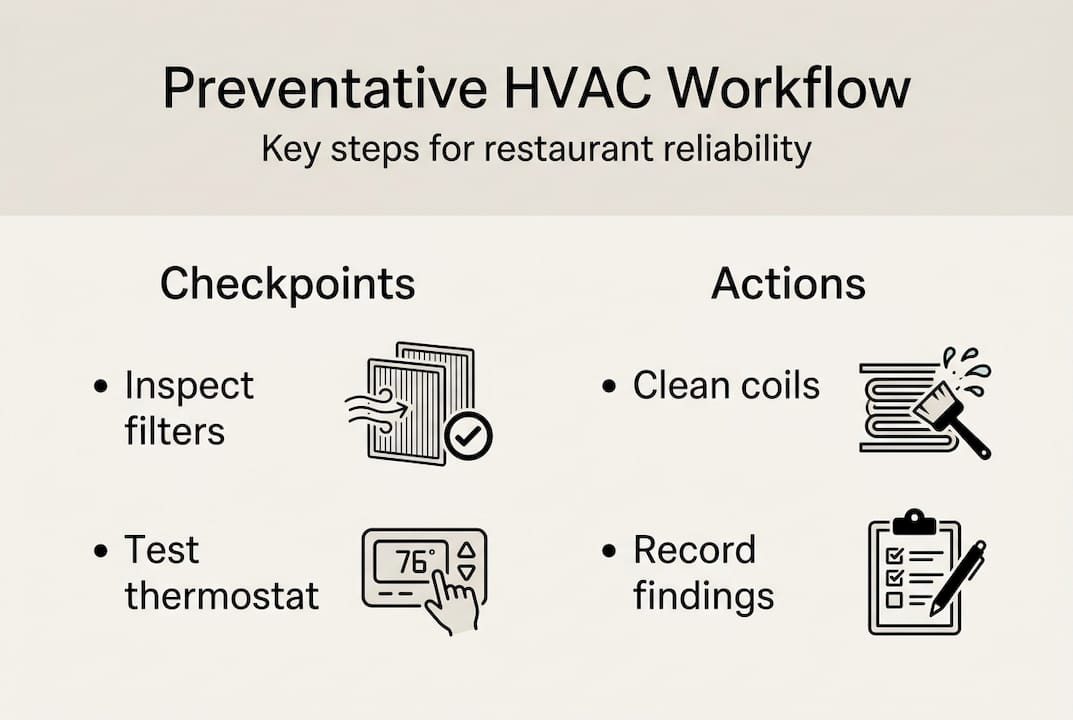
- Inspect and replace air filters. In a restaurant, filters clog faster than in any other commercial setting. A clogged filter forces your system to work harder and drives up energy costs immediately.
- Check thermostat calibration. A thermostat reading two degrees off can mean your system runs longer than needed.
- Clear condensate drain lines. Pour a small amount of diluted bleach down the drain to prevent algae and clogs.
- Listen for unusual sounds. Rattling, squealing, or banging are early warnings worth logging.
Quarterly tasks:
- Clean evaporator and condenser coils. Grease and dust accumulate fast in restaurant environments.
- Inspect fan belts for wear and tension. A snapped belt shuts down airflow entirely.
- Check refrigerant and wiring for signs of leaks or corrosion.
- Test all dampers and vents for proper airflow balance between kitchen and dining areas.
- Review your digital maintenance log and note any recurring issues.
Biannual or seasonal tasks:
- Schedule a professional seasonal tune-up before summer and again heading into the cooler months.
- Have ducts inspected for grease accumulation, which is a fire risk in commercial kitchens.
- Test the full system under load to catch any performance drops before peak season.
Pro Tip: Take photos during each inspection and attach them to your digital log. Visual records make it easy to spot gradual changes, like a coil that is getting progressively dirtier, before they become failures.
For any issues that surface during these checks, your HVAC troubleshooting process should be documented and ready to activate without delay.
Florida-specific challenges: Grease, humidity, mold, and airflow
The step-by-step routine forms your foundation, but Central Florida restaurants must also account for unique local hazards that can undermine even a solid maintenance schedule.
Grease is your biggest threat. Restaurant kitchens generate grease-laden air constantly, and that grease coats your HVAC coils faster than you might expect. Coated coils cannot transfer heat efficiently, which strains your compressor and raises your energy bills. Worse, grease buildup is a fire hazard.
Humidity control is non-negotiable. Florida’s outdoor humidity regularly exceeds 80%, and your HVAC system is your primary defense against moisture inside your building. Without proper dehumidification, you risk:
- Mold growth in ductwork and drain pans
- Condensation on walls and ceilings
- Musty odors that drive guests away
- Slippery floors from excess moisture
“Coil cleaning and humidity control are critical in Florida to prevent mold, condensation, and energy waste in commercial restaurant environments.”
Airflow balance between your kitchen and dining room matters more than most operators realize. If your kitchen exhaust pulls more air out than your supply system pushes in, you create negative pressure. That negative pressure drags hot, humid outdoor air through every gap in your building envelope, making your system work overtime.
Understanding the right HVAC system type for your specific layout can help you address these airflow imbalances at the equipment level, not just through maintenance alone.
Troubleshooting and verifying your maintenance workflow
After working through the preventative maintenance process and addressing Florida-specific issues, you need to track and verify results for continued success. A workflow that is not measured is a workflow that drifts.
Signs your workflow is performing well:
- Indoor temperatures stay stable within one to two degrees of your setpoint
- Humidity readings stay between 40% and 60% in dining areas
- Energy bills trend downward or stay flat despite rising utility rates
- No emergency service calls between scheduled maintenance visits
- Health inspection reports show no ventilation or temperature violations
Common mistakes that undermine your workflow:
- Skipping coil cleaning because it looks clean enough. Grease is not always visible.
- Ignoring exhaust fan balance. Grease-laden air clogs coils quickly and creates fire risk when exhaust is not properly managed.
- Letting documentation slide. An undocumented task is an unverified task.
- Waiting for a problem to call a technician. By then, the damage is done.
Pro Tip: Set a monthly 15-minute review with your maintenance point of contact to go over the digital log together. Patterns become obvious fast when you look at the data regularly.
When something falls outside your team’s ability to diagnose or fix, your troubleshooting HVAC workflow should include a clear escalation path to a certified technician. Do not let a small issue sit because no one knew who to call.
Next steps: Partner with HVAC pros for restaurant reliability
Building a solid preventative maintenance workflow puts you ahead of most restaurant operators in Central Florida. But even the best internal process has limits. Complex refrigerant issues, duct system problems, and full system inspections require certified professionals with commercial-grade tools and experience.
At Lucas Air Conditioning and Heating, we work with restaurant owners and managers across Central Florida to build maintenance programs that fit your operation, your schedule, and your budget. Whether you need a one-time inspection to validate your current workflow or an ongoing commercial service agreement, we bring the same veteran-owned work ethic to every job. Our HVAC repair workflow guide outlines how we approach commercial service calls, and our team handles everything from emergency repairs to full commercial HVAC installation. Reach out today to schedule a consultation and keep your restaurant running at its best all year long.
Frequently asked questions
How often should restaurant HVAC systems be serviced in Central Florida?
Quarterly servicing is the standard recommendation for Florida restaurants, with monthly filter and drain checks for high-volume operations. The heat and humidity here accelerate wear faster than in most other regions.
What is the most common cause of HVAC issues in restaurants?
Grease buildup and poor humidity control are the leading culprits. Grease and humidity degrade coil performance, promote mold growth, and create fire hazards when left unaddressed.
Can digital maintenance tracking improve HVAC reliability?
Absolutely. Digital scheduling and monitoring reduce missed tasks, create accountability, and give you data to predict failures before they happen, especially useful for operators managing more than one location.
Does preventative maintenance really lower energy bills?
Yes, and the savings are significant. Proper preventative maintenance can reduce your restaurant’s energy bills by 15-30%, which adds up fast when HVAC is driving nearly half your total energy spend.
