
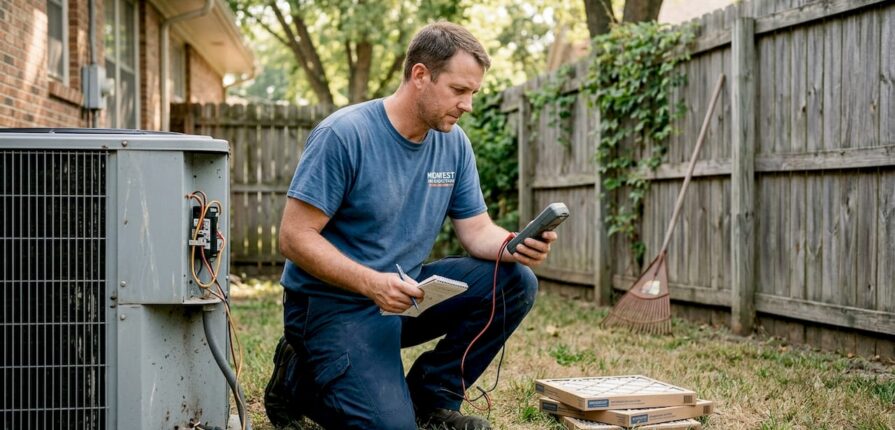
Skipping your HVAC tune-up might feel like a smart way to save money, but the numbers tell a very different story. Neglected HVAC systems can cut their own lifespan in half and cost you 20 to 40% more in energy every single month. That means a system that should last 20 years might give out in 10, and your utility bills quietly climb the whole time. This article breaks down exactly what a tune-up involves, how much it can save you, and why skipping it is one of the most expensive habits a homeowner or business owner in Central Florida can have.
Table of Contents
- What is an HVAC tune-up and why is it important?
- How regular tune-ups save money and energy
- How tune-ups extend system lifespan and prevent breakdowns
- What actually happens during a tune-up? The 21-point checklist
- Why ‘if it ain’t broke, don’t fix it’ is bad advice
- Extra value for businesses: Tune-ups for commercial HVAC systems
- Ready for your tune-up? Let the experts handle it
- Frequently asked questions
Key Takeaways
| Point | Details |
|---|---|
| Tune-ups save energy | Routine HVAC tune-ups reduce energy bills by 5-20% per year. |
| Longer system lifespan | Regular maintenance can add 5-10 years to your HVAC unit’s life. |
| Fewer breakdowns, more peace of mind | Proactive service cuts unexpected failures by up to 95%. |
| Professional service matters | Certified technicians ensure safety and compliance. |
What is an HVAC tune-up and why is it important?
An HVAC tune-up is a scheduled professional service where a certified technician inspects, cleans, and adjusts your heating and cooling system to keep it running at peak performance. Think of it like an oil change for your car. You do not wait until the engine seizes to take action. The same logic applies to your air conditioner or heat pump.
During a tune-up, a technician will typically cover the following:
- Cleaning evaporator and condenser coils
- Checking refrigerant levels and looking for leaks
- Inspecting electrical connections and controls
- Lubricating moving parts to reduce friction
- Testing thermostat accuracy and calibration
- Clearing and flushing the condensate drain line
- Replacing or inspecting the air filter
These steps matter because each one targets a specific failure point. Dirty coils force your system to work harder. Low refrigerant causes compressor damage. Loose electrical connections create fire risks. Getting HVAC inspection basics right from the start prevents all of these problems before they become expensive.
“Regular HVAC tune-ups improve energy efficiency by 5 to 20%, according to the U.S. Department of Energy. That is not a rounding error. That is real money back in your pocket every month.”
Professional service also matters for safety. Refrigerant handling, for example, requires EPA 608 certification. A trained technician following standard HVAC tune-up steps protects both your equipment and your household.
How regular tune-ups save money and energy
Let’s talk dollars. A tune-up typically costs between $75 and $150. That might feel like an unnecessary expense when your system seems to be running fine. But consider this: energy savings of 5 to 20% per year add up fast, especially in Florida where air conditioning runs almost year-round.
If your monthly electric bill averages $200, a 15% reduction saves you $30 a month, or $360 a year. One tune-up pays for itself in weeks. And that does not even count the repair savings.

Reactive maintenance costs 50% more than preventive maintenance. Waiting for something to break means emergency service calls, rushed part orders, and sometimes full system replacements.
| Cost category | Preventive maintenance | Reactive maintenance |
|---|---|---|
| Annual tune-up cost | $75 to $150 | $0 (skipped) |
| Average repair cost | $150 to $400 | $400 to $1,500+ |
| Energy cost impact | 5 to 20% savings | 20 to 40% higher bills |
| Risk of full replacement | Low | High |
The benefits of seasonal tune-ups go beyond just energy. You also get peace of mind heading into Florida’s brutal summer months knowing your system will not fail on the hottest day of the year. A solid preventative maintenance guide can help you stay on schedule and track what has been serviced.
How tune-ups extend system lifespan and prevent breakdowns
Here is a number worth remembering: a well-maintained HVAC system lasts 15 to 20 years. A neglected one? Only 10 to 12 years. That is nearly a decade of extra life you get simply by scheduling annual service.
The components most likely to fail without regular attention include:
- Compressor — The most expensive part to replace, often $1,500 to $2,500. Dirty coils and low refrigerant destroy it over time.
- Blower motor — Lack of lubrication causes overheating and burnout.
- Capacitors — These small electrical components fail silently and leave your system unable to start.
- Condensate drain — A clogged drain causes water damage and mold growth inside your air handler.
- Contactor — Worn contacts cause hard starts and shorten compressor life.
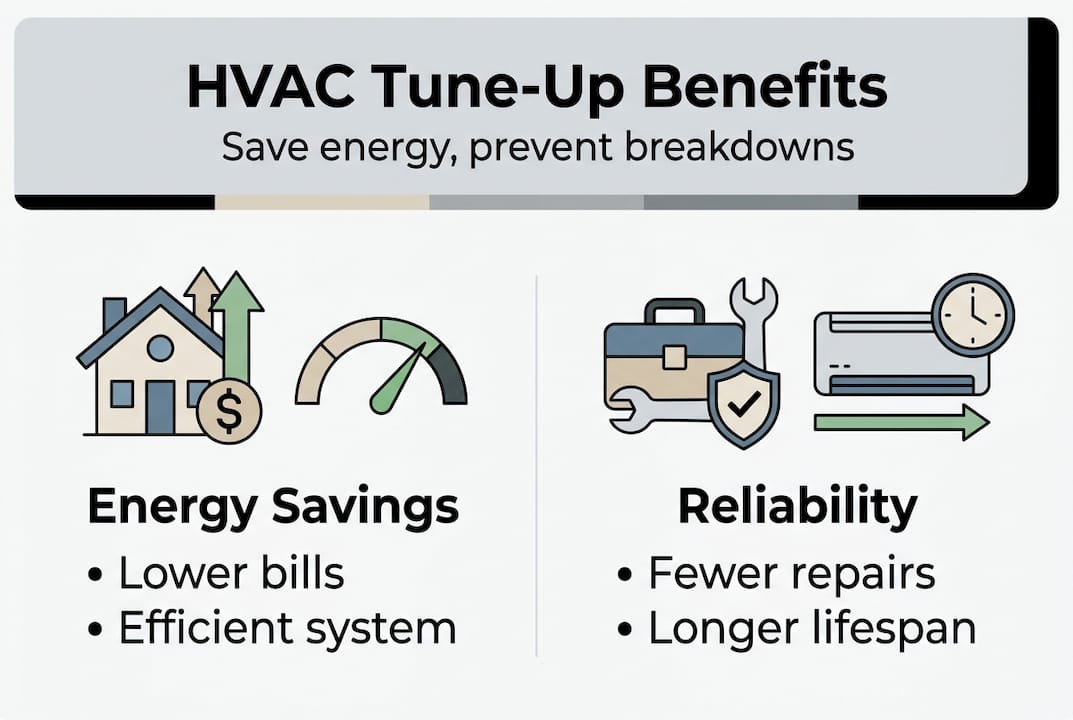
Regular tune-ups catch all of these issues early. In fact, tune-ups reduce breakdowns by up to 95%, and for commercial facilities, the return on investment can reach 545%.
Pro Tip: The best time to catch a failing capacitor or a refrigerant leak is during a scheduled tune-up, not at 9 PM on a Friday in July when your system stops working entirely. Early detection through an in-depth tune-up process is where the real savings happen.
| Maintenance status | Expected lifespan | Avg. repair frequency | Estimated 10-year cost |
|---|---|---|---|
| Regularly maintained | 15 to 20 years | Once every 3 to 5 years | $1,500 to $2,500 |
| Neglected | 10 to 12 years | Once every 1 to 2 years | $4,000 to $8,000+ |
If you want to stay ahead of issues, the home maintenance checklist and residential repair workflow are great resources to bookmark.
What actually happens during a tune-up? The 21-point checklist
A professional HVAC tune-up is not just a quick look-over. A standard tune-up includes a 21-point inspection covering coils, refrigerant, airflow, electrical systems, and more. Here is what that looks like in practice:
- Inspect and replace air filter
- Clean evaporator coil
- Clean condenser coil
- Check refrigerant charge and inspect for leaks
- Measure airflow across the coil
- Inspect and tighten all electrical connections
- Test capacitors and contactors
- Lubricate all moving parts
- Inspect blower motor and belt
- Test thermostat operation and calibration
- Flush and clear condensate drain line
- Inspect drain pan for cracks or buildup
- Check ductwork for visible leaks or damage
- Measure supply and return air temperatures
- Test safety controls and shutoffs
- Inspect heat exchanger (for heating systems)
- Check gas pressure and burner operation (if applicable)
- Test starting components
- Measure voltage and amperage on motors
- Inspect outdoor unit for debris and damage
- Provide a written summary of findings
Each of these steps targets a real failure point. Skipping even a few of them leaves your system vulnerable. The full tune-up checklist gives you a clear picture of what to expect from a professional visit.
Pro Tip: Filter changes are the one task most homeowners can handle themselves every 1 to 3 months. Everything else on this list, especially refrigerant checks and electrical testing, should be left to a certified technician. For businesses, the commercial checklist essentials cover additional requirements specific to larger systems.
Why ‘if it ain’t broke, don’t fix it’ is bad advice
This is the most common reason people skip tune-ups. The system is cooling the house, so why spend money on it? The problem is that HVAC systems degrade gradually. You rarely notice the decline until something fails completely.
Skipping maintenance often doubles energy use and cuts equipment life in half. That is not a worst-case scenario. That is the average outcome for systems that go years without service.
Here are the most common avoidable breakdowns and what they cost when ignored:
- Dirty coils: Reduce efficiency by up to 30%, leading to compressor failure ($1,500 to $2,500)
- Clogged drain lines: Cause water damage and mold remediation costs ($500 to $3,000)
- Worn capacitors: Lead to hard starts that burn out the compressor prematurely
- Low refrigerant: Forces the system to run longer cycles, spiking energy bills and damaging components
- Loose electrical connections: Create fire hazards and cause intermittent failures
“Waiting until your system breaks is like skipping oil changes until your engine seizes. The repair bill is always bigger than the maintenance would have been.”
Just like roof maintenance risks compound over time when ignored, HVAC neglect snowballs quietly. The risks of skipping tune-ups are real, measurable, and completely avoidable.
Extra value for businesses: Tune-ups for commercial HVAC systems
For Central Florida businesses, the stakes are even higher. A failed HVAC system does not just mean discomfort. It means lost productivity, unhappy customers, and potential inventory or equipment damage in temperature-sensitive environments.
Predictive maintenance saves businesses 25 to 40% on maintenance costs and adds 5 to 10 years to system life. That is a significant return on a relatively small investment in scheduled service.
| Business metric | Without regular tune-ups | With regular tune-ups |
|---|---|---|
| Annual energy cost | Baseline + 20 to 40% | Baseline |
| System lifespan | 10 to 15 years | 20 to 25 years |
| Unplanned downtime | High frequency | Reduced by up to 95% |
| Maintenance cost | 50% higher (reactive) | Optimized (preventive) |
Commercial systems run harder and longer than residential ones. They serve more people, cycle more air, and face greater wear. That makes proactive service even more critical. A commercial maintenance agreement locks in regular visits so nothing falls through the cracks, and you always know your system is ready for the next busy season.
Ready for your tune-up? Let the experts handle it
Every fact in this article points to the same conclusion: regular HVAC tune-ups save money, extend system life, and prevent the kind of breakdowns that ruin your summer or disrupt your business. The math is clear, and the process is simple when you have the right team.
At Lucas Air Conditioning and Heating, we have been serving Central Florida homeowners and businesses since 2018. Our certified technicians follow a thorough process every time, so you get real results, not just a quick checkup. Book your professional tune-up today and see the difference a properly maintained system makes on your next energy bill. You can also schedule a tune-up visit online in minutes. For ongoing peace of mind, ask us about our maintenance agreements that keep your system covered all year long.
Frequently asked questions
How often should I schedule an HVAC tune-up?
Schedule professional HVAC tune-ups at least once a year, ideally before Florida’s peak cooling or heating seasons. Homes with older systems or heavy usage may benefit from twice-yearly service.
Can tune-ups really prevent breakdowns?
Yes. Regular tune-ups identify and fix small issues before they become failures, reducing breakdowns by up to 95%. That is not a marketing claim. It is a documented industry outcome.
Is it safe to do my own HVAC maintenance?
Basic tasks like changing your air filter every 1 to 3 months are safe and encouraged. However, refrigerant handling and electrical testing require certified professionals, as outlined by EPA 608 certification requirements.
Do businesses need tune-ups as frequently as homes?
Yes, and often more so. Commercial systems run harder and serve more people. Predictive maintenance saves 25 to 40% for businesses and significantly extends equipment life compared to reactive service.
