
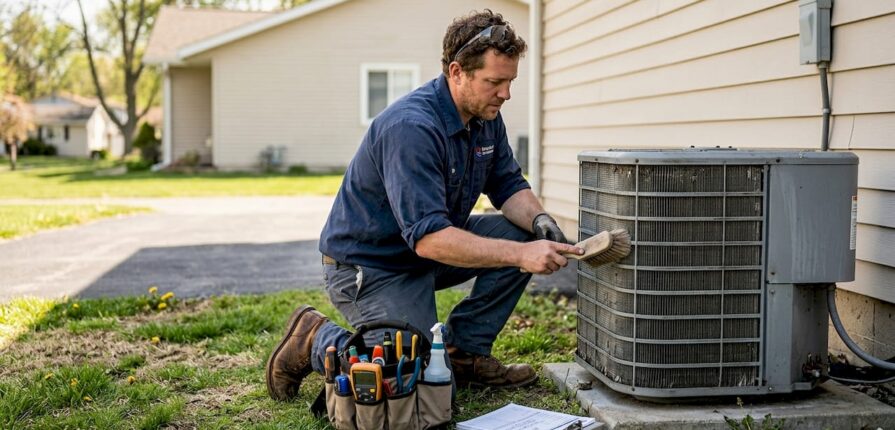
Most Central Florida homeowners only call an HVAC technician when the system stops working. That reactive habit is expensive. Preventive maintenance yields a 545% ROI and cuts breakdowns by 70 to 75 percent, which means every dollar you spend on a scheduled tune-up returns more than five dollars in avoided repairs and energy savings. This guide breaks down exactly what preventative tune-ups involve, why they matter more in Florida than almost anywhere else, and how to build a simple schedule that protects your investment year after year.
Table of Contents
- What is a preventative HVAC tune-up?
- Top reasons to schedule preventative tune-ups
- Preventative vs reactive maintenance: A side-by-side comparison
- When and how often should you schedule?
- What to expect during a professional tune-up
- Get expert preventative tune-ups for your Florida property
- Frequently asked questions
Key Takeaways
| Point | Details |
|---|---|
| Significant cost savings | Preventative tune-ups can deliver up to 545 percent return on investment by cutting repair costs and lowering energy bills. |
| Longer HVAC lifespan | Scheduling regular tune-ups extends Florida HVAC system life to 15-20 years, compared to only 10-12 years with a reactive approach. |
| Fewer breakdowns | Preventative maintenance reduces surprise breakdowns by up to 75 percent, especially in high-stress climates like Central Florida. |
| Best timing in spring | The most effective time for a tune-up is before Florida’s summer heat spikes, typically between February and April. |
| Expert service is essential | While some tasks can be done yourself, professional technicians ensure a thorough, effective preventative maintenance. |
What is a preventative HVAC tune-up?
A preventative tune-up is a scheduled service visit where a certified technician inspects, cleans, and adjusts your HVAC system before problems develop. Think of it like an oil change for your car. You do not wait for the engine to seize before you act.
In Central Florida, your air conditioner runs harder and longer than systems in most other states. High humidity, frequent afternoon thunderstorms, and a cooling season that stretches nearly year-round all put extra stress on every component. A tune-up accounts for those local conditions in ways a generic checklist cannot.
Here is what a standard professional tune-up typically covers:
- Thermostat calibration to confirm accurate temperature readings
- Electrical connection inspection and tightening of loose terminals
- Coil cleaning on both evaporator and condenser units
- Blower motor and belt inspection for wear or misalignment
- Drain line flushing to prevent mold and water damage
- Refrigerant level check and leak detection
- Lubrication of all moving parts
- Filter inspection and replacement if needed
- Safety control testing to verify shutoffs work correctly
One important boundary: refrigerant handling requires EPA certification, so that task is never a DIY job. Homeowners can swap filters and clear debris around the outdoor unit, but a full HVAC tune-up checklist requires professional tools and training to deliver real results.
Top reasons to schedule preventative tune-ups
Scheduled tune-ups pay off in three concrete ways: your system lasts longer, your energy bills stay lower, and you avoid the worst-case scenario of a breakdown on the hottest day of the year.
Let’s start with lifespan. Regular tune-ups extend system life from a reactive average of 10 to 12 years up to 15 to 20 years. That is up to 50 percent more life from the same equipment. In Florida, where replacement costs for a full system can run $5,000 to $12,000, that extra lifespan is real money.
| Factor | Without tune-ups | With tune-ups |
|---|---|---|
| Average system lifespan | 10 to 12 years | 15 to 20 years |
| Breakdown frequency | High | 70 to 75% lower |
| Energy efficiency | Degrades over time | Maintained or improved |
| Annual repair costs | Unpredictable, high | Predictable, low |
| ROI on maintenance spend | Minimal | Up to 545% |
The preventative maintenance benefits go beyond the numbers. A well-maintained system cools your home faster, holds temperature more consistently, and runs quieter. For property managers overseeing multiple units, that reliability directly affects tenant satisfaction and retention.
“Preventive maintenance delivers 70 to 75 percent fewer breakdowns and a 545% return on investment compared to reactive-only service strategies.” — HVAC Maintenance Statistics
Pro Tip: Book your tune-up between February and April, before Florida’s brutal summer heat arrives. Technician schedules fill up fast once temperatures climb, and a pre-season check catches issues while you still have time to fix them without urgency pricing.
Learning about seasonal tune-up advantages specific to Florida can help you plan the right service window for your property.
Preventative vs reactive maintenance: A side-by-side comparison
Reactive maintenance means you wait until something breaks, then call for emergency service. It feels like the cheaper option until you see the actual numbers.
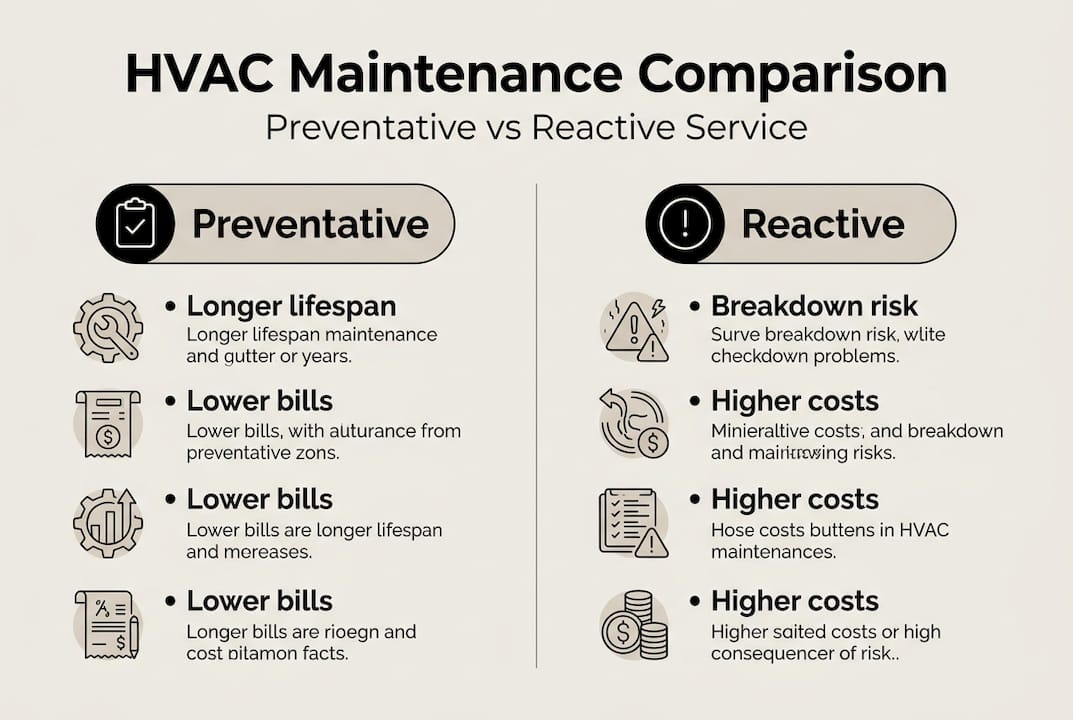
Preventative maintenance consistently outperforms reactive across every measurable category. Here is how the two approaches compare directly:
| Category | Preventative maintenance | Reactive maintenance |
|---|---|---|
| Typical annual cost | Low and predictable | High and unpredictable |
| Emergency service calls | Rare | Frequent |
| System downtime | Minimal | Hours to days |
| Equipment lifespan | 15 to 20 years | 10 to 12 years |
| Energy bills | Optimized | Gradually increasing |
| Warranty protection | Often maintained | May be voided |
For Florida homeowners and property managers, the reactive approach creates specific pain points:
- Summer breakdowns happen when demand for technicians is highest, meaning longer wait times and premium emergency rates
- Humidity damage accelerates when drain lines clog undetected, leading to mold growth inside the air handler
- Compressor failures are far more common in systems that run dirty or low on refrigerant for extended periods
- Tenant complaints spike when rental units lose cooling during peak season, creating legal and financial exposure
Understanding why preventative wins is not just about saving money today. It is about avoiding the compounding costs that reactive-only management creates over a system’s full life.
When and how often should you schedule?
For Central Florida, the answer is clear. Spring scheduling between February and April is the sweet spot before peak cooling demand hits. Your system gets checked and optimized right before it needs to perform at its hardest.
As a general rule, schedule at least one professional tune-up per year. If you manage a rental property with high occupancy, or if your system runs continuously, twice per year is a smarter investment. Older systems, those over ten years old, also benefit from more frequent attention.
Here is a simple process to get started:
- Check your last service date. If it has been more than 12 months, you are overdue.
- Call or book online with a licensed local HVAC provider before the spring rush.
- Clear the area around your outdoor condenser unit at least two feet in every direction.
- Replace your air filter if it has been more than 30 to 60 days since the last change.
- Note any symptoms like unusual sounds, warm spots, or higher-than-normal bills to share with the technician.
- Ask about a maintenance plan if you want automatic scheduling and priority service built in.
Following a structured seasonal maintenance checklist between professional visits keeps your system in better shape and helps technicians spot problems faster when they arrive.
Pro Tip: If you manage multiple properties, stagger your tune-up appointments across February and March. This avoids the April crunch when every homeowner in Central Florida suddenly realizes summer is two weeks away.
What to expect during a professional tune-up
A lot of homeowners feel uncertain about what actually happens during a service visit. Knowing the process removes that uncertainty and helps you evaluate whether you are getting full value.
A thorough professional tune-up follows a structured sequence. Professional service maximizes system efficiency in ways that no amount of DIY maintenance can replicate, because it requires calibrated tools, refrigerant handling certification, and trained diagnostic judgment.
Here is what a quality tune-up visit includes:
- Full system inspection of all mechanical and electrical components
- Coil cleaning using professional-grade solutions to remove buildup that chokes airflow
- Refrigerant pressure check to confirm the system is charged correctly
- Electrical testing of capacitors, contactors, and wiring for signs of wear
- Blower and motor lubrication to reduce friction and extend part life
- Condensate drain flush to prevent clogs that cause water damage and mold
- Thermostat accuracy test to make sure your settings match actual output
- Safety control verification so emergency shutoffs work when needed
As a homeowner or property manager, your job before the visit is simple: make sure the technician has clear access to both the indoor air handler and the outdoor condenser. Have your system’s service history available if you have it.
Do not expect a tune-up to include major repairs. If the technician finds a failing part, that is a separate conversation with a separate quote. A tune-up is maintenance, not a full overhaul. Review the professional tune-up checklist and our full service menu to understand exactly what each visit covers.
Get expert preventative tune-ups for your Florida property
At Lucas Air Conditioning and Heating, we have been helping Central Florida homeowners and property managers protect their HVAC investments since 2018. Founded by Army Veteran Cameron Lucas, our team understands that reliability and trust matter as much as technical skill.
We serve Eustis, The Villages, and surrounding communities with scheduled tune-ups designed for Florida’s demanding climate. Whether you need a one-time service or a recurring homeowner maintenance plan, we make it easy to stay ahead of breakdowns. Our Central Florida HVAC pros are ready to help you get the most from your system. Take five minutes now to schedule a tune-up before the summer rush fills our calendar.
Frequently asked questions
How long does a preventative HVAC tune-up typically take?
A standard professional tune-up usually takes 60 to 90 minutes, depending on system size, age, and overall condition.
Is preventative maintenance worth it for newer HVAC systems?
Yes. Even new systems benefit from early tune-ups because regular service extends lifespan up to 50 percent and helps protect manufacturer warranties that often require documented maintenance.
Can I do my own HVAC tune-up?
Homeowners can handle filter changes and clearing debris, but professional tasks like refrigerant handling require certification and specialized equipment that DIY simply cannot replace.
Do tune-ups reduce electricity bills?
Yes. A clean, properly calibrated system runs more efficiently, and preventive maintenance delivers up to 545% ROI partly through measurable reductions in monthly energy costs.
How often should Florida homeowners schedule tune-ups?
Most experts recommend at least once per year, with spring between February and April being the ideal window before Central Florida’s peak cooling season begins.
