
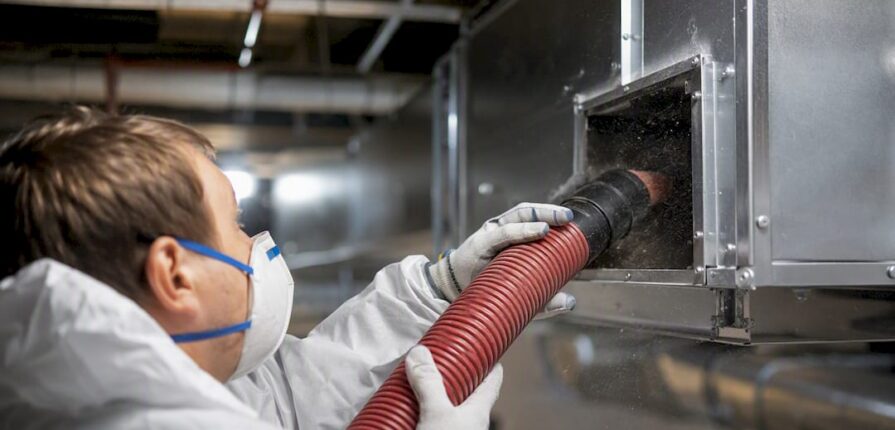
Most commercial duct cleaning jobs in the United States typically range widely depending on size and complexity, with small offices generally costing less and larger warehouse or restaurant complexes costing more. The number that actually matters isn’t the range. It’s what happens after you request a quote: any contractor worth hiring will insist on an on-site walkthrough before quoting a fixed price, because square footage alone tells you almost nothing about access, contamination, or the number of rooftop units involved.
- Small office or retail space: generally lower cost range
- Mid-size commercial building or single restaurant: moderate cost range
- Large facility, warehouse, or multi-tenant complex: higher cost range
- Pricing shows up as per square foot, per system/RTU, or occasionally per vent
The one move that protects your budget: never accept a phone quote for a commercial job. Ask for a walkthrough and a written, itemized bid tied to NADCA’s cleaning specifications.
TL;DR:
- Expect costs to range from $500 to $9,000 depending on building size, contamination, and system complexity, with on-site walkthroughs essential for accurate quotes.
- Always request detailed, itemized proposals that break down labor, equipment, materials, permits, and disposal costs to prevent hidden charges.
- Convert bids based on different pricing models to a common unit, such as square footage or system count, for fair comparison.
- Contamination type, access difficulty, and scheduling constraints significantly influence the final price, often more than square footage.
- Reputable contractors follow NADCA standards, provide visual proof of cleaning, and tailor quotes to your building’s specific scope and needs.
Table of Contents
- Commercial Duct Cleaning Cost Breakdown by Line Item
- Which Pricing Model Fits Your Building?
- What Drives Your Final Price Up or Down
- How to Get Comparable Bids You Can Actually Trust
- Does Duct Cleaning Actually Pay for Itself?
- The Gap Between Cost Guides and Real Budgeting
- Getting an Itemized Quote from Lucas Air Conditioning and Heating
- Key Takeaways
- Sources
Commercial Duct Cleaning Cost Breakdown by Line Item
A real commercial quote isn’t one number. It’s a stack of line items, and reading them correctly is how you catch a lowball bid before it becomes a change order. Industry cost data breaks a typical mid-size project into five buckets: labor, equipment, materials, permits, and disposal, and labor usually eats the largest share because commercial ductwork requires more crew hours than a residential system ever would.
Crew size is the variable most owners underestimate. A two-person crew works fine for a small office suite, but a hospital wing or a food-processing plant might need four or five technicians running negative-air machines simultaneously just to keep the workday from turning into three. Local labor rates matter too. A contractor quoting a coastal metro job will typically price labor 10 to 20 percent higher than the same scope in a rural market, which is worth knowing before you assume a competitor’s bid is padded.
Add-ons are where budgets quietly balloon. Watch for these on a quote:
- Coil cleaning (often bundled, sometimes billed separately at $150 to $400 per unit)
- Antimicrobial or sanitizing treatment
- Mold remediation, which requires separate protocols and often separate licensing
- Ceiling tile or access-panel replacement after inspection
- Hoisting or lift rental for rooftop unit access
None of these are scams. They’re legitimate scope additions. The problem is a contractor who buries them in fine print instead of listing them upfront.
Which Pricing Model Fits Your Building?
Three pricing structures dominate the commercial market, and knowing which one applies to your property lets you sanity-check a bid in about thirty seconds.
- Per square foot is the most common model for open-plan buildings. Office space typically runs $0.15 to $0.25 per square foot, restaurants run higher at $0.25 to $0.50 due to grease buildup, and warehouses often land lower at $0.10 to $0.25 because of simpler ductwork layouts.
- Per system or per RTU applies when a building runs multiple independent HVAC units, like a strip mall or a mid-rise with rooftop package units serving different floors. Contractors price this way because cleaning five separate systems takes meaningfully more setup and teardown time than one large system, even if the total square footage is similar.
- Per vent or per duct run shows up occasionally in residential quotes but rarely in commercial work, since counting individual vents across a large facility is slower and less accurate than measuring square footage or system count.
To compare two bids fairly, convert them to the same unit. If one contractor quotes $0.20 per square foot for your 10,000 square foot office and another quotes a flat $2,200, divide that flat number by your square footage. You’ll often find the “flat rate” bid is actually the better deal once you do the math, or the reverse. Either way, you can’t compare apples to apples until both numbers speak the same pricing language.
What Drives Your Final Price Up or Down
Four factors explain almost every dollar of variance between a $1,500 quote and a $7,000 quote for buildings of similar size.
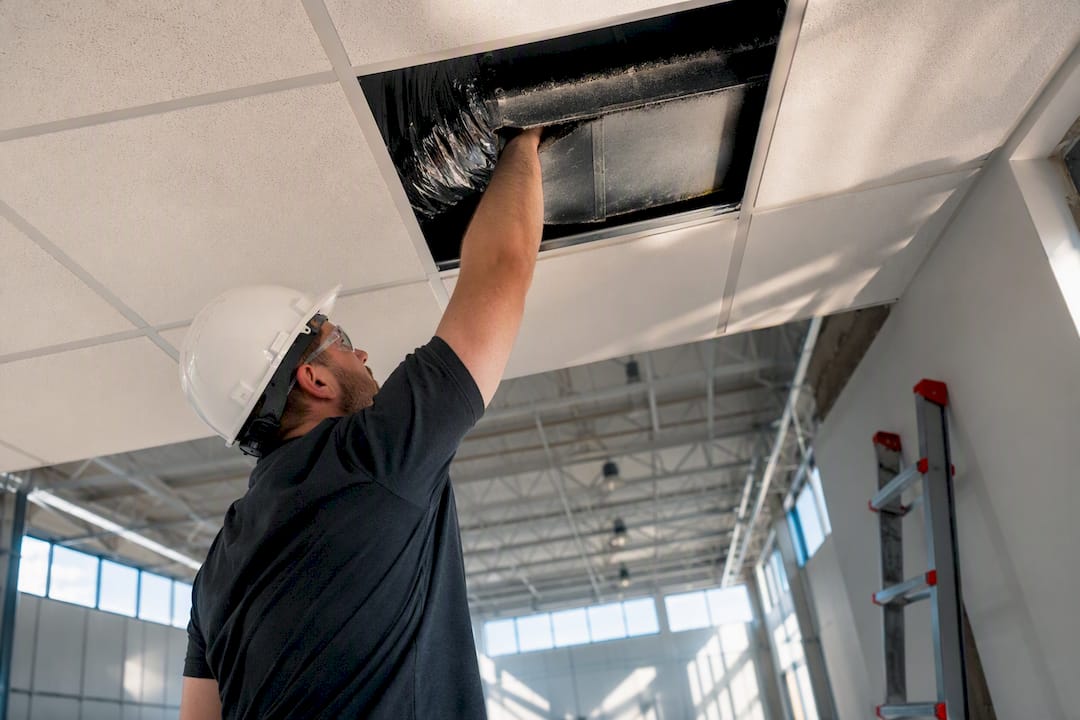
Access difficulty tops the list. Ductwork buried above a drop ceiling in a strip mall is a different job than rooftop units on a three-story building requiring lift rental and roof access permits. Enclosed plenums and tight mechanical rooms slow technicians down regardless of square footage.
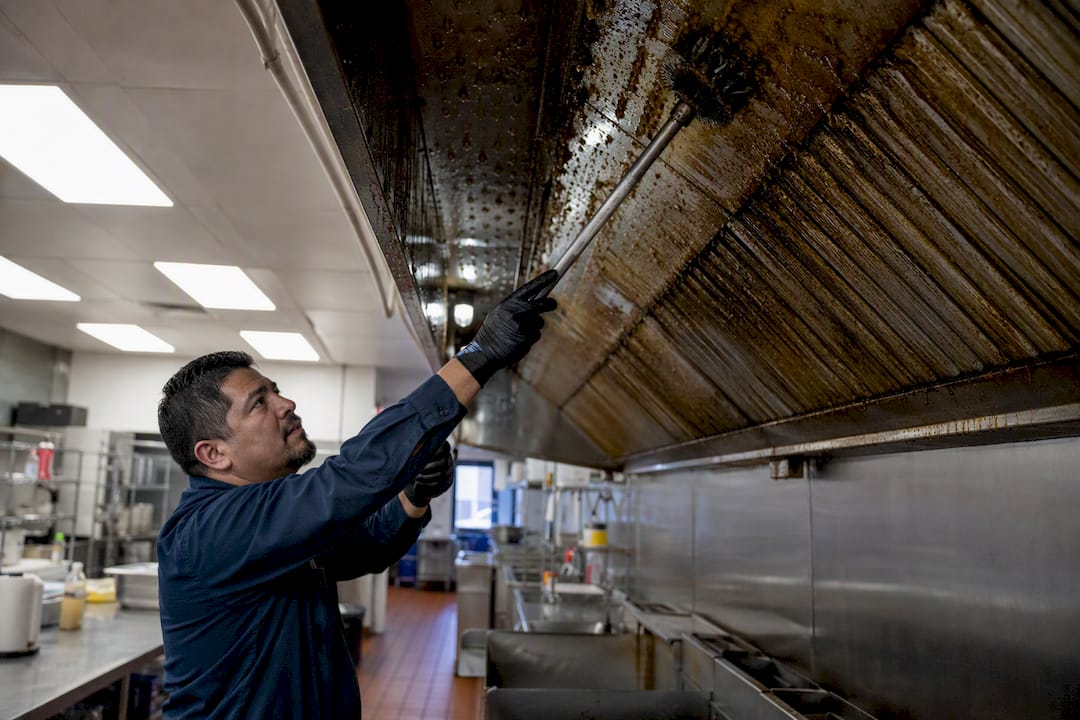
Contamination type changes the entire scope. Grease-laden kitchen exhaust systems require chemical degreasing and hot-water pressure washing under NFPA 96 rules, a different process (and often a separate invoice) from standard HVAC duct cleaning. Mold contamination or construction debris after a renovation both trigger remediation protocols that add materials and labor hours.
Scheduling constraints matter more in commercial work than residential. After-hours or weekend cleaning to avoid disrupting business operations commonly adds a premium, and asbestos testing on older buildings can add both cost and calendar time before work even begins.
System count is the multiplier. A building with six rooftop units and separate zone ductwork costs more to clean thoroughly than a single large system, even at identical total square footage, because each unit needs its own coil and blower cleaning pass.
Pro Tip: Ask your contractor to quote coil and blower cleaning as a line item rather than assuming it’s included. Some bids clean only the ductwork and skip the coils entirely, which limits the efficiency gains you’re paying for.
How to Get Comparable Bids You Can Actually Trust
Getting three quotes only helps if all three quoted the same scope. Here’s how to make that happen.
- Write the request around NADCA’s General Specifications, or ask each bidder to reference the ACR standard directly in their proposal. This forces every contractor to price against the same baseline instead of three different interpretations of “clean the ducts.”
- Require an on-site walkthrough before any fixed number. A contractor willing to quote a commercial job over the phone is either guessing or padding the number to cover the unknowns. Reputable providers walk the building first, every time.
- Demand a fully itemized proposal. Labor hours, equipment used, materials, permit costs, disposal fees, and any add-ons should each appear as their own line, not folded into one lump sum.
- Ask for documentation before the crew leaves. Before-and-after photos, an inspection report, and a description of the cleaning methods used are standard practice among established contractors, and NADCA’s commercial cleaning checklist specifically calls for verification through inspection or testing once the work is complete.
Facilities coordinating a large project should also expect some added labor for scheduling. Commercial cleaning often requires temporary HVAC downtime, negative-air machine setup, and containment barriers, all of which need sign-off from building operations before a crew shows up. Contractors managing multiple commercial accounts increasingly rely on estimating platforms like BRCKS to build these itemized proposals consistently, which is part of why well-run companies can turn around a detailed bid within a day or two of the walkthrough.
If your bid doesn’t include at least labor, equipment, materials, permits, and disposal as separate lines, ask why before you sign anything.
Does Duct Cleaning Actually Pay for Itself?
The honest answer is: sometimes, and the evidence is more nuanced than most sales pitches suggest.
A systematic review of duct cleaning research found that while cleaning methods do reduce contaminant deposits in controlled lab settings, field evidence linking cleaning to consistently improved indoor air quality, occupant health outcomes, or predictable energy savings remains limited.
That doesn’t mean cleaning is worthless. It means the marketing claim of guaranteed double-digit energy savings deserves skepticism. What’s better supported: restoring airflow in a clogged system reduces strain on fans and compressors, and recent reporting on HVAC efficiency suggests that cleaning can meaningfully reduce a system’s tendency to “hunt” or overwork itself in variable-air-volume setups. Translating that into dollars for your building means measuring airflow or fan power before and after the job. A preventative maintenance program that documents those numbers turns duct cleaning from a guess into a capital-maintenance line item you can defend to a finance team.
The Gap Between Cost Guides and Real Budgeting
Most articles on this topic hand you a price range and call it a day. That’s not enough for anyone actually managing a budget. The range matters less than the process that gets you an accurate number, and too many property owners skip straight to comparing quotes without first standardizing what those quotes are supposed to include.
Here’s where conventional advice falls short: it treats duct cleaning as a commodity service you shop by price alone. In practice, the contractors worth hiring are the ones who slow you down at the front end, insist on walking the building, and hand you a scope that references an actual standard instead of vague language like “thorough cleaning.” That friction is a feature, not an inconvenience.
If you manage a restaurant, healthcare facility, or warehouse, prioritize contamination type and access difficulty over square footage when estimating your budget. A kitchen exhaust job and an open-plan office job of the same size are not the same project, and pretending otherwise is how budgets go sideways midyear.
— Results
Getting an Itemized Quote from Lucas Air Conditioning and Heating
Central Florida business owners don’t need another vague estimate. They need a contractor who walks the building, prices the actual scope, and hands over a document that survives scrutiny from a finance team or a landlord. Lucas Air Conditioning and Heating has served Central Florida since 2018, founded by Army veteran Cameron Lucas, and that veteran-owned, community-rooted approach shows up in how the company handles commercial work: no phone-quote guessing, no vague line items.
The process starts with an on-site assessment of your ductwork, rooftop units, and access points, followed by a scope built around recognized commercial cleaning standards. You get an itemized proposal covering labor, equipment, materials, and disposal, plus before-and-after documentation so you have proof of the work performed, not just an invoice. Scheduling flexes around your business hours, including after-hours work for facilities that can’t shut down mid-day. Financing options and maintenance agreements are also available for property owners who’d rather fold cleaning into an ongoing service plan than pay for it as a one-off expense.
If you’re ready to see what your building’s scope actually costs, start with the commercial duct cleaning guide for property managers and request a walkthrough.
Key Takeaways
Commercial duct cleaning costs hinge on scope and access more than square footage, and a fixed price only means something when it follows an on-site walkthrough and NADCA-aligned specifications.
| Point | Details |
|---|---|
| Know your range | Expect $500 to $9,000 depending on building size, system count, and contamination type. |
| Read every line item | Labor, equipment, materials, permits, and disposal should each appear separately on a quote. |
| Match the pricing model | Convert per-square-foot, per-system, and flat-rate bids to the same unit before comparing them. |
| Require documentation | Ask for before-and-after photos and an inspection report tied to NADCA’s checklist. |
| Choose a local option that follows the standard | Lucas Air Conditioning and Heating provides on-site walkthroughs and itemized commercial bids across Central Florida. |
Sources
Recommended
- Duct Replacement Cost in 2026: What You’ll Actually Pay – Lucas Air Conditioning and Heating
- Commercial Duct Cleaning Guide for Property Managers – Lucas Air Conditioning and Heating
- Step by Step Duct Cleaning: Home Guide for 2026 – Lucas Air Conditioning and Heating
- Why Regular Duct Cleaning Boosts Air Quality and Efficiency – Lucas Air Conditioning and Heating
