
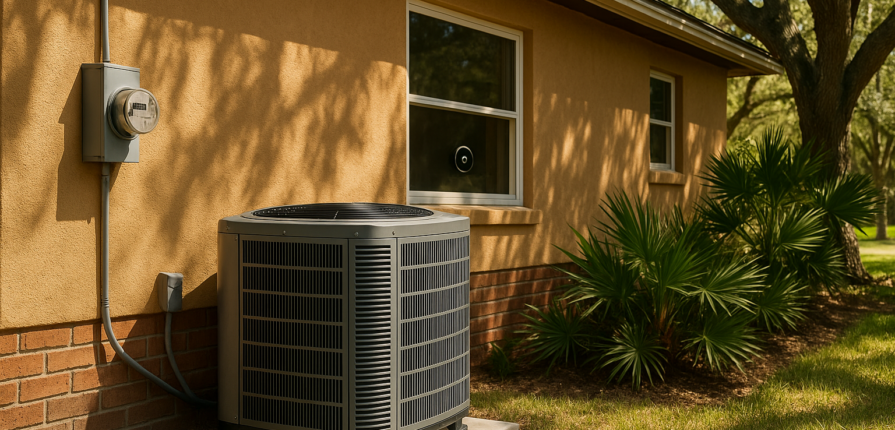
TL;DR: Air conditioning is the single largest electricity end use in the average U.S. home, so when something goes wrong, your bill notices first. Most high-bill culprits — dirty filters, leaky ducts, low refrigerant, aging equipment — are fixable. This checklist walks you through all seven so you know exactly what to look for.
You open your Duke Energy bill, do a double-take, and start wondering whether your AC unit is secretly running a cryptocurrency mining operation. Sound familiar?
You are not imagining it. According to the U.S. Energy Information Administration, electricity consumption for air conditioning accounts for about 19% of electricity use in U.S. homes — making it the single biggest electrical load under your roof. When your system is struggling, that percentage climbs fast.
In Lake County and Orange County, Florida, where AC runs six to eight months a year, even a modest efficiency loss adds up to real money. Here are the seven most common reasons your AC is inflating your electric bill, and what you can do about each one.
1. A Dirty or Clogged Air Filter
This is the first thing to check — and the easiest to fix yourself. A clogged air filter leads to a variety of problems, including high electric bills, because your HVAC system has to work harder to push air through the system. This increased workload results in your system running longer, which means more electricity is needed to power it.
What to do: Replace your air filter regularly — in general, every 1–3 months is recommended depending on your usage. Homes with pets, dusty conditions, or residents with allergies may need monthly changes. In Florida’s humidity, a loaded filter can also contribute to mold growth on your coil.
2. Dirty Evaporator or Condenser Coils
Your AC has two sets of coils: the evaporator coil inside and the condenser coil in the outdoor unit. Both need to be clean to transfer heat efficiently. Dirty coils reduce system efficiency by blocking heat transfer and making your HVAC system work harder, which increases energy use and lowers overall performance.
When coils are coated with dust, dirt, grease, or pet dander, your AC loses efficiency, runs longer, and can consume 15–30% more electricity than necessary. That is a significant hit to your monthly bill for a problem that a professional tune-up can address.
What to do: Routine maintenance is the most effective way to prevent efficiency loss — regular filter changes, professional coil cleaning, and system inspections keep airflow unrestricted and heat transfer efficient. Lucas Air’s precision tune-up includes coil inspection and cleaning as part of every visit.
3. Leaky or Uninsulated Ductwork
This one is sneaky, because you cannot see it happening. In homes with central air conditioning and heating, leaky ductwork can lead to serious energy loss — according to the EPA, the typical home with a forced-air HVAC system loses between 20 and 30 percent of its conditioned air due to duct leakage.
Here in Central Florida, ducts often run through hot attic spaces. When conditioned air escapes into a 140°F attic before it ever reaches your living room, your system has to run longer to compensate — and your bill reflects every extra minute.
Common signs of duct leakage include high summer utility bills, ducts located in unconditioned spaces like attics or crawlspaces, tangled or kinked flex ductwork, and rooms that are difficult to cool.
What to do: Have a technician perform a duct inspection. Air loss through ducts can account for about 30 percent of a cooling system’s energy consumption, according to the U.S. Department of Energy — making duct sealing one of the highest-return investments a homeowner can make. Lucas Air offers professional duct cleaning and sanitization services for Lake County and Orange County homes.
4. Low or Leaking Refrigerant
Refrigerant is the substance that actually removes heat from your home’s air. When levels are low — almost always because of a leak — your system loses its ability to cool efficiently. If your AC is leaking refrigerant, your system will not draw out heat efficiently, causing it to work significantly harder to reach desired temperatures and driving higher electric bills.
Low refrigerant is also hard on the compressor, which is the most expensive component in your system. Catching a refrigerant leak early is far cheaper than replacing a compressor — or the entire unit.
Signs to watch for: The house takes longer to cool, warm air blows from vents even when the system is running, or you notice ice forming on the refrigerant line or outdoor unit. If you spot any of these, also check out our guide to 8 Reasons Your AC Isn’t Cooling Enough for a fuller picture.
What to do: Call a licensed HVAC technician. Refrigerant handling requires EPA Section 608 certification — this is not a DIY repair.
5. An Aging or Oversized/Undersized System
Air conditioners typically have a lifespan of 10 to 15 years before they begin to malfunction, and the older your unit, the less efficient it becomes. Older systems simply use more electricity to do the same job as a modern high-efficiency unit.
Sizing matters just as much as age. If your air conditioning unit is too small for your home, it will have to work harder to keep it cool, and that extra work increases your energy consumption and generates high electric bills. An oversized unit causes a different problem: it short-cycles (turns on and off rapidly), which wastes energy and leaves your home feeling humid — a real issue in Florida.
Improperly installed heating and cooling equipment can reduce system efficiency by 30%, according to ENERGY STAR. Whether the problem is age, sizing, or installation quality, an inefficient system is always expensive to operate.
What to do: If your system is more than 10–12 years old and your bills keep climbing, it may be time to get a free estimate on a replacement. Lucas Air’s installations start at $7,500 and include the unit, permit, a one-year labor guarantee, and a ten-year parts warranty — with KwikComfort financing available.
6. A Faulty or Poorly Placed Thermostat
Your thermostat is the brain of your cooling system, and when it misfires, your energy bill pays the price. A faulty thermostat can cause your air conditioner to run continuously and may also cause it to cycle too often, using too much energy.
Thermostat placement is just as important as thermostat function. A thermostat located near a sunny window, a lamp, or a heat-generating appliance will read the room temperature as warmer than it actually is — and keep the AC running when it doesn’t need to.
What to do: Installing a smart thermostat can save homeowners about 8% on heating and cooling costs, according to ENERGY STAR. A programmable or smart thermostat eliminates the guesswork, automatically raising the setpoint when you are away and returning to comfort temperature before you get home. Lucas Air installs smart thermostats throughout Lake County and Orange County — ask about adding one to your next service call.
7. Thermostat Set Too Low (or Running 24/7)
Sometimes the culprit is behavioral, not mechanical. If you keep your thermostat set to a very low temperature, your AC unit will run constantly, leading to a spike in your electric bill — especially if you are trying to cool down your house too quickly.
Every degree below the recommended temperature adds to your energy expenditure. The U.S. Department of Energy recommends 78°F when you are home and higher when you are away as a starting point for balancing comfort and efficiency in hot climates.
Ceiling fans allow you to raise the thermostat setting about 4 degrees without impacting your comfort, according to DOE’s Energy Saver guide — a simple, low-cost way to reduce AC runtime without feeling warmer.
What to do: Raise your thermostat by 2–3 degrees, use ceiling fans to maintain comfort, and close blinds or window coverings on west- and south-facing windows during peak afternoon heat. Small changes add up over a long Florida cooling season.
When to Call a Pro
If you have worked through this list and your bill is still unusually high — or if your system is making new noises, short-cycling, or struggling to hold temperature — it is time to have a licensed technician take a look. Unusual sounds before a high-bill event are worth paying attention to; our guide on What Different AC Noises Mean can help you describe what you are hearing before you call.
At Lucas Air Conditioning and Heating, we serve homeowners, retirees, property managers, and small businesses throughout Tavares, Eustis, Leesburg, Mount Dora, The Villages, Lady Lake, Apopka, and surrounding communities. Our precision tune-up is $125, and our Preventative Maintenance Agreement — $129 per year — includes one annual tune-up, 15% off parts, and priority scheduling. Emergency service is available outside regular hours.
Founded by U.S. Army veteran Cameron Lucas (82nd Airborne Division), we built this company on the same values we carried in uniform: respect, integrity, and doing the job right the first time. Give us a call or request a free estimate online — no pressure, no upselling, just straight answers.
Recommended Reads
- 8 Reasons Your AC Isn’t Cooling Enough (And What to Do About Each)
- What Different AC Noises Mean — and When to Call a Tech
- Why Does My AC Smell Like Burning? Common Causes and When to Worry
