
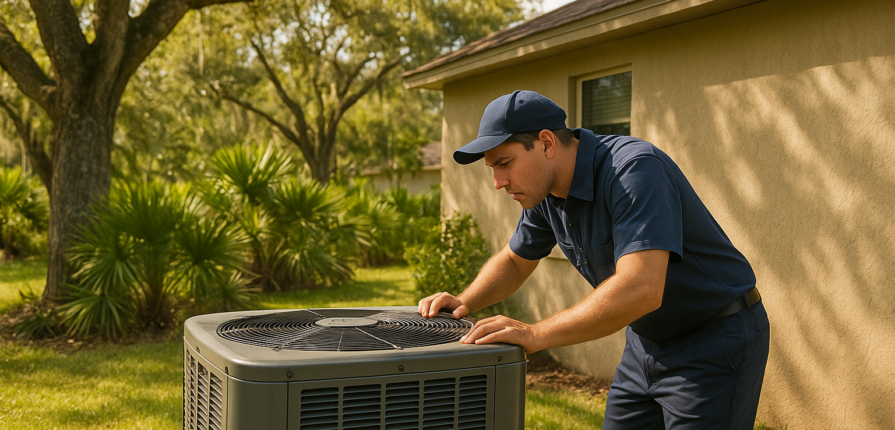
TL;DR: A burning smell from your AC is sometimes harmless — like dust burning off coils at the start of season — but it can also signal a failing motor, overheating capacitor, or dangerous electrical fault. The smell’s character (dusty vs. plastic vs. rubber) tells you a lot about urgency. When in doubt, shut the system off and call a licensed HVAC technician.
You flip on the AC and catch a whiff of something burning. Your first instinct is probably right: don’t ignore it. A burning smell from your air conditioner can range from a harmless first-start of the season to a legitimate fire risk.
This guide breaks down the six most common causes, how to tell them apart by smell and symptom, and exactly when to pick up the phone — or cut the power first.
Is a Burning Smell from Your AC Always Dangerous?
Not always — but you should treat every burning odor seriously until you’ve identified the source. One cause is genuinely benign; the rest require professional attention to some degree.
The single most useful clue is what the smell is like. Dusty and faint? Probably harmless. Sharp, plastic-y, or rubbery? Shut it down and call a tech.
6 Common Reasons Your AC Smells Like Burning
1. Dust Burning Off (The Harmless One)
If you haven’t run the AC in months — common here in Lake County after a mild winter — dust settles on the heating elements, motor, and coils. When airflow hits those surfaces for the first time, the dust burns off briefly.
This smell is dry, faintly musty, and should clear within 10 to 20 minutes of startup. If the smell fades quickly and doesn’t return, you’re almost certainly fine.
What to do: Let it run and watch. If the smell persists past the first cooling cycle, move on to the causes below.
2. Dirty or Clogged Air Filter
A dirty filter is one of the most common — and preventable — triggers of burning odors. ENERGY STAR recommends inspecting, cleaning, or changing air filters once a month in central air conditioners, furnaces, and heat pumps.
When the filter clogs, airflow drops. Your blower motor has to work harder to pull air through, which generates heat. That excess heat can produce a dry, burnt-dust odor from the motor and surrounding components.
According to the U.S. Department of Energy, a clogged filter can force your system to use up to 15% more energy — and that added strain isn’t just wasteful, it accelerates wear on every component downstream.
What to do: Check the filter first. If it’s grey and matted, replace it. Monitor the system. If the smell returns with a clean filter, something else is the problem.
3. Overheating Blower Motor
Your air handler contains a blower motor that circulates conditioned air throughout your home. When this motor overworks — due to a dirty filter, closed vents, bent fan blades, or simple age — it can overheat and produce a burning odor near your supply vents.
Skipping annual AC maintenance is a common culprit. Without lubrication on moving parts, metal-on-metal friction builds, accelerating wear and heat generation. In some cases, the system will cycle off abruptly because it has a thermal shut-off that activates when the motor gets too hot — a built-in protection, but also a warning sign.
What to do: Turn off the system. Do not run it repeatedly hoping it resets. A tech needs to inspect the motor, bearings, and fan blades before you restart.
Heads-up: If your AC is also struggling to keep up with the heat, our article on 8 reasons your AC isn’t cooling enough covers how motor strain affects cooling performance.
4. Failing Capacitor
Capacitors are small cylindrical components inside your outdoor condenser unit. They store and release the electrical charge needed to start and run the compressor and fan motors. Florida’s heat is brutal on capacitors — they degrade from overheating, power surges, and simple age.
When a capacitor fails or starts to short circuit, it puts extra strain on the motor it’s supposed to support, causing that motor to overheat — which produces a distinct burning smell, often stronger near the outdoor unit.
What to do: This is an urgent repair. Shut the system off and call a technician. Running a system on a bad capacitor risks burning out the compressor — a much more expensive failure.
5. Electrical Wiring or Component Failure
This is the cause that demands the most immediate action. Electrical issues — faulty wiring connections, short circuits, worn bearings, or an overheating motor — can cause AC components to overheat and melt surrounding materials.
Electrical wiring in your AC system has a plastic coating. When connections loosen or circuits short, that coating can melt, releasing a sharp, chemical, burning-plastic odor. This smell is distinctly different from dusty burn-off — it’s acrid, often sweet-ish, and sometimes similar to burning electronics or gunpowder.
According to the National Fire Protection Association (NFPA), air conditioning and related equipment were involved in over 2,800 home structure fires annually between 2014 and 2018, resulting in dozens of injuries and millions in property damage. When home AC fires do occur, electrical wire insulation is frequently the first material to ignite.
What to do: Shut the system off at the thermostat and at the breaker. Do not restart it. Call a licensed HVAC technician. If you see smoke or sparks, evacuate and call 911.
6. Worn or Slipping Fan Belt
Some older AC and air handler systems — particularly belt-drive blower units — use a rubber belt to spin the blower wheel. Over time, that belt can become frayed, cracked, or worn. As it slips or drags, friction generates heat, and the rubber begins to smell.
The giveaway here is a burning rubber odor, similar to what you’d smell from a slipping car belt. It’s often accompanied by reduced airflow from your vents.
What to do: Shut the system off and call a tech. Belt replacement is a straightforward repair, but running the system with a damaged belt risks further damage to the blower motor.
Quick-Reference: What Does the Smell Tell You?
- Dusty, dry, fades in minutes: Likely harmless dust burn-off. Monitor and move on.
- Burning plastic or acrid chemical: Electrical fault. Shut down immediately — fire risk.
- Burning rubber: Fan belt slipping or degrading. Turn off; schedule repair.
- Hot metal / overheated electronics: Overheating motor or capacitor. Shut down; call a tech.
- Rotten eggs or sulfur: Possible gas leak — not your AC. Evacuate immediately and call your gas utility or 911.
- Sweet or chloroform-like chemical: Possible refrigerant leak. Turn off system; call an HVAC technician.
When to Shut Your AC Off Immediately
Most HVAC professionals agree: don’t hesitate to cut power to your system if any of these apply.
- The smell is sharp, plastic-y, or smells like burning electronics
- The smell has lasted more than 20–30 minutes
- Your breaker has tripped — especially if it trips again after resetting
- You see or smell smoke
- You hear buzzing, humming, or clicking alongside the odor
- The system shuts itself off and the smell lingers
Turn off the unit at the thermostat, then flip the dedicated AC breaker in your electrical panel. This fully cuts power to the system. Do not restart it until a licensed tech has inspected it — restarting a unit with an electrical fault can cause additional damage or start a fire.
Note: Unusual sounds often accompany electrical and mechanical failures. If your system is making noises alongside the smell, our guide on what different AC noises mean can help you describe what you’re hearing when you call for service.
How to Prevent Burning Smells Before They Start
The good news: most of the causes above are preventable with routine maintenance. ENERGY STAR’s maintenance checklist for central air systems includes several checks that directly address the conditions that lead to burning odors:
- Tighten all electrical connections and measure voltage and current on motors — faulty electrical connections reduce the life of major components and create unsafe operating conditions.
- Lubricate all moving parts — parts that lack lubrication cause friction in motors and increase electricity use.
- Inspect, clean, or change air filters monthly in your central AC, furnace, or heat pump.
- Clean evaporator and condenser coils — dirty coils force the system to run longer, increasing energy costs and component wear.
At Lucas Air Conditioning and Heating, our Precision Tune-Up ($125) covers all of these checks — and our Preventative Maintenance Agreement ($129/year) includes one tune-up, 15% off parts, and priority scheduling, so you’re first in line when something does go wrong. Annual maintenance is the simplest, most cost-effective way to keep burning smells, surprise breakdowns, and costly repairs out of your Lake County summer.
When to Call Lucas Air
If you’re in Tavares, Eustis, Mount Dora, Leesburg, The Villages, Lady Lake, Apopka, or anywhere else in Lake or Orange County, and your AC is throwing off a burning smell that isn’t going away — don’t wait. We offer emergency service outside regular hours for exactly these situations.
Lucas Air is a veteran-owned company founded on honesty and trust. We won’t upsell you on repairs you don’t need, and we’ll tell you straight what’s going on with your system. Free estimates on new installations, financing available, and a 5.0-star Google rating — because we treat every customer’s home the way we’d want ours treated.
Give us a call or reach out online. A burning smell is your AC asking for help. We’ll answer.
Recommended Reads
- 8 Reasons Your AC Isn’t Cooling Enough (And What to Do About Each)
- What Different AC Noises Mean — and When to Call a Tech
