
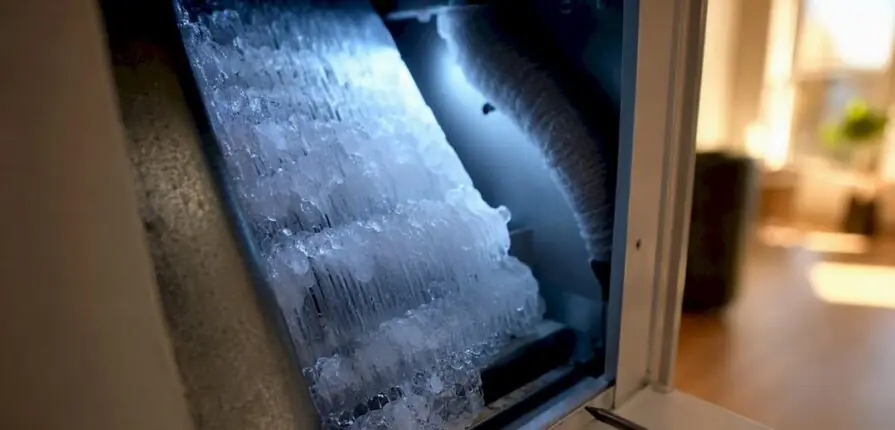
If you see ice on your AC lines or the house isn’t cooling like it should, turn the system off and set the fan to ON. Running the compressor against a frozen coil risks permanent damage, and thawing safely can take anywhere from one hour to a full day. Once it’s clear, replace the filter and check airflow before restarting. If it freezes again, stop and call a licensed technician.
TL;DR:
- Most frozen coils are caused by airflow restrictions like clogged filters or blocked vents, not refrigerant issues, making airflow checks the priority.
- Thawing requires turning off the system, setting the fan to on, and waiting until the ice melts completely before further inspection or restarting the unit.
- If the coil freezes again within days despite proper airflow, refrigerant or mechanical faults likely exist, requiring a professional technician’s diagnosis.
- Regular maintenance, including filter changes and seasonal tune-ups, can prevent most freeze-up issues by addressing common causes early.
- Calling a technician is essential when the coil repeatedly freezes, refrigerant leaks are suspected, or visible damage suggests a hardware failure that cannot be fixed at home.
Table of Contents
- How Do You Confirm a Frozen AC Coil?
- What Causes an AC Coil to Freeze in the First Place?
- How Do You Safely Thaw a Frozen AC Coil?
- When Should You Call an HVAC Technician?
- How Can You Prevent Frozen AC Coils Going Forward?
- What Do Technicians Actually Find on Frozen Coil Calls?
- A Frozen Coil Is a Warning, Not a Crisis
- Get Your Coil Diagnosed and Fixed Right the First Time
- Where to Learn More About Frozen AC Coils
- Sources
How Do You Confirm a Frozen AC Coil?
Ice doesn’t always sit where you can see it. Sometimes the giveaway is a thick sleeve of frost wrapped around the insulated suction line running from the outdoor unit into the house. Other times you’ll spot it directly on the evaporator coil inside the air handler, usually behind an access panel in a closet or attic.
Watch for these signs together, not just one:
- Visible ice or heavy frost on the coil or the suction line
- Weak or nonexistent airflow from the supply vents
- The system runs constantly but the house temperature won’t drop
- Water pooling under or near the air handler once the ice starts melting
Thaw time depends on how much ice built up. A light frost usually clears in one to three hours with the fan running. A heavy, solid block of ice can take most of a day, and it will produce a real amount of meltwater. Set a towel or a shallow pan under the air handler before you walk away, because that water has to go somewhere.
What Causes an AC Coil to Freeze in the First Place?
A frozen evaporator coil almost always traces back to one of two problems: not enough warm air reaching the coil, or not enough refrigerant moving through it. The coil needs a steady flow of room temperature air to keep its surface above freezing. If airflow is cut, the coil temperature drops below freezing, causing ice to form and the problem to worsen.
Airflow restrictions are the more common culprit, and they’re usually preventable:
- A clogged filter is the single biggest offender, starving the coil of the air it needs
- Blocked or closed supply and return vents choke the system the same way
- A dirty coil surface itself insulates against heat transfer
- A dust-caked blower wheel can quietly cut airflow even with a brand-new filter in place, which is why persistent freezing sometimes has nothing to do with the filter you just changed
Refrigerant problems are the other major category, and they’re not something you fix yourself. A low charge from a slow leak, or a restriction at the metering device, both drop the coil’s operating temperature below where it should sit. Low charge and metering device restrictions are the two leading refrigerant related causes technicians see on service calls.
A few other contributors round out the list: a miscalibrated thermostat that keeps calling for cooling long after the space is comfortable, a clogged condensate drain that backs up moisture near the coil, and running the air conditioner when it’s already cool outside. Outdoor temperatures below roughly 60°F reduce the system’s heat load enough to freeze the coil even when everything mechanical is working fine.
The diagnostic logic is simple: fix airflow first. Change the filter, open every vent, clear anything blocking a return grille. If the coil freezes again within a day or two despite clean airflow, that points to refrigerant or a mechanical fault, and it’s time to call a technician.
How Do You Safely Thaw a Frozen AC Coil?
Follow this order, and don’t skip ahead:
- Turn the thermostat to OFF. Not just “cooling off.” The system needs to stop calling for the compressor entirely.
- Set the fan to ON. This forces continuous, room-temperature air across the coil, which is the safest way to thaw it without ever touching the ice.
- Position towels or a bucket under the air handler and anywhere meltwater is likely to drip.
- Wait until the ice is completely gone before removing any panels or touching the coil. Peeking too early just lets warm, humid air in and slows things down.
- Once it’s clear, walk through the post-thaw checklist below before you turn the cooling back on.
After the coil is fully thawed, replace the air filter, make sure every supply and return register is open, and take a look at the suction line insulation for tears or gaps. Run the fan alone for a few minutes to confirm you’re getting strong airflow at the vents. Then check the condensate drain, since a clogged line is a common freeze-up companion. A shop vac at the drain’s outdoor termination or a vinegar flush usually clears minor clogs, a step worth pairing with the same meltwater management approach plumbing pros use for frozen pipes.
Do not chip at the ice with a screwdriver or any tool. You’ll puncture the coil or cut a refrigerant line before you know it. Don’t point a hair dryer or space heater at it either. And never add refrigerant yourself. Refrigerant work is federally regulated, and adding charge to a system with an undiagnosed restriction can send a slug of liquid refrigerant into the compressor and kill it outright.
Pro Tip: Snap a photo of the ice pattern before you start the thaw. If you end up calling a technician, showing them exactly where the ice formed saves diagnostic time and often lowers the visit cost.
When Should You Call an HVAC Technician?
Some signs mean stop troubleshooting and pick up the phone:
- The coil freezes again within a day or two after you’ve fixed the filter and opened every vent
- You notice an oily residue on refrigerant line connections, or hear a hissing sound near the outdoor unit
- There are visible stains suggesting a slow refrigerant leak
- The freeze only partially clears, or comes right back within hours of a full thaw
A technician’s visit starts with gauge readings on suction and discharge pressure to see whether the charge is low. They’ll check the blower wheel and coil for buildup, run a leak detector along the line set, and inspect the condensate drain and pan. Depending on what they find, the fix ranges from a simple drain clearing or coil cleaning to brazing a leak point or, in older systems with a badly corroded coil, a full coil replacement. Handling refrigerant legally requires an EPA Section 608 certification, which is exactly why this part of the job isn’t a DIY project.
How Can You Prevent Frozen AC Coils Going Forward?
A frozen coil is rarely bad luck. It’s almost always a maintenance gap that finally caught up with the system, and the good news is that most of the causes are easy to head off.
- Set a filter schedule and stick to it. A MERV 8 to MERV 11 filter is the practical range for most residential systems. Anything much higher can choke an older blower motor that wasn’t designed for that much resistance.
- Keep every return and supply vent open. Closing off rooms to “save energy” restricts total airflow and pushes the whole system toward a freeze, not away from one.
- Check the air handler’s surroundings. A closet or attic unit needs clearance around it. Boxes stacked against a return grille cause the exact same problem as a dirty filter.
- Book a tune-up before the heavy cooling season starts. A proper pre-summer tune-up covers coil cleaning, a refrigerant pressure check, condensate line clearing, and a blower inspection, catching small issues before they become an emergency call.
- Watch how you run the system in shoulder seasons. Running cooling when it’s already cool outside is a common, avoidable trigger.
Pro Tip: If you want an early warning sign, check the temperature difference between the air going into the return and the air coming out of a supply vent. A healthy system usually shows a spread of around 18 to 22 degrees. A much smaller gap often means airflow trouble is already brewing, well before ice ever shows up.
A maintenance agreement takes the guesswork out of remembering all this, since it puts filter checks and seasonal tune-ups on a schedule instead of on your memory.
What Do Technicians Actually Find on Frozen Coil Calls?
The pattern shows up again and again: a filter that’s overdue by months, sometimes paired with a blower wheel caked in enough dust to visibly reduce airflow even with a fresh filter installed. Those two issues together account for a large share of the freeze-up calls that come in during peak cooling season.
A typical diagnostic visit follows the same protocol outlined above: confirm the freeze, walk through the safe thaw, then move into pressure checks, a visual inspection of the coil and blower, and a look at the condensate line. From there, the fix is either straightforward, a cleaning and a filter change, or it points toward a repair, coil replacement, or in some cases a full system evaluation if the unit is older and the coil has failed before.
A Frozen Coil Is a Warning, Not a Crisis
Most frozen coils are a maintenance issue caught mid-cycle, not a sign your system is failing. Treat the first freeze as useful information. Fix the airflow basics, watch for a repeat, and build a relationship with a technician you trust before you actually need one in an emergency. That habit alone prevents more surprise repair bills than any single fix on this page.
— Results
Get Your Coil Diagnosed and Fixed Right the First Time
Chasing a frozen coil on your own works for the first freeze. If it comes back, or if you’re not sure whether you’re looking at a dirty filter or a refrigerant leak, that’s exactly the point where a proper diagnostic visit pays for itself. Lucasair sends a technician who runs the full pressure and airflow check, cleans the coil and blower if that’s the issue, and tells you straight whether you’re looking at a simple repair or something bigger.

A visit typically covers refrigerant leak detection, coil cleaning or replacement, condensate line clearing, and a full tune-up if your system is due for one. Lucasair also offers maintenance agreements that put a yearly tune-up on a set schedule, plus financing options if a coil replacement turns out to be necessary. The company builds its diagnostic visits around getting you a straight answer, not a guessing game.
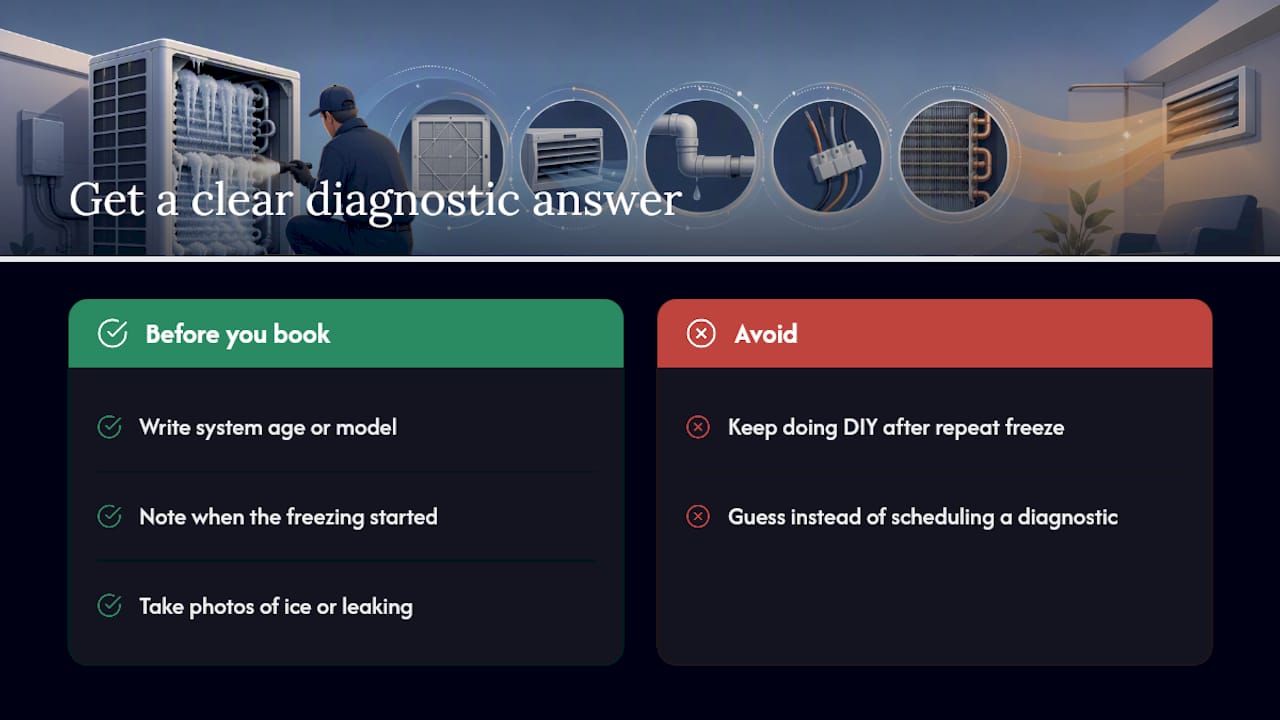
Before you book, jot down your system’s age or model number if you have it, when the freezing started, and any photos of the ice or leaking you noticed. That short list helps the technician diagnose faster once they arrive. Ready to get it looked at? Schedule a repair visit and get your cooling back on track.
Where to Learn More About Frozen AC Coils
For deeper technical detail beyond this guide, manufacturer resources like Carrier’s frozen AC guide and American Standard’s coil troubleshooting article cover the thaw process and root causes in more depth.
Need a hand? Lucas Air Conditioning and Heating offers refrigerant leak repair in Tavares, FL and our evaporator coil cleaning in Tavares, FL for homes and businesses across Lake County.
Sources
- Will Frozen AC Fix Itself? | Guide to Frozen AC Coils
- How to check if your AC evaporator coil is frozen and what to do
- Why A/C systems freeze – ACprosite