
A musty AC smell almost always means mold, mildew, or bacteria growing somewhere moisture collects, usually the drain pan, the evaporator coil, or a stretch of ductwork. Start with three moves: replace the air filter, check and flush the condensate drain line, and shut the system off if the smell is strong or anyone in the house has started coughing or sneezing more than usual. If the odor persists after that or you spot standing water or visible mold, stop troubleshooting and call a technician.
TL;DR:
- Most musty AC smells are caused by mold, mildew, or bacteria thriving in the drain pan, evaporator coil, or ductwork, not just from dirty coils.
- Replacing the filter and flushing the condensate drain line often resolve the odor, but ongoing or strong smells require professional inspection for hidden mold or damaged drain pans.
- A persistent musty smell paired with visible mold, standing water, or household symptoms suggests a health risk and warrants immediate HVAC system shutdown and professional cleaning.
- Seasonal tune-ups, humidity control, and sealing duct leaks can prevent odor recurrence, but failed habits often require coil cleaning, duct inspection, or equipment repairs.
- DIY fixes like replacing filters or flushing drains are effective first steps; if odors persist, a technician’s coil cleaning and duct assessment are necessary for a lasting solution.
Table of Contents
- Is a musty AC smell dangerous or an emergency?
- What’s causing the musty smell in your AC?
- How to get rid of the musty smell yourself
- When to call a professional instead of DIYing it
- Stop the smell from coming back
- What Lucas Air Conditioning and Heating sees in real musty-odor calls
- The troubleshooting order most guides get backwards
- Get a professional diagnosis for a musty AC smell
- Sources
Is a musty AC smell dangerous or an emergency?
It depends on what you see and smell, not just the odor itself. A faint musty note that shows up only at startup is usually a coil issue and rarely an emergency. A strong, persistent smell throughout the house, paired with visible mold or standing water, is a different story.
Turn the system off and ventilate the space if any of these apply:
- The smell is strong enough to notice in every room, not just near one vent
- Someone in the house has unexplained coughing, sneezing, or asthma flare-ups
- You can see standing water in or around the unit
- There’s visible mold growth on vents, coils, or nearby surfaces
The EPA advises against running an HVAC system when contamination with mold is suspected, since airflow can spread spores through every room the ducts reach. A typical residential AC pulls a moderate to high amount of water out of indoor air during the cooling season, which is exactly why moisture control, not just cleaning, is the real fix. Households with asthma or allergies should treat a lingering musty odor as a health cue, not just a nuisance smell, and address it sooner rather than later.
What’s causing the musty smell in your AC?
Work through this checklist in order. Most cases resolve at step one or two.
- Dirty or damp air filter. A clogged filter restricts airflow, trapping dust, pet dander, and moisture that mold feeds on. Pull it out and hold it to light. If you can’t see through it, that’s your answer.
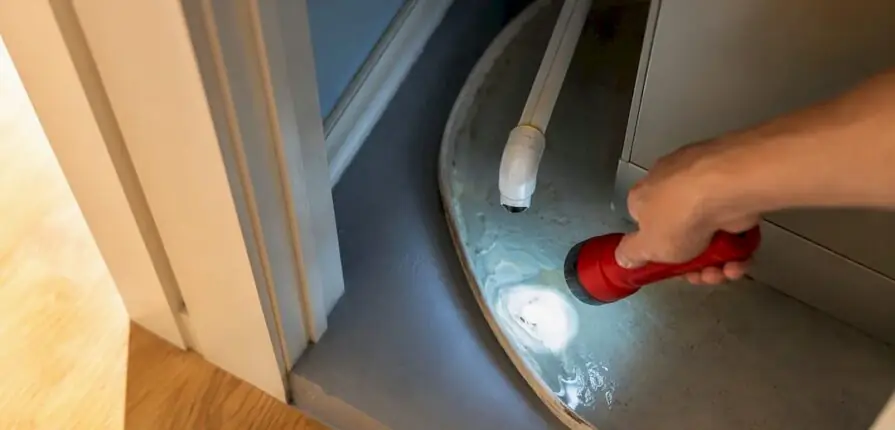
- Clogged condensate drain line. This PVC pipe carries water away from the coil. Algae and sludge build up inside it over a season or two, backing up water that starts to smell like a swamp.
- Standing water in the drain pan. If the drain line is blocked, water pools in the pan under the coil instead of draining outside. Standing water in hidden pans is one of the most common long-term odor sources technicians find, and it can sit there for weeks unnoticed.
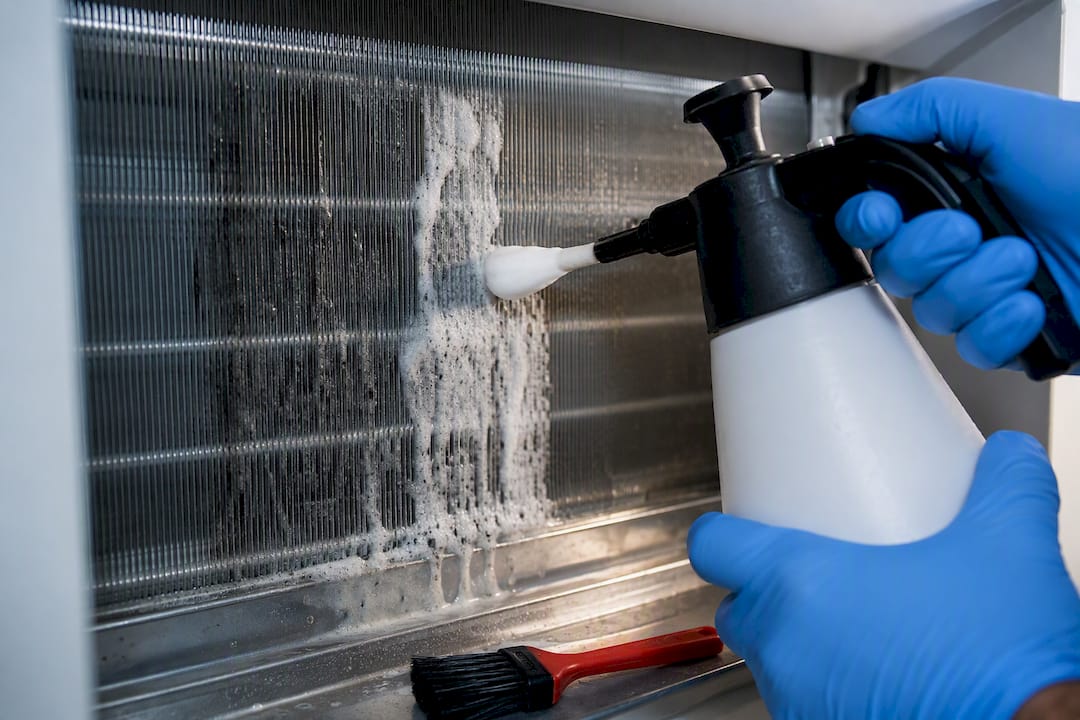
- Mold or biofilm on the evaporator coil. HVAC techs call this “dirty sock syndrome.” A slimy bacterial film forms on the coil fins and produces a sharp, sour, sock-like smell that’s often strongest right when the system kicks on.
- Moisture trapped in ductwork. Ducts running through attics or crawl spaces pick up condensation, especially if insulation is thin or seams have gaps. Leaky ducts can also pull musty attic air straight into your supply vents.
- Window units and portable ACs. Same root causes, smaller scale. Algae grows fast in the drip pan of a window unit because it’s shallow, warm, and rarely gets cleaned.
Most homeowners land on cause one, two, or four. The other two usually show up when the first three have already been ruled out.
How to get rid of the musty smell yourself
These steps go from easiest to most involved. Work through them in order and stop once the smell clears.
- Replace the air filter. Check it monthly and swap it every 30 to 90 days depending on your filter type, pets, and how much dust your home generates. A clean filter alone solves a surprising number of musty-smell complaints.
- Flush the condensate drain line. Locate the access point, usually a T-shaped PVC fitting near the indoor unit, and pour a cup of white vinegar or hydrogen peroxide down it to break up algae. For a stubborn clog, a wet/dry vacuum at the outside drain opening can pull the blockage free.
- Inspect and clean the drain pan. Wipe it down with a mild detergent or a diluted bleach solution, wearing gloves, and let it dry completely before closing the unit back up.
- Clean accessible vents and registers. Vacuum out dust and debris where vents meet the floor or wall. Trapped debris holds moisture longer than bare metal.
- Switch your thermostat fan from “On” to “Auto.” Running the fan continuously in a humid climate re-evaporates moisture sitting on the coil and in the drain pan, which pushes that smell right back into your ducts. “Auto” lets the coil dry between cooling cycles.
- Know when to stop. An electrical or chemical smell, any hint of a refrigerant leak, or mold you can see deep inside the ductwork means it’s time to call a professional rather than keep working on it yourself.
Pro Tip: If the smell only shows up in the first few minutes after startup and fades, that’s the classic biofilm signature. Cleaning sprays rarely touch it because biofilm protects the microbes underneath it from surface-level disinfectants. That pattern is your cue to book a proper coil cleaning.
When to call a professional instead of DIYing it
Some signs mean the problem has moved past what a filter change or a vinegar flush can fix. Call a technician if:
- The odor comes back within days of a DIY cleaning
- You see mold near registers, in the attic, or around visible ductwork
- Standing water keeps returning no matter how often you clear the drain
- Someone in the house has ongoing respiratory symptoms that seem tied to when the AC runs
A professional visit usually includes foaming coil cleaner to strip biofilm the vinegar trick can’t reach, condensate line repair or full replacement if the pipe is cracked or collapsed, drain pan replacement when the old one has degraded, and a duct inspection to check for hidden moisture or gaps. Ask any technician you hire: Do you clean coils and physically remove biofilm, or just spray a deodorizer? Will you show me what you find in the ducts? Do you recommend a float safety switch to prevent future pan overflows? Will I get a written estimate before work starts?
Stop the smell from coming back
Prevention comes down to keeping moisture from accumulating in the first place. A few consistent habits do more than any single deep clean.
- Replace filters on schedule, and match the MERV rating to your system, not just the highest number on the shelf
- Book a seasonal tune-up before peak cooling season to catch a slow drain or dirty coil before it turns musty
- Keep indoor relative humidity between 30 and 50 percent, using a portable or whole-house dehumidifier if your home runs consistently damp
- Seal and insulate ductwork running through attics or crawl spaces where condensation forms easily
- Leave the fan on “Auto” instead of “On” year-round
For homes with a recurring problem despite good habits, a UV germicidal light installed near the coil keeps microbial growth from taking hold, and a condensate safety switch shuts the system down automatically before a clogged drain overflows into your ceiling or walls.
What Lucas Air Conditioning and Heating sees in real musty-odor calls
Lucas Air Conditioning and Heating has been diagnosing and fixing Central Florida AC systems since 2018, founded by Army veteran Cameron Lucas. On musty-odor service calls, the pattern repeats often enough to predict: a slow-draining condensate line paired with early-stage biofilm on the coil, usually in a system overdue for a tune-up by six months or more.
The fix is rarely one thing. Technicians typically flush or replace the condensate line, run a foaming coil treatment to strip biofilm a homeowner’s vinegar rinse missed, and check the drain pan for cracks or standing water. Every inspection includes showing the homeowner what was found, coil photos, moisture readings, drain flow, before any repair work starts, so there’s no guessing about what you’re paying for or why.
The troubleshooting order most guides get backwards
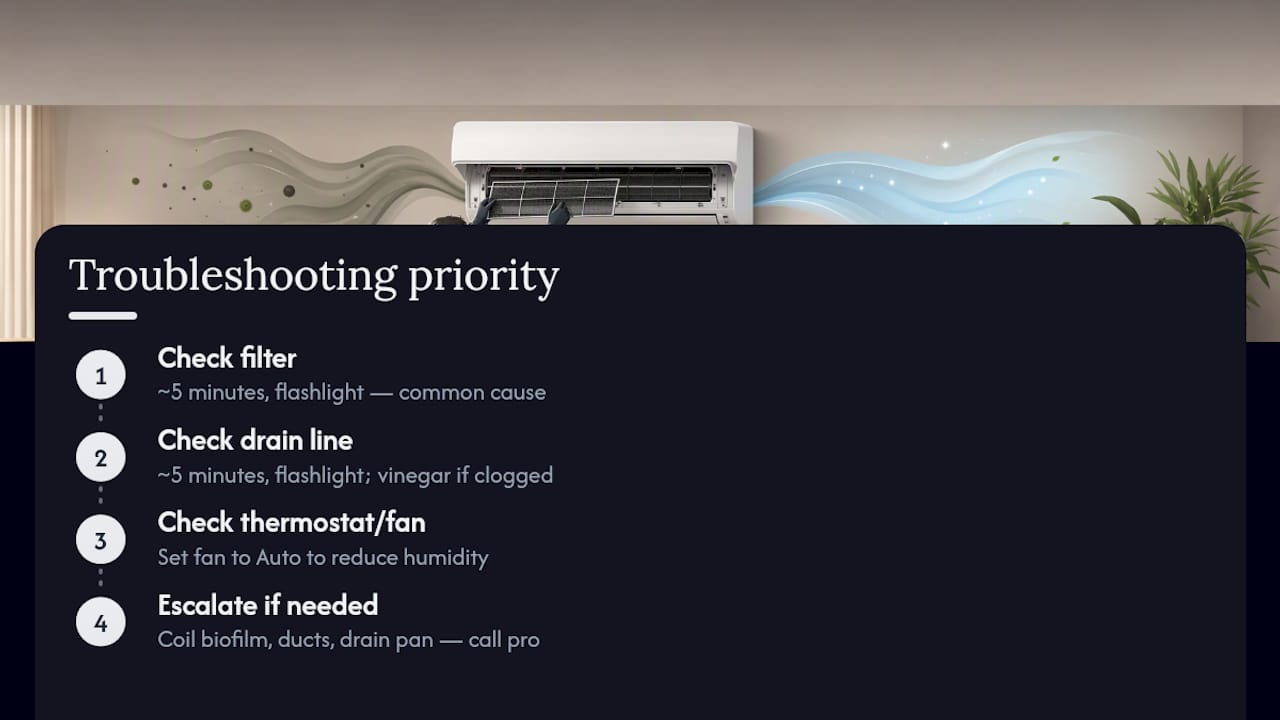
Most advice online treats every musty smell like a coil-cleaning problem first. That’s backwards. The filter and the drain line cause the majority of cases, and both take five minutes to check with no tools beyond a flashlight. Coil cleaning is real, and biofilm is a legitimate cause, but jumping straight to it means paying for a service call before you’ve ruled out the two-dollar fix.
The other place conventional advice falls short is humidity. Plenty of guides list “clean your coil” and “change your filter” without mentioning that a fan stuck on “On” in a humid climate can undo both fixes within a week by re-evaporating moisture right back into the ductwork. Humidity control isn’t an afterthought here. It’s the difference between a smell that stays gone and one that creeps back every August.
What the reader should prioritize first is simple: filter, drain line, thermostat setting. Those three cost nothing beyond a few minutes and maybe a bottle of vinegar. Everything past that point, coil biofilm, duct contamination, a failing drain pan, is where local, hands-on diagnostic experience actually earns its cost.
— Results
Get a professional diagnosis for a musty AC smell
If the filter change and drain flush didn’t clear the smell, Lucasair gives Central Florida homeowners a faster path to a real fix than trial-and-error DIY: a technician who can see inside the coil and ductwork instead of guessing from the vents. Diagnostic visits cover the parts homeowners can’t easily reach: foaming coil cleaning to strip biofilm, condensate line repair, drain pan inspection, and a duct check for hidden moisture or leaks pulling in musty attic air.

Booking one is straightforward. A technician inspects the system, walks you through what’s causing the smell with photos and moisture readings, and completes the repair or schedules follow-up work the same visit in most cases. Homeowners dealing with recurring odors often add a maintenance agreement so the drain line and coil get checked before the smell has a chance to come back. If your system needs more than a cleaning, browse Lucasair’s repair services or schedule an inspection online to get a fix scoped out before summer humidity makes the problem worse.
Need a hand? Lucas Air Conditioning and Heating offers AC drain line repair in Tavares, FL for homes and businesses across Lake County.
Sources
- A brief guide to mold, moisture and your home | US EPA
- Why is there a musty smell from my HVAC system even after coil cleaning? – PickHVAC
- How to get rid of a musty smell from your central AC system – AppliancePartsPros