
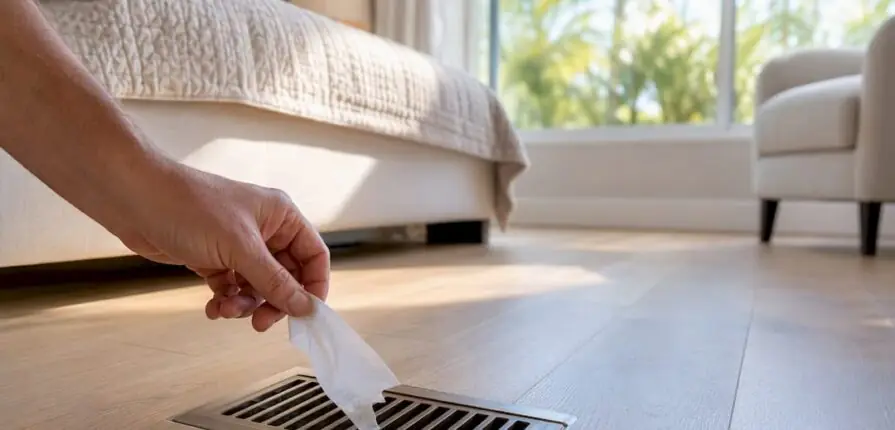
No heat from vents almost always traces back to one of three things: a thermostat or fan setting, a dirty air filter choking airflow, or a control component (blower, ignition, capacitor) that quit mid-cycle. Start by confirming the thermostat is set to Heat with the fan on Auto, then check the filter and the breaker. If vents are still blowing room-temperature air 10 to 15 minutes into a confirmed heat call, work through the checks below or call a technician.
TL;DR:
- Dirty air filters can cause the system to overheat and trip safety limits, often restoring warm air within about 15 minutes after replacement.
- A blown fuse, a tripped breaker, or an incorrectly set thermostat fan switch can prevent warm air from reaching the vents.
- Heat pumps may blow cold air during defrost cycles, but persistent cold air indicates possible reversing valve faults or low refrigerant levels.
- Leaky or blocked ductwork can cause uneven temperatures, with supply air near the unit being significantly warmer than faraway vents.
- Most no-heat issues are due to skipped maintenance, like infrequent filter changes and neglected duct sealing, which homeowners can often address themselves.
Table of Contents
- Why Your Heater Blows Cold Air: The Main Causes
- How Do You Troubleshoot No Heat from Vents?
- Why Does My Heat Pump Blow Cold Air?
- Could the Problem Be in Your Ductwork?
- When Should You Call an HVAC Technician?
- What Maintenance Prevents No-Heat Problems?
- A Founder’s Note on What Actually Fixes Most No-Heat Calls
- Get Your Heat Fixed Fast with Lucasair
- Sources
Why Your Heater Blows Cold Air: The Main Causes
Cold air from vents while the system runs usually comes from one of six places, and figuring out which one narrows your fix from “call someone” to “grab a screwdriver.”
- Thermostat errors. The fan switch set to “On” instead of “Auto” pushes air constantly, including the cool stretches between heating cycles. Dead batteries or the wrong system mode cause the same symptom.
- A clogged filter. A dirty filter starves the system of airflow, which can make the furnace overheat and trip a safety limit that shuts the burners off while the blower keeps running. Swapping the filter often restores warm air within about 15 minutes.
- Blower or control failures. A failing capacitor, seized motor, or bad control board can let the burners fire without ever moving warm air through the ducts. A blower that hums but doesn’t spin usually points to a capacitor or motor problem.
- Ignition or burner faults. A dirty flame sensor, failed pilot, or ignition fault can let the blower run its normal cycle even though no heat was ever produced.
- Duct delivery problems. Leaks, disconnected boots, crushed flex duct, or bare insulation can bleed off heat before it reaches distant rooms, leaving some vents warm and others nearly cold.
- Power and safety interlocks. A tripped breaker, a furnace door switch that isn’t fully seated, or a condensate float switch can cut power to the system entirely, even when the thermostat display looks normal.
How Do You Troubleshoot No Heat from Vents?
Work through these in order. Each step below takes only a few minutes and rules out (or confirms) one likely cause before you move to the next.
- Confirm a real heat call. Set the thermostat to Heat, bump the setpoint 3 to 5°F above room temperature, and set the fan to Auto. Give the system 60 to 180 seconds; most furnaces and heat pumps have a built-in startup delay before air even begins moving.
- Check power and indicators. Look at the breaker panel, the furnace’s power switch (often a light switch near the unit), and the thermostat’s battery status. If your furnace has an LED window, note the blink pattern, most manufacturers translate flashing codes into specific faults in the installation manual.
- Replace the filter and test airflow. Put in a fresh filter, then compare vents close to the unit against ones farther away after 5 to 15 minutes. Warm air that starts strong and then goes cool in cycles often means a limit switch is tripping from restricted airflow.
- Run a blower test. Switch the fan to On. If it runs fine there but stays silent or hums during a heat call, suspect the fan relay, control board, or wiring rather than the burners themselves.
- For heat pumps, check outside. Clear leaves or ice from the outdoor unit, then switch between heat and cool while listening for the reversing valve’s audible click.
- Know where to stop. Skip anything involving the gas valve, ignition components, exposed wiring, or the heat exchanger. Those repairs carry real safety risk and belong to a licensed technician.
Pro Tip: Take a photo of your thermostat settings and any blinking LED code before you call for service. Technicians can often narrow down the likely part over the phone when they have exact symptoms instead of “it’s just not heating.”
For a longer walkthrough with more diagnostic branches, Lucasair’s heating system troubleshooting guide covers additional edge cases beyond this checklist.
Why Does My Heat Pump Blow Cold Air?
Heat pumps behave differently than furnaces, and that difference confuses a lot of homeowners. A normal defrost cycle runs 1 to 10 minutes and can feel like cold air blowing, because the system briefly reverses to melt frost off the outdoor coil. That’s expected. Cold air lasting well beyond that window is not.
- No click when switching modes often signals a failing reversing valve or a wiring fault at the solenoid, worth checking electrically before assuming a full valve replacement.
- Heavy outdoor coil icing or low refrigerant charge cuts capacity, especially as outdoor temperatures drop toward the mid-20s Fahrenheit and below.
- Auxiliary heat should engage automatically in that cold range. If it’s not kicking in and the house stays cold, that’s a control issue, not a temperature limit.
Clearing debris, switching modes to listen for the valve, and watching whether aux heat activates are all fair homeowner checks. Refrigerant work and valve replacement are not. If you want a deeper primer on how the reversing process works, this heat pump explainer breaks down the mechanics in plain terms.
Could the Problem Be in Your Ductwork?
Sometimes the furnace or heat pump is doing its job just fine, and the heat never makes it to the room. That’s a delivery problem, not a production problem, and it’s one of the more common reasons for uneven warmth in different rooms.
Use a simple probe or infrared thermometer at a supply vent close to the unit, then check one far from it. Supply air should read noticeably warmer than room temperature within 5 to 10 minutes of a confirmed heat call; a big gap between near and far vents points to duct losses along the way.
- Feel for warm air escaping into the attic or crawlspace near visible duct runs.
- Check that boots are still attached where ducts meet the floor or wall.
- Look for crushed or kinked flex duct, especially where it bends around framing.
- Confirm registers and dampers are actually open, not just visually closed by a previous occupant.
Pro Tip: If one specific room runs cold every winter, check that room’s damper before assuming it’s a bigger system fault. Dampers get bumped closed during cleaning or furniture moves more often than people realize.
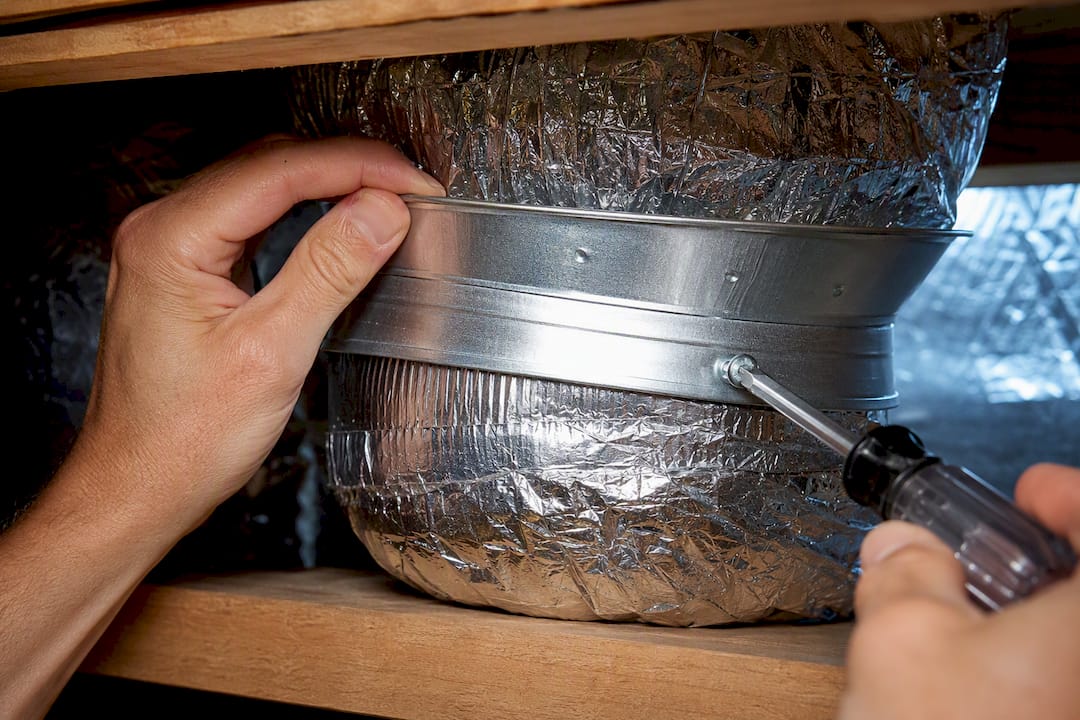
Reattaching a loose boot or opening a stuck damper is fair game for a homeowner. Sealing leaky duct joints or replacing crushed sections properly usually calls for duct cleaning and sealing service.
When Should You Call an HVAC Technician?
Some symptoms mean stop troubleshooting and call for service immediately. Others just mean your DIY checklist has run its course.
- Emergency, stop and call now: any gas smell, visible flame rollout, repeated limit-switch trips, or a burning odor from the unit or vents.
- DIY limit reached: if thermostat settings, a fresh filter, and the breaker panel haven’t restored warm air within 10 to 15 minutes of a confirmed heat call, the cause is likely mechanical or electrical.
- Component-level repairs: blower motor or capacitor replacement, control board faults, reversing valve swaps, refrigerant charge issues, and any suspected crack in the heat exchanger all require licensed hands.
- What to tell the technician: your exact thermostat settings and behavior, any blinking LED codes, the near-versus-far vent temperatures you measured, unusual noises or smells, and every step you already tried.
Walking a technician through those details on the phone frequently cuts a diagnostic visit down significantly, since half the guesswork is already done before the truck leaves the shop.
What Maintenance Prevents No-Heat Problems?
Most no-heat calls trace back to something that regular maintenance would have caught months earlier.
- Replace filters every 30 to 90 days, leaning toward the shorter end with pets or heavy dust.
- Book an annual or biannual tune-up covering combustion inspection, blower performance, capacitor and relay condition, and thermostat calibration.
- Inspect accessible ductwork yearly and reseal any joints showing gaps or torn tape.
- Keep the outdoor unit clear of leaves and debris, and schedule coil cleaning if airflow feels weak.
A maintenance agreement bundles these checks into a set schedule and typically moves you up the priority list when something does fail mid-winter.
A Founder’s Note on What Actually Fixes Most No-Heat Calls
Most no-heat service calls we see resolve with a filter swap or a thermostat fix, nothing dramatic. The recurring problems, the ones that come back every season, almost always trace to skipped maintenance rather than bad luck with equipment. If you call for service, have your thermostat model, any error codes, and a quick note on exactly what you observed at the vents ready to go. It shaves real time off the visit and gets your heat back faster.
— Results
Get Your Heat Fixed Fast with Lucasair
If the checks above didn’t bring the warm air back, the next move is a diagnostic visit rather than more guessing. Professional HVAC technicians handle the repairs that sit past the homeowner line: blower motor and capacitor swaps, control board faults, heat pump reversing valve issues, and duct sealing when heat is getting lost between the furnace and the room.

A typical service visit starts with the same information you gathered in this guide: your thermostat settings, any LED codes, and where exactly the cold air showed up. Having the unit accessible and that information ready usually means a faster diagnosis and a shorter repair window. If you’re in Central Florida and vents are still blowing cold, you can book a visit through Lucasair’s repair service page and get a technician out to track down the actual cause instead of another round of trial and error.
Need a hand? Lucas Air Conditioning and Heating offers heat pump repair in Tavares, FL for homes and businesses across Lake County.
Sources
- Why your furnace may not be blowing hot air (The Spruce, 2025)
- Furnace running but not blowing air (PickHVAC)
- Troubleshooting heat pumps stuck in one mode (ACHR News, 2026-01-23)
- Furnace not blowing hot air (Trane troubleshooting)