
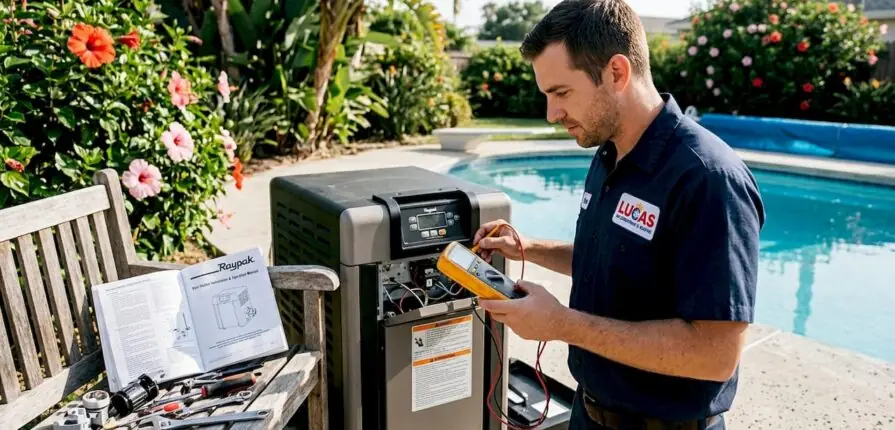
TL;DR:
- Proper maintenance extends the lifespan of your pool heater by preventing premature breakdowns caused by neglected care. Regular inspections of components like the TRV, water chemistry, and ignition system, combined with seasonal upkeep, ensure efficient and reliable operation year-round. Professional service remains essential for diagnosing complex issues, verifying performance, and avoiding costly repairs from overlooked problems.
Your pool heater works hard, and when it fails mid-swim season, the cause is almost always the same: skipped maintenance. Learning how to maintain pool heater systems properly is not complicated, but it does require consistency and attention to detail. Skip the routine care and you are looking at premature breakdowns, energy waste, and repair bills that dwarf the cost of prevention. This guide walks you through everything, from the tools you need to a full seasonal schedule, so your heater runs reliably year after year.
Key Takeaways
| Point | Details |
|---|---|
| Seasonal care extends lifespan | Routine inspections can stretch heater life from 6 years to 15 years with consistent effort. |
| TRV inspection prevents costly damage | Checking the Thermal Regulator Valve each spring protects the heat exchanger from corrosion and scale. |
| Water chemistry is non-negotiable | Keeping pH at 7.4 to 7.6 prevents heat exchanger corrosion that voids most manufacturer warranties. |
| Test fire before every season | Running a full heat cycle before peak use confirms ignition, flame quality, and thermostat function. |
| Know when to call a pro | Annual professional servicing is the single best investment for heat pump and gas heater longevity. |
How to maintain pool heater: tools and safety prep
Before you touch anything on your pool heater, gather the right supplies. Working without them leads to shortcuts, and shortcuts lead to damage. Here is what you need on hand:
- A soft brush and shop vacuum (never a wire brush on burner components)
- A multimeter for checking voltage and resistance on electrical components
- Fin comb for heat pump coil maintenance
- pH test kit and water chemistry adjustment chemicals
- Replacement gaskets and O-rings matched to your heater model
- Manufacturer’s owner manual, either physical or downloaded
Safety comes first, especially with gas and electric systems. Shut off the gas supply at the shutoff valve before opening any panels on a gas heater. Turn off the breaker for electric or heat pump units. Give the unit 30 minutes to cool before you begin any internal work. If you smell gas at any point, stop immediately and call your gas utility before proceeding.
Pro Tip: Read your owner’s manual before every maintenance session, not just the first time. Manufacturers update torque specs, cleaning recommendations, and safety warnings that matter for your specific model.
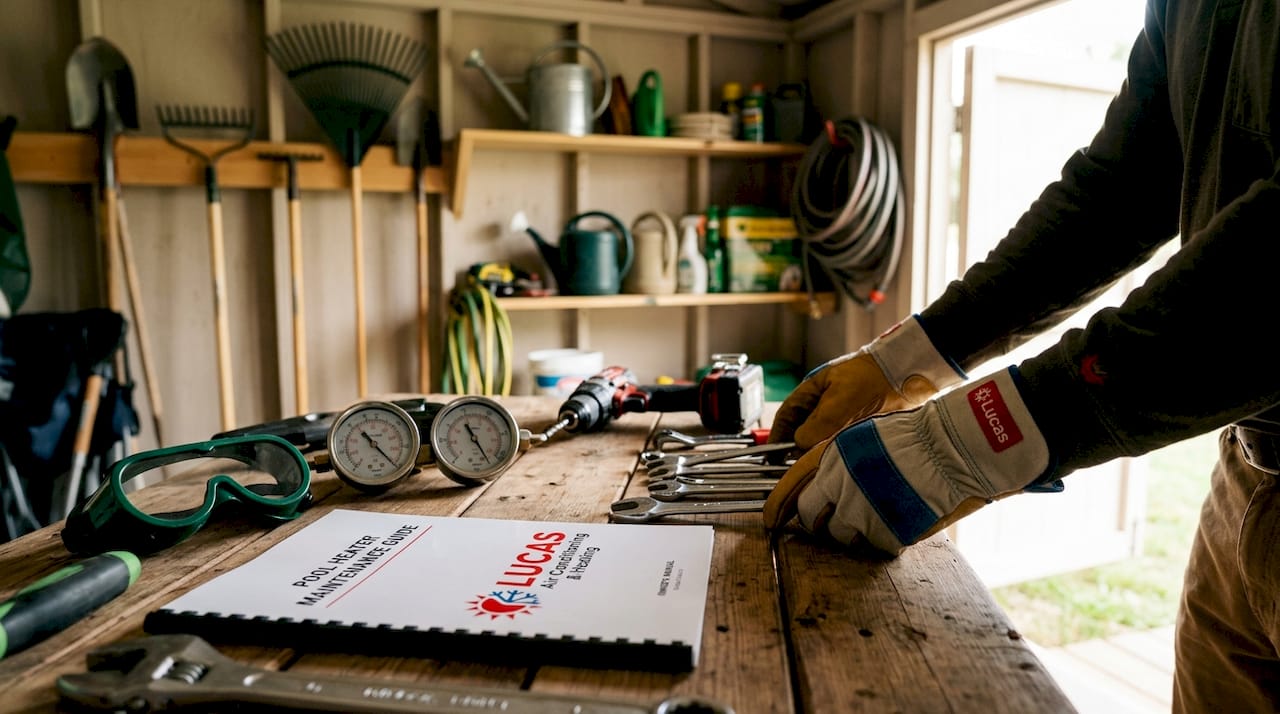
The type of heater you own changes what you focus on. Gas heaters require attention to burners, gas pressure, and combustion. Heat pump heaters center on coil condition, refrigerant lines, and airflow. Electric resistance heaters are simpler but still need element checks and thermostat calibration. Knowing your heater type up front prevents wasted effort and keeps you focused on what actually matters.
Seasonal pool heater maintenance checklist
This is where the real work happens. Spreading pool heater care instructions across the calendar prevents the accumulation of problems that cause sudden failures.
Spring opening
- Inspect the Thermal Regulator Valve (TRV) carefully. The TRV is a diagnostic mirror of your water chemistry health. Scale or corrosion on the TRV is your first warning that pH or calcium hardness has been running out of range, long before you see heat exchanger damage.
- Open the heater cabinet and vacuum the burner tray thoroughly. Insect nests and debris inside the burner tray are a top cause of no-start failures in spring. A shop vacuum removes them safely without damaging the delicate ribbon burners that a wire brush would destroy.
- Check the ignition system per your manufacturer’s instructions. Look for cracked electrodes, corroded connections, or soot buildup on the igniter tip.
- Verify the gas supply pressure if you own a gas unit. Manifold pressure should read 3.5 inches WC for natural gas systems. A significant deviation signals a regulator issue that a technician needs to address.
- Balance your water chemistry before firing the heater. Target a pH of 7.4 to 7.6 and calcium hardness between 200 and 400 ppm. pH below 7.2 causes corrosion that voids most heat exchanger warranties and leads to expensive pinhole leaks.
Pro Tip: Take a photo of every component you open before touching anything. If reassembly gets confusing, that photo saves significant time and frustration.
Summer upkeep
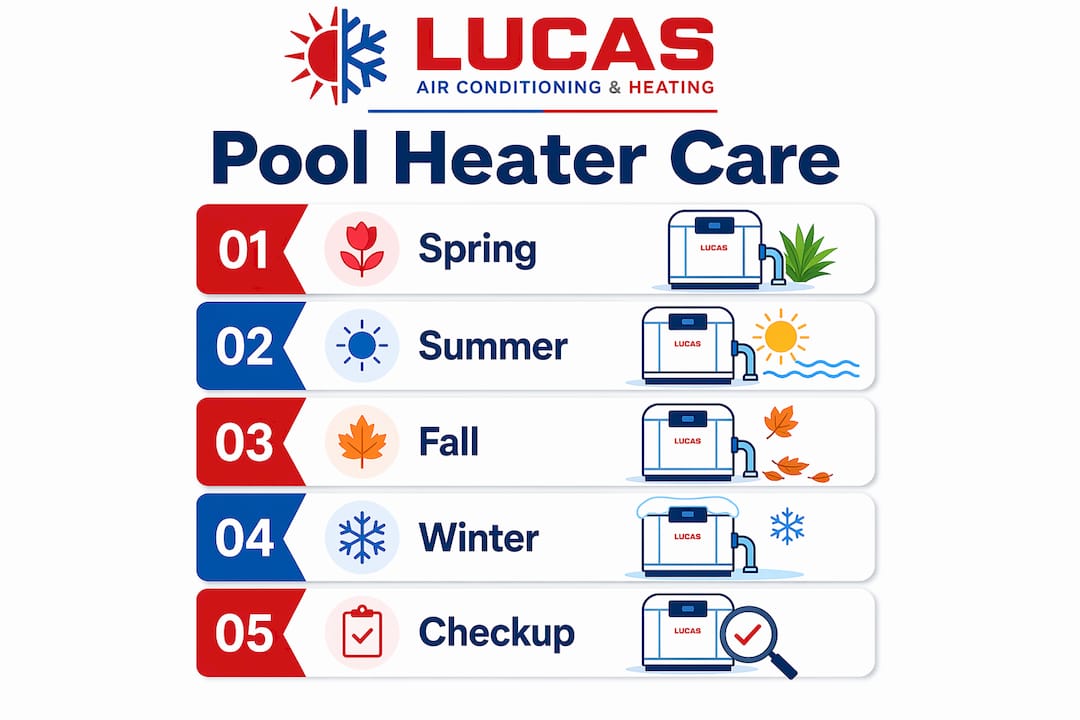
Summer maintenance is less intensive but still matters. Check your vents monthly for obstructions like overgrown vegetation, bird activity, or debris accumulation. Watch flame color on a gas heater. A healthy flame burns blue with orange tips. Yellow or orange flames across the whole burner indicate incomplete combustion, often from dirty orifices or a gas pressure issue.
Monitor your water chemistry weekly during heavy swim season. High bather load shifts pH faster, and acidic water is your heat exchanger’s worst enemy. For heat pump units, keep at least 24 inches of clearance around the unit so airflow stays unrestricted. Blocked airflow forces the compressor to work harder and shortens its life.
| Season | Primary tasks | What you are protecting |
|---|---|---|
| Spring | TRV check, burner cleaning, ignition test, water chemistry | Heat exchanger, ignition system |
| Summer | Vent checks, flame quality, weekly water chemistry | Combustion quality, coil efficiency |
| Fall | Heat exchanger cleaning, gasket inspection, test fire | Seals, exchanger, thermostat |
| Winter | Full drain, cover installation, TRV recheck | Freeze damage prevention |
Fall closing
Clean the heat exchanger fins with a soft brush and rinse gently. Inspect every visible gasket and O-ring for cracking or compression set. These small components are cheap to replace now and expensive when they fail mid-season. Run a complete test fire in the fall, not just in the spring. You want to confirm the heater operates correctly before cold weather arrives, while service appointments are easier to schedule.
Winter preparation
In Central Florida, hard freezes are uncommon but not impossible. Even so, draining your pool heater for extended off-season storage removes standing water that can cause corrosion inside the heat exchanger. Use a manufacturer-approved cover that allows ventilation to prevent moisture buildup. Do not use solid tarps that trap humidity inside the cabinet.
Troubleshooting common pool heater problems
Most pool heater failures come from flow restrictions, dirty burners, and ignored safety controls. They are not random. They build up over time from skipped maintenance steps. Recognizing the pattern early saves the repair.
Here are the most common issues and what they actually mean:
- No heat output: Check the filter first. A clogged filter reduces flow below the heater’s minimum threshold, triggering the pressure switch. Clean or replace the filter before assuming a heater fault.
- Heater cycles off unexpectedly: A faulty or dirty pressure switch is a common culprit. So is a partially closed valve in the return line. Check flow rate before chasing electrical causes.
- Strange clicking or rumbling noise: Clicking is normal during ignition on a gas unit. Persistent clicking after ignition signals a flame sensor failure. Rumbling during operation on a heat pump often points to a failing fan motor bearing.
- Yellow or weak flame: Usually a burner orifice blockage or low gas pressure. Vacuum the burner tray and recheck manifold pressure.
One rule you should never break: do not bypass safety switches or TRV controls to force a heater to run. Bypassing TRV safety switches causes dangerous overheating and can destroy the heat exchanger in a single firing cycle. If the heater will not run with safety controls active, the safety control is doing its job. That is a call for a technician, not a jumper wire.
The most common owner mistake that shortens heater life is running the unit with unbalanced water chemistry. The second most common is ignoring minor symptoms like short cycling or reduced output until they become major failures. Troubleshooting pool heater issues early, when symptoms are small, almost always keeps the repair bill small too.
Verifying performance and scheduling professional service
After any maintenance session, run a full heat cycle test before declaring the job done. Set the thermostat 10°F above the current pool temperature, start the heater, and observe the entire sequence from ignition through steady operation to thermostat shutoff. Watch for blue flame with orange tips, consistent combustion noise, and a clean shutoff when the target temperature is reached.
While the heater runs, confirm these items:
- Pressure switch activates within the normal range of 1.0 to 2.0 PSI
- No gas odor is detectable around fittings or the gas valve
- The thermostat shuts the unit down cleanly at the set temperature
- No error codes appear on the control board display
Even with diligent owner maintenance, a professional annual tune-up is worth scheduling. Heat pump pool heaters require annual professional service to operate efficiently and can last more than 10 years when that care is consistent. A certified technician checks refrigerant charge, electrical connections, and combustion analysis that go beyond what any owner can do without specialized tools.
The clearest signs that you need professional attention rather than a DIY fix include: the heater fails to ignite after two full cycles, you detect a gas odor at any point, the heat pump loses heating capacity despite correct airflow, or error codes persist after a filter clean and flow check. None of those situations benefit from more owner troubleshooting. They need a qualified technician.
My honest take on pool heater care
I’ve seen the same pattern repeatedly: pool owners do everything right during installation and nothing after. The heater runs well for two or three seasons, then starts showing minor symptoms. Those symptoms get ignored because the heater still works. By year four or five, what would have been a $150 repair becomes a $900 heat exchanger replacement or a full unit swap.
What I’ve learned is that the five minutes of quarterly attention described in pool heater upkeep guidelines genuinely changes the math on equipment life. It is not marketing talk. The data backs it up. Seasonal inspections can extend a heater’s working life from the typical 6 to 8 years all the way to 10 to 15 years.
The part most people underestimate is water chemistry. Owners obsess over pump operation and filter cleanliness, which is reasonable. But acidic water silently destroys a heat exchanger from the inside over months while the heater appears to run fine. By the time output drops noticeably, the damage is often done.
My take on professional servicing: do not treat it as optional. The diagnostic tools a qualified technician brings, specifically combustion analysis, refrigerant pressure testing, and electrical load measurement, catch problems that no visual inspection will surface. Think of it the same way you think about a car tune-up. You could skip it, but you already know what happens when you do.
— Lucasair
Keep your heater running with professional support
Consistent owner care handles a lot, but some tasks genuinely require professional tools and training. At Lucasair, we provide pool heater repair and service for Central Florida homeowners who want their equipment running safely and efficiently. Whether you need a diagnostic check, a full tune-up, or are dealing with a heater that won’t fire, our team handles it.
For your AC, our preventative maintenance agreement puts a yearly tune-up on the calendar, so nothing gets missed. If you need a more involved fix, our residential repair services cover pool and spa heaters. Contact Lucasair to schedule your pool heater service and stop problems before they start.
FAQ
How often should a pool heater be serviced professionally?
Most manufacturers and HVAC professionals recommend annual professional servicing. Heat pump pool heaters in particular need yearly tune-ups to maintain efficiency and achieve their full 10-plus-year lifespan.
What water chemistry levels protect a pool heater?
Keep pH between 7.4 and 7.6 and calcium hardness between 200 and 400 ppm. Running pH below 7.2 causes heat exchanger corrosion that voids most warranties.
Why does my pool heater keep shutting off?
The most common causes are low water flow from a dirty filter, a triggered pressure switch, or a partially closed valve. Clean the filter first, then check flow rate before assuming an electrical fault.
Can I clean pool heater burners myself?
Yes, with the right approach. Use a shop vacuum to remove debris from the burner tray. Never use a wire brush on ribbon burners, as that damages them. For a deeper clean or orifice blockages, call a professional.
What is the TRV and why does it matter?
The Thermal Regulator Valve (TRV) protects the heat exchanger by regulating water flow temperature. Inspecting it each spring reveals early signs of water chemistry problems before they cause expensive internal damage.
Recommended
- Step by Step Pool HVAC Maintenance for Lasting Comfort – Lucas Air Conditioning and Heating
- How to Schedule Pool Heater Service for Reliable Comfort – Lucas Air Conditioning and Heating
- Pool Heater Repair: Ensuring Year-Round Comfort in Eustis – Lucas Air Conditioning and Heating
- Pool Heater Repair: Maximizing Comfort and Efficiency – Lucas Air Conditioning and Heating