
TL;DR:
- Pool heater troubleshooting involves verifying power, gas supply, and water flow before opening panels to identify issues efficiently. Common problems include low water flow, faulty error codes, or ignition failures, which require systematic diagnosis rather than random part replacement. When dealing with gas leaks, refrigerant issues, or persistent faults, it is essential to contact a professional technician for safe, accurate repairs.
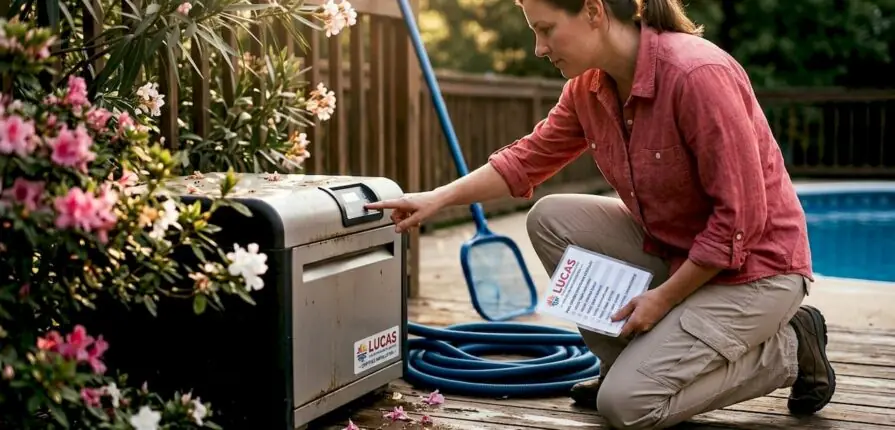
You fire up the pool heater, wait an hour, and the water is still cold. Or the unit kicks on, runs for two minutes, then shuts off with a blinking error code you’ve never seen before. This pool heater troubleshooting guide walks you through the most common swimming pool heater problems — from no ignition to weak heat output — so you can diagnose what’s actually wrong before spending money on parts you may not need. Most issues have a clear cause, and finding it takes less time than you’d think.
Table of Contents
- Key takeaways
- Pool heater troubleshooting guide: starting with the right prep
- Step-by-step troubleshooting for common pool heater problems
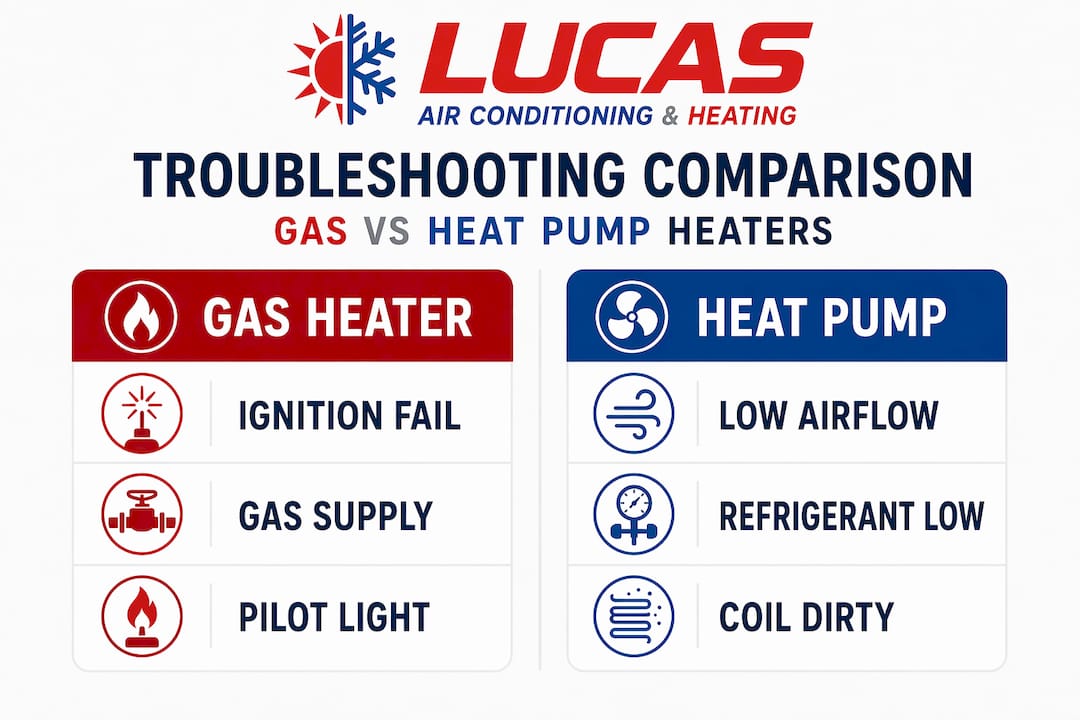
- Heat pump heaters vs. gas heaters: different problems, different fixes
- When to call a professional pool heater technician
- My honest take on pool heater troubleshooting
- Expert pool heater repair when you need it most
- FAQ
Key takeaways
| Point | Details |
|---|---|
| Start with the basics | Verify power, gas supply, and pump operation before opening any panels or replacing parts. |
| Flow problems are the top cause | Low water flow triggers safety shutoffs and error codes; clean filters and baskets first. |
| Error codes are your friend | Codes like ERR IGN or ERR PS point to specific fault families, saving time and guesswork. |
| Heat pumps need warmer air | Heat pump heaters won’t run efficiently below certain ambient temperatures, which is not a malfunction. |
| Know when to stop DIYing | Gas leaks, persistent ignition failures, and refrigerant issues require a certified technician. |
Pool heater troubleshooting guide: starting with the right prep
Before you poke around inside the unit, run through a short checklist. Pool heater failures almost always trace back to one of five root causes: no power, no gas, no water flow, a thermostat set too low, or an active error code. Checking these five things first saves you from chasing a ghost.
Here’s what to verify before you touch anything else:
- Power supply: Check the circuit breaker and any disconnect switch near the heater. A tripped breaker is the most overlooked fix in pool heater repair.
- Gas supply: Confirm the shutoff valve is fully open for gas heaters. If you use propane, check the tank level.
- Pump operation: Walk over to your pump and confirm it’s running with good pressure. A pool heater won’t fire without adequate water moving through it.
- Thermostat setting: Make sure the setpoint is at least 4 to 6 degrees above the current water temperature. Some heaters won’t activate if the gap is too small.
- Error codes: Read the display panel before resetting anything. Write the code down.
On the safety side, always shut off the heater and let it cool before opening access panels. If you smell gas at any point, leave the area, don’t flip any switches, and call your gas provider immediately.
Pro Tip: Take a photo of any error code on the display before you reset the unit. Some codes clear automatically after a power cycle and you’ll lose the diagnostic information you need.
Step-by-step troubleshooting for common pool heater problems
Work through these steps in order. Skipping ahead typically leads to unnecessary parts purchases and wasted afternoons.
- Confirm power delivery. Check the breaker panel for a tripped breaker. Reset it once and watch whether it trips again. If it does, stop and call a technician. A breaker that keeps tripping signals a wiring fault, not a simple fix.
- Restore water flow. Low water flow is one of the most frequent causes of a pool heater not working. The heater’s flow switch shuts it down if flow drops below roughly 25 to 30 GPM, protecting the heat exchanger from burning out. Clean your skimmer basket, pump basket, and filter. If you have a variable speed pump, confirm it’s running at a speed that delivers enough flow through the heater circuit.
- Check thermostat and control board. Set the thermostat several degrees above your current water temperature. If the display is blank or unresponsive, try a full power cycle by turning off the breaker for 30 seconds. Some control boards reset cleanly after a brief outage.
- Read and interpret error codes. This step deserves real attention. Pentair MasterTemp error codes group faults into families: flow errors like ERR PS clear on their own once flow is restored, while ignition errors like ERR IGN require a manual reset and deeper diagnosis. Treating every error the same way leads to repeated resets without any real fix. Error-code-based troubleshooting works best when you categorize the fault first, then trace it back to the source.
- Inspect the ignition system. If the burner won’t light, verify the pilot light or hot surface igniter is intact. For a more precise diagnosis, measuring 24 VAC at the gas valve and checking ignitor resistance in the 50 to 80 ohm range will tell you exactly which component is failing, instead of replacing parts at random.
- Check safety switches. The pressure switch and high-limit switch are the two most commonly triggered safety devices. The high-limit switch cuts power to the burner when the water temperature spikes too high. If it’s tripped, find out why before resetting it. Overheating usually points to low flow, not a bad switch.
- Verify plumbing valve positions. This one catches a lot of people off guard. Bypass valves in the wrong position can reroute water away from the heater entirely, creating symptoms that look exactly like an electrical or sensor fault. Confirm that all valves are positioned to route flow through the heater, not around it.
- Inspect burner orifices. On gas heaters, spider webs, rust, and debris regularly clog burner orifices. A blocked orifice produces weak or uneven flames and can cause the unit to short-cycle. Clean them carefully with compressed air.
Pro Tip: If your heater is intermittently cycling on and off, the flow switch may be misreading marginal pump speed. Adding a flow meter and fine-tuning your pressure switch setting can eliminate nuisance shutoffs without any parts replacement.
Here’s a quick reference for the most common error symptoms:
| Symptom | Most likely cause | First step |
|---|---|---|
| Heater won’t start | No power or tripped breaker | Check breaker and disconnect switch |
| Heater ignites then shuts off | Low water flow or safety switch | Clean filters, check flow rate |
| Error code on display | Varies by fault family | Write down code, look up fault category |
| Weak heat output | Burner blockage or low gas pressure | Inspect orifices, check gas supply |
| Heater runs but water stays cold | Bypass valve misaligned | Verify plumbing valve positions |
Heat pump heaters vs. gas heaters: different problems, different fixes
Heat pump pool heaters share some symptoms with gas heaters, but the diagnostic process is different enough to cover separately.
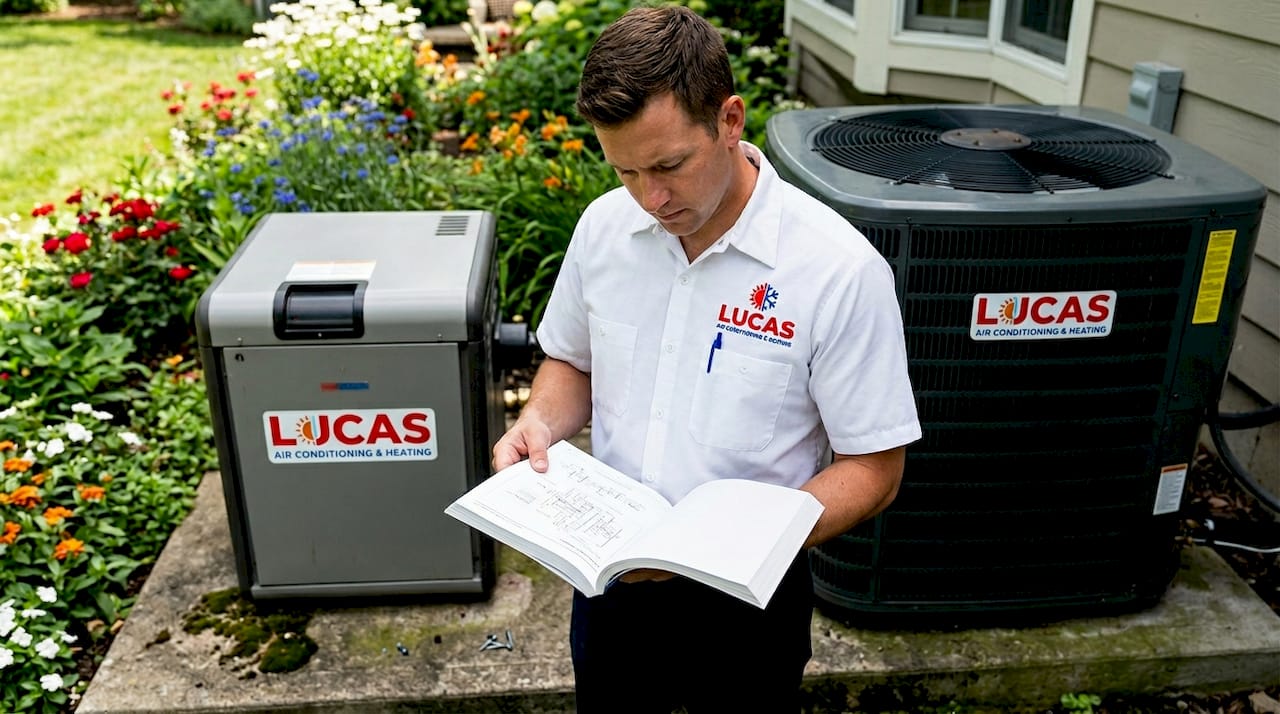
Heat pumps don’t generate heat by burning fuel. They extract heat from outdoor air and transfer it to the water, which means ambient air temperature directly affects performance. The Hayward HeatPro VS requires a thermostat setpoint above 60°F and stops running efficiently when outdoor temps drop too low. If your heat pump seems sluggish on a cold Central Florida morning, that’s expected behavior, not a malfunction.
Common issues specific to heat pump troubleshooting include:
- Dirty evaporator coils: Leaves, grass clippings, and debris restrict airflow across the coil and drop efficiency fast. Clean the coil fins with a garden hose annually, or more often if you have landscaping nearby.
- Refrigerant problems: If the unit runs but barely heats the water, low refrigerant is a strong possibility. This requires a licensed HVAC technician. You cannot recharge refrigerant yourself legally or safely.
- Flow switch sensitivity: Heat pump flow switches can misread speed at certain RPM ranges on variable speed pumps. Adjusting pump speed and pressure switch settings stabilizes operation without replacing hardware.
- Ambient temperature lockout: Some units won’t run below a minimum setpoint of around 60°F. Perceived heater failure during cool weather often turns out to be a design threshold, not a broken part.
For a deeper look at how these units work before you troubleshoot, the pool heat pump guide from Lucasair covers the fundamentals in plain language.
When to call a professional pool heater technician
Some situations call for a trained technician from the start, and recognizing them early saves you money and keeps you safe.
Stop the DIY work and call a pro when you encounter any of these conditions:
- You smell gas. This is not a troubleshooting situation. Evacuate, don’t touch switches, and call your gas provider and a technician.
- The breaker keeps tripping. A breaker that trips repeatedly after a reset indicates an electrical fault in the heater or the circuit, not a one-time surge.
- The heater leaks water or shows visible corrosion inside. Leaking from the heat exchanger is a serious issue. Operating a leaking heater causes more damage and voids most warranties.
- You’ve replaced parts and the problem persists. Repeated resets and part swaps without a root-cause diagnosis often signal a deeper wiring, gas pressure, or sensor issue that needs proper test equipment.
- Refrigerant recharge is needed. This requires EPA certification. Full stop.
“The cost of one professional diagnostic visit is almost always less than the total of two or three misguided parts replacements.”
Scheduling professional service once a year, ideally before the swim season, also prevents most of these failure scenarios from showing up in the first place. An annual tune-up gives a technician the chance to catch corroded connections, borderline flow rates, and worn igniters before they leave you with a cold pool on a hot day.
My honest take on pool heater troubleshooting
I’ve seen pool owners spend three weekends and several hundred dollars replacing sensors, igniters, and control boards when the real problem was a partially closed bypass valve or a clogged filter cutting flow below the shutoff threshold. The fix took five minutes once someone looked at the right thing.
The biggest mistake I see is skipping the systematic approach. People get an error code, google the code, find a forum post saying “replace the igniter,” and order the part without ever checking whether 24 VAC is actually reaching the gas valve. Differentiating ignition failures from safety lockouts is what separates a quick fix from a parts-swapping spiral.
I also think people underestimate thermostat settings as a source of confusion. Lowering your setpoint by just 2°F cuts monthly energy costs by over 10%. Some owners do this, forget they did it, and then call it a heater performance problem two weeks later. Always check your set temperature before assuming anything is broken.
My honest advice is this: run through the five basics first, every single time. Power, gas, flow, thermostat, error codes. If none of those explain the problem, pull out a multimeter and start measuring instead of guessing. And if gas or refrigerant is involved, call someone who does this every day.
— Lucasair
Expert pool heater repair when you need it most
When the DIY troubleshooting steps don’t resolve your issue, or when the problem involves gas, refrigerant, or wiring, the Lucasair team is ready to help. As a veteran-owned HVAC provider based in Tavares, Florida, Lucasair offers professional pool heater diagnostics and repair for homeowners across Central Florida. From cleaning heat exchangers to replacing faulty control boards, the licensed technicians at Lucasair handle the repairs that require real tools and real expertise. If you’re in The Villages area, the trusted HVAC team at Lucasair can schedule a visit, assess your system, and get your pool back to the right temperature fast.
FAQ
Why is my pool heater running but not heating the water?
The most common cause is a misaligned bypass valve routing water around the heater instead of through it. Low flow, a failing heat exchanger, or a thermostat set below the current water temperature can produce the same symptom.
What does low flow error mean on a pool heater?
A low flow error means the water moving through the heater has dropped below the minimum threshold, typically 25 to 30 GPM, triggering the protective flow switch. Clean your filter, pump basket, and skimmer basket, then check your pump speed.
How do I reset my pool heater?
Turn off the heater at the control panel, then shut off the circuit breaker for 30 seconds before restoring power. For error codes that require manual reset, like ERR IGN on Pentair MasterTemp units, consult the manual for the specific reset procedure.
Can I troubleshoot a heat pump pool heater the same way as a gas heater?
The basics overlap, but heat pumps have unique issues like dirty evaporator coils, refrigerant loss, and ambient temperature lockouts that gas heaters don’t have. Always check outdoor air temperature and coil condition first when a heat pump underperforms.
How often should a pool heater be serviced professionally?
Once a year is the standard recommendation, ideally before your primary swim season. Annual service catches worn igniters, corroded connections, and marginal flow rates before they become full failures.
Recommended
- Pool Heater Repair: Maximizing Comfort and Efficiency – Lucas Air Conditioning and Heating
- Pool Heater Repair: Ensuring Year-Round Comfort in Eustis – Lucas Air Conditioning and Heating
- Step by Step Pool HVAC Maintenance for Lasting Comfort – Lucas Air Conditioning and Heating
- Step by step HVAC troubleshooting guide homeowners – Lucas Air Conditioning and Heating