
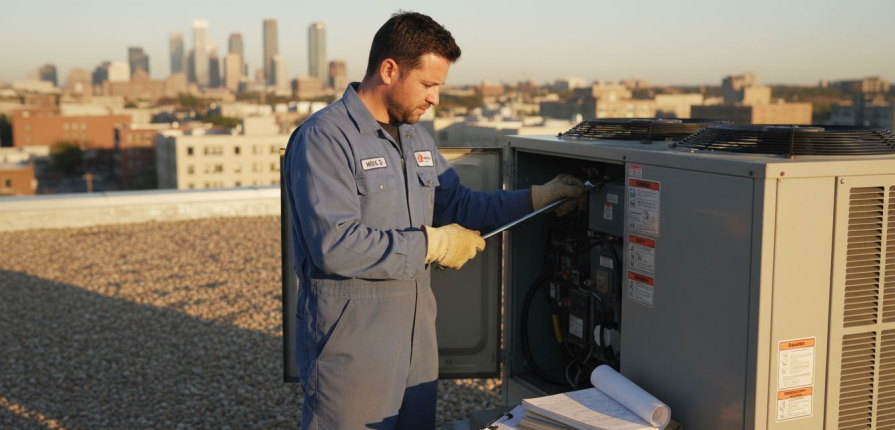
Frequent HVAC disruptions can mean lost revenue, rising energy costs, and frustrated tenants for commercial properties across Central Florida. Keeping systems reliable takes more than quick fixes, especially when overlooked maintenance or poor documentation lets minor issues spiral into major failures. By adopting proven diagnostic assessments and maintaining a comprehensive record of service history as outlined in industry standards, property managers gain the foundation for efficient repair workflows and consistent system reliability.
Table of Contents
- Step 1: Assess System Issues And Gather Service History
- Step 2: Prepare The Workspace And Assemble Necessary Tools
- Step 3: Diagnose Core Problems Using Professional Techniques
- Step 4: Perform Repairs And Replace Faulty Components
- Step 5: Verify System Performance And Document Results
Quick Summary
| Key Takeaway | Explanation |
|---|---|
| 1. Collect and Organize Service Histories | Gather all past maintenance records to identify issues and trends, which informs better maintenance strategies. |
| 2. Prepare Workspace and Tools | Organize your workspace and ensure all necessary tools are readily available to enhance repair efficiency. |
| 3. Use Advanced Diagnostic Techniques | Employ professional tools like pressure gauges and thermal cameras to accurately diagnose HVAC problems. |
| 4. Follow Repair Protocols Closely | Carefully replace faulty components according to manufacturer specifications to ensure system reliability. |
| 5. Document All Repairs and Results | Maintain detailed records of diagnostics, repairs, and performance tests to support future maintenance and compliance. |
Step 1: Assess System Issues and Gather Service History
Understanding your commercial HVAC system starts with a comprehensive assessment of its current condition and past performance. By systematically examining service records and system components, you will gain critical insights that help predict potential failures and optimize maintenance strategies.
Begin by collecting all available service documentation, including previous repair reports, maintenance logs, and equipment warranty information. Standardized inspection procedures recommend tracking detailed service histories to identify recurring issues and performance trends. Review these documents carefully to understand the system’s maintenance trajectory and pinpoint potential problem areas. Pay special attention to repair frequency, recurring component failures, and any past recommendations from technicians.
Next, perform a physical inspection of your HVAC equipment. Check for visible signs of wear, corrosion, unusual noise, or performance irregularities. Note any observations that deviate from normal operating conditions. Quality maintenance standards emphasize documenting these observations systematically to support informed decision making about repairs or potential system replacements.
Pro tip: Create a digital repository for all HVAC service records to ensure easy access and comprehensive tracking of your system’s maintenance history.
Here’s a summary of common HVAC issues and their potential impacts on system performance:
| Issue Identified | Potential Impact | Recommended Action |
|---|---|---|
| Recurring component failures | Frequent downtime, higher costs | Replace with OEM parts |
| Wear or corrosion | Reduced efficiency, risk of leaks | Schedule preventative maintenance |
| Unusual noises | Possible mechanical failure | Perform targeted diagnostics |
| Inconsistent performance | Comfort issues, high energy use | Review past maintenance logs |
Step 2: Prepare the Workspace and Assemble Necessary Tools
Preparing your workspace and gathering the right tools is a critical first step in ensuring a smooth and efficient HVAC repair process. By organizing your environment and equipment beforehand, you will minimize potential disruptions and maximize your productivity.
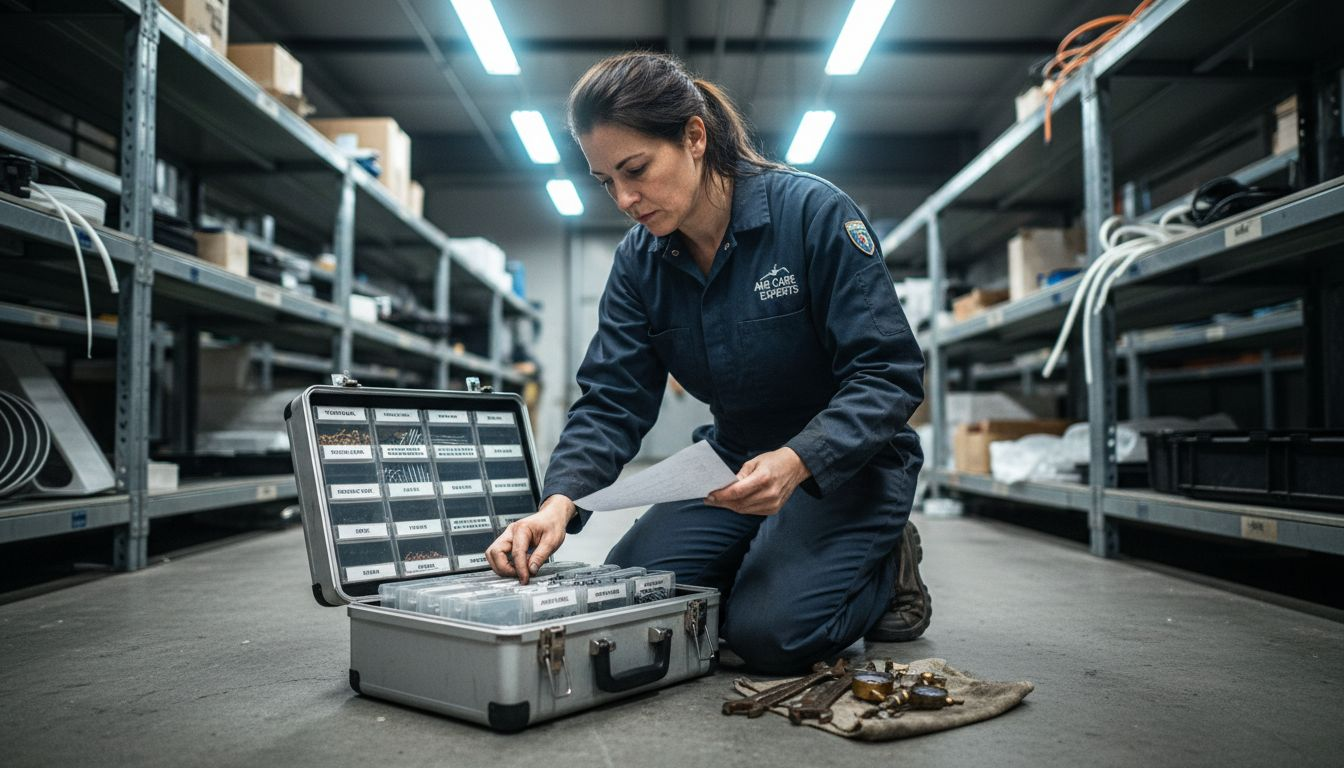
Start by clearing and organizing the workspace around the HVAC system. Remove any obstacles that might impede access to equipment and ensure you have adequate lighting and ventilation. Lay out a clean work surface or drop cloth to protect surrounding areas and keep tools organized. Gather all necessary diagnostic equipment such as multimeters, pressure gauges, thermometers, screwdrivers, wrenches, and safety gear like gloves and protective eyewear.
According to professional maintenance guidelines, create a comprehensive tool checklist before beginning work. Verify that all equipment is in good working condition and calibrated correctly. Having a systematic approach to tool preparation will help you work more efficiently and reduce the likelihood of interruptions during the repair process.
Pro tip: Invest in a portable toolbox with clearly labeled compartments to keep your equipment organized and easily accessible during HVAC service tasks.
Step 3: Diagnose Core Problems Using Professional Techniques
Accurately diagnosing HVAC system issues requires a systematic approach and specialized techniques that go beyond visual inspections. Your goal is to identify the root cause of performance problems using precise measurement and analysis methods that professionals rely on.
Begin by employing advanced diagnostic techniques such as system pressure testing, airflow measurements, and thermal imaging. Use a digital multimeter to check electrical components and assess voltage consistency. Conduct comprehensive airflow measurements using an anemometer to detect any obstructions or performance reductions in the ventilation system. Thermal imaging cameras can help you identify temperature variations and potential insulation or heat transfer issues that might not be visible during standard inspections.
Utilize data analysis and sensor technologies to track system performance metrics. Professional diagnostic methods emphasize collecting and comparing performance data to establish a baseline and identify subtle deviations. Pay close attention to unusual patterns in temperature readings, pressure fluctuations, and energy consumption that might indicate underlying mechanical or electrical problems.
Pro tip: Document all diagnostic measurements and observations in a digital log to create a comprehensive reference for future maintenance and troubleshooting efforts.
Below is a comparison of diagnostic tools and their main uses in HVAC troubleshooting:
| Tool | Main Purpose | Measurement Provided |
|---|---|---|
| Digital multimeter | Electrical system checks | Voltage, continuity |
| Pressure gauge | HVAC system pressure tests | Static and dynamic pressure |
| Anemometer | Ventilation performance | Airflow rate |
| Thermal imaging camera | Detect temperature issues | Surface temperature profile |
Step 4: Perform Repairs and Replace Faulty Components
Successfully repairing an HVAC system requires precision, careful planning, and a methodical approach to component replacement. Your primary goal is to restore system functionality while minimizing potential future performance issues.
Following professional repair standards, begin by carefully removing the identified faulty components. Disconnect electrical power completely before starting any work and use appropriate personal protective equipment. Carefully label and track each component you remove to ensure correct reinstallation or replacement. When selecting replacement parts, match specifications exactly with the original equipment manufacturer recommendations. Take precise measurements and compare technical specifications to guarantee compatibility and optimal system performance.
Execute the replacement process with meticulous attention to detail. Inspect connection points, seals, and mounting surfaces for any signs of wear or damage before installing new components. Test electrical connections thoroughly and verify proper alignment and mounting. After installation, perform a comprehensive system test to confirm that the repaired components function correctly and integrate seamlessly with the existing HVAC infrastructure. Pay close attention to system performance metrics such as airflow, temperature regulation, and energy efficiency during your initial post repair assessment.
Pro tip: Always keep manufacturer documentation and take detailed photos during disassembly to help guide precise reassembly and troubleshooting.
Step 5: Verify System Performance and Document Results
The final stage of your HVAC repair process involves comprehensive performance verification and meticulous documentation. Your objective is to confirm that the repairs have fully restored system functionality and create a detailed record of the maintenance intervention.
Begin by conducting systematic performance tests across multiple operational parameters. Measure airflow rates, temperature differentials, electrical consumption, and overall system efficiency. Use calibrated instruments to record precise readings and compare them against manufacturer specifications and pre repair baseline measurements. Run the system through complete operational cycles to verify consistent performance under different load conditions and ensure all repaired components interact seamlessly.
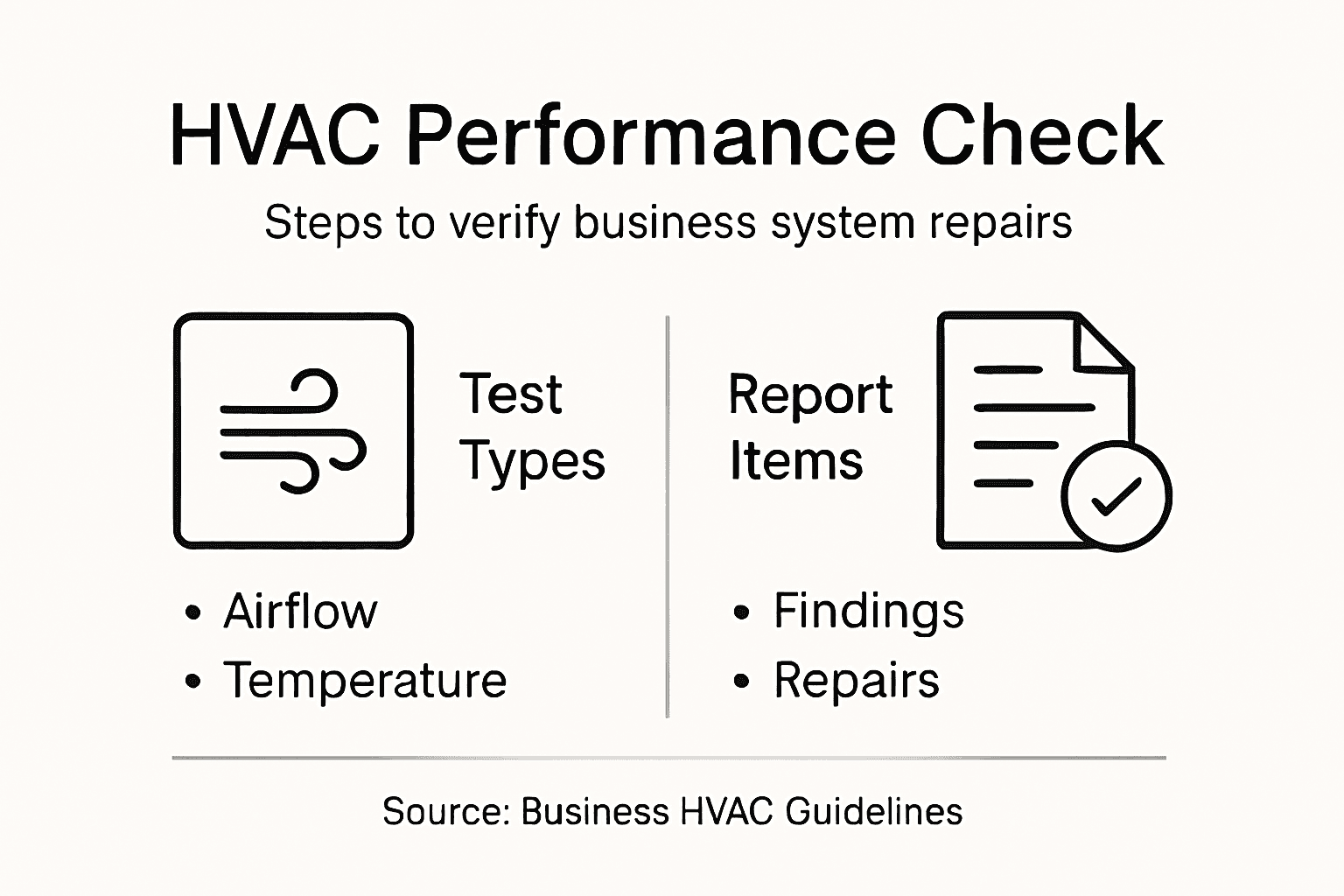
Following quality verification protocols, generate a comprehensive repair report documenting every aspect of your maintenance work. Include detailed diagnostic findings, specific components replaced, measurement readings, and performance test results. Photograph key repair areas and attach technical documentation to create a complete service record. This documentation serves multiple purposes including tracking system health, supporting future maintenance decisions, and providing legal and warranty compliance evidence.
Pro tip: Create a digital backup of all repair documentation and performance test results to ensure long term accessibility and easy reference.
Streamline Your Commercial HVAC Repairs with Trusted Local Experts
Efficiently diagnosing and repairing your business HVAC system can feel overwhelming when facing recurring issues and downtime. This article highlights the importance of systematic assessments, precise diagnostics, and proper component replacement to optimize system performance and reduce costly disruptions. If you want to move from confusion to confidence in managing your HVAC repairs see how expert maintenance and repair services can simplify your workflow.
Discover professional solutions tailored for Central Florida businesses by exploring our Maintenance Archives at Lucas Air Conditioning and Heating, your local veteran-owned company that values reliability and customer care. Take advantage of current Special Offers to maintain peak system performance without breaking your budget. Act now to ensure your commercial HVAC system stays efficient and responsive by visiting https://lucasair.com to schedule your appointment or request a consultation today.
Frequently Asked Questions
How can I assess my HVAC system’s current condition before repairs?
To assess your HVAC system’s current condition, gather all service history documents, including previous repair reports and maintenance logs. Review these documents for recurring issues and conduct a physical inspection of the equipment to note any visible signs of wear or performance irregularities.
What tools do I need to prepare before starting HVAC repairs?
Before starting HVAC repairs, gather essential diagnostic tools such as a digital multimeter, pressure gauges, thermometers, and an anemometer. Organize these tools in a portable toolbox, ensuring everything is in good working condition for efficient workflow during repairs.
What steps should I follow to diagnose HVAC issues effectively?
To diagnose HVAC issues effectively, employ advanced techniques like system pressure testing, airflow measurements, and thermal imaging. Use these tools to collect precise data and track performance metrics, enabling you to identify the root causes of any problems more accurately.
How do I ensure that replacement parts are compatible with my HVAC system?
To ensure replacement parts are compatible, match specifications exactly with the original equipment manufacturer’s recommendations. Take precise measurements of the components before ordering new parts to avoid future compatibility issues and ensure optimal system performance.
What should I include in the documentation after completing HVAC repairs?
After completing HVAC repairs, document critical details such as diagnostic findings, specific components replaced, measurement readings, and performance test results. Create a comprehensive repair report that serves as a tracking reference for future maintenance and warranty compliance.
How can I verify the performance of my HVAC system after repairs?
Verify the performance of your HVAC system post-repairs by conducting systematic performance tests across various operational parameters. Measure airflow rates, temperature differentials, and energy efficiency to confirm that all components are functioning correctly and that the system is running as intended.
Recommended
- 7 Essentials for a Thorough Commercial HVAC Checklist
- Why Choose Professional HVAC Repair in Eustis, FL
- Page Elements – Lucas Air Conditioning and Heating
- What Is Commercial HVAC and Its Impact on Business
- Broan repair In Irvine Orange CA
- 7 kľúčových upratovacích checklistov pre kanceláriu
- HVAC Contractor Eustis FL
- Air Conditioning Installation Eustis FL
