
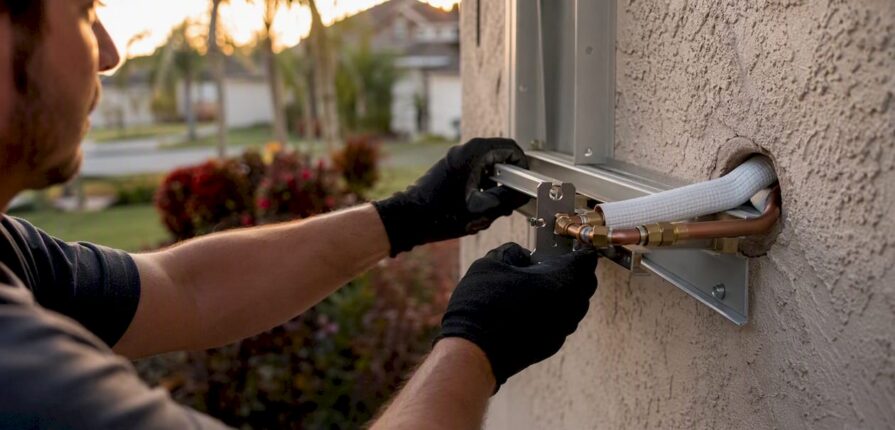
For Central Florida homeowners and commercial property owners, the strongest alternatives to a traditional central air conditioning system are ductless mini-splits and air-source heat pump systems, with hybrid setups, geothermal, and whole-home envelope improvements rounding out the practical options.
Here is the short list:
- Ductless mini-splits: Zone-level control, excellent humidity handling, no duct losses
- Air-source heat pumps (ducted or ductless): Year-round heating and cooling, ideal for all-electric homes
- Upgraded ducted heat-pump replacements: Best when existing ductwork is in good condition
- Geothermal heat pumps: Highest efficiency, higher upfront cost, requires site assessment
- Whole-home envelope and ventilation upgrades: Insulation, air sealing, ceiling fans as a supplement or first step
Two numbers worth knowing before you go further: ENERGY STAR data shows ductwork can waste a significant portion of conditioned air in a typical system, and eliminating those ducts with a mini-split often yields substantial energy savings in real-world Florida installations.
Key Takeaways
Ductless mini-splits and air-source heat pumps are the most practical alternatives to central AC for Central Florida properties, with the right choice depending on duct condition, layout, and whether the home is all-electric.
| Point | Details |
|---|---|
| Duct losses are the first problem to solve | ENERGY STAR data shows 20–30% energy loss through ductwork; address this before sizing new equipment. |
| Mini-splits lead on humidity control | Inverter-driven units run continuously at low speed, removing moisture without overcooling. |
| Heat pumps suit all-electric homes | DOE figures show heat pump COPs of 2.5–3.5 vs. 1.0 for electric resistance, cutting heating costs significantly. |
| Verify rebates before budgeting | Florida utility rebates vary by provider; federal tax credit eligibility requires a Qualified Manufacturer ID check. |
| Lucasair provides local assessments | Veteran-owned, Eustis-based, with financing options and full installation services across Central Florida. |
Table of Contents
- How do the main alternatives compare for Central Florida?
- How do you choose the right alternative for your property?
- What do these options actually cost, and when do you break even?
- What does installation and maintenance look like?
- Which option fits your specific Central Florida situation?
- A local perspective on what actually works in Central Florida
- Ready to find the right system for your Central Florida property?
- Sources
How do the main alternatives compare for Central Florida?
Florida’s combination of heat and humidity narrows the field fast. An option that works in Phoenix may leave you with a clammy house in Orlando.
Ductless mini-splits are the most versatile option for most Central Florida properties. More importantly, inverter-driven compressors modulate run speed continuously, which means they remove moisture without overcooling a room. According to FilterBuy’s Florida mini-split guide, this continuous low-speed operation is a genuine humidity-control advantage in humid climates. Zoning is the other payoff: you stop cooling empty rooms, which ENERGY STAR identifies as one of the primary comfort and efficiency drivers for modern homeowners.
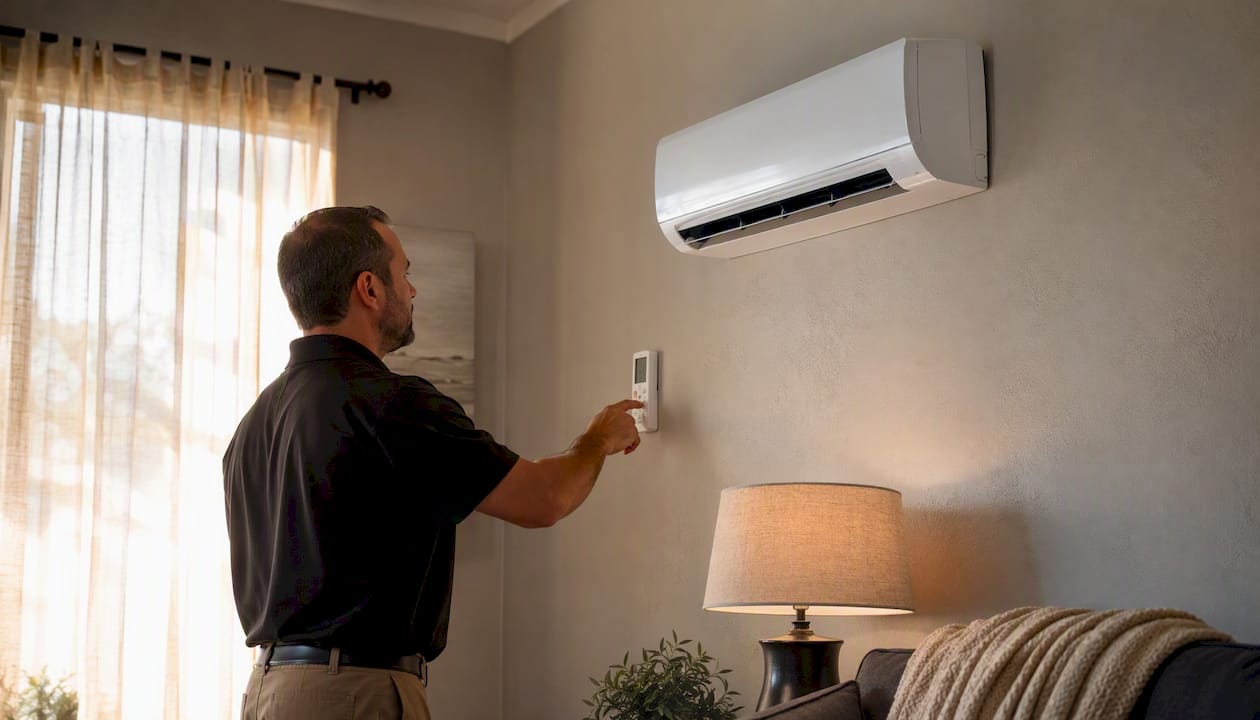
Air-source heat pumps make the most sense for all-electric homes. The U.S. Department of Energy puts heat pump COPs at roughly 2.5–3.5 in moderate Florida winter temperatures, compared to a COP of 1.0 for electric resistance heat. That means you get two to three times the heating output per dollar spent on electricity. For a ducted whole-home setup, a high-SEER2 heat pump replacing an aging central system is often the cleanest path when ductwork is already in good shape.
Geothermal heat pumps deliver the highest efficiency of any option, but the upfront cost and site requirements (loop field installation, soil assessment) put them out of reach for most residential projects without significant budget and land.
Whole-home envelope improvements (attic insulation, air sealing, radiant barriers) reduce the load on whatever system you choose. They rarely replace mechanical cooling in Florida, but they can drop your required system capacity by a meaningful amount.
Quick pros and cons:
- Mini-splits: Excellent humidity control, zone flexibility, no duct losses. Higher per-zone cost for whole-home coverage.
- Ducted heat-pump replacement: Whole-home coverage in one install, lower per-square-foot cost when ducts are sound. Duct losses remain if sealing is skipped.
- Geothermal: Best long-term efficiency. High upfront cost, complex install, weeks of disruption.
- Envelope upgrades: Reduces load, improves comfort year-round. Does not replace active cooling.
- Ceiling fans and targeted ventilation: Cheap, fast, and effective as a supplement. Not a standalone solution in Central Florida summers.
How do you choose the right alternative for your property?
Start with what you already have. The right answer depends on your duct condition, layout, humidity problem areas, occupancy patterns, and whether your home is all-electric.
- Inspect ductwork and attic/crawlspace. Leaky or uninsulated ducts in a hot attic are the single biggest efficiency drain. If ducts are in poor shape, a ductless system or full duct replacement should be on the table.
- Map your primary cooling and heating zones. How many distinct areas need independent temperature control? A single open-plan floor is a different problem than a two-story home with a hot upstairs.
- Identify nuisance rooms. A garage conversion, sunroom, or attic bedroom that never gets comfortable is often the best candidate for a targeted single-zone mini-split rather than a full system overhaul.
- Check electrical service capacity. Multi-zone mini-splits and heat pumps may require a panel upgrade. Confirm this before getting quotes.
- Prioritize dehumidification needs. If your thermostat hits setpoint but the house still feels muggy, oversized equipment is likely short-cycling. The U.S. Department of Energy notes that oversized systems cool quickly but don’t run long enough to pull moisture out of the air. Variable-speed compressors solve this.
Questions to ask your contractor:
- What size did you calculate, and what’s the Manual J load calculation showing?
- Will this system require a permit and refrigerant handling by a licensed tech?
- What electrical upgrades are needed?
- How long will installation take, and will I be without cooling overnight?
- What warranty does the manufacturer offer, and does your install preserve it?
Red flags: Any contractor who sizes by square footage alone (skipping a load calculation), offers to handle refrigerant without a license, or skips the permit process. DIY refrigerant work typically voids manufacturer warranties and can create insurance complications in Florida counties that require permits for this work.
Pro Tip: A hybrid approach often beats full replacement. Keep a high-efficiency central system for main living areas and add a single-zone mini-split for the one or two rooms that never get comfortable. You fix the problem without paying for a whole-home ductless install.
What do these options actually cost, and when do you break even?
Cost ranges vary by system type and home size. Here are realistic figures for Central Florida, drawn from CoolingMaven’s Florida cost guide:
| System Type | Typical Installed Cost | Operating Cost Direction | Humidity Control |
|---|---|---|---|
| Single-zone mini-split | varies depending on system size | 30–50% lower than ducted central | Excellent (inverter-driven) |
| Multi-zone mini-split | $8,000–$15,000 | 30–50% lower than ducted central | Excellent per zone |
| Ducted heat-pump replacement | $5,800–$14,000 | Significantly better than resistance heat | Good with proper sizing |
| Geothermal heat pump | higher upfront cost, varies widely | Lowest long-term operating cost | Good |
| Envelope upgrades only | varies depending on upgrades and extent | Reduces load on existing system | No active dehumidification |
Payback depends on four things: how much you currently pay for electricity, how bad your existing duct losses are, how many hours per year you run the system (a lot, in Florida), and whether you qualify for rebates or tax credits.
On financing and rebates: the Inflation Reduction Act created federal tax credits for qualifying heat pumps and mini-splits, but eligibility rules have changed and now include a Qualified Manufacturer ID requirement. Check current thresholds at ENERGY STAR or consult a tax professional before counting on a specific credit amount. Utility rebates in Florida vary by provider. Duke Energy and JEA have offered mini-split incentives; FPL has historically focused rebates on central AC replacements. Confirm your utility’s current program before budgeting. PACE financing (Property Assessed Clean Energy) lets you spread the cost over time through your property tax bill, which can make a higher-efficiency system accessible without a large upfront payment. For more on energy-saving strategies for your home, Lucasair has a practical local resource worth reading.
What does installation and maintenance look like?
Single-zone mini-splits are the fastest install: a licensed tech can typically complete one in a single day with minimal disruption. Multi-zone systems run 1–3 days depending on the number of heads and wall penetrations required. A central heat-pump replacement takes 1–3 days if ductwork stays in place, longer if duct repairs or sealing are part of the job. Geothermal is a weeks-long project involving ground loop installation and significant landscaping disruption.
Maintenance checklist for each option:
- Mini-splits: Clean or replace the air handler filters monthly during heavy-use months; schedule a professional coil cleaning and refrigerant check annually.
- Ducted heat pumps: Annual tune-up covering coils, refrigerant levels, electrical connections, and thermostat calibration. Duct cleaning every 3–5 years if you keep a ducted system.
- Geothermal: Annual professional inspection of the loop field and heat exchanger; less frequent refrigerant service than air-source systems.
- All systems: Change or clean filters on schedule. In Florida’s humidity, a clogged filter is the fastest path to a frozen coil and a service call.
Refrigerant work requires a licensed technician in Florida. Attempting it yourself typically voids the manufacturer warranty and may trigger permit violations. Always ask your installer for documentation of the permit pulled and the warranty terms in writing.
Pro Tip: Ask your installer about a preventative maintenance agreement before the job is done. Locking in annual service at install time is almost always cheaper than scheduling it separately, and it keeps the warranty intact.
Which option fits your specific Central Florida situation?
- All-electric single-family slab home: A ducted air-source heat pump replacement is the cleanest whole-home solution. If ducts are in poor shape, a multi-zone mini-split system avoids the duct problem entirely.
- Two-story home with a hot upstairs: A single-zone or two-zone mini-split targeting the upper floor fixes the problem without replacing the whole system. The downstairs central unit handles the rest.
- Garage conversion or ADU: Single-zone mini-split. No ducts to run, fast install, independent control.
- Small commercial office: Multi-zone mini-split or a commercial-grade ducted heat pump, depending on square footage and layout. Zone control matters for offices with variable occupancy.
- Condo without existing ductwork: Ductless mini-split is the only practical mechanical cooling option. No duct infrastructure to work with.
Quick decision flow: no ducts at all → mini-split. Sound ducts and whole-home cooling needed → high-SEER2 ducted heat pump. One or two nuisance rooms only → single-zone mini-split added to existing system. For more on HVAC upgrade decisions specific to Florida, the property-type context matters more than most guides acknowledge.
A local perspective on what actually works in Central Florida
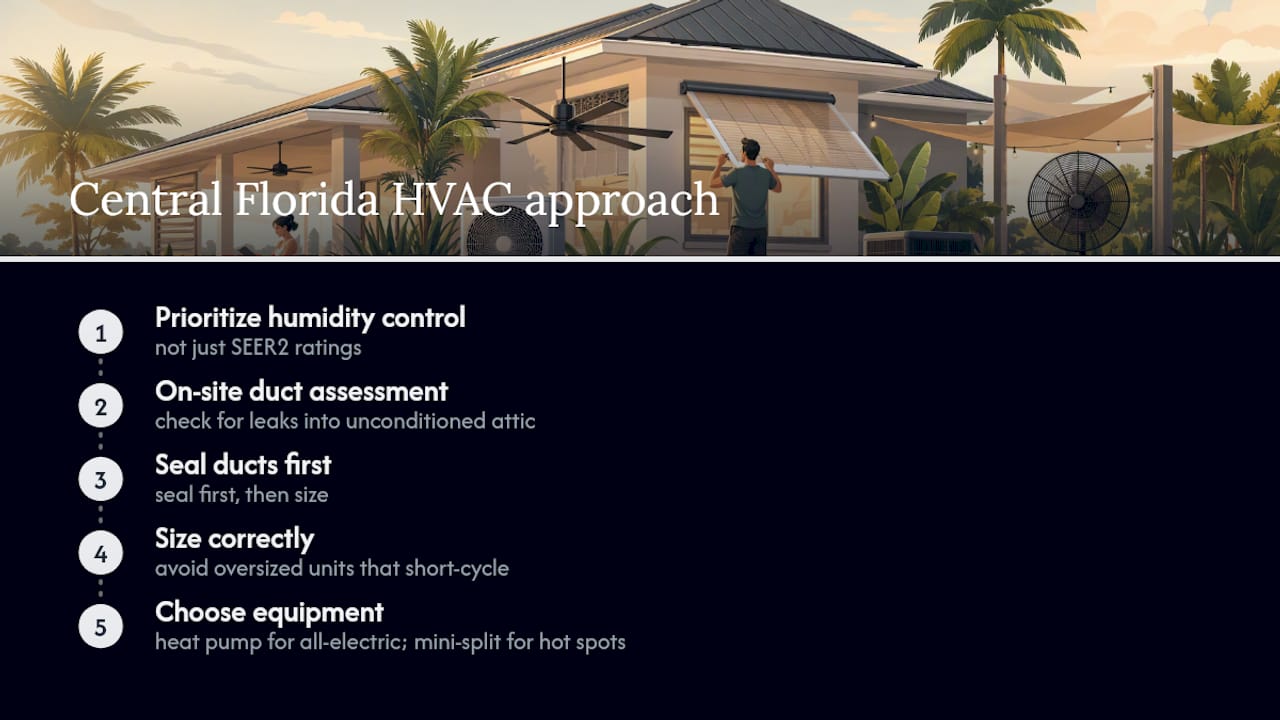
The conventional wisdom in HVAC guides is to lead with efficiency ratings. In Central Florida, humidity control is the real deciding factor. A system with a great SEER2 rating that short-cycles because it’s oversized will leave you with a 74°F house that feels like 80°F. That’s the complaint Lucasair hears most often from homeowners who had a system installed elsewhere and are calling for a second opinion.
The practical default Lucasair recommends: start with an on-site duct assessment. If ducts are leaking into an unconditioned attic, no amount of equipment upgrade fixes the root problem. Seal first, then size. For all-electric homes with sound ductwork, a high-efficiency heat pump replacement is usually the right call. For homes with chronic hot spots or rooms that were never comfortable, a targeted mini-split is faster and cheaper than a full system overhaul.
Lucasair has been serving Central Florida since 2018, veteran-owned and locally operated out of Eustis. Financing options are available, and the team handles everything from duct cleaning and tune-ups to full system installations for residential and commercial properties. An on-site assessment is the only way to get a recommendation that actually fits your home’s layout, duct condition, and occupancy pattern.
Ready to find the right system for your Central Florida property?
Lucas Air’s on-site assessment gives you a concrete recommendation, not a generic quote. The team inspects your ductwork, calculates your actual load, identifies problem zones, and walks you through the options that fit your budget and property type.

What the assessment covers: duct condition check, Manual J load calculation, zone mapping, electrical capacity review, and a written summary of recommended options with cost ranges. Financing is available for qualifying installations, and the team can walk you through current utility rebate programs for your area.
Book your assessment or get a quote through Lucas Air’s installation services page, or review the step-by-step installation overview to know what to expect before the tech arrives.
Sources
- ENERGY STAR
- U.S. Department of Energy
- Adding a Mini Split AC System in Florida | Costs, Rebates & 2026 Guide — FilterBuy
- Mini Split AC Cost + Rebates in FL: Better Than Central? — CoolingMaven
Always verify current rebate amounts and federal tax credit thresholds at the official program pages or with a qualified tax advisor before finalizing your budget.
Recommended
- Best HomeYou.com Alternatives for Central Florida HVAC – Lucas Air Conditioning and Heating
- Best mntplus.com Alternatives for Central Florida Homes – Lucas Air Conditioning and Heating
- Best allweatherheatingandcooling.net Alternatives in Central Florida – Lucas Air Conditioning and Heating
- Top 6 centralfloridaairinc.com Alternatives 2026 – Lucas Air Conditioning and Heating
