

TL;DR:
- The best HVAC features for new homes combine energy efficiency, precise indoor air quality controls, and smart comfort technology to maximize comfort and reduce utility costs from day one. Selecting and properly sizing the right system during construction—along with early planning for ductwork, ventilation, and smart controls—ensures optimal performance and long-term savings. Avoiding common mistakes like skipped load calculations or improper filtration enhances indoor air quality and system longevity.
The best HVAC features for new homes combine high energy efficiency, precise indoor air quality controls, and smart comfort technology to minimize utility costs and maximize daily living from day one. Selecting the right HVAC system during new construction is the single most consequential home comfort decision you will make. Unlike retrofits, new construction gives you a clean slate to integrate ductwork, smart wiring, and ventilation from the framing stage forward. This guide covers every feature worth prioritizing, from system type and zoning to filtration and efficiency ratings.
1. The right HVAC system type for your new home
Choosing the right system type is the foundation of every other HVAC decision. The four main options for new construction are forced-air central systems, heat pumps, ductless mini-splits, and hybrid systems. Each serves different home sizes, climates, and layouts.
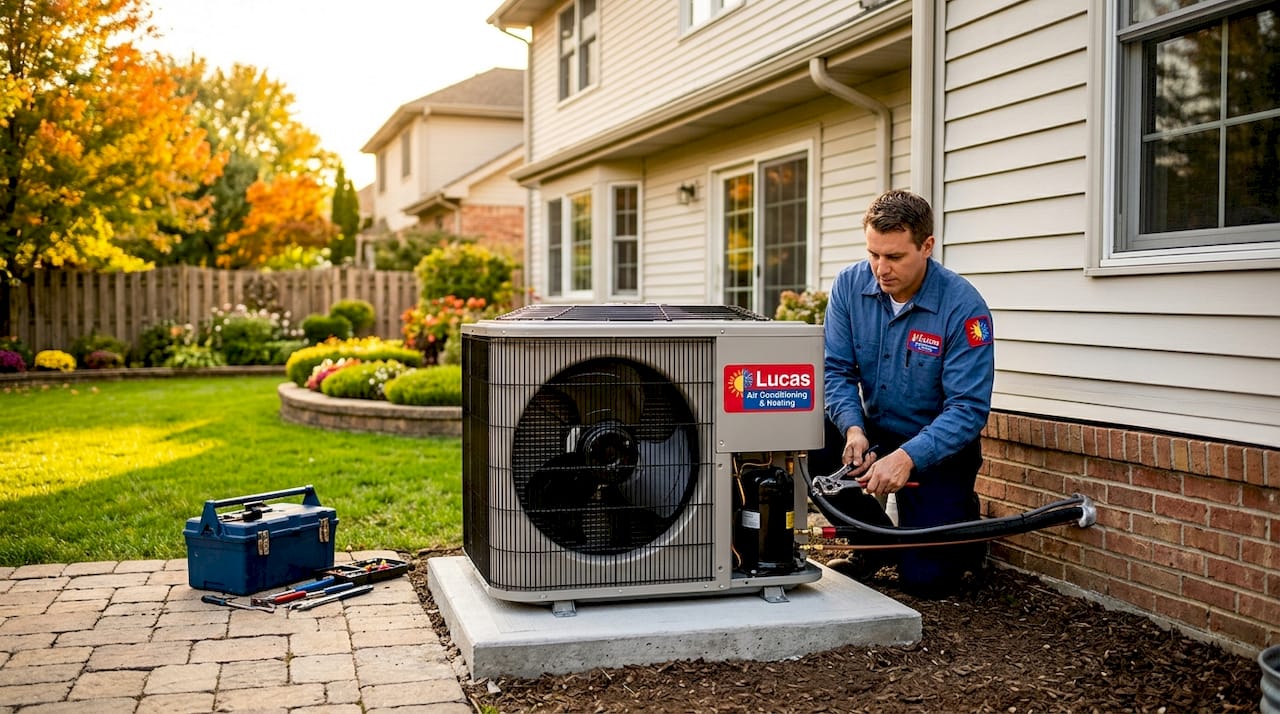
Forced-air central systems remain the most familiar choice. They use a furnace or air handler paired with a central air conditioner to distribute conditioned air through ducts. They work well in most climates and integrate easily with zoning and smart thermostats.
Heat pumps are the standout option for energy-conscious buyers. Whole-house heat pumps are 2 to 4 times more efficient than traditional electric resistance heating or oil furnaces. That gap in efficiency translates directly to lower monthly bills, especially in moderate climates like Central Florida.
Ductless mini-splits solve the uneven comfort problem in open-plan or multi-story homes. Zoning and mini-split systems provide precise room temperature control that central systems cannot match without additional zoning hardware. They also eliminate duct losses, which account for a significant share of energy waste in conventional systems.
Hybrid systems pair a heat pump with a gas furnace backup. They switch automatically based on outdoor temperature, capturing heat pump efficiency in mild weather while relying on gas when temperatures drop sharply.
- Match system type to your home’s square footage and floor plan
- Consider your local climate before committing to a heat pump only setup
- Ask your contractor about choosing the right system before framing is complete
Pro Tip: In Florida’s humid subtropical climate, an air-source heat pump with a variable-speed compressor handles both heating and cooling efficiently year-round without a gas backup.
2. Smart thermostats and HVAC zoning
Smart thermostats are no longer a luxury upgrade. Smart thermostats and variable-speed compressors improve comfort stability and reduce electricity consumption measurably. Devices like the Ecobee SmartThermostat Premium and Google Nest Learning Thermostat learn your schedule, adjust automatically, and connect to mobile apps for remote control.
HVAC zoning takes that control further by dividing your home into independent temperature zones. A two-story home with a home office, for example, can heat the office to 72°F while leaving the guest bedroom at 68°F. You pay only to condition the spaces you actually use. The energy savings from zoning are most significant in larger homes where certain rooms sit empty for hours at a time.
Key benefits of combining smart thermostats with zoning:
- Room-by-room temperature customization without manual adjustments
- Integration with Amazon Alexa, Google Home, and Apple HomeKit
- Scheduling that aligns with your daily routine automatically
- Remote access via smartphone when you are away from home
- Detailed energy usage reports that identify waste patterns
The combination of smart controls and zoning is one of the highest-return HVAC upgrades for new homeowners. It costs more upfront but pays back through lower bills and better comfort within a few years.
3. Indoor air quality filtration
Indoor air quality is where many new homeowners underinvest. The air inside a new home can carry construction dust, VOCs from paint and adhesives, and allergens that a basic filter will not capture. MERV 8 to 13 filters offer the best balance between filtration efficiency and maintaining proper airflow in residential HVAC systems.
Filters rated above MERV 13, such as HEPA-style filters, can restrict airflow enough to stress the blower motor and reduce system lifespan. The fix is not always a higher-rated filter. It is the right filter for your specific system’s capacity. Experienced contractors verify the system’s max MERV rating before recommending filters to prevent airflow restriction.
Pro Tip: Ask your HVAC installer to document the maximum supported MERV rating for your specific air handler. Write it on a label inside the filter access panel so you never accidentally install a filter that strains the system.
Built-in air purifiers using UV-C light or bipolar ionization add another layer of protection against bacteria, mold spores, and viruses. Brands like Reme Halo and Aprilaire offer whole-home purification modules that mount directly inside the air handler. For more on improving indoor air quality at home, the options go well beyond filter swaps.
4. Heat and energy recovery ventilators
New homes built to modern energy codes are tightly sealed. That is good for efficiency and bad for fresh air. Without mechanical ventilation, a sealed home accumulates carbon dioxide, humidity, and airborne pollutants faster than an older drafty house. Heat recovery ventilators (HRVs) and energy recovery ventilators (ERVs) solve this problem without wasting conditioned air.
HRVs and ERVs balance fresh air intake with energy savings by transferring heat between outgoing stale air and incoming fresh air. HRVs transfer heat only and perform best in cold, dry climates. ERVs transfer both heat and moisture, making them the better choice for mixed or humid climates like Florida.
The critical detail most homeowners miss is that coordinated ventilation design must align with ductwork and humidity controls during construction. A poorly integrated ERV can introduce excess humidity into the duct system, creating conditions for mold growth. This is a design decision, not an add-on.
5. Energy efficiency ratings explained
HVAC efficiency ratings determine your long-term operating costs. Understanding four key metrics helps you compare systems accurately.
| Rating | What it measures | Good threshold |
|---|---|---|
| SEER2 | Cooling efficiency for AC and heat pumps | 15+ for new construction |
| HSPF2 | Heating efficiency for heat pumps | 8.5+ recommended |
| AFUE | Heating efficiency for furnaces | 90%+ for high efficiency |
| ENERGY STAR | Federal certification for top-tier efficiency | Always prioritize |
ENERGY STAR-qualified central air conditioners meet or exceed federal energy efficiency standards and represent the minimum bar worth setting for new construction. Going above that threshold costs more upfront but reduces operating costs for the life of the system.
Full HVAC replacement costs range from $5,000 to $28,000 in 2026 depending on system size, efficiency tier, and complexity. That range makes proper sizing critical. An oversized high-efficiency system still wastes money through short cycling. An undersized one runs constantly and wears out faster.
Manual J load calculations prevent both problems by sizing equipment precisely to your home’s actual heat gain and loss. Any contractor who skips this step and sizes by square footage alone is guessing.
6. Proper sizing and load calculations
Sizing is the most misunderstood HVAC installation tip in new construction. Bigger is not better. An oversized system cools or heats the space too quickly, shuts off before completing a full cycle, and leaves humidity uncontrolled. An undersized system runs nonstop, drives up energy bills, and fails prematurely.
Manual J is the industry-standard load calculation method developed by the Air Conditioning Contractors of America (ACCA). It accounts for square footage, ceiling height, insulation levels, window placement, local climate data, and occupancy. A proper Manual J calculation takes time and costs money. It is worth both.
The payoff compounds over time. A correctly sized system with a high SEER2 rating operates in longer, more efficient cycles. It dehumidifies better, maintains more consistent temperatures, and lasts longer between major repairs. For a deeper look at modern HVAC features that deliver real savings, sizing is always the starting point.
7. Early HVAC planning during construction
Planning HVAC at the new construction stage allows integration of ductwork, air handlers, and smart wiring that improves both efficiency and air quality. This is the single biggest advantage new construction offers over existing homes. Once walls are closed, your options shrink and your costs rise.
Practical steps to take before framing is complete:
- Confirm duct routing with your HVAC contractor before insulation goes in
- Pre-wire for smart thermostat wiring and zoning control panels
- Plan equipment locations to allow easy filter and coil access
- Specify duct sealing requirements in your contractor agreement
- Discuss ERV or HRV placement relative to the main air handler
Duct sealing deserves special attention. Unsealed duct joints can leak 20 to 30 percent of conditioned air into unconditioned spaces like attics and crawl spaces. Sealing with mastic or metal tape at every joint costs very little during construction and saves significantly over time.
Quiet operation is another feature worth specifying. Systems with variable-speed blowers and compressors run at lower speeds during mild conditions, producing noticeably less noise than single-stage equipment. Brands like Carrier, Trane, and Lennox offer variable-speed options across their product lines.
Key takeaways
The best HVAC design for new homes requires matching system type to climate, sizing equipment with Manual J calculations, and integrating smart controls and ventilation from the construction phase forward.
| Point | Details |
|---|---|
| System type matters | Match heat pumps, mini-splits, or central systems to your climate and floor plan. |
| Size with Manual J | Oversized and undersized systems both waste money and wear out faster. |
| Prioritize MERV 8 to 13 | Higher-rated filters can restrict airflow and stress your system if not matched to capacity. |
| Plan ventilation early | HRVs and ERVs must integrate with ductwork during construction, not after. |
| Smart controls pay back | Zoning and smart thermostats reduce bills and improve comfort in larger homes. |
What I’ve learned from watching homeowners get this wrong
Most new homeowners focus on the visible stuff: cabinet finishes, flooring, paint colors. HVAC gets delegated to whoever the builder’s preferred contractor happens to be. That contractor may be competent, but their incentive is to install quickly, not to optimize for your specific home and lifestyle.
The single most common mistake I see is skipping the Manual J calculation. A builder’s contractor sizes by rule of thumb, the system short cycles all summer, and the homeowner spends years wondering why their humidity never feels right. The fix after the fact costs thousands. The fix during construction costs nothing extra.
The second mistake is treating ventilation as optional. Florida homes built to current energy codes are tight enough that without an ERV, you are recirculating the same air continuously. That matters for health, and it matters especially if anyone in the home has allergies or asthma.
The third mistake is buying the highest MERV filter available at the hardware store without checking what the system supports. I have seen blower motors fail years early because a homeowner was trying to do the right thing and over-filtered. Check the system’s rated maximum before you buy a single filter.
The good news is that all three mistakes are completely avoidable with the right contractor and a few informed questions before construction closes in. The 2026 HVAC trends are moving toward smarter, more integrated systems. New homeowners who plan early capture every advantage those systems offer.
— Lucasair
How Lucasair helps new homeowners get HVAC right

Lucasair, founded by Army Veteran Cameron Lucas and based in Eustis, Florida, specializes in HVAC installation for new and existing homes across Central Florida. The team handles everything from Manual J load calculations and duct design to smart thermostat setup and zoning configuration. If you are building or buying a new home and want a system sized, installed, and commissioned correctly from day one, Lucasair brings the experience to make that happen. Explore the step-by-step installation process or contact the team directly to schedule a consultation and get your new home’s comfort system built right the first time.
FAQ
What HVAC system type is best for a new home in Florida?
An air-source heat pump with a variable-speed compressor is the top choice for Florida’s humid subtropical climate. It handles both heating and cooling efficiently year-round and outperforms traditional electric resistance systems by 2 to 4 times in efficiency.
How do I know if my HVAC system is properly sized?
Proper sizing requires a Manual J load calculation that accounts for your home’s insulation, window placement, ceiling height, and local climate data. Any contractor sizing by square footage alone is not following industry-standard practice.
What MERV rating filter should I use in a new home?
MERV 8 to 13 filters offer the best balance between filtration and airflow for most residential systems. Always confirm your specific air handler’s maximum supported MERV rating before purchasing filters to avoid restricting airflow.
Do new homes need an HRV or ERV?
Yes, tightly sealed new homes built to modern energy codes need mechanical ventilation. An ERV is the better choice for Florida’s humid climate because it manages both heat and moisture transfer, preventing humidity buildup inside the duct system.
What does ENERGY STAR certification mean for HVAC equipment?
ENERGY STAR-certified HVAC equipment meets or exceeds federal efficiency standards set by the Department of Energy. It represents the minimum efficiency threshold worth specifying for new construction, with higher SEER2 and HSPF2 ratings delivering greater long-term savings.
Recommended
- HVAC trends 2026: Smart solutions, efficiency, comfort – Lucas Air Conditioning and Heating
- Upgrade your HVAC in 2026 for efficiency & cost savings – Lucas Air Conditioning and Heating
- HVAC upgrade benefits 2026: save costs and boost efficiency – Lucas Air Conditioning and Heating
- Modern HVAC features that save money and boost comfort – Lucas Air Conditioning and Heating
