
TL;DR:
- Forced air HVAC systems use ductwork and blowers to deliver conditioned air throughout a building for heating and cooling. Proper design, sealing ducts, and regular maintenance are essential for maximizing efficiency, comfort, and system lifespan. Heat pumps now dominate the market because of their high efficiency and ability to provide both heating and cooling in suitable climates.
Forced air heating and cooling systems are HVAC systems that use a blower to push conditioned air through a network of ducts and vents, delivering temperature control to every room in a building. The Department of Energy confirms that supply and return ducts work together with an Air Handling Unit to circulate air continuously throughout the home. These systems form the backbone of climate control in most American homes, covering both heating via a furnace or heat pump and cooling via a central air conditioner. Brands like Lennox, Carrier, and Trane all build equipment designed around this ducted distribution model. Understanding how these systems work, what they cost, and how to maintain them gives you a real advantage when making decisions about comfort and energy spending.
How do forced air heating and cooling systems work?
A forced air system has four core components: the heating or cooling source, the blower, the ductwork, and the supply and return registers. Each plays a specific role in moving conditioned air from the equipment to the living space and back again.
Here is the basic operational cycle:
- The thermostat signals a call for heating or cooling. The control board activates the furnace burner, heat pump compressor, or air conditioning unit depending on the season.
- The heat exchanger or refrigerant coil conditions the air. In heating mode, a furnace burns fuel or a heat pump extracts heat from outside air. In cooling mode, refrigerant absorbs heat from indoor air passing over the evaporator coil.
- The blower motor forces air through the supply ducts. Air travels from the air handler through insulated ductwork to registers in each room, delivering conditioned air at the target temperature.
- Return air pathways complete the loop. Warm or cool air in the room eventually flows back through return registers, passes through the air filter, and re-enters the air handler for reconditioning. The DOE explains that cooled air gradually warms as it circulates, then returns via return ducts to repeat the cycle.
- The system shuts off when the thermostat is satisfied. The blower may run briefly afterward to clear residual conditioned air from the ducts.
Central air systems come in two configurations. Split systems place the compressor and condenser outdoors while the air handler and evaporator coil sit indoors. Packaged units combine all components in a single outdoor cabinet and sometimes include electric heating coils, making them popular in warmer climates like Central Florida where heating demand is lower.
Pro Tip: If your home has multiple stories, ask your HVAC technician about zoning dampers inside the ductwork. Zoning lets you direct airflow independently to different floors, which cuts energy waste and eliminates the common problem of one floor being too hot while another is too cold.
What are the efficiency factors and energy considerations for forced air systems?
Equipment efficiency ratings and ductwork quality together determine how much energy your system actually uses. Buying a high-efficiency unit and ignoring the ducts is one of the most common and costly mistakes homeowners make.
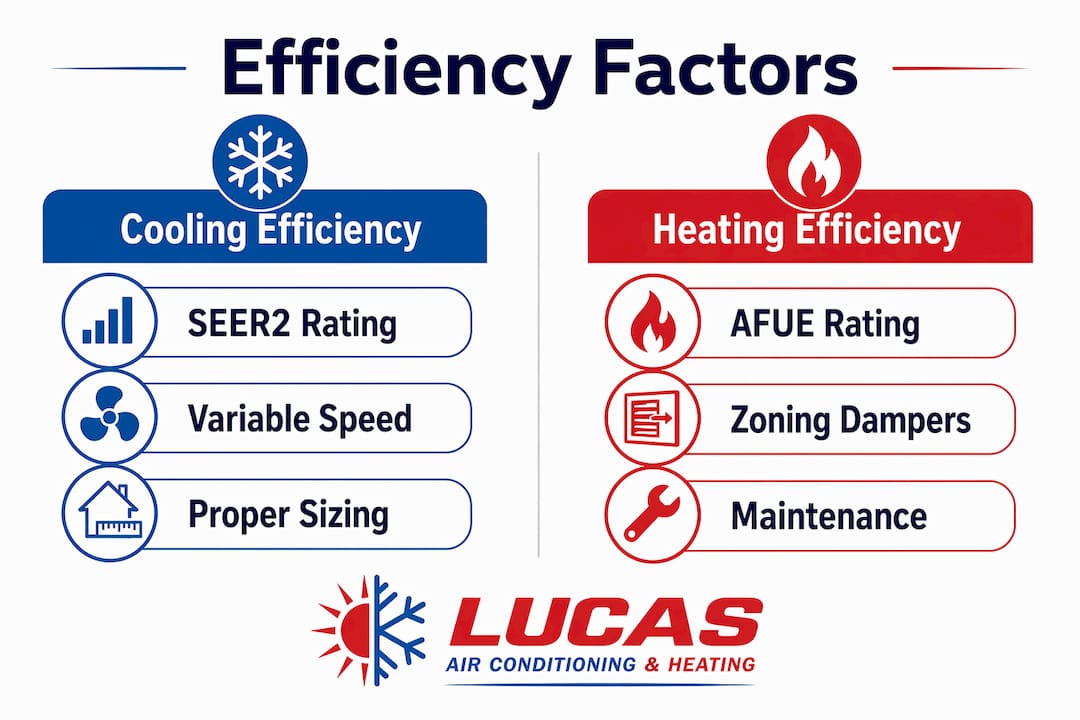
Key efficiency factors include:
- SEER2 rating: The Seasonal Energy Efficiency Ratio 2 measures cooling efficiency under more realistic operating conditions than the original SEER standard. Higher SEER2 ratings combined with variable-speed compressors deliver measurably better comfort and lower electricity bills.
- Duct leakage: Leaky ducts can waste 20 to 30 percent of conditioned air before it reaches the living space. Sealing and insulating ducts is one of the highest-return upgrades available to homeowners.
- Static pressure: Improper duct design and static pressure restrict airflow and reduce system performance regardless of equipment quality. Fan sizing should incorporate a 25% safety margin to account for resistance in the duct network.
- Filter condition: Clogged filters restrict airflow, cause uneven cooling, raise energy bills, and strain the blower motor. A dirty filter is the single most preventable cause of HVAC performance loss.
- Heat pump vs. furnace efficiency: Air-source heat pumps can reduce electricity for heating by up to 75% compared to electric resistance heating, because they transfer heat rather than generate it.
| Efficiency factor | Impact on performance |
|---|---|
| SEER2 rating (16+) | Lower cooling costs per season; better humidity control |
| Duct leakage below 5% | Prevents 20-30% conditioned air loss |
| Clean filter (monthly check) | Maintains full airflow and reduces blower strain |
| Variable-speed blower | Quieter operation and more consistent temperatures |
| Correct system sizing | Prevents short-cycling and humidity problems |
Energy savings come more from system efficiency and reduced energy use than from thermostat setpoint adjustments alone. That means upgrading aging equipment and sealing ducts delivers more consistent results than simply adjusting the thermostat schedule.
Pro Tip: Before buying a new system, check for HVAC upgrade benefits specific to 2026 federal tax credits and utility rebates. Many homeowners leave hundreds of dollars on the table by not checking eligibility before purchase.
Forced air systems versus other HVAC options: what are the differences?
Choosing between a ducted forced air system and an alternative depends on your home’s existing infrastructure, climate, and budget. Each system type has a clear use case.
| System type | Best for | Key limitation |
|---|---|---|
| Forced air (furnace + central AC) | Homes with existing ductwork | Duct leakage reduces efficiency |
| Whole-house heat pump (ducted) | Mild to moderate climates | Performance drops in extreme cold |
| Ductless mini-split | Additions, older homes, no ducts | Higher per-zone equipment cost |
| Hydronic/radiant heating | Luxury installs, allergy-sensitive homes | No cooling capability; high install cost |
| Dual-fuel (heat pump + gas furnace) | Cold climates needing backup heat | Requires both gas and electric infrastructure |
Ductless mini-splits from manufacturers like Mitsubishi and Daikin work well for room additions or older homes without existing ductwork. They eliminate duct losses entirely but cost more per conditioned square foot when covering a whole house.
Whole-house heat pumps use existing ductwork to replace both the furnace and the central air conditioner in a single system. Consumer Reports notes that heat pumps outsold traditional furnaces in 2024, reflecting a clear shift in buyer preference driven by efficiency gains. Heat pumps also run continuously at low capacity, which improves humidity control compared to the on-off cycling of a traditional furnace.
Dual-fuel systems pair a heat pump with a gas furnace. The heat pump handles mild weather efficiently while the furnace takes over when temperatures drop below the heat pump’s effective range. This setup is particularly effective in climates that experience both mild winters and occasional cold snaps.
Hydronic and radiant systems circulate heated water through floor tubing or radiators. They provide exceptional comfort and are ideal for allergy-sensitive households because they produce no airflow. The trade-off is that they cannot cool a space, so a separate cooling system is always required.
How much does it cost to install or replace a forced air system?
Cost is the factor that most often drives homeowner decisions, and the range is wide enough that a ballpark figure without context is nearly useless.
Full HVAC replacements cost between $5,000 and $28,000 nationwide in 2026, with the final price shaped by several variables:
- Home size and system capacity: Larger homes require higher-tonnage equipment and more extensive ductwork, which raises both equipment and labor costs.
- Equipment efficiency tier: A standard 14 SEER2 central air system costs significantly less upfront than a 20 SEER2 variable-speed unit, though the higher-efficiency model typically pays back the difference over five to eight years.
- Installation complexity: Replacing like-for-like equipment in a home with existing ductwork is the least expensive scenario. Adding new ductwork, upgrading electrical service, or converting from one fuel type to another adds cost.
- Rebates and incentives: Federal tax credits under the Inflation Reduction Act and utility rebate programs can reduce net cost by $500 to $2,000 or more depending on the equipment chosen and the homeowner’s tax situation.
- Professional load calculation: Skipping a Manual J load calculation to save money is a false economy. Accurate load calculations are the foundation of correct system sizing, and an oversized or undersized system will underperform regardless of its efficiency rating.
For Central Florida homeowners, cooling capacity dominates the cost equation. A properly sized system for a 2,000-square-foot home in Lake County typically falls in the $7,000 to $14,000 range for a full split-system replacement including labor. You can review current installation rates to get a clearer picture of what to expect locally.
What maintenance tips extend forced air system life and comfort?
A forced air system that receives consistent maintenance lasts 15 to 20 years and performs near its rated efficiency throughout that lifespan. One that is ignored degrades within five to seven years.
Follow this maintenance sequence to protect your investment:
- Replace the air filter every 30 to 90 days. The correct interval depends on filter type, pet ownership, and local dust levels. A 1-inch fiberglass filter needs monthly replacement; a 4-inch media filter can last up to 90 days. Skipping this step is the fastest path to airflow restriction and system strain.
- Schedule a professional tune-up twice per year. Spring and fall tune-ups catch refrigerant issues, electrical faults, and blower problems before they become failures during peak demand.
- Inspect and seal ductwork every three to five years. Ductwork design and airflow quality largely determine system effectiveness beyond equipment efficiency. Mastic sealant or metal tape applied at joints and connections prevents conditioned air from escaping into unconditioned attic or crawl space.
- Clean the outdoor condenser coil annually. Debris, grass clippings, and dirt on the condenser fins reduce heat rejection capacity, forcing the compressor to work harder and shortening its life.
- Check thermostat calibration and settings. A thermostat that reads two degrees off causes the system to run longer than necessary. Smart thermostats from Ecobee or Nest can also identify unusual runtime patterns that signal developing problems.
Pro Tip: Duct cleaning is worth doing every five to seven years in most homes, but it is not a substitute for sealing. A clean leaky duct is still a leaky duct. Seal first, then clean.
Property managers overseeing multiple units benefit from scheduling all tune-ups in the same service window each season. Bulk scheduling with a single provider often reduces per-unit cost and simplifies record-keeping for warranty compliance. You can also review energy-saving tips for Central Florida to find additional ways to reduce operating costs across your portfolio.
Key takeaways
Forced air systems deliver reliable whole-home comfort only when the equipment, ductwork, and maintenance all work together at the same level of quality.
| Point | Details |
|---|---|
| Ductwork quality matters as much as equipment | Leaky or poorly designed ducts waste 20-30% of conditioned air regardless of equipment efficiency. |
| SEER2 ratings drive long-term savings | Higher-rated variable-speed systems cost more upfront but reduce seasonal energy bills measurably. |
| Heat pumps are now the leading choice | Consumer Reports confirms heat pumps outsold furnaces in 2024, offering heating and cooling in one unit. |
| Installation costs vary widely | Full HVAC replacements range from $5,000 to $28,000 in 2026 depending on size, efficiency, and complexity. |
| Consistent maintenance extends system life | Filter changes, annual tune-ups, and duct sealing keep systems performing near rated efficiency for 15-20 years. |
What I’ve learned after years of watching homeowners get this wrong
Most homeowners focus almost entirely on the equipment brand when replacing a forced air system. They research Lennox versus Carrier, compare SEER2 ratings, and negotiate equipment prices. Then they accept whatever ductwork the installer proposes without asking a single question about static pressure, duct sizing, or leakage testing. That is exactly backwards.
Even high-efficiency equipment fails to deliver comfort and efficiency if the distribution system is poorly designed or commissioned. I have seen 20 SEER2 systems underperform a 14 SEER2 system in the same neighborhood because the ductwork in the high-efficiency home was never properly sized or sealed. The equipment gets the marketing budget; the ductwork gets ignored.
The other misconception I see constantly is treating heat pump technology as experimental or risky. Heat pumps paired with gas furnaces as dual-fuel systems are a mature, proven technology that optimizes seasonal efficiency by balancing electric and fuel heating depending on outdoor temperatures. In Central Florida, where winters are mild, a heat pump alone handles nearly every heating day of the year without any backup at all.
My honest recommendation: before you buy anything, pay for a professional energy analysis and a Manual J load calculation. It costs a few hundred dollars and saves you from a five-figure mistake. The HVAC industry has a long history of oversizing equipment because bigger feels safer to the installer. It is not safer. It causes short-cycling, poor humidity control, and premature compressor failure.
— Lucasair
Ready to upgrade or service your forced air system?
Lucasair serves homeowners and property managers across Central Florida with residential and commercial HVAC installation, tune-ups, and preventative maintenance. Founded by Army Veteran Cameron Lucas in Tavares, Florida, Lucasair brings honest assessments and precise sizing to every job, whether you are replacing an aging system, upgrading to a heat pump, or sealing a leaky duct system.
If you are planning a system replacement or want a professional evaluation of your current setup, the HVAC installation guide for homeowners walks through exactly what to expect at each stage. For ongoing protection, the preventative maintenance guide covers the full service schedule that keeps systems running efficiently year after year. Contact Lucasair to schedule a consultation and get a sizing assessment done right the first time.
FAQ
How do forced air heating and cooling systems work?
A forced air system conditions air at a central unit, then uses a blower to push that air through supply ducts to registers in each room. Return ducts bring air back to the unit to be filtered and reconditioned in a continuous loop.
What is the difference between a heat pump and a forced air furnace?
A furnace generates heat by burning fuel or using electric resistance, while a heat pump transfers heat from outdoor air into the home using refrigerant. Heat pumps use the same ducted forced air distribution method but consume significantly less energy for heating in moderate climates.
How often should I replace the filter in a forced air system?
Replace a standard 1-inch filter every 30 days and a 4-inch media filter every 60 to 90 days. Homes with pets or high dust levels need more frequent changes to prevent airflow restriction and system strain.
What SEER2 rating should I look for in a new system?
A minimum SEER2 of 14.3 meets current federal standards, but systems rated 16 SEER2 and above with variable-speed compressors deliver better comfort and lower operating costs over the system’s lifespan.
How much does a full HVAC replacement cost in 2026?
Full HVAC replacements range from $5,000 to $28,000 depending on home size, equipment efficiency tier, and installation complexity. Federal tax credits and utility rebates can reduce the net cost by $500 to $2,000 or more.
Recommended
- Upgrading HVAC systems in Central Florida: Your 2026 guide – Lucas Air Conditioning and Heating
- How to Choose HVAC System for Energy-Efficient Comfort – Lucas Air Conditioning and Heating
- How HVAC Systems Help Control Infection: A 2026 Guide – Lucas Air Conditioning and Heating
- Upgrade your HVAC in 2026 for efficiency & cost savings – Lucas Air Conditioning and Heating