
TL;DR:
- Many HVAC myths are costly misunderstandings that lead to increased expenses and reduced system lifespan. Proper maintenance, correct sizing, and regular filter changes are essential for efficiency and comfort, while misconceptions like closing vents or over-sizing systems can cause damage and higher energy bills. Informed decisions based on professional advice help homeowners avoid unnecessary expenses and prolong their HVAC system’s effectiveness.
Most common HVAC repair myths are not harmless misunderstandings. They are false beliefs that cost homeowners real money, shorten system lifespans, and create comfort problems that never needed to happen. Trane, ACHR News, and the U.S. Department of Energy have each documented how misconceptions about filter changes, system sizing, and thermostat behavior drive up repair bills and reduce efficiency. This article cuts through the noise on the most persistent HVAC repair misconceptions so you can make decisions based on facts, not folklore.
1. Air filters only need to be changed once a year
The correct filter replacement interval is every 30 to 90 days, not once a year. That range depends on your home’s air quality, whether you have pets, and how often the system runs. In Central Florida, where systems run nearly year-round, the lower end of that range applies to most households.
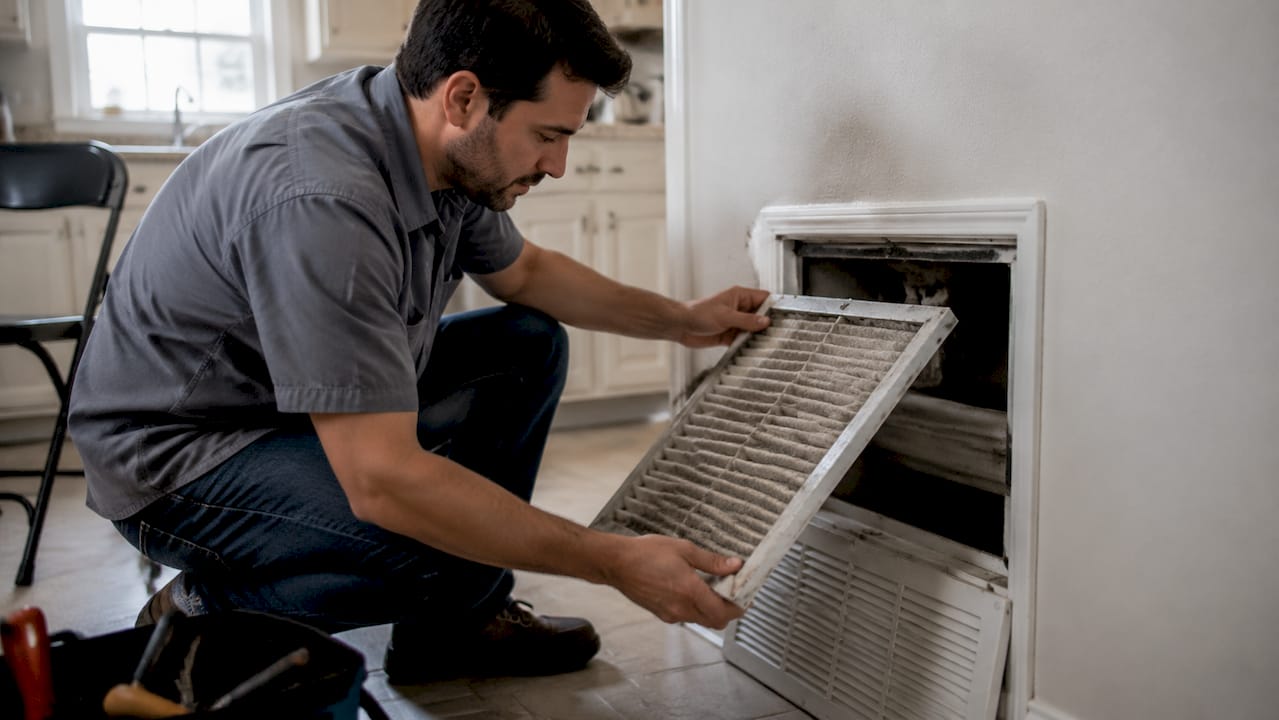
A clogged filter does not just reduce air quality. It restricts airflow, which forces the blower motor to work harder, raises your energy bill, and accelerates wear on internal components. Trane confirms that dirty filters drive costly AC repair by creating strain that compounds over time.
Pro Tip: Set a recurring phone reminder every 30 days to check your filter. If it looks gray and dense, replace it regardless of how long it has been in place. A $10 filter swap beats a $400 blower motor repair every time.
Choosing the right filter matters as much as changing it on schedule. A MERV 8 filter works well for most homes. A MERV 13 or higher captures more particles but restricts airflow more, which can stress older systems not designed for that resistance. Match the filter rating to your system’s specifications, not just your allergy concerns.
2. A bigger HVAC system always performs better
Oversized HVAC systems are one of the most expensive mistakes a homeowner can make, and HVAC contractors confirm it regularly. Oversized systems cause frequent cycling, poor humidity control, and a “cold and clammy” indoor environment that no amount of thermostat adjustment will fix.
Here is why: an oversized unit cools or heats a space so quickly that it shuts off before completing a full cycle. Short cycling means the system never runs long enough to pull humidity out of the air. In Florida’s climate, that is a serious comfort and air quality problem.
| Correctly sized system | Oversized system |
|---|---|
| Runs full cycles, removes humidity | Short cycles, leaves air damp |
| Consistent indoor temperature | Temperature swings between rooms |
| Lower long-term energy costs | Higher energy use from frequent starts |
| Longer equipment lifespan | Accelerated wear from stop-start cycling |
Modern furnace and air handler units are compact yet highly efficient. Physical size no longer predicts heating or cooling capacity the way it did with older equipment. A proper Manual J load calculation, performed by a licensed technician, determines the right unit size for your home’s square footage, insulation, window area, and local climate. Read Lucasair’s guide on choosing the right HVAC system before you commit to any new installation.
Pro Tip: Never let a contractor size your system based on square footage alone. Insist on a Manual J calculation. Any contractor who skips it is guessing, and you will pay for that guess for years.
3. Cranking the thermostat speeds up heating or cooling
Setting your thermostat to 60°F when you want 72°F does not cool your home faster. Thermostat settings cause longer run times but do not change the rate at which conditioned air enters the space. Your system delivers air at a fixed capacity regardless of how extreme the setpoint is.
What actually happens when you crank the thermostat:
- The system runs continuously until it reaches the extreme setpoint, wasting energy
- Extended run times at maximum load increase wear on the compressor and blower
- You often forget to reset it, which means the system overshoots your comfort target
- In extreme cases, prolonged operation without reaching setpoint triggers mechanical failures
The smarter approach is to set your thermostat to your actual target temperature and leave it there. A programmable or smart thermostat, such as a Nest or Ecobee, handles schedule-based adjustments automatically without the energy waste. Pair your system with a ceiling fan to extend comfort further. Using a ceiling fan allows you to raise the thermostat setting by approximately 4 degrees Fahrenheit without any noticeable drop in comfort, which directly reduces runtime and energy costs.
4. Closing vents in unused rooms saves energy
Closing supply vents in empty rooms feels logical. It is also one of the more damaging HVAC maintenance myths in circulation. Your HVAC system was designed and balanced to push air through a specific number of open vents. Closing vents raises duct static pressure, which strains the blower motor, causes duct leaks, and can freeze the evaporator coil, especially in humid climates like Central Florida.
Here are the real consequences of closing vents:
- Duct static pressure increases, forcing the blower to work against resistance it was not built to handle.
- Duct seams and connections develop leaks under the added pressure, sending conditioned air into your attic or crawl space.
- Reduced airflow over the evaporator coil causes it to freeze, which can damage the compressor.
- The system runs longer to compensate, which increases energy use rather than reducing it.
Your system needs at least 75% of its vents open to maintain proper airflow balance. If you genuinely want to condition fewer zones, a zoned HVAC system with dampers is the correct solution. That requires a professional installation, but it actually delivers the energy savings that vent-closing never does.
5. HVAC systems only need service after something breaks
Waiting for a breakdown to call a technician is the most expensive approach to HVAC ownership. Preventive tune-ups detect minor problems before they escalate into multi-thousand-dollar repairs. A capacitor that costs $30 to replace during a tune-up costs $300 or more when it fails and takes the compressor with it.
Preventive maintenance delivers benefits that reactive repair never can:
- Technicians clean coils, which directly improves efficiency and reduces energy bills
- Refrigerant levels are checked and corrected before low charge damages the compressor
- Electrical connections are tightened, preventing failures that happen at the worst possible time
- Drain lines are cleared before they back up and cause water damage to ceilings or floors
- Belts, bearings, and motors are inspected while replacement is still a minor cost
Lucasair’s routine HVAC maintenance checklist outlines exactly what a thorough tune-up covers and why each step matters. Scheduling two tune-ups per year, one before cooling season and one before heating season, keeps your system running at peak efficiency and extends its operational life. The cost of two annual tune-ups is almost always less than a single emergency repair call.
6. New systems do not need maintenance
A brand-new HVAC system still needs regular maintenance from day one. This misconception leads homeowners to skip the first year or two of service, which is precisely when small installation issues, refrigerant charge imbalances, and airflow problems should be caught and corrected.
Manufacturer warranties on most major brands, including Carrier, Lennox, and Trane, require documented annual maintenance to remain valid. Skipping service does not just risk your system. It can void the warranty that protects your investment. Check your warranty documentation carefully. Most require professional service records as proof of compliance.
Pro Tip: Keep a folder, physical or digital, with every service record, filter receipt, and warranty document for your HVAC system. If you ever need warranty service or sell your home, that documentation is worth real money.
7. Upgrading early is a waste of money
Replacing a functioning HVAC system before it fails seems wasteful. The math says otherwise. Upgrading to a modern, efficient air conditioner before it breaks saves homeowners 20 to 40% on cooling costs. A 15-year-old system running at 10 SEER efficiency costs significantly more to operate each month than a new 18 to 20 SEER unit.
Beyond energy savings, an aging system requires increasingly frequent repairs. Each repair on an old unit is money spent on a depreciating asset. At some point, the cumulative repair cost exceeds the cost of replacement. Most HVAC professionals place that crossover point at around 10 to 12 years for systems in high-use climates like Florida. If your system is approaching that age and facing a major repair, replacement is often the smarter financial decision.
Key takeaways
Most HVAC repair misconceptions share one root cause: homeowners apply intuitive logic to a mechanical system that does not work the way intuition suggests.
| Point | Details |
|---|---|
| Filter replacement frequency | Replace every 30 to 90 days, not annually, to prevent airflow restriction and costly repairs. |
| System sizing matters | Oversized units cause short cycling and humidity problems; always require a Manual J calculation. |
| Thermostat behavior | Extreme setpoints extend runtime but never speed up cooling or heating. |
| Vent closing backfires | Closing vents increases duct pressure and raises energy costs rather than reducing them. |
| Preventive maintenance pays | Annual tune-ups catch small issues before they become multi-thousand-dollar failures. |
Why these myths persist longer than they should
After years of talking with homeowners across Central Florida, the pattern is clear: HVAC myths survive because they feel logical. Closing a vent in an empty room sounds like turning off a light. Setting the thermostat lower sounds like pressing harder on the gas. The problem is that HVAC systems are pressure-based, not switch-based, and that distinction changes everything.
What frustrates me most is that these misconceptions are not harmless. A homeowner who skips filter changes for a year, closes half their vents, and waits for a breakdown before calling anyone has essentially chosen the most expensive possible path through HVAC ownership. None of those decisions saved money. All of them cost more.
Property managers face a compounded version of this problem. One tenant’s habit of closing vents in their unit can create pressure imbalances that affect adjacent units. One deferred maintenance decision across a portfolio of properties becomes a wave of emergency calls in July. The fix is not complicated. It is scheduled maintenance, correct information, and a technician you trust to tell you the truth rather than sell you the largest unit on the lot.
The sources that get this right are consistent: Trane, ACHR News, and field technicians who have seen the consequences firsthand. When in doubt, go to those sources or call a licensed professional who will give you a straight answer. Lucasair’s preventive maintenance guide is a good starting point for homeowners who want to understand what proactive care actually involves.
— Lucasair
Get accurate HVAC service from a team that knows the difference

Lucasair serves homeowners and property managers across Central Florida with honest assessments, professional tune-ups, and repairs grounded in what your system actually needs, not what sounds impressive. Cameron Lucas founded Lucasair in 2018 on the principle that clients deserve straight answers and reliable service. Whether you need a seasonal tune-up, a repair diagnosis, or guidance on whether replacement makes financial sense, the team at Lucasair gives you the facts. Contact your trusted HVAC contractor in The Villages or explore Lucasair’s full residential repair services to schedule your next appointment.
FAQ
How often should I really change my HVAC air filter?
Most residential HVAC systems require filter replacement every 30 to 90 days. Homes with pets, high dust levels, or year-round system use should replace filters closer to every 30 days.
Does closing vents in empty rooms lower my energy bill?
No. Closing vents increases duct static pressure, which strains the blower motor and causes duct leaks. Your energy bill typically rises, not falls, when vents are closed.
Will setting my thermostat lower cool my home faster?
Setting the thermostat to an extreme temperature does not speed up cooling. Your system delivers conditioned air at a fixed rate and simply runs longer until it reaches the setpoint, wasting energy in the process.
Is a bigger air conditioner better for my home?
Oversized HVAC systems short-cycle, fail to remove humidity properly, and create uneven temperatures. Correct sizing, determined by a Manual J load calculation, outperforms any oversized unit.
Do new HVAC systems need annual maintenance?
Yes. New systems still require annual maintenance to catch installation issues, maintain manufacturer warranty validity, and prevent minor problems from becoming major failures.
Recommended
- HVAC Maintenance Checklist for 2026: Avoid Costly Repairs – Lucas Air Conditioning and Heating
- Common AC Repair Issues Every Homeowner Should Know – Lucas Air Conditioning and Heating
- 6 Signs of HVAC System Issues Every Homeowner Should Know – Lucas Air Conditioning and Heating
- Step by Step HVAC Repair Guide for Homeowners – Lucas Air Conditioning and Heating
