
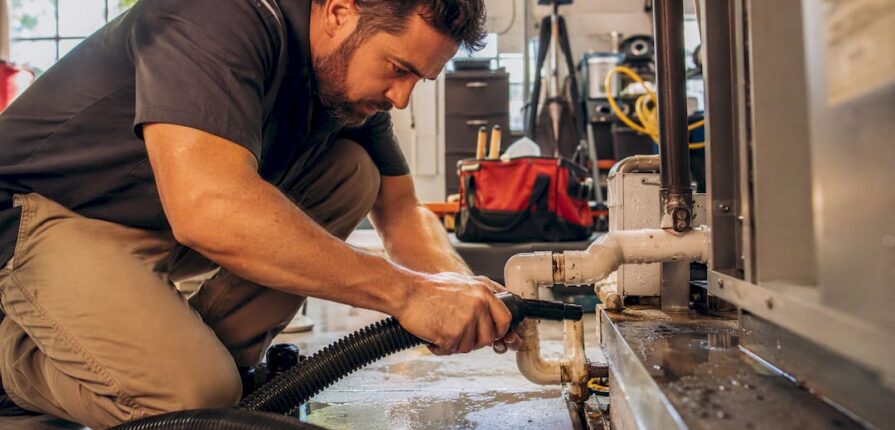
If your AC is leaking water, the culprit is almost always one of three things: a clogged condensate drain line, a frozen evaporator coil that just thawed, or a cracked drain pan. Turn the system off at the thermostat, and if water is pooling near an outlet or panel, cut power at the breaker too. Grab towels or a bucket to catch what’s already dripping.
Before you do anything else:
- Check the air filter. If it’s gray and matted, that’s a strong clue you’re dealing with a frozen coil.
- Look for the visible drain line, usually PVC pipe running from the indoor unit to the outside. If water is backing up there instead of exiting, you likely have a clog.
- If you smell mildew near the indoor unit, stop investigating and treat it as a drain issue. Don’t run the system again until you’ve addressed it.
Key Takeaways
Most AC water leaks trace back to a clogged condensate drain, a frozen coil that just thawed, or a cracked drain pan, and catching the cause early keeps a cheap fix from becoming an expensive one.
| Point | Details |
|---|---|
| Turn off first | Shut off the thermostat and breaker immediately if water is actively leaking indoors. |
| Check the filter | A dirty filter is the top cause of frozen coils; replace it and wait 2 to 4 hours before restarting. |
| Clear the drain line | Use a wet/dry vacuum at the outdoor exit and flush with vinegar every few months. |
| Know your cost range | Drain clearing often runs under $200, while pan or coil replacement can cost much more. |
| Call Lucasair for diagnostics | Lucas Air Conditioning and Heating inspects the drain, pump, pan, and refrigerant charge in one visit for Central Florida homeowners. |
Where to learn more about AC condensation and drain issues
For deeper technical detail, review Trane’s condensation guide, its troubleshooting resource, and EPA Section 608 certification details for refrigerant work standards.
Table of Contents
- What Causes AC Water Leaks Inside Your Home?
- How Do You Fix an AC Water Leak Yourself?
- Should You Turn Off an AC That’s Leaking Water?
- How Often Should You Maintain Your AC to Prevent Leaks?
- When Should You Call an HVAC Technician for a Water Leak?
- What to Expect From a Professional AC Leak Repair Visit
- Get a Professional Diagnosis Instead of Guessing at the Cause
- Sources
What Causes AC Water Leaks Inside Your Home?
Your air conditioner produces condensation every time it runs, the same way a cold glass of iced tea sweats on a humid day. That moisture is supposed to collect in a drain pan under the evaporator coil and flow out through a condensate line to the outdoors. Water inside your house means that one part of the system has failed.
Here’s how each failure point shows up:
- Clogged condensate drain line. This is the most frequent cause of indoor AC leaks, according to Carrier’s consumer guidance. The drain line sits dark, damp, and warm most of the day, which makes it a breeding ground for algae and biofilm buildup that experts say narrows the passage until water backs up into the pan and overflows (Service First Heating and Cooling). You’ll usually notice a musty smell first, then standing water near the indoor unit.
- Frozen evaporator coil. A dirty filter restricts airflow across the coil, which drops its surface temperature until moisture in the air freezes onto it instead of draining away. Low refrigerant does the same thing. Once you turn the unit off or the ice melts on its own, all that frozen moisture turns into a sudden gush of water, often mistaken for a fresh leak when it’s actually a delayed one (Trane).
- Cracked or rusted drain pan. Pans corrode over time, especially older metal ones. A secondary pan, if your system has one, will catch overflow temporarily, but a hole in the primary pan lets water drip straight down, sometimes into a ceiling below an attic unit.
- Condensate pump failure. Systems installed in basements or spaces without gravity drainage rely on a small pump to push water uphill to an exit point. When the pump’s float switch sticks or the motor burns out, water has nowhere to go but back into your living space.
- Improper pitch or disconnected line. Condensate lines need a slope of roughly 1/4 inch per foot to drain properly (HVAC Cary NC). If a line was installed flat, or shifted after installation, water pools inside the pipe and mimics a clog even when nothing is blocking it.
Ductwork problems can contribute too. Leaky supply ducts running through hot attic space pull in humid air, and if insulation around the ducts or refrigerant lines has degraded, condensation forms on the outside of the metal and drips just like a leak from the unit itself.
How Do You Fix an AC Water Leak Yourself?
Work through these steps in order. Stop and call a technician the moment you hit something outside your comfort zone.
- Cut power completely. Switch the thermostat to off, then flip the breaker for the outdoor and indoor units. Never touch standing water near an electrical panel.
- Swap the air filter. If it’s dirty, replace it. If the coil was frozen, leave the system off for 2 to 4 hours to let the ice fully melt before restarting, per manufacturer guidance from Trane. Restarting too soon just refreezes the coil.
- Inspect the drain pan and line. Look for visible cracks, rust holes, or a line that’s come loose from its fitting. A flashlight helps here since indoor units are often tucked in closets or attics.
- Clear the drain line with a wet/dry vacuum. Find where the line exits outside, usually a white PVC pipe near the outdoor unit. Seal the vacuum hose against the opening with a rag and run it for 60 to 90 seconds. You’ll often hear a gulp as the clog releases (Direct Energy).
- Flush with vinegar. Pour a cup of distilled white vinegar into the drain access point near the indoor unit every few months to keep algae from regrouping. A bottle brush works for any clog you can physically reach.
- Restart and watch. Turn the system back on and check the drain line and pan over the next hour for renewed water flow.
Pro Tip: If your line has a removable clean-out T-fitting near the drain pan, you can vacuum it out repeatedly without cutting into glued pipe. If yours doesn’t have one, ask your technician to add it during your next service visit.
Stop immediately if you notice a hissing sound, an oily residue around fittings, or warm air blowing from the vents. Those point to a refrigerant leak, which requires certified handling. Same goes for clogs buried inside a wall or any water pooling near outlets or wiring.
Should You Turn Off an AC That’s Leaking Water?
Yes. Running a leaking AC risks more water damage and can push electrical components into standing moisture, according to guidance from Island Airco. Shutting it down stops the problem from getting worse while you figure out the cause.
Treat it as urgent if you see any of the following:
- Water stains spreading across a ceiling or down a wall
- Pooling near an electrical outlet, panel, or the unit’s control board
- A strong, persistent musty odor or visible mold growth
- A hissing noise, oily film, or ice on the refrigerant lines
If you’re dealing with an emergency sign, shut the system off, place towels or a shallow pan to catch active drips, and take photos of the damage for insurance purposes. Don’t attempt any repair involving exposed wiring or refrigerant lines yourself.
How Often Should You Maintain Your AC to Prevent Leaks?
Most leaks are preventable with a handful of recurring habits. Skipping them is how a five-dollar filter turns into a five-hundred-dollar repair.
- Replace the air filter monthly during peak cooling season, and check it every two to three weeks if you have pets or allergy sufferers at home.
- Flush the condensate line two to four times per year, more often if you live somewhere humid, using the vinegar method above or a commercial treatment tablet dropped into the drain access point.
- Schedule an annual tune-up that includes a coil cleaning, full condensate drain flush, drain pan inspection, condensate pump test, and refrigerant charge check.
- Confirm proper slope during installation or repairs. A line pitched at roughly 1/4 inch per foot drains correctly; anything flatter invites standing water and repeat clogs.
- Ask for a secondary pan and clean-out access if your unit sits in an attic or above a finished space, so a future clog doesn’t mean ceiling damage.
Pro Tip: Mark your filter changes on a phone calendar reminder. It sounds basic, but forgetting this single step is behind more frozen-coil service calls than any other cause. A complete preventative maintenance guide walks through the full annual cadence if you want a printable checklist. Homeowners heading into the off season can also review this winterizing checklist to keep the drain system in good shape year round.
When Should You Call an HVAC Technician for a Water Leak?
Some fixes are safe for a homeowner with a screwdriver and a wet/dry vacuum. Others require refrigerant certification, specialized tools, or simply more hands than one person has. Refrigerant leaks, coil replacement, drain pan replacement, condensate pump swaps, and any clog buried inside a wall cavity all fall into professional territory.
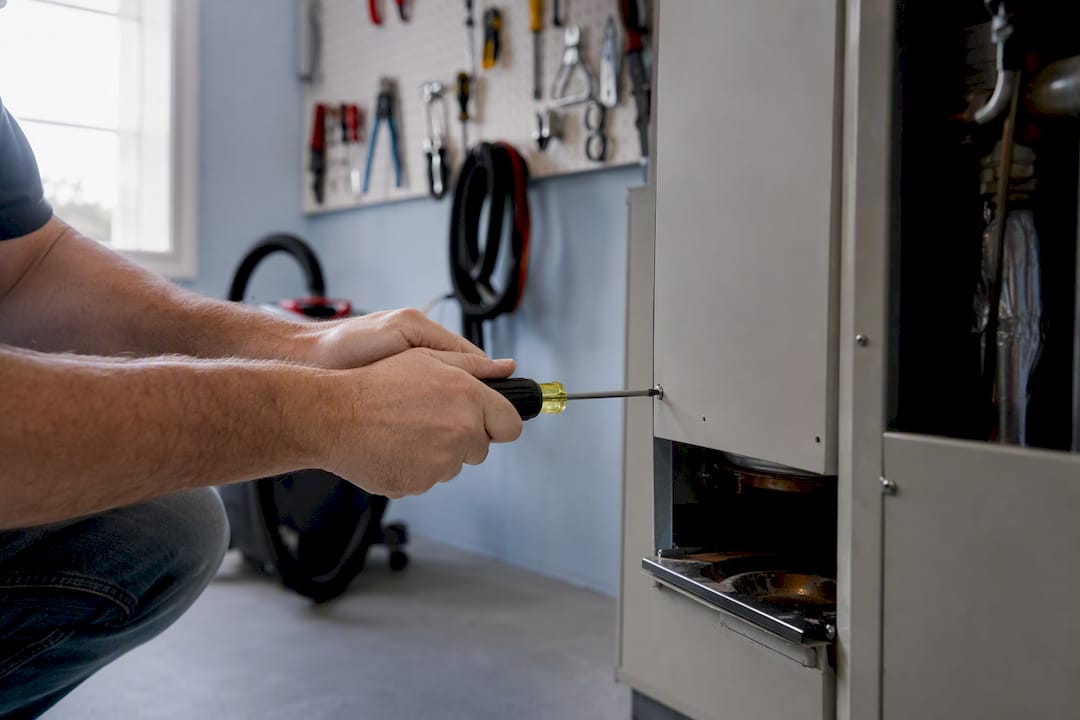
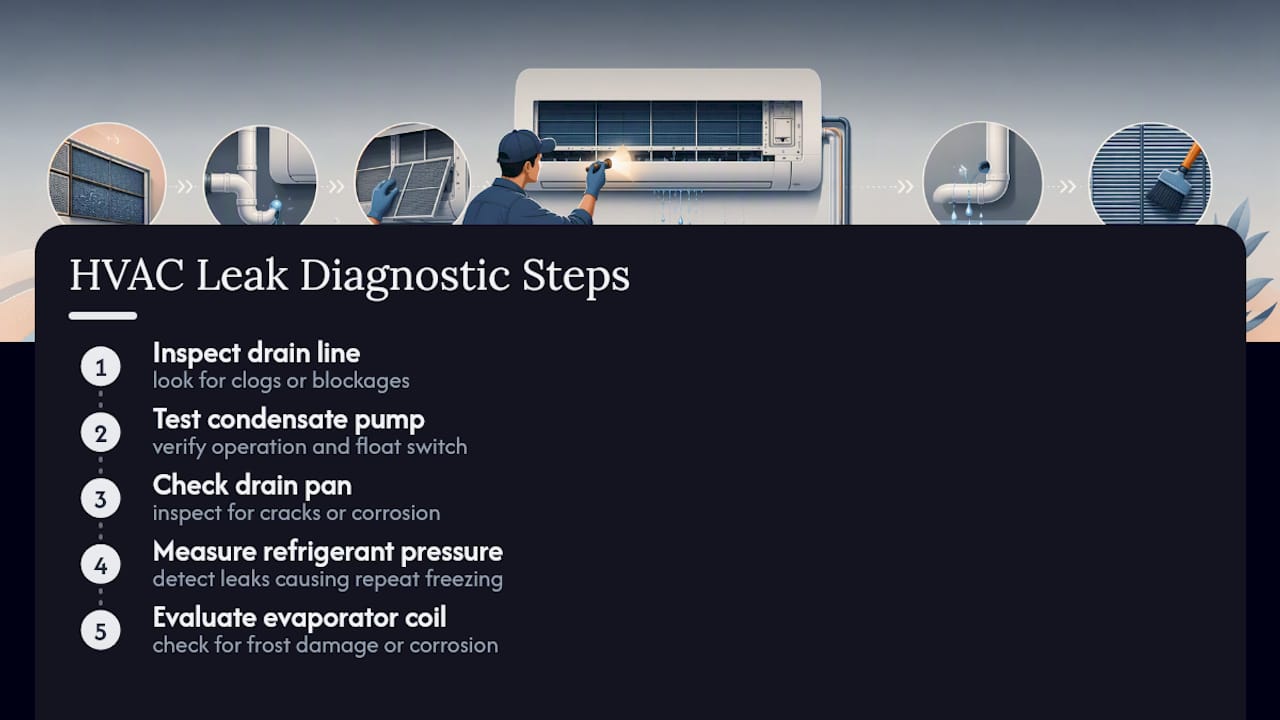
A technician arriving for a water leak call will typically inspect the drain line, test the condensate pump, check the pan for cracks, measure refrigerant pressure, and evaluate the coil for frost damage or corrosion, according to guidance from Patton Air. That full diagnostic matters because clearing a visible clog won’t help if the real problem is a slow refrigerant leak causing repeat freezing.
These ranges come from industry cost data compiled by J Martin Indoor Air Quality and vary by region, system age, and accessibility. When you’re choosing a technician for refrigerant work, confirm they hold EPA Section 608 certification, request an itemized quote before work begins, and ask about warranty coverage on parts and labor.
What to Expect From a Professional AC Leak Repair Visit
A service call for a water leak typically covers the same ground a homeowner starts on, just with more thorough tools and diagnostic equipment. Expect a technician to clear the drain line with a wet vacuum or nitrogen purge, inspect the pan for hairline cracks, test the condensate pump under load, check for frost on the coil, and verify refrigerant charge against manufacturer specs.
Lucas Air Conditioning and Heating was founded in 2018 by Army veteran Cameron Lucas and serves homeowners and businesses across Central Florida with:
- Diagnostic visits covering drain line, pan, pump, coil, and refrigerant charge in one trip
- Online scheduling so you can book a repair visit without a phone call
- Financing options for repairs that turn into larger system work
- A veteran-owned team with roots in local community service
Before your appointment, snap a few photos of where the water is pooling and note whether it started suddenly or built up over days. This pre-call checklist covers exactly what to gather so the technician can diagnose faster once they arrive.
A technician’s view on why small leaks turn expensive
A drain line clog rarely stays small. Leave it a week and the pan overflows onto drywall. Leave it a month and that drywall grows mold, which turns a $200 drain cleaning into a $2,000 remediation job. I’ve seen the same pattern play out dozens of times: a homeowner ignores a musty smell for a season, then calls once water is running down a hallway wall.
The fix that actually prevents most of these calls isn’t complicated. It’s a filter changed on schedule and a drain line flushed twice a year. Nobody gets excited about either task, which is exactly why they get skipped until the ceiling stain shows up.
— Results
Get a Professional Diagnosis Instead of Guessing at the Cause
A leak that keeps coming back usually means the root cause, whether it’s a low refrigerant charge, a failing pump, or a hairline crack in the pan, never actually got fixed. Lucasair sends a technician to check every point in the condensate system in a single visit, so you’re not paying for a drain clearing today and a coil repair next month.

That matters most for Central Florida homes, where humidity keeps AC systems working overtime and drain lines clogging faster than in drier climates. If your unit has leaked more than once this season, or you’d rather have a certified tech confirm the cause than keep testing fixes yourself, schedule a repair visit and get the system checked properly before a small leak turns into water damage.
Sources
Recommended
- What Causes a Home AC Unit to Freeze Up? – Lucas Air Conditioning and Heating
- Common AC Repair Issues Every Homeowner Should Know – Lucas Air Conditioning and Heating
- 10 Ways to Reduce AC Costs This Summer – Lucas Air Conditioning and Heating
- Sweating Air Ducts: Fix and Prevent Moisture Problems – Lucas Air Conditioning and Heating
