
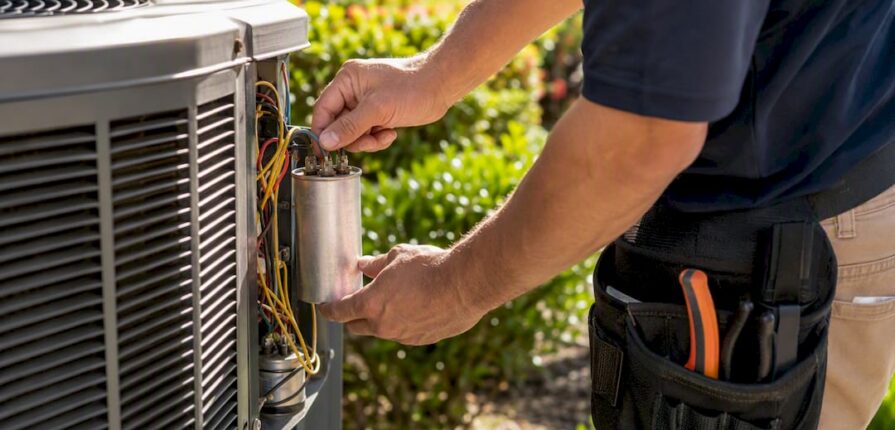
Most homeowners pay $100 to $400 for AC capacitor replacement, parts and labor included, with a national average landing around $175. The part itself is cheap, often under $50. What drives the bill is the diagnostic visit and labor. If your AC is humming but not starting, this is a job for a licensed HVAC technician, not a weekend project.
- Part cost: roughly $8 to $45
- Labor and service call: $60 to $150 per hour, or a flat diagnostic fee
- DIY is possible for trained hands, but a charged capacitor can deliver a lethal shock even with the unit powered off
Key Takeaways
AC capacitor replacement typically costs $100 to $400 total, with the diagnostic and labor accounting for most of that bill rather than the part itself.
| Point | Details |
|---|---|
| Typical cost range | Budget $100 to $400 for parts and labor combined on a standard replacement. |
| Watch for humming without starting | This is the clearest sign of a failing capacitor, but a meter test confirms it. |
| Lifespan runs 10 to 20 years | Early failure can signal compressor stress rather than a simple worn part. |
| Match the exact rating | μF and voltage must stay within about 5% of the original part to protect your motor. |
| Lucasair offers transparent quotes | Published rates and on-site diagnostics help Central Florida homeowners avoid surprise charges. |
Table of Contents
- AC Capacitor Replacement Cost Basics: What the Part Does
- Bad AC Capacitor Symptoms Homeowners Notice First
- Why AC Capacitors Fail: Heat, Age, and Voltage Stress
- AC Capacitor Replacement Cost Breakdown by Home and Unit Type
- DIY AC Capacitor Replacement vs Calling a Professional
- Questions to Ask Before You Book AC Capacitor Repair
- Lucas Air’s Approach to Capacitor Diagnosis and Pricing
- What Actually Matters When You’re Facing This Repair
- Get a Straight Answer on Your AC Repair Cost
- Sources
AC Capacitor Replacement Cost Basics: What the Part Does
Your outdoor AC unit runs on a jolt of stored electrical energy that gets the compressor and fan motors spinning, then keeps the current flowing steady while they run. That’s the capacitor’s job. Miss that jolt and the motor just sits there and hums.
Three types show up in residential systems:
- Run capacitors keep a motor running smoothly once it starts.
- Start capacitors deliver the initial punch of torque, mostly on older or heavy-load compressors.
- Dual-run capacitors combine both jobs for the fan and compressor in one canister, which is why they tend to cost more than a single-function part.
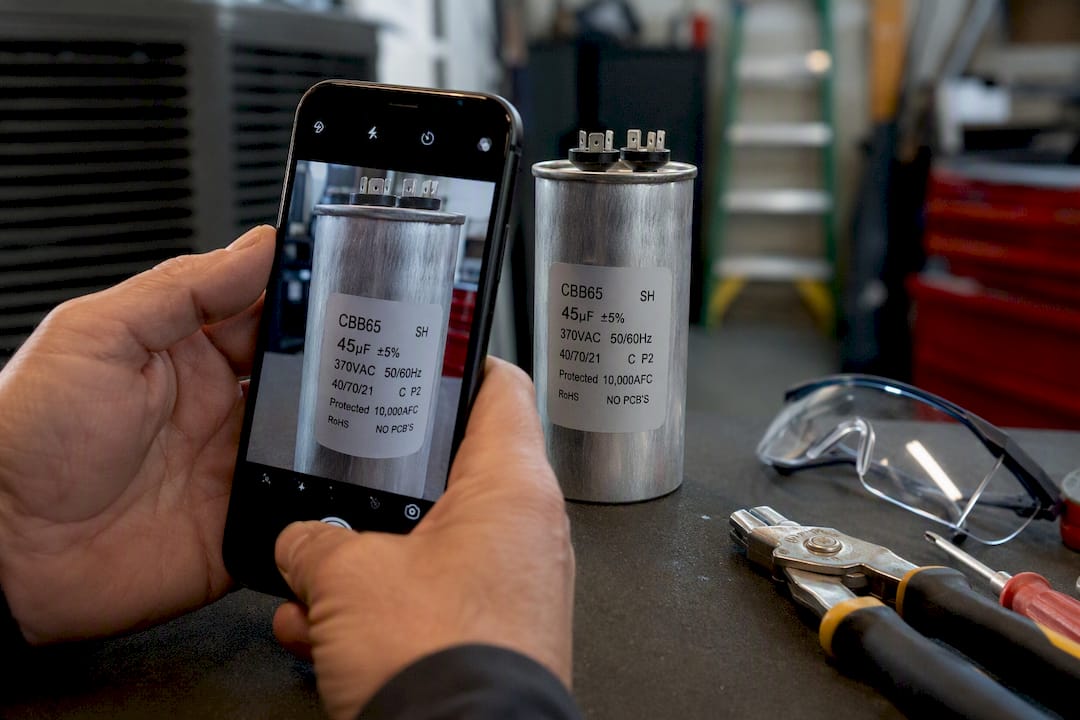
Capacitors are rated in microfarads (μF) and voltage, typically 250, 370, or 440 volts. Swap in the wrong rating and you risk motor damage or a voided warranty, since replacement capacitance needs to stay within about 5% of the original spec.
Bad AC Capacitor Symptoms Homeowners Notice First
A failing capacitor rarely fails silently. Watch for these signs before you call anyone:
- The unit hums but the fan or compressor won’t kick on.
- The system starts sometimes, then stalls other times, seemingly at random.
- Airflow feels weaker than usual, even though the thermostat says it’s running.
- Run times stretch longer than normal to hit the same temperature.
- Your electric bill climbs without a clear reason.
- The capacitor itself looks swollen, cracked, or has visible residue leaking from the top.
Humming alone isn’t a clean diagnosis. A seized compressor can sound similar, which is exactly why a proper meter test matters before anyone orders a part. You can safely do two things yourself: look at the capacitor’s casing for bulging, and confirm the breaker or fuse hasn’t tripped. Don’t touch the terminals or attempt to test the charge without proper tools.
Pro Tip: Snap a photo of the capacitor’s label with your phone before you call for service. The μF and voltage numbers printed there help a technician quote you accurately over the phone, and confirm they’re bringing the right part on the first visit.
Why AC Capacitors Fail: Heat, Age, and Voltage Stress
Capacitors wear out. Industry sources put typical lifespan at 10 to 20 years, and Central Florida’s ambient heat pushes that number toward the shorter end since heat degrades the internal components faster than in milder climates.
Beyond simple age, a few things shorten the clock:
- Voltage spikes from lightning strikes or grid fluctuations
- Frequent short cycling, where the system turns on and off rapidly instead of running steady
- A struggling compressor drawing excess current, which overworks the capacitor supporting it
A capacitor that fails well before the 10 year mark is often a symptom, not the disease. It can point to a compressor under strain or a system nearing the end of its service life, which is why a technician checking “just the capacitor” will usually test the surrounding components too.
AC Capacitor Replacement Cost Breakdown by Home and Unit Type
The part itself rarely breaks the budget; however, understanding the various costs involved can help homeowners plan better, as explained in Understanding the Cost Factors in Building a Custom Home — Bayfair Custom Homes. What varies is everything wrapped around it: the service call, labor time, and how hard the unit is to reach.
Bryant, an HVAC manufacturer, puts the typical total between $100 and $400, with part costs shifting based on voltage and capacitor type. Today’s Homeowner reports an average closer to $180 for a typical home system, with home size and unit type moving that number up or down. Thermostat & HVAC Helpers notes that for many pros, the service call fee makes up most of the total bill, since the part swap itself takes only 20 to 30 minutes.
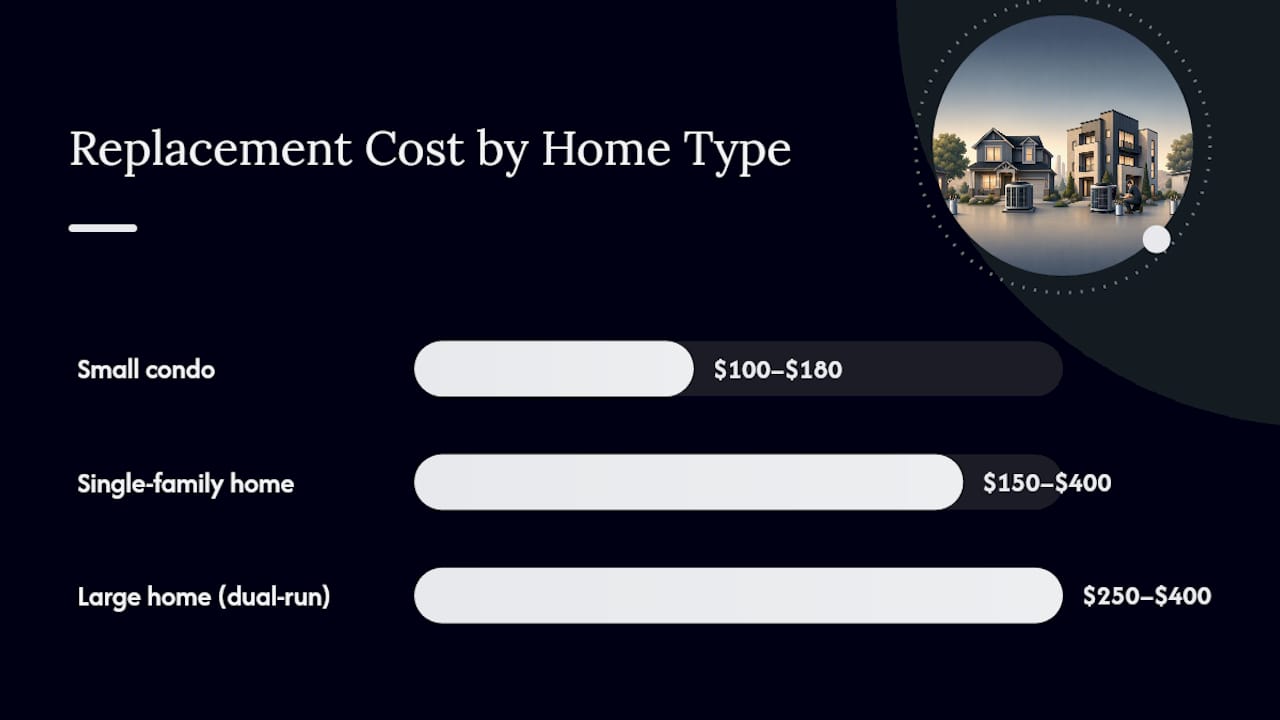
| Scenario | Typical Total Cost |
|---|---|
| Small condo, standard run capacitor | $100 to $180 |
| Average single-family home, standard AC | $150 to $400 |
| Large home, dual-run capacitor, harder access | $250 to $400 |
Four variables push a quote up or down:
- Voltage and μF rating: dual-run capacitors and high-voltage units cost more than a basic single-function part.
- Accessibility: a unit wedged behind landscaping or on a tricky rooftop can add $40 to $70 in labor.
- Timing: emergency or after-hours calls carry a premium over a scheduled daytime visit.
- Coverage: a home warranty or an active maintenance agreement can offset part or all of the bill.
The takeaway for budgeting: expect somewhere in the $100 to $400 range for a straightforward job, and lean toward the higher end if your system is older, hard to access, or needs weekend service.
DIY AC Capacitor Replacement vs Calling a Professional
A capacitor holds enough stored charge to deliver a serious, even lethal, shock, and that charge lingers after you’ve cut power to the unit. That single fact is why most HVAC professionals recommend hiring a licensed technician rather than attempting this yourself.
If you’re experienced and insist on doing it yourself:
- Match the exact μF rating and voltage printed on the old part. No substitutions.
- Gather insulated tools, safety glasses, and a multimeter rated for the job.
- Understand that proper discharge is a required safety step, not optional, before touching any terminal.
- Budget 20 to 30 minutes for a straightforward swap once power is confirmed off.
A technician’s visit typically follows this sequence: test the capacitor’s charge with a meter, discharge it safely, remove and replace the failed part, then run the system to confirm normal startup and airflow. Most pros also check the compressor and fan motor for related strain, since a capacitor rarely fails in isolation.
Pro Tip: If your unit is under 10 years old and the capacitor already failed, ask the technician point blank whether they see signs of compressor stress. A young capacitor failing early is a flag worth chasing down.
Questions to Ask Before You Book AC Capacitor Repair
A little vetting on the phone saves you from surprise charges later. Ask upfront:
- Is there a diagnostic fee, and does it apply toward the repair if you move forward?
- Is pricing flat rate or hourly, and what’s included in that number?
- What brand or grade of capacitor will they install, and does it carry a warranty?
- Will they test related components like the compressor and fan motor while they’re in there?
Watch for red flags once someone’s on site: vague pricing that shifts after they open the unit, pressure to replace parts that weren’t part of the original complaint, or a refusal to show you the failed capacitor before disposing of it. A legitimate technician has no reason to hide a burnt-out part.
Get the quote in writing before work starts, and ask for the specific part number or rating they’re installing. If a technician suspects compressor trouble on top of the capacitor, a second opinion is reasonable given how much more a compressor replacement costs.
Lucas Air’s Approach to Capacitor Diagnosis and Pricing
Lucas Air Conditioning and Heating has served Central Florida homeowners since 2018, founded by Army veteran Cameron Lucas. That background shapes how the company approaches every service call: straight answers, no theatrics.
- Veteran owned, with a direct focus on community trust in Eustis and the surrounding counties
- Offers AC repairs, tune-ups, preventative maintenance agreements, and full system installations
- Publishes rate information so homeowners know what a fair quote looks like before a technician arrives
- Performs the same meter test and safe discharge process described above, then provides a fixed quote before any part gets replaced
A capacitor issue that turns out to be something bigger, a stressed compressor or an aging system, gets flagged honestly rather than buried in a bigger invoice. That’s the standard a repair visit should meet.
What Actually Matters When You’re Facing This Repair
Most articles on this topic treat the capacitor like an isolated $150 fix and move on. That’s not wrong, but it’s incomplete. The number that matters more than the repair cost itself is the age of the capacitor relative to the age of the system. A five-year-old unit throwing a failed capacitor is a different situation than a fifteen-year-old system doing the same thing, even though the invoice might look identical.
Conventional advice tells homeowners to “get three quotes.” Fine in theory, but most people don’t have three technicians available on a 95 degree afternoon when the AC just quit. What actually helps is knowing the fair price range before anyone shows up, and knowing which two or three questions separate a straight shooter from someone padding the bill.
Prioritize this: confirm the part rating matches, get the quote in writing, and ask whether they checked the compressor. Everything else, brand of capacitor, exact labor rate, matters less than those three things.
— Results
Get a Straight Answer on Your AC Repair Cost
Lucasair gives Central Florida homeowners something a lot of AC repair calls don’t: a published rate sheet and a technician who tells you plainly whether you’re looking at a $150 capacitor swap or something bigger. No vague pricing, no pressure to replace parts that don’t need replacing.

That matters most when your AC dies on a Florida afternoon and you need someone who will test the system properly instead of guessing. Lucasair’s technicians run the same meter checks and safe discharge process described above, then hand you a fixed quote before touching your unit, whether that’s a capacitor, a related motor issue, or a full system evaluation. If your unit is humming, stalling, or running longer than it should, schedule a diagnostic visit and get a real number instead of a guess.
Sources
- How Much Does an AC Capacitor Replacement Cost? (2026 Prices) — This Old House
- How Much Does an AC Capacitor Cost? — Today’s Homeowner
- HVAC capacitor replacement — Thermostat & HVAC Helpers
Recommended
- AC Blower Motor Cost: What Homeowners Should Budget in 2026 – Lucas Air Conditioning and Heating
- Rates – Lucas Air Conditioning and Heating
- Common AC Repair Issues Every Homeowner Should Know – Lucas Air Conditioning and Heating
- Duct Replacement Cost in 2026: What You’ll Actually Pay – Lucas Air Conditioning and Heating
