
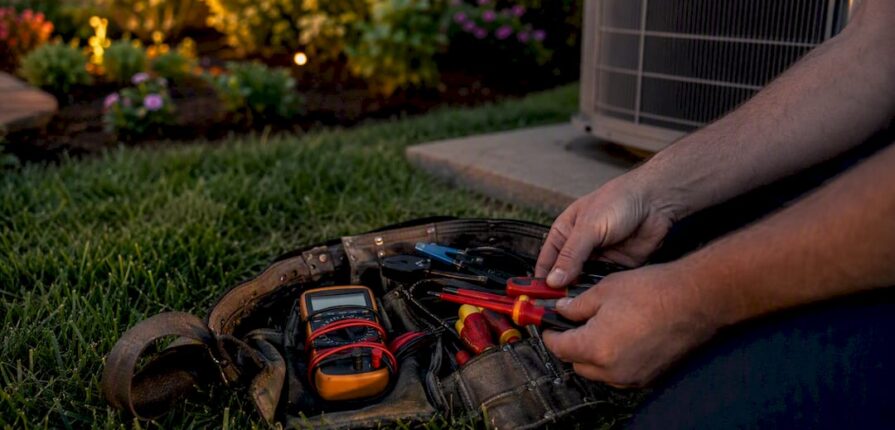
A simple after-hours fix, like a bad capacitor or a tripped breaker, typically runs $300 to $700 all in. A major failure, a dead compressor or a fried control board, can push that past $1,500. The diagnostic fee alone lands somewhere between $100 and $300 once you add the after-hours surcharge on top of a standard call fee, according to HVAC Database’s after-hours pricing breakdown.
Here’s the one-line rule: call now if there’s a safety risk, a vulnerable person in the house (infants, elderly, anyone with a health condition sensitive to heat), or damage that’s actively getting worse. Everything else can usually wait for daytime rates.
Before you dial anyone, run three checks:
- Confirm the thermostat is set to “cool” and the batteries aren’t dead.
- Pull the filter and look for a solid wall of dust blocking airflow.
- Check the breaker panel for a tripped switch, which sometimes fixes the problem outright.
Those three checks take five minutes and occasionally save you the entire after-hours premium.
Key Takeaways
After-hours AC repair costs more because of overtime labor and billing minimums, not inflated parts prices, and a written itemized quote is the best protection against surprise charges.
| Point | Details |
|---|---|
| Typical after-hours range | Simple fixes run $300–$700; major failures like compressors can exceed $1,500. |
| Surcharge structure | Expect a flat $100–$300 surcharge plus a 1–2 hour labor minimum at after-hours rates. |
| Ask before you authorize | Get the surcharge, hourly rate, and diagnostic-credit policy in dollars, on the phone. |
| Prevention lowers frequency | Maintenance plans and quick pre-call checks catch many issues before they become emergencies. |
| Lucasair’s approach | Lucas Air Conditioning and Heating publishes its own rate structure and provides itemized invoices for every after-hours call. |
Table of Contents
- What Drives After Hours AC Repair Cost
- How Much Does Each Repair Cost After Hours?
- Is Your AC Problem Actually an Emergency?
- Cutting Your Odds of an After-Hours Call
- What to Ask the Dispatcher Before You Say Yes
- Why Transparent Pricing Matters More Than Speed
- What This Guide Gets Right That Others Miss
- Get an Honest Quote Before the Bill Surprises You
- Frequently Asked Questions About After-Hours AC Repair Cost
- Sources
What Drives After Hours AC Repair Cost
The premium you pay after dark isn’t about the parts. It’s about the labor, the minimums, and the calendar.
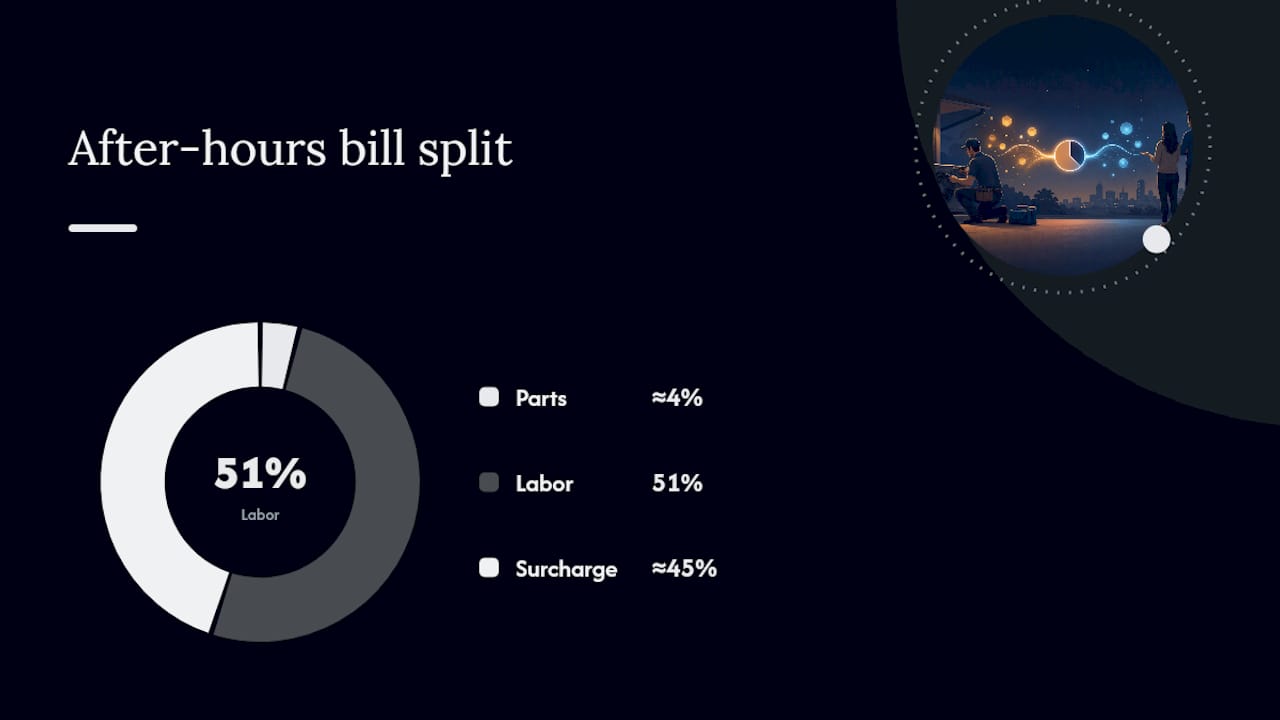
A daytime service call typically costs $75 to $200, with hourly labor in the $75 to $150 range, according to a current cost guide on emergency HVAC pricing. Once the sun goes down or the calendar flips to Saturday, that same visit jumps to a $150 to $350 service call with labor between $125 and $275 an hour, and holidays push it higher still.
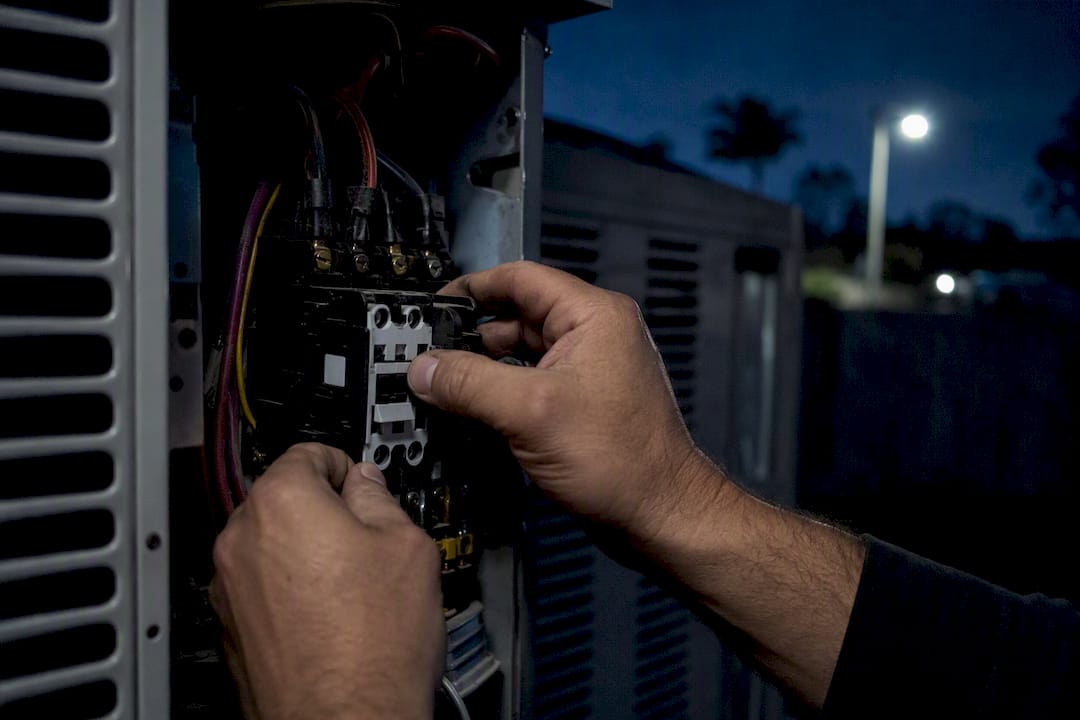
Here’s where most homeowners get confused: parts themselves are rarely marked up specifically because it’s 10 p.m. The real cost driver is overtime pay for the technician and the fact that most companies bill emergency dispatches with a 1 to 2 hour labor minimum, even if the actual repair takes fifteen minutes, a pattern confirmed by Cool Call Pro’s emergency rate guide. Overnight parts runs or special supplier trips do add a shipping premium, but that’s a smaller slice of the bill than the labor minimum.
Here’s a worked example that shows why the same repair can cost double or triple depending on the clock. A failed capacitor, a $15 part, typically runs about $90 total during business hours:
- Daytime capacitor swap at 2 p.m.: $75 service call plus roughly 30 minutes labor equals about $90 to $130.
- The exact same failure at 9 p.m.: add a $150 flat after-hours surcharge, then bill a full 1-hour minimum at $150 to $200/hour instead of a partial hour.
- Total after-hours bill for that same $90 daytime job: often $300 to $450, sometimes more depending on the company’s minimum.
That gap is the surcharge and the minimum working together, not a pricier part. It’s also why asking about the minimum before you authorize a truck is one of the highest-value questions on this whole list.
How Much Does Each Repair Cost After Hours?
Once you know the base surcharge structure, the next question is which specific failure you’re dealing with. Costs vary a lot by component, and some failures are simply more expensive no matter what time it is.
- Capacitor replacement: $150–$250 daytime, $300–$450 after-hours.
- Contactor replacement: $150–$300 daytime, $300–$500 after-hours.
- Condensate line/drain clog clearing: $100–$250 daytime, $250–$400 after-hours.
- Refrigerant recharge: $200–$600 daytime, $400–$900 after-hours (varies heavily by refrigerant type).
- Fan motor replacement: $300–$700 daytime, $500–$1,000 after-hours.
- Control board replacement: $400–$800 daytime, $600–$1,200 after-hours.
- Compressor replacement: $1,500–$3,000+ daytime, often $2,000–$4,000+ after-hours.
| Repair | Daytime Range | After-Hours Range |
|---|---|---|
| Capacitor | $150–$250 | $300–$450 |
| Contactor | $150–$300 | $300–$500 |
| Condensate clog | $100–$250 | $250–$400 |
| Refrigerant recharge | $200–$600 | $400–$900 |
| Fan motor | $300–$700 | $500–$1,000 |
| Control board | $400–$800 | $600–$1,200 |
| Compressor | $1,500–$3,000+ | $2,000–$4,000+ |
Sealed-system work is the real outlier on this list. A compressor or evaporator coil failure means opening a system that’s been holding pressurized refrigerant, and that job takes longer, needs specialized recovery equipment, and often forces a decision between a costly repair and a full replacement. Overall, emergency repair costs for most homeowners fall between $300 and $1,500, with the average call landing around $500 to $700 once the service fee and repair are combined. Older systems running legacy refrigerants like R-22 add another layer of cost, since that refrigerant is scarce and priced accordingly, and technicians sometimes need more time to source it or requalify the system for a newer alternative.
Is Your AC Problem Actually an Emergency?
Not every broken AC justifies a midnight phone call. Three situations genuinely do:
- Safety risks — burning smells, sparking, visible smoke, or water pooling near electrical panels.
- Habitability for vulnerable occupants — infants, elderly residents, or anyone with a heat-sensitive medical condition stuck in a home climbing past 85 degrees.
- Actively escalating damage — a leak spreading across a ceiling, a frozen coil dripping onto flooring, or a compromised system that’s getting worse by the hour.
If none of those apply, you’re usually looking at a comfort-only issue: warm air but no smoke, no water, no medical urgency. Waiting until morning on a comfort-only problem usually saves a notable amount, potentially several hundred dollars.
While you wait, run a ceiling fan, crack a window at night if it’s cooler outside, or reset the breaker once (never repeatedly). If the breaker trips again immediately, stop resetting it. That’s an electrical issue, not a fluke, and Lucas Air’s guide to breaker trips walks through what to check next.
Pro Tip: If the outdoor temperature is dropping and no one in the house has a medical vulnerability to heat, a warm night is almost always cheaper to sleep through than to fix at 11 p.m.
Cutting Your Odds of an After-Hours Call
The cheapest emergency repair is the one you never need. Run through the pre-call checklist first: thermostat setting, filter condition, and breaker status. Those three items solve a surprising share of “emergency” calls without a technician ever showing up.
- Enroll in a preventative maintenance agreement, which typically includes priority dispatch and discounted emergency rates.
- Check whether a home warranty or, for renters, a landlord’s coverage applies before paying out of pocket.
- Keep a window unit or a portable fan on hand for comfort-only nights so you’re never forced into a costly call just to sleep comfortably.
Pro Tip: Routine tune-ups catch failing capacitors and dirty coils months before they turn into a 2 a.m. breakdown, which is the whole reason maintenance plans exist.
What to Ask the Dispatcher Before You Say Yes
Get these answers out loud, on the phone, before a truck leaves the shop:
- “What is your after-hours surcharge, in dollars?”
- “What’s your hourly labor rate after hours, and what’s the minimum billed hours?”
- “Is the diagnostic fee credited toward the repair if I approve the work?” Practices vary here, and Angi’s HVAC cost breakdown notes many companies do apply it, but not all.
Watch for red flags: a dispatcher who won’t quote a number, vague language like “emergency rate applies,” or pressure to sign before you’ve seen a written estimate. If a company can’t answer question one clearly, that’s worth noting before you commit a truck roll.
If you do proceed, insist on an itemized receipt showing the surcharge, labor hours, parts cost, and any return-trip fee separately. Companies confident in their pricing rarely hesitate to hand that over.
Pro Tip: A dispatcher who answers all three questions in under a minute, with actual dollar figures, is usually a company that bills the same way it talks.
Why Transparent Pricing Matters More Than Speed
A reputable after-hours provider tells you the surcharge, the hourly rate, and the minimum before the truck leaves the lot, not after the technician is standing in your driveway. Lucas Air Conditioning and Heating publishes its standard rate structure so customers can compare it against any after-hours quote they’re weighing.
- Founded in 2018 by Cameron Lucas, an Army veteran, with a focus on Central Florida homeowners and businesses.
- Every after-hours dispatch includes a written itemized invoice covering surcharge, labor, and parts, no verbal-only estimates.
- Veteran and first-responder support is built into the company’s community commitments, not an afterthought.
The measure of a trustworthy provider isn’t how fast they answer the phone. It’s whether the number they quote on the phone matches the number on the invoice.
What This Guide Gets Right That Others Miss
Most cost guides quote a single number and stop there, which is almost useless when you’re standing in a hot house at midnight trying to decide whether to make the call. The real value isn’t the price range. It’s understanding that the surcharge and the labor minimum, not the part itself, account for nearly all the markup you’ll pay after dark.
The conventional advice, “always call a professional for AC emergencies,” skips the harder judgment call: figuring out whether your situation is actually an emergency. A warm bedroom on a mild night isn’t the same as a compressor grinding itself apart or a toddler in an 88 degree house. Readers who learn to tell those apart save money without taking on real risk.
What should you prioritize first? Ask the three dispatcher questions before anything else. A company that answers clearly, in dollars, before sending a truck is telling you something about how it operates. One that dodges the question is telling you something too, and it’s rarely good news for your final bill.
Get an Honest Quote Before the Bill Surprises You
Lucas Air Conditioning and Heating is the option for Central Florida homeowners and property managers who want an after-hours repair bill that matches what the dispatcher quoted, not a number that grows once the technician’s already in the driveway. Founded by an Army veteran with a straightforward approach to pricing, Lucas Air publishes its rate structure upfront and backs every emergency dispatch with a written, itemized invoice covering surcharge, labor, and parts separately.
If your AC has stopped working and you’re weighing whether tonight is the night to call, schedule a repair and get a clear answer on surcharge and labor minimums before any truck leaves the shop. If your system is older or you’re already suspecting a bigger issue like a compressor, it’s worth asking about HVAC repair workflow options so you know what a full repair versus replacement conversation looks like before you’re forced into a decision at 11 p.m.
Frequently Asked Questions About After-Hours AC Repair Cost
How much does after-hours AC repair typically cost?
Most simple after-hours fixes total $300 to $700 once you combine the service call, surcharge, and labor minimum. Major failures like a dead compressor or control board can exceed $1,500.
Is the diagnostic fee separate from the repair cost?
Usually yes, though many companies credit the diagnostic fee toward the repair if you approve the work on the spot. Always ask before the technician arrives, since practices vary by company.
Why is emergency AC repair pricing so much higher at night?
The premium comes from technician overtime pay and labor minimums, typically 1 to 2 billed hours, not from marked-up parts. A holiday call adds an even higher multiplier on top of the standard after-hours surcharge.
What’s a fair after-hours surcharge?
A reasonable flat surcharge falls between $100 and $300, on top of standard labor and diagnostic costs. If a dispatcher won’t give you a dollar figure when asked directly, treat that as a red flag.
Can I wait until morning for AC repair?
If there’s no safety risk, no vulnerable occupant in extreme heat, and no active water or electrical damage, waiting for daytime rates typically saves $150 to $400. Comfort-only issues can almost always hold until business hours.
Do maintenance plans really reduce emergency AC calls?
Regular tune-ups catch failing components, like a weakening capacitor, before they fail completely, and most maintenance plans include priority dispatch and discounted emergency rates when a breakdown does happen.
Sources
- After-Hours HVAC Service Call Cost: Emergency Pricing Guide
- Emergency HVAC Service Cost: Fair Rates 2026 | Cool Call Pro
- HVAC Emergency Repair: $300-$1,500 (24/7 Help)
