
TL;DR: An AC breaker keeps tripping when the system draws more current than the circuit can safely carry, or when there is a short or ground fault. The usual causes are a dirty filter or coil, a weak capacitor, a failing fan motor or compressor, or loose wiring. Reset it once, and if it trips again, leave it off and call a pro.
An AC breaker keeps tripping when the system draws more current than the circuit is built to carry, or when there is a short or ground fault somewhere. In Tavares homes, the usual causes are a dirty filter or coil, a weak capacitor, a failing fan motor or compressor, or loose wiring. Reset it once. If it trips again, leave it off.
A breaker is a safety switch, not just a nuisance. When it keeps cutting power to your air conditioner, something in the unit or the wiring needs a closer look. Below we explain how a breaker works, which AC parts usually cause the trips, and how to tell an AC problem from a house-wiring problem.
What does it mean when your AC breaker trips?
It means the breaker sensed unsafe current and shut off the circuit to protect the wiring. According to the Electrical Safety Foundation International, a standard breaker trips when current goes past the level its rating allows. ESFI also says frequent trips point to a problem that should be inspected.
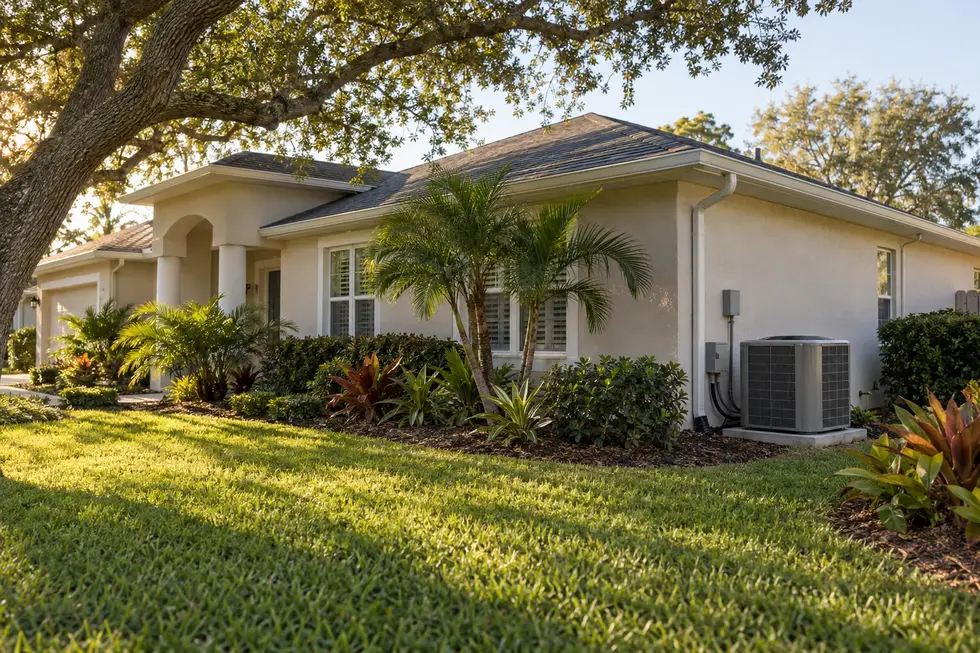
Most split systems have two breakers in the panel. One feeds the outdoor condenser and one feeds the indoor air handler. The outdoor unit holds the compressor and fan motor, which use the most power, so its breaker trips most often. You may also have a disconnect box on the wall next to the outdoor unit.
A breaker trips for one of three basic reasons:
- Overload: a motor works too hard and pulls extra current for too long.
- Short circuit: current takes a shortcut between wires, often because of damaged insulation or a burned part.
- Ground fault: current leaks to grounded metal, such as the unit cabinet, often because of moisture or a failed part.
Is it safe to keep resetting a tripped AC breaker?
No. One careful reset is reasonable, but repeated resets are not. Each trip means the breaker caught a real fault. Forcing power back on can overheat wiring or damage the compressor, which is the most expensive part of your system.
The U.S. Department of Energy guide to common air conditioner problems says to check fuses and breakers when the system stops working. It also says to let the unit cool for five minutes before you reset it. Here is the safe way to do it:
- Set the thermostat to OFF.
- Find the AC breaker in your panel. A tripped breaker sits in the middle or OFF position.
- Push it all the way to OFF, then wait at least five minutes.
- Flip it back to ON.
- Wait a few more minutes, then set the thermostat back to COOL.
If the breaker trips again right away or within a few hours, leave it off and call for service. Don’t tape the breaker on, and never swap it for a larger one. ESFI warns that an oversized fuse is a dangerous fire hazard, and the same is true for an oversized breaker.
Which AC problems make the breaker keep tripping?
Most repeat trips come from a part in the outdoor unit or from blocked airflow that makes the system work harder. This table sorts the five most common causes.
| Cause | When it usually trips | What you might notice | Who should fix it |
|---|---|---|---|
| Dirty filter or clogged condenser coil | After a long run on a hot afternoon | Long run times, weak cooling, debris packed on the outdoor coil | You change the filter. An HVAC tech cleans the coil. |
| Weak or failed capacitor | Right when the outdoor unit tries to start | Humming outdoor unit, fan not spinning, clicking | HVAC tech |
| Failing condenser fan motor | After several minutes of running | Fan spins slowly or stops, burning smell near the unit | HVAC tech |
| Compressor trouble (hard start, shorted or grounded winding) | Within seconds, every time the compressor kicks on | Loud clunk or hum, then the breaker trips | HVAC tech |
| Loose or corroded wiring, or a worn breaker | With no clear pattern, sometimes during rain | Scorched wires, warm breaker, random trips | HVAC tech for wiring at the unit. A licensed electrician for the panel and house wiring. |
Dirt matters more than most people think. ENERGY STAR says dirty coils make a system run longer, and a dirty filter can damage equipment and cause early failure. The Department of Energy also lists dirty filters and coils as a cause of early compressor and fan failure. Long, hard run times push the current up until the breaker trips.
Why do AC breakers trip more often in Central Florida?
Because our air conditioners work harder and longer than most. With Central Florida heat and humidity and a long cooling season, the compressor and fan motor run many hours a day for much of the year. A part that is starting to fail usually gives out on the hottest afternoon, when the load is highest.
Your yard plays a part too. Wooded lots around Paisley and Astor often drop leaves and pine needles on the outdoor coil. In Zellwood, grass clippings and yard debris do the same. A packed coil can’t get rid of heat, so pressure and current climb. Summer storms bring wind-driven rain and power hits that can loosen connections, soak a disconnect box or weaken a capacitor. Hurricane pads and straps keep the outdoor unit anchored, but they don’t protect the electrical parts inside it.
A few habits help prevent trips. Check your filter often during the cooling season. Keep plants and debris cleared back from the outdoor unit. Have the coils and electrical parts checked once a year before summer.
Is it an AC problem or an electrical problem?
If only the AC breaker trips and everything else in the house works, the cause is usually in the air conditioner. If several breakers trip, a breaker feels warm, or the panel smells like burning, the problem is likely in your home’s electrical system. That calls for a licensed electrician.
An HVAC technician tests the unit side. That means capacitor readings, amp draw on the compressor and fan motor, the contactor, the wiring at the unit and the condition of the coil. If the unit checks out and the trips keep coming, the next step is an electrician to inspect the panel, breaker and house wiring. Lucas Air Conditioning and Heating, LLC works on the air conditioner itself and will tell you plainly when a problem belongs to an electrician.
Signs you need to call a pro now
- The breaker trips again within minutes or hours of a reset.
- The breaker won’t stay on at all.
- You smell burning near the panel, air handler or outdoor unit.
- The breaker or panel cover feels warm.
- The outdoor unit hums or buzzes, but the fan doesn’t spin.
- You see scorched, melted or chewed wires.
- Other breakers in the house start tripping too.
Odd sounds often show up before a breaker starts tripping. Our guide to what different AC noises mean can help you describe the problem when you call. If the breaker holds but the house still isn’t cool, read 8 reasons your AC isn’t cooling enough.
If you’re a landlord or property manager, ask tenants to call after the first repeat trip instead of resetting the breaker over and over. A quick call can save a compressor.
Why call Lucas Air for a tripping AC breaker in Tavares?
- Lucas Air Conditioning and Heating, LLC is a veteran-owned HVAC contractor in Tavares, located at 15800 Old US Hwy 441.
- Cameron Lucas, who served 8 years in the U.S. Army with the 82nd Airborne Division, founded the company in early 2018.
- The company holds Florida license CAC1819409.
- Customers have given it 5.0 stars on Google across more than 1,000 reviews.
- A diagnostic visit is $125 for homes and $135 for commercial properties.
- The $129-per-year Preventative Maintenance Agreement includes one tune-up, 15% off parts and priority scheduling.
- At the Colonial Pines apartment complex in Tavares, the team replaced 30 split systems and installed 2 ductless units in 10 working days.
- Office hours are Monday through Friday, 8:00 AM to 5:30 PM, and a technician is on call after hours for emergencies.
If your AC breaker has tripped twice, leave it off and call (352) 805-0359, or book a diagnostic appointment online.
Frequently Asked Questions
Why does my AC breaker trip only when it rains?
Rain can get into a worn disconnect box or reach damaged wiring at the outdoor unit and cause a ground fault. Leave the breaker off and have the wiring and disconnect checked before you use the system again.
Can I install a bigger breaker so my AC stops tripping?
No. The breaker is sized to protect the wire and the unit. A larger breaker lets the wire overheat before it trips, which is a fire hazard. Any breaker or panel change should be done by a licensed electrician.
How much does it cost to find out why my AC breaker keeps tripping?
At Lucas Air Conditioning and Heating, a diagnostic is $125 for homes and $135 for commercial properties. The repair cost depends on which part failed. A capacitor, a fan motor and a compressor are very different jobs.
Does a tripping AC breaker mean I need a new system?
Usually not. Most causes, like a dirty coil, a weak capacitor or a loose wire, can be repaired. A failed compressor on an older system is the main case where replacement may make more sense.
Why does my AC breaker trip right after the power comes back on?
The compressor may be trying to restart before system pressures have settled, or a power surge may have damaged a capacitor or other part. Turn the thermostat off, wait at least five minutes, then reset once. If it trips again, call for service.
Recommended Reads
- HVAC Contractor in Tavares, FL
- Landing Page for Seasonal Specials – Online Booking – Lucas Air Conditioning and Heating
- Landing Page for Seasonal Specials – Lucas Air Conditioning and Heating