
TL;DR:
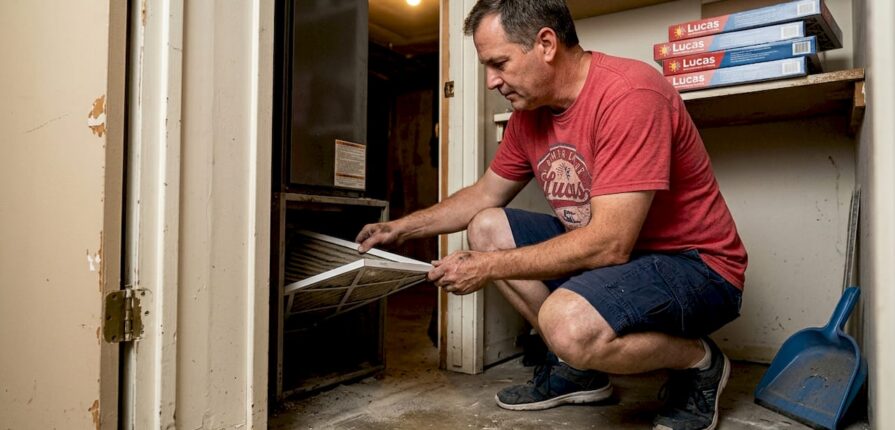
- Choosing the correct air filter for Central Florida homes involves balancing filtration quality with system compatibility to prevent airflow restrictions. Higher-rated filters, like MERV 13 and above, can strain outdated or improperly sized HVAC systems, leading to decreased efficiency and potential moisture problems. Professional assessment ensures homeowners select the safest, most effective filters tailored to their specific system and climate conditions.
Grab any filter off the hardware store shelf, slide it in, and you’re done, right? If only it were that simple. Most Central Florida homeowners and business owners treat air filter selection as an afterthought, but with our year-round humidity, afternoon thunderstorms, and subtropical heat, a poorly matched filter can do more harm than good. The wrong choice leaves your indoor air full of mold spores and allergens, strains your HVAC system, and quietly drives up energy bills. This guide breaks down exactly how filters work, what every rating means, and how to make the smartest choice for your property.
Table of Contents
- What air filters actually do: beyond the basics
- Understanding MERV ratings, HEPA, and CADR: what matters most
- Common Central Florida challenges: mold, humidity, and filter limitations
- Portable air cleaners and real-world performance in homes and offices
- Why one-size-fits-all air filter advice fails Central Florida homes
- Take the next step to cleaner, healthier air
- Frequently asked questions
Key Takeaways
| Point | Details |
|---|---|
| Choose the right filter | Use the highest MERV filter your system can safely handle to maximize air quality without sacrificing airflow. |
| Control humidity for mold prevention | Filtration reduces airborne spores, but managing humidity is key to avoiding mold in Central Florida homes. |
| Supplement wisely with portable air cleaners | Portable units boost air filtration in problem spots but are not replacements for proper HVAC filters. |
| Ratings matter, but compatibility comes first | High efficiency is only useful if your HVAC system can operate efficiently with the chosen filter. |
What air filters actually do: beyond the basics
Air filters serve two jobs at once, and most people only think about one of them. Yes, filters clean the air you breathe by trapping particles as air circulates through your HVAC system. But they also protect the mechanical components inside your system, including the blower motor, evaporator coil, and heat exchanger. A clogged or improper filter can coat those parts in dust, cutting efficiency and triggering expensive repairs.
The particles that filters target range widely in size:
- Dust and dirt (large particles, relatively easy to capture)
- Pet dander (medium-sized, common in Florida homes)
- Pollen (medium to large, a real problem during Florida’s extended pollen season)
- Mold spores (small to medium, a major concern in humid climates)
- Bacteria and fine particulates (very small, requires higher-rated filters)
- Volatile organic compounds or VOCs (gases, require activated carbon filters, not standard filters)
Here is the trade-off that most homeowners miss: as filter ratings go higher and they capture smaller particles, they also create more resistance to airflow. This resistance is called pressure drop, and if your HVAC system was not designed to push air through a dense filter, it will work harder, run longer, use more electricity, and eventually wear out faster. According to ASHRAE Standard 52.2, MERV ratings reflect the filter’s ability to remove particles, but they are also directly tied to airflow resistance.
“A filter that removes 95% of particles is worthless if it causes your system to overheat and shut down. Balance is everything.”
Regular HVAC preventative maintenance includes checking that the current filter is the right fit for your system, not just swapping it out for whatever is on sale. This matters enormously in our climate, where systems run hard nearly every month of the year.
Understanding MERV ratings, HEPA, and CADR: what matters most
Understanding what filters do leads naturally to the question: which kind is best for your needs? Three rating systems dominate the conversation, and knowing the difference saves you money and frustration.
MERV (Minimum Efficiency Reporting Value) is the standard scale for HVAC filters. Developed under ASHRAE Standard 52.2, MERV runs from 1 (nearly useless fiberglass) to 20 (used in hospital operating rooms). For most residential systems, MERV 8 to MERV 13 hits the sweet spot between filtration quality and safe airflow. The EPA recommends at least MERV 13 for meaningful particle removal, but stresses that you must match the filter to your specific HVAC system’s capability.
| MERV rating | Particle size targeted | Best use case |
|---|---|---|
| 1 to 4 | Large dust, pollen | Basic protection, old systems |
| 5 to 8 | Mold spores, pet dander | Most standard residential systems |
| 9 to 12 | Fine dust, legionella | Upgraded residential, light commercial |
| 13 to 16 | Bacteria, smoke, fine particles | High-performance residential, medical offices |
| 17 to 20 | Viruses, ultrafine particles | Hospitals, cleanrooms |
HEPA (High Efficiency Particulate Air) filters capture 99.97% of particles at 0.3 microns or larger. These are not typically installed in residential ductwork because they create extreme airflow resistance. You will find them inside portable air cleaners and some specialized commercial systems.
CADR (Clean Air Delivery Rate) is the metric for portable air purifiers. It tells you how many cubic feet of clean air the unit pushes out per minute. A unit with a CADR of 200 for smoke, for example, can clean the air in a room twice as fast as a unit with a CADR of 100.
Here is how to choose the right filter for your situation:
- Check your HVAC system’s documentation or the manufacturer’s website to find the maximum MERV rating it supports.
- If you are unsure, start at MERV 8 and ask a technician to assess whether moving to MERV 11 or MERV 13 is safe for your equipment.
- For portable air cleaners, measure your room’s square footage and match the CADR rating to at least two-thirds of that number.
- Change filters on schedule. A MERV 13 filter clogged with six months of Florida dust is worse than a fresh MERV 8.
- Check your home’s actual filter slot size before buying in bulk. Many older Central Florida homes have non-standard slots.
Pro Tip: When preparing your HVAC for peak seasons, always install a fresh filter so the system enters its most demanding months at peak efficiency.
Common Central Florida challenges: mold, humidity, and filter limitations
Matching the right filter is especially important in our regional climate. Central Florida averages relative humidity between 70% and 90% during summer months, and that creates conditions where mold can grow inside ductwork, on evaporator coils, and along the return air pathway. A filter alone cannot fix this problem, but it plays an important role in reducing how many mold spores circulate through your living or working space.
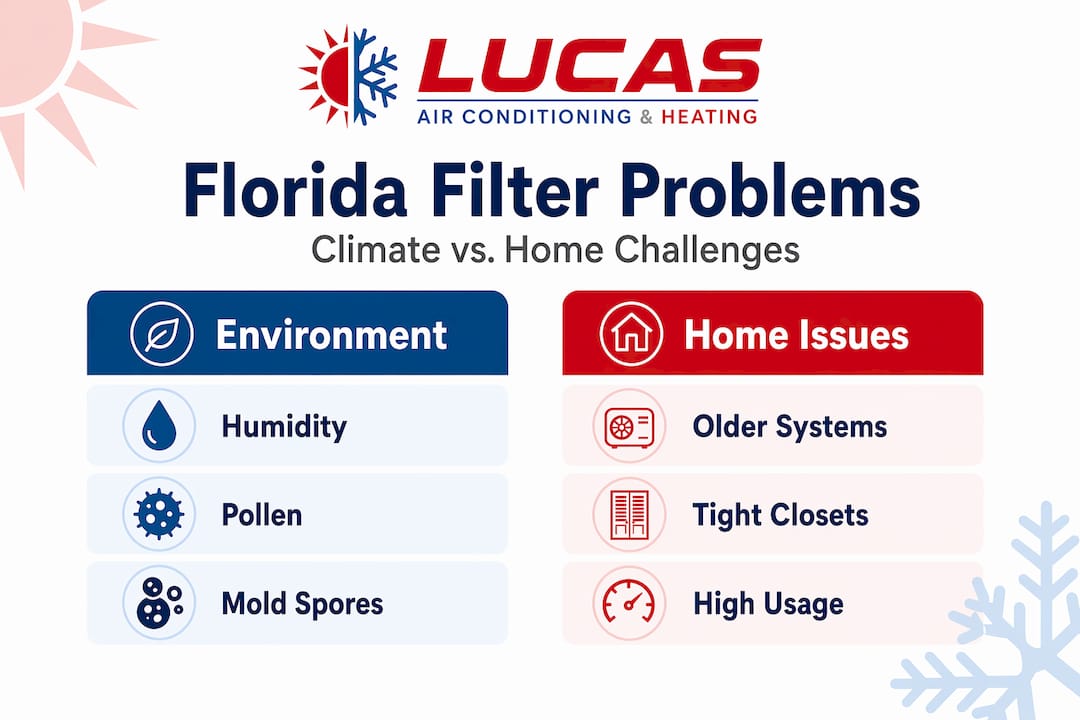
| Central Florida air quality challenge | Filter’s role | Additional solution needed |
|---|---|---|
| Mold spores | Captures airborne spores | Whole-home dehumidifier |
| Pollen (spring/fall) | Highly effective at removal | Regular outdoor cleaning |
| Pet dander | Very effective | Regular grooming and vacuuming |
| VOCs and odors | No effect with standard filters | Activated carbon filter or UV system |
| High dust from sandy soil | Effective but clogs faster | More frequent filter changes |
According to research on humidity control in humid climates, HVAC filtration alone does not solve mold risk. Filtration can reduce the number of airborne spores, but humidity control is the essential front-line defense against mold establishing itself in your home or office.
Watch for these warning signs that your current filter setup is letting your system down:
- Musty odors from vents, especially after the system starts up
- Visible dust buildup on registers or furniture shortly after cleaning
- Increased allergy symptoms at home compared to outdoors
- Higher-than-normal energy bills without a clear reason
- Ice forming on the outdoor unit (often caused by restricted airflow from an overly dense filter)
- Weak airflow from vents even when the system is running
Pro Tip: If your home feels sticky and humid even with the AC running, a filter upgrade alone will not fix it. Ask your technician about adding a whole-home dehumidifier during your next HVAC maintenance visit.
Portable air cleaners and real-world performance in homes and offices
If you need extra filtration beyond your central HVAC, portable solutions add another layer of protection. Portable air cleaners work independently of your ductwork, drawing room air through their own filters and pushing out cleaned air directly into the space. They are useful in bedrooms, home offices, small commercial spaces, and any area where someone has allergies, asthma, or other respiratory concerns.
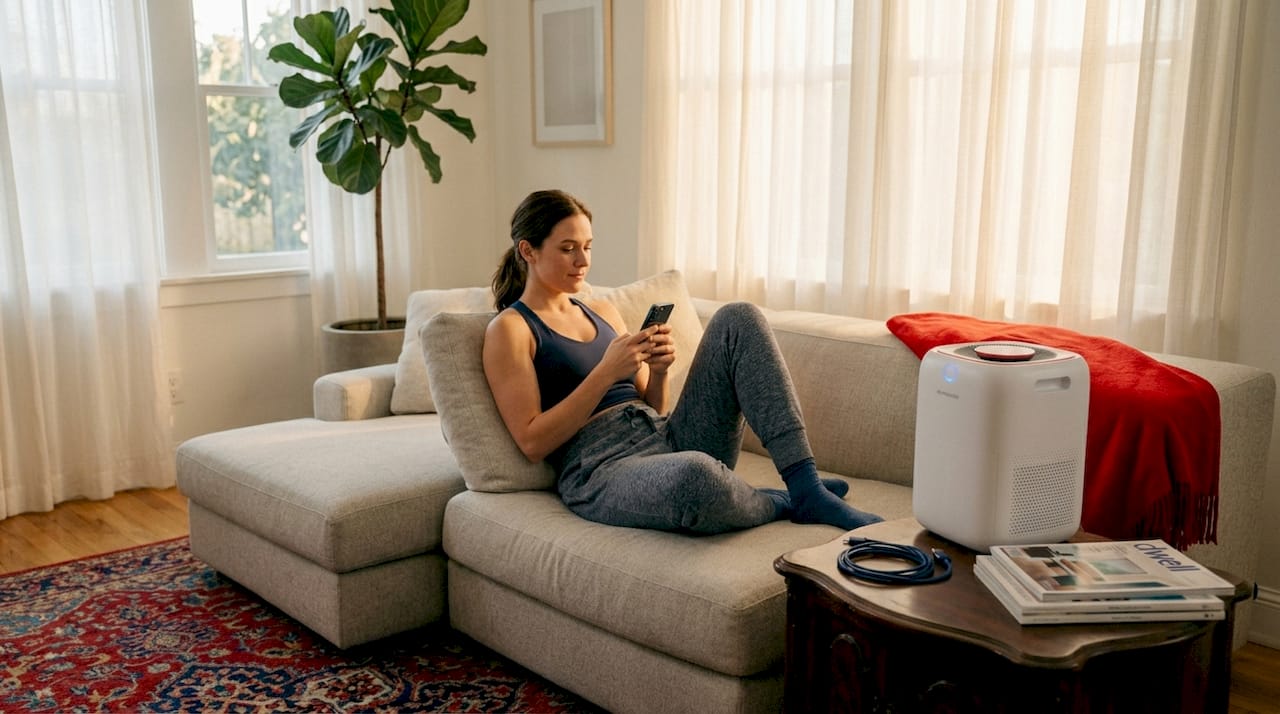
Choosing the right unit comes down to matching the CADR rating to the room size. The EPA recommends that portable air cleaners be chosen using the CADR specific to your room size, noting that real-world performance often differs significantly from what the packaging suggests. A 2026 study published in the Journal of Exposure Science and Environmental Epidemiology confirmed that air cleaner performance varied considerably between actual homes and usage patterns, even when units had similar theoretical ratings.
Here is what drives that gap between theory and real-world results:
- Placement matters enormously. A purifier tucked in a corner behind furniture cleans far less air than one positioned in an open central spot.
- Door and window habits change how quickly clean air gets diluted by incoming dirty air.
- Fan speed settings affect both noise and effectiveness. Running on low speed looks great on an energy bill but captures far fewer particles.
- Filter maintenance applies to portable units just as much as HVAC filters. A clogged HEPA filter in a portable unit captures almost nothing.
“A portable air cleaner is a tool, not a solution. Use it alongside a well-maintained HVAC system, not instead of one.”
Portable air cleaners make the most sense in these situations:
- Bedrooms for people with allergies or asthma (better air purification during sleep has shown real health benefits)
- Spaces that are not served by central ductwork
- Small offices or conference rooms with high occupancy
- Temporary protection during renovation or construction activity nearby
To get the most from your system, check your full HVAC inspection checklist to make sure your central system and any portable units work together efficiently rather than working against each other.
Why one-size-fits-all air filter advice fails Central Florida homes
Having explored practical applications, let’s expose the hidden risks in generic filter advice. Walk into any big-box store and you will see packaging screaming “MERV 13 for maximum protection.” National blogs and social media HVAC influencers repeat the same message: buy the highest MERV rating you can find. In Central Florida, following that advice blindly can cost you real money and real comfort.
Here is the issue: a large portion of residential systems installed across Central Florida, especially in homes built before 2010, were sized and designed around MERV 7 or MERV 8 filters. These systems often use single-stage blower motors that cannot increase their output to overcome a dense filter’s resistance. When you install a MERV 13 or higher filter in one of these systems, you do not get cleaner air. You get reduced airflow, a stressed blower motor, a coil that runs colder than designed, and a real risk of moisture problems because warm air is no longer moving over the evaporator at the right rate. According to the guidance in ASHRAE Standard 52.2, choosing a filter above what your system can handle can reduce airflow, comfort, and even cause moisture-related issues inside the unit.
Florida’s architecture adds another layer. Many homes here use air handlers in tight closets or attic-mounted systems with long duct runs. These installations are especially sensitive to pressure drop. A filter that works fine in a basement installation with short, wide ducts can cripple airflow in a typical Eustis or Clermont attic system.
The honest answer is that regular HVAC maintenance is the foundation of everything. A technician who has actually looked at your system, measured airflow, and understands your home’s layout can tell you in five minutes what filter rating is safe and effective. No packaging claim can do that. What works for your neighbor’s 2022 variable-speed system could genuinely harm your 2008 single-stage unit. Local expertise and compatibility checks beat generic national advice every single time.
Take the next step to cleaner, healthier air
You now know more about air filters than most homeowners will ever learn. But knowledge only pays off when you act on it.
At Lucas Air Conditioning and Heating, we help Central Florida homeowners and businesses find the right filter for their specific system, not just the most expensive one on the shelf. As your trusted HVAC contractor serving the area since 2018, we offer professional inspections that identify exactly what your system can safely handle. We also provide whole-home humidity control solutions, mold prevention assessments, and HVAC system upgrades that let you safely run higher-rated filters for genuinely cleaner air. Call us or book online today and let us put your indoor air quality to work for you.
Frequently asked questions
How often should Central Florida homeowners replace HVAC air filters?
Most Central Florida homes need filter changes every one to two months because our high humidity and year-round pollen seasons load filters faster than in drier climates. Homes with pets or anyone with allergies may need monthly changes.
Is a higher MERV filter always better for my system?
Use the highest MERV rating your specific system is designed to handle because pushing beyond that can restrict airflow and reduce comfort. The right filter is the highest your HVAC can handle safely, not simply the highest available.
Does a portable air cleaner replace my HVAC filter?
Portable air cleaners are effective as supplemental filtration for specific rooms, but they do not replace a properly fitted, regularly changed HVAC filter. The EPA is clear that portable units should be viewed as a supplement, not a replacement for whole-system filtration.
Can an air filter control humidity and prevent mold?
Air filters reduce the number of airborne mold spores circulating in your home, but they cannot prevent mold from growing. As research on humidity and mold risk confirms, only proper humidity control through dehumidification addresses the root cause of mold growth in humid climates like Central Florida.
Recommended
- Indoor air quality: improve comfort and health at home – Lucas Air Conditioning and Heating
- Duct Cleaning & Indoor Air Quality: Evidence & Best Practices – Lucas Air Conditioning and Heating
- Apartment air quality: practical solutions for Central Florida – Lucas Air Conditioning and Heating
- Why Regular Duct Cleaning Boosts Air Quality and Efficiency – Lucas Air Conditioning and Heating
