
TL;DR:
- Higher SEER ratings do not guarantee lower utility bills; proper installation, duct sealing, and maintenance are equally important.
- In Central Florida’s climate, systems with a balance between 16 and 18 SEER offer optimal cost savings and comfort, considering diminishing returns above that range.
Most Florida homeowners assume that buying the highest SEER-rated air conditioner on the lot automatically means lower electric bills and a cooler home. That assumption costs people money every single year. SEER ratings are a powerful tool for comparing systems, but they’re just the starting point of a much bigger picture. This article breaks down exactly what SEER and SEER2 mean, how different ratings affect your utility bills in real numbers, and how to make a choice that actually delivers comfort and savings in Central Florida’s demanding climate.
Table of Contents
- What is SEER rating and why does it matter?
- How SEER compares: Understanding efficiency, cost, and diminishing returns
- Expert SEER insights: System choice, installation, and real-world results
- SEER, EER, and Florida’s commercial standards: What business owners need
- Why SEER ratings are only half the story for Florida homes and businesses
- Ready to optimize your comfort and efficiency?
- Frequently asked questions
Key Takeaways
| Point | Details |
|---|---|
| SEER measures efficiency | SEER and SEER2 show how efficiently an air conditioner cools your space for the energy used. |
| Diminishing returns above SEER 18 | Paying more for very high SEER ratings offers limited extra savings compared to mid-range models. |
| Installation and upkeep matter | A well-installed system, even at a modest SEER, can beat a higher-rated but poorly installed unit. |
| Commercial units use EER/IEER | Property managers should check EER2/IEER ratings and focus on correct sizing for best results. |
| Florida climate impacts savings | Picking the right SEER level for Florida’s heat and humidity maximizes your comfort and utility savings. |
What is SEER rating and why does it matter?
SEER stands for Seasonal Energy Efficiency Ratio. In plain terms, it measures how much cooling a system delivers for every kilowatt-hour (kWh) of electricity it uses over an entire cooling season. Think of it like a report card for your AC. The higher the number, the more efficiently your system converts electricity into cool air.
Starting in 2023, the industry shifted to a new benchmark called SEER2. The key difference? SEER2 uses more realistic testing with higher external static pressure (0.5 in. w.c. versus 0.1 in. w.c.) to simulate actual ductwork resistance in homes. In older testing, systems performed in nearly ideal lab conditions, which made ratings look better than they performed in real buildings. SEER2 closes that gap considerably.
Here’s a quick look at what common SEER ratings mean in practical terms:
| SEER rating | Efficiency level | Typical use case |
|---|---|---|
| 13–14 | Minimum/standard | Budget replacement units |
| 15–17 | Good | Most Central Florida homes |
| 18–20 | High efficiency | Premium residential use |
| 21+ | Ultra-high efficiency | High-end, variable-speed systems |
Why does this matter in Florida specifically? Because Central Florida air conditioners run almost year-round. Unlike the Midwest where systems sit idle through a long winter, your AC here earns its keep from February through November. That means even small differences in efficiency add up fast on your monthly FPL or Duke Energy bill.
Key reasons SEER matters for Florida property owners:
- Longer operating seasons mean efficiency differences create larger annual savings
- Higher humidity puts extra load on systems, making real-world efficiency critical
- Rate increases in electricity costs amplify the return on an efficient system
- Resale value improves with a newer, higher-rated HVAC system
“The SEER rating is your roadmap for comparing cooling efficiency between systems. In a high-use climate like Florida’s, that roadmap directly shapes your operating costs every single month.”
When you’re choosing an energy-efficient HVAC system, SEER is the first number you should understand. But it’s far from the last.
How SEER compares: Understanding efficiency, cost, and diminishing returns
Now that you understand what SEER measures, it’s time to look at the money side of the equation. This is where many homeowners make expensive mistakes.
Think of SEER like miles per gallon in a car. A vehicle that gets 40 MPG is more fuel-efficient than one getting 25 MPG, but upgrading from a 40 MPG car to a 60 MPG hybrid costs significantly more upfront, and the fuel savings may never fully recover that investment depending on how much you drive. HVAC efficiency works the same way.
Diminishing returns become significant above SEER 18 to 20. Jumping from a SEER 14 to SEER 20 can increase your upfront equipment cost by 30 to 40%, but only deliver around 20% improvement in annual cooling bills. Here’s what that looks like in real numbers for a typical 2,000 square foot Central Florida home:
| SEER rating | Estimated upfront cost | Estimated annual cooling cost | 10-year savings vs. SEER 14 |
|---|---|---|---|
| 14 | $3,500–$4,500 | $1,800 | Baseline |
| 16 | $4,200–$5,200 | $1,575 | ~$2,250 |
| 18 | $5,000–$6,500 | $1,400 | ~$4,000 |
| 20 | $6,500–$8,500 | $1,260 | ~$5,400 |
| 22 | $9,000–$12,000 | $1,160 | ~$6,400 |
Notice what happens between SEER 18 and SEER 22. You pay thousands more upfront but the annual savings gap narrows significantly. For most homeowners, the sweet spot sits between SEER 16 and 18, where you get meaningful efficiency gains without paying a premium that takes 15 or more years to break even.
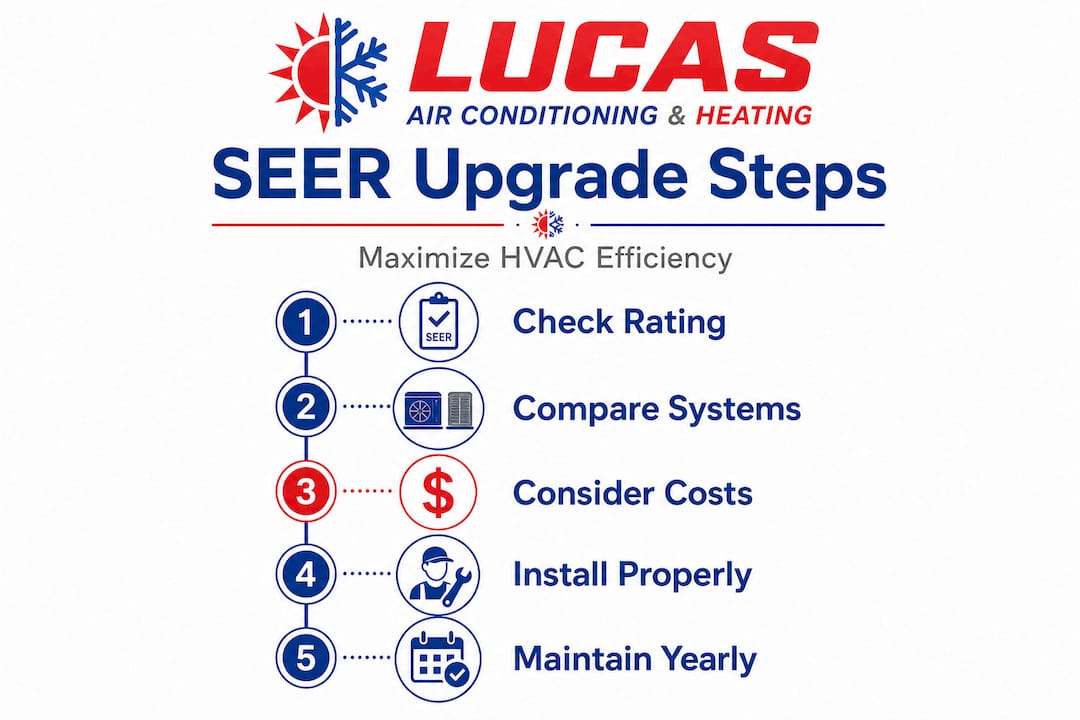
Pro Tip: Before committing to a high-SEER system, calculate your simple payback period. Divide the extra upfront cost by your projected annual savings. If it takes more than 8 to 10 years to break even, a mid-range SEER may make more financial sense for your household.
Here’s a practical checklist for making the SEER decision:
- Calculate your current annual cooling cost using your utility bills from the past 12 months
- Determine your home’s actual usage since a snowbird home used 4 months a year has a very different payback calculation than a full-time residence
- Get quotes for multiple SEER tiers and compare total 10-year cost including equipment and estimated operating costs
- Factor in available rebates since utilities and manufacturers sometimes offer rebates for higher-efficiency equipment that change the math
- Ask about financing options because some higher-SEER systems are accessible monthly even if the upfront cost looks steep
Focusing on saving energy with HVAC efficiency means looking at the full picture, not just chasing the biggest number on the spec sheet.
Expert SEER insights: System choice, installation, and real-world results
Understanding the label is one thing. Getting that labeled performance out of your system every day is another challenge entirely.
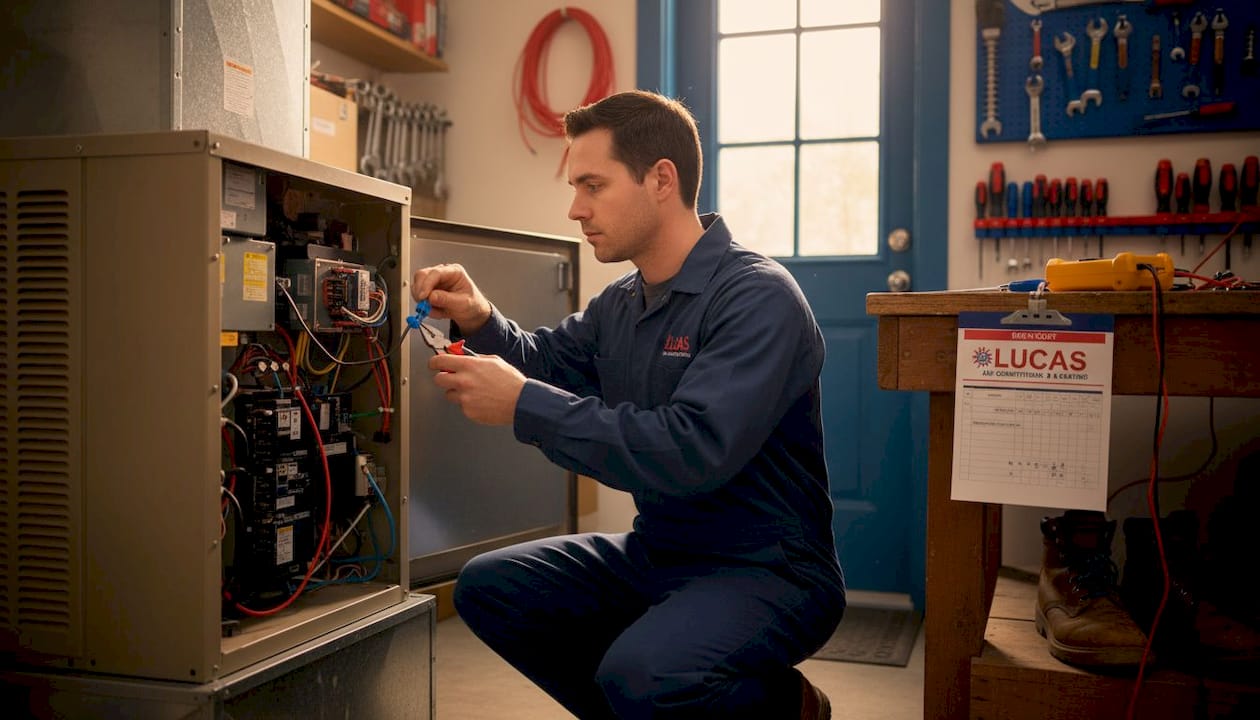
Here’s something most equipment salespeople don’t tell you. Variable-speed compressors achieve their rated SEER much more consistently in real homes compared to single-stage units, and a poor installation can turn a high-SEER unit into a low performer regardless of the rating on the label.
Single-stage systems run at full capacity or they’re off. On mild days when you only need 60% of your system’s cooling power, that single-stage unit still runs at 100% until the thermostat clicks off. It cycles on and off more frequently, wastes energy, and struggles with humidity control. Variable-speed systems modulate output to match the actual demand of your home. That’s how they maintain efficiency close to their rated number in real conditions.
Several factors determine whether your system delivers on its SEER promise:
- System type: Variable-speed systems consistently outperform single-stage in real-world efficiency
- Duct quality: Leaky or poorly insulated ducts can waste 20 to 30% of cooled air before it reaches your rooms
- Refrigerant charge: An overcharged or undercharged system runs less efficiently and wears out faster
- Installation quality: Improper line sizing, poor drainage setup, and incorrect airflow can undercut even the best equipment
- Usage patterns: A home that sets back the thermostat during working hours will see greater savings from efficiency upgrades than one kept at a constant temperature
- Home envelope: Insulation, window quality, and air sealing play a huge role in how hard your HVAC actually has to work
Pro Tip: When getting a new system installed, insist on a Manual J load calculation. This is the industry-standard method for determining the correct size unit for your specific home. Oversized systems short-cycle, undersized ones run constantly, and both scenarios waste money and create comfort problems regardless of SEER rating.
“The difference between a properly installed SEER 16 system and a poorly installed SEER 20 system? The SEER 16 unit wins every time.”
This is exactly why skilled installation and commissioning matter more than most buyers realize. Reviewing energy-saving HVAC tips can help you understand ongoing habits that protect that efficiency after installation. For those interested in newer technology, understanding modern HVAC features for comfort gives a broader view of what today’s systems can do beyond raw SEER numbers.
SEER, EER, and Florida’s commercial standards: What business owners need
For commercial property managers and business owners, the conversation shifts to a different set of ratings entirely. SEER works well for comparing residential split systems, but it doesn’t apply cleanly to larger commercial equipment.
The two key efficiency ratings for commercial HVAC are:
- EER2 (Energy Efficiency Ratio 2): Measures efficiency at a single, specific outdoor temperature (typically 95°F), making it a better comparison point for peak cooling demand in Florida summers
- IEER (Integrated Energy Efficiency Ratio): Accounts for performance across a range of operating conditions, making it more representative of real annual performance for commercial rooftop units and chillers
Commercial managers should note that larger units use EER2 and IEER ratings rather than SEER, and compliance is governed by ASHRAE 90.1, the national standard for energy efficiency in commercial buildings.
Here’s a side-by-side comparison of the three rating systems:
| Rating | Best used for | What it measures | Governed by |
|---|---|---|---|
| SEER/SEER2 | Residential split systems | Seasonal average efficiency | DOE minimum standards |
| EER2 | Commercial/light commercial | Peak efficiency at 95°F | ASHRAE 90.1 |
| IEER | Large commercial equipment | Efficiency at partial loads | ASHRAE 90.1 |
For property managers, IEER is often the most meaningful number because commercial buildings spend most of their operating time at partial cooling loads, not peak demand. A system with a strong IEER performs efficiently even on mild days, which adds up to significant savings across a large facility.
What commercial buyers should check when upgrading or evaluating HVAC systems:
- Verify that equipment meets current ASHRAE 90.1 minimum efficiency requirements for your region
- Prioritize proper system sizing over chasing peak efficiency ratings since an oversized commercial unit creates humidity and comfort problems
- Review maintenance schedules because commercial systems with quarterly service calls consistently outperform neglected high-rated units
- Ask for IEER data, not just SEER or EER, when comparing large rooftop units or split systems above 5 tons
- Consider demand-controlled ventilation and variable refrigerant flow (VRF) technology for larger spaces
Understanding the industrial HVAC maintenance benefits is essential for keeping commercial equipment operating near its rated efficiency year after year. Skipping maintenance is where most commercial property managers lose the efficiency gains they paid for at purchase.
Why SEER ratings are only half the story for Florida homes and businesses
Here’s the perspective that years of working in Central Florida’s climate has given us: the obsession with maximizing SEER rating is often a distraction from what actually drives comfort and savings.
Florida’s heat and humidity are relentless. A system that’s slightly oversized in Minnesota might be annoying. Here, an oversized system is a real problem because it cools the air temperature quickly but doesn’t run long enough to remove humidity. You end up with a home that feels sticky and clammy even at 72 degrees. That’s a SEER 20 system making your home less comfortable than a properly sized SEER 16 would.
We’ve seen homeowners pour money into top-tier equipment only to see minimal bill reduction because their duct system was never addressed. Leaky ducts running through a hot attic in Lake County or Orange County can easily waste 25% of your expensive cooled air. Fixing those ducts before upgrading equipment is often a smarter investment than buying a higher SEER unit.
The most important factor in long-term efficiency? Annual maintenance. A SEER 18 system that gets a tune-up every year runs close to its rated performance for 15 or more years. The same unit neglected for three years might be operating at the equivalent of SEER 13 due to dirty coils, low refrigerant, and clogged filters. Exploring the HVAC upgrade benefits for 2026 shows that the combination of a right-sized system and consistent maintenance delivers the best return, not simply the highest efficiency number.
The real wins come from thoughtful system selection, expert installation, sealing and insulating your duct system, and keeping your system serviced. Chasing the most expensive SEER rating without addressing those fundamentals is like buying a race car and putting discount tires on it.
Ready to optimize your comfort and efficiency?
Making smart SEER decisions requires local expertise that accounts for Central Florida’s unique climate, code requirements, and your specific home or building.

At Lucas Air Conditioning and Heating in Eustis, we help homeowners and property managers navigate exactly these decisions every day. Whether you’re exploring the real HVAC upgrade comfort and costs for your home or reviewing 2026 upgrade benefits before making a purchase, our team brings honest, veteran-owned service to every conversation. From right-sized system selection to professional installation and ongoing HVAC maintenance for home comfort, we make sure your SEER investment actually pays off. Contact us to schedule a consultation and get real answers matched to your property’s needs.
Frequently asked questions
What SEER rating is best for Central Florida homes?
A SEER rating between 16 and 18 balances upfront costs and energy savings for most Florida homes, since diminishing returns appear above SEER 18 to 20 as equipment costs grow faster than utility savings. Proper installation and sizing matter just as much as the rating itself.
Is SEER2 that different from the old SEER standard?
Yes, and the difference matters in real homes. SEER2 uses more realistic testing with higher external static pressure to simulate actual ductwork resistance, so the ratings reflect how a system truly performs in your house rather than in ideal lab conditions.
How can I tell if my current HVAC is efficient?
Check the data tag on your outdoor unit for a SEER number. If your system is below 14, upgrading typically means better efficiency and lower bills since a higher SEER rating means more efficient cooling for each kilowatt-hour consumed.
Do commercial systems use SEER ratings too?
No. Large commercial HVAC systems use EER2 or IEER efficiency ratings instead of SEER, and their efficiency requirements are governed by ASHRAE 90.1 national standards rather than the residential DOE benchmarks.
Will a higher SEER always lower my energy bills?
Not automatically. Variable-speed systems achieve their rated SEER more consistently than single-stage units in real homes, and a poorly installed high-SEER unit can actually underperform a well-installed lower-SEER system. Installation quality, duct condition, and proper sizing all determine your real-world results.
Recommended
- Save on energy costs with HVAC efficiency in 2026 – Lucas Air Conditioning and Heating
- Energy saving HVAC tips for Central Florida: Cut bills 30% – Lucas Air Conditioning and Heating
- How to Choose HVAC System for Energy-Efficient Comfort – Lucas Air Conditioning and Heating
- Energy-saving HVAC tips for Central Florida homeowners – Lucas Air Conditioning and Heating
