
TL;DR:
- Effective HVAC design in Central Florida requires precise load calculations that account for humidity, solar gain, and outdoor air. Properly sized equipment and ductwork, combined with moisture control strategies, ensure energy efficiency and year-round comfort. Insisting on engineering standards like Manual J, S, and D prevents common sizing errors that compromise system performance in humid climates.
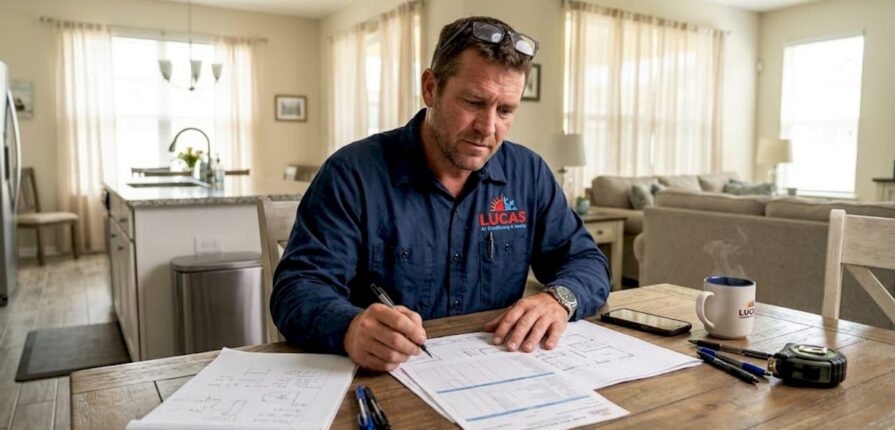
If your energy bills spike every summer and certain rooms never quite reach the right temperature, your HVAC system may not be the problem. The design behind it likely is. Central Florida’s relentless heat and notoriously high humidity create a set of conditions that standard HVAC approaches simply aren’t built to handle well. Humidity control alone is a primary design constraint for every system installed in this region. This guide walks through the most critical HVAC design considerations — backed by engineering standards and field experience — so you can ask better questions and make smarter decisions for your home or property.
Table of Contents
- Core HVAC design considerations for Florida homes
- Manual J load calculation and right-sizing: The foundation
- Managing Florida’s humidity: Latent load and dehumidification
- Duct system design and airflow: Why it matters more than you think
- Ventilation, outdoor air, and filtration: The healthy air trifecta
- Our take: What most HVAC checklists miss in the real world
- Ready to optimize your home’s HVAC design?
- Frequently asked questions
Key Takeaways
| Point | Details |
|---|---|
| Manual J load calculation | Insist on a real, room-by-room Manual J to avoid oversized or undersized equipment. |
| Humidity control matters | Designers must address both temperature and moisture for real comfort in Florida homes. |
| Duct system impacts efficiency | Proper duct design and balancing are as important as equipment selection for true energy savings. |
| Ventilation increases latent load | Bringing in outdoor air can improve quality but needs proper sizing for Florida’s humidity. |
| Choose expert-guided design | Work with pros who provide end-to-end calculations, not just rules of thumb. |
Core HVAC design considerations for Florida homes
With the local design challenge in mind, let’s lay out the most critical criteria that guide truly effective HVAC design in Central Florida.
Every effective HVAC design starts with the same foundation: understanding exactly how much heating and cooling a specific home actually needs. In Florida, that calculation is more complex than most people realize, because you’re not just dealing with summer heat. You’re fighting moisture, solar gain through large windows, and outdoor air that can feel like a sauna nine months out of the year.
The criteria that matter most for Central Florida homes include:
- Manual J load calculation — a room-by-room analysis of heat gain and loss
- Humidity and latent load management — how much moisture the system removes
- Right-sizing equipment — avoiding units that are too big or too small
- Duct system design — using Manual D to size airflow and minimize pressure drop
- Ventilation and outdoor air intake — balanced fresh air without overloading the system
- Filtration selection — matching filters to your indoor air quality goals
- Sensible heat ratio (SHR) — evaluating how well equipment handles both temperature and moisture
The ACCA Manual J, S, and D workflow ties all of these together into a reliable engineering process rather than a series of guesses. These aren’t optional add-ons. They’re the standard.
Pro Tip: When interviewing HVAC contractors, ask specifically if they perform the full Manual J, S, and D process. If they quote you based on square footage alone, that’s a red flag. Rule-of-thumb sizing is one of the most common sources of long-term comfort complaints and unnecessary energy costs.
Getting Manual J calculation guidance right from the start shapes every decision that follows, from what equipment you install to how your ducts are laid out.
Manual J load calculation and right-sizing: The foundation
Now, let’s examine how Manual J load calculations and equipment right-sizing set the stage for every other design choice.
Manual J is not a shortcut. It’s a detailed, room-by-room engineering process that accounts for insulation levels, window area and orientation, ceiling heights, internal heat sources like appliances and occupants, and local climate data. The result is a specific number: how many BTUs per hour your home needs to stay comfortable at peak conditions.
Accurate load calculations prevent the two most common sizing mistakes: oversizing and undersizing. Here’s how a proper Manual J process should unfold with your HVAC professional:
- Gather building envelope data — insulation R-values, window types and orientations, air leakage estimates, ceiling heights, and floor plan square footage for each zone.
- Input local climate data — Central Florida design temperatures and humidity levels, which reflect the worst-case conditions your system needs to handle.
- Calculate sensible and latent loads separately — sensible load (temperature-based) and latent load (moisture-based) must be calculated as independent numbers, not lumped together.
- Select equipment using Manual S — once loads are known, equipment is chosen based on its rated performance at your actual design conditions, not manufacturer defaults.
- Design the duct system using Manual D — airflow to each room is calculated to match the room’s load, not just split evenly.
“An oversized system will short-cycle, running briefly and shutting off before it can remove enough moisture from the air. The temperature may feel acceptable, but the humidity remains high, making the home feel uncomfortable and promoting mold growth.”
Oversizing is a particularly sneaky problem in Florida. When choosing efficient HVAC systems, bigger is almost never better here. A properly sized system runs longer cycles at lower intensity, which is exactly what pulls moisture out of the air effectively.
Managing Florida’s humidity: Latent load and dehumidification
Once right-sizing is handled, addressing Florida’s serious humidity load is essential for true year-round comfort.
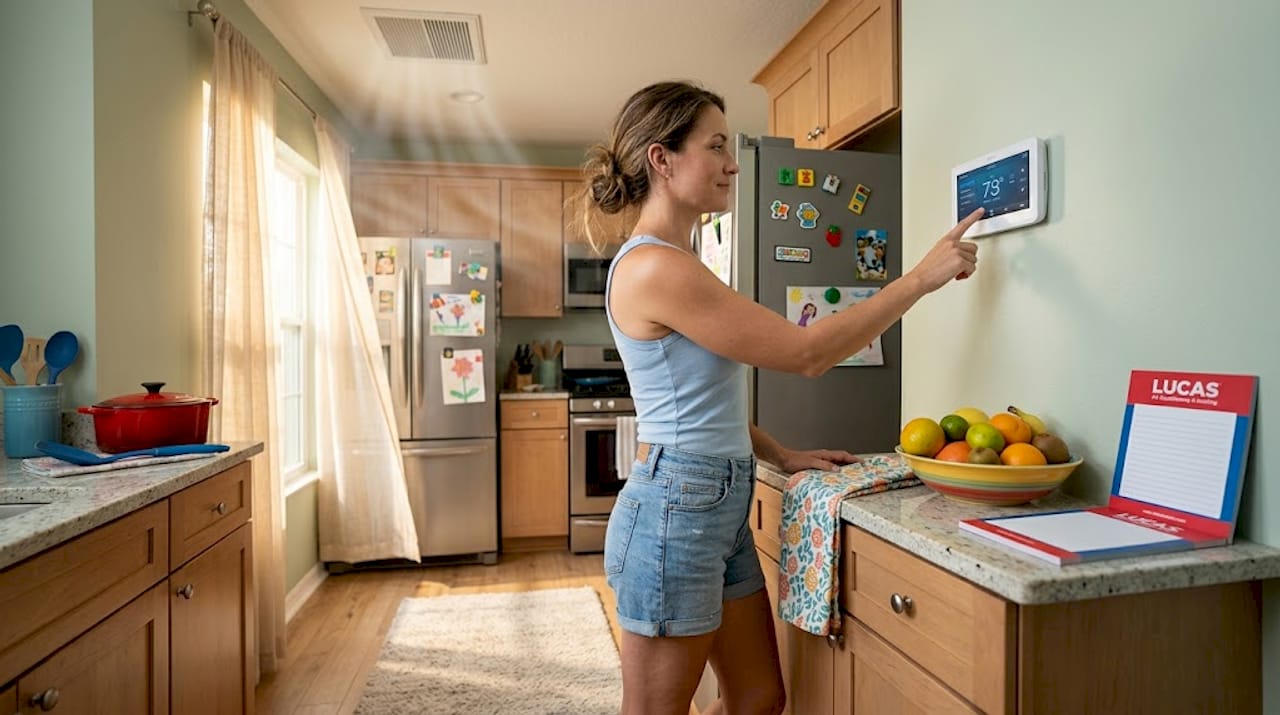
Here’s a simple way to think about it. Your thermostat measures sensible load, which is the heat you feel and a thermometer can read. But your discomfort in Florida is often caused by latent load, which is the invisible moisture in the air that makes 78°F feel unbearable. Two different homes at the same temperature can feel completely different depending on relative humidity.
Latent loads can represent 30 to 40% of total cooling demand during peak summer in Central Florida. That’s a massive share of your system’s workload, and most generic sizing approaches ignore or underestimate it. Equipment that only meets the temperature setpoint while ignoring moisture will leave you with a cool but clammy house.
Oversized systems in humid climates make this worse. They cool the air quickly and shut off before the coil has time to condense and drain moisture. This is called short-cycling, and it’s a humidity disaster in slow motion.
| Design approach | Temperature outcome | Humidity outcome | Energy use | Comfort rating |
|---|---|---|---|---|
| Proper Manual J with SHR review | Meets setpoint consistently | Stays at or below 50% RH | Optimized | High |
| Oversized system, no SHR check | Reaches setpoint quickly | Often stays above 60% RH | Wasteful | Low |
| Undersized system | Struggles to meet setpoint | Very high humidity | Excessive | Very low |
| Correctly sized with dehumidifier | Exceeds expectations | Stays at 45 to 50% RH | Slightly higher | Very high |
The sensible heat ratio (SHR) is a number between 0 and 1 that tells you how much of a unit’s cooling capacity goes toward reducing temperature versus removing moisture. A lower SHR means the system removes more moisture relative to heat. In Florida, you generally want equipment with an SHR in the range of 0.70 to 0.75 to handle the humidity design constraint of this region effectively.
Pro Tip: Ask your contractor to show you the equipment’s SHR at your specific design conditions, not just at the standard ARI rating conditions. The rated SHR at 80°F and 67°F wet bulb is not the same as performance at Central Florida’s actual conditions.
When selecting systems for humidity control, variable-speed equipment and two-stage compressors tend to perform far better than single-stage units in humid climates, because they run longer, lower-intensity cycles that give the coil more time to remove moisture.
Duct system design and airflow: Why it matters more than you think
Beyond the equipment itself, your ductwork delivers — or destroys — real-world system results.
Most homeowners focus entirely on the air handler and condenser. But a perfectly selected piece of equipment attached to a poorly designed duct system will underperform from day one. Manual D, the gold standard for duct design, addresses static pressure, duct sizing, branch layout, and room-by-room airflow to ensure the right amount of conditioned air reaches every space.
Here’s what good duct design actually produces in practice:
| Duct scenario | Static pressure | CFM at farthest register | Noise level | Comfort |
|---|---|---|---|---|
| Manual D designed, properly sealed | Within rated range | Meets room load | Quiet | Consistent |
| Undersized trunk line | High pressure | Below target | Noisy at grilles | Uneven |
| Oversized ducts with poor velocity | Low pressure | Weak delivery | Minimal noise | Poor mixing |
| Leaky ducts in unconditioned attic | Variable and low | Severely reduced | Variable | Very poor |
In Central Florida, leaky ducts running through hot attic spaces are one of the single biggest sources of energy waste. When conditioned air leaks into an unconditioned attic that reaches 140°F or more in summer, you’re essentially air conditioning your attic. That’s energy you’re paying for that never reaches a living space.
Duct layout problems to avoid in Florida homes include:
- Long duct runs with sharp turns that increase resistance and reduce airflow
- Ducts installed in unconditioned attic space without proper insulation wrapping
- Supply and return registers that aren’t balanced to room-specific load calculations
- Flexible duct that’s compressed or kinked, reducing effective diameter
- No return air pathway, which pressurizes rooms and forces conditioned air out of the building
Proper duct cleaning best practices also matter over the life of the system. A well-designed duct system that’s kept clean maintains consistent airflow performance for years, while neglected ducts accumulate debris that chokes airflow and degrades indoor air quality.
Ventilation, outdoor air, and filtration: The healthy air trifecta
Finally, let’s cover the healthy air essentials: how your system brings in, cleans, and manages fresh air for everyone inside.
Building ventilation standards require a minimum amount of outdoor air to be introduced into conditioned spaces. In a sealed, energy-efficient home, that outdoor air isn’t optional. Without it, indoor air quality degrades from carbon dioxide buildup, off-gassing from building materials, and accumulated allergens.
The challenge in Central Florida is that every cubic foot of outdoor air you bring in during summer carries a significant moisture load. This means ventilation decisions directly affect your latent load calculation and must be treated as a design input, not an afterthought.
Best practices for ventilation, outdoor air, and filtration in Central Florida homes:
- Size outdoor air intake based on actual occupancy, not maximum building capacity, to avoid unnecessary latent load
- Use energy recovery ventilators (ERVs) when possible to precondition incoming outdoor air, reducing both temperature and moisture before it enters the system
- Select filtration with MERV ratings appropriate to your needs — MERV 8 to 13 covers most residential needs without excessive pressure drop
- Avoid over-filtering — a MERV 16 filter in a system not designed for it restricts airflow and reduces efficiency significantly
- Place return air intakes strategically to avoid pulling air directly from garages, utility rooms, or crawl spaces
Understanding how HEPA filters trap allergens is useful if someone in your home has respiratory sensitivities, but hospital-grade filtration in a residential system often creates more airflow problems than it solves. Match your filter choice to your actual needs.
Pro Tip: Filtration and ventilation are where homeowners and even some contractors cut corners most often. These elements directly affect real estate and HVAC comfort considerations, especially if you’re managing a rental property where air quality complaints can drive costly turnover.
Our take: What most HVAC checklists miss in the real world
Let’s step back and share why our team sees so many missed opportunities and systemic errors in regional HVAC checklists.
Here’s the uncomfortable reality: most homeowners in Central Florida get a sizing conversation that lasts about five minutes, followed by a quote based on square footage and whatever equipment the contractor has on hand. That’s not design. That’s guessing with paperwork attached.
The full Manual J, S, and D workflow isn’t just a better approach. It’s the only approach that accounts for the actual interplay between your building, your equipment, and the brutal humidity of a Central Florida summer. When those three pieces don’t talk to each other, you get systems that cool acceptably but never get humidity under control. You get rooms that are always too warm or too cold. You get energy bills that don’t match what the equipment’s efficiency ratings promised.
Checklist advice published online typically covers the obvious stuff: change your filter, schedule a tune-up, don’t block registers. That’s maintenance, not design. What those lists miss is the specific way that sensible heat ratio, part-load performance, and duct static pressure interact in a hot, humid climate. It’s a compounding problem. A slightly oversized system short-cycles. Short-cycling reduces moisture removal. Poor humidity control makes occupants lower the thermostat. Lower thermostat settings increase runtime. Runtime increases energy costs. And none of it gets blamed on the original sizing error.
The fix isn’t complicated, but it does require insisting that your contractor shows their work. Ask to see the Manual J outputs. Ask what SHR the selected equipment achieves at your design conditions. Ask how duct sizing was determined. These questions cost you nothing but time, and they protect you from years of underperforming comfort and overpaying for energy.
Our perspective, built from serving Central Florida homeowners since 2018: the most valuable energy-saving tips for Florida homes all trace back to getting the design right before installation. And for property managers overseeing HVAC in rental properties, the calculation is even clearer. One properly designed system reduces service calls, increases tenant satisfaction, and extends equipment life considerably.
Ready to optimize your home’s HVAC design?
Now that you’re equipped with the most important design considerations, here’s where Central Florida homeowners and property managers can get step-by-step guidance and support for flawless HVAC results.
At Lucas Air Conditioning and Heating, we’ve been helping Central Florida homeowners and property managers navigate these decisions since 2018. Our team follows the full engineering workflow on every project — not shortcuts.
Whether you need a detailed walkthrough of the step-by-step HVAC installation process, are ready to explore residential and commercial installation options tailored to your property, or want to lock in long-term performance with HVAC preventative maintenance, Lucas Air is ready to help. Call us or schedule online to get a real design conversation started. No guesswork, no rule-of-thumb quotes. Just honest, field-proven HVAC guidance built for Central Florida.
Frequently asked questions
What is a Manual J load calculation and why is it important?
A Manual J load calculation is an engineering process that determines your home’s exact heating and cooling needs, ensuring your HVAC system isn’t too large or too small. Without it, contractors are guessing, and in Florida’s climate, wrong guesses cost you in comfort and energy every single month.
Why does humidity matter so much in Central Florida HVAC design?
Florida’s high humidity means cooling isn’t enough — your system must also be engineered to remove moisture, or you’ll face mold risk, sticky air, and inflated energy bills. Humidity is a primary design constraint in this region, not a secondary concern.
What’s the difference between sensible and latent load in HVAC terms?
Sensible load is the heat you feel and measure with a thermometer; latent load is hidden moisture that requires dehumidification to remove. In Florida, treating latent load as an engineering requirement rather than an afterthought is what separates comfortable homes from clammy ones.
How can poor ductwork design affect my home’s HVAC performance?
Undersized or leaky ducts reduce airflow, cut efficiency, and create uneven temperatures throughout your home. Poor duct design can negate even the best equipment’s performance, especially when ducts run through unconditioned attic spaces.
How does outdoor air intake affect humidity in Florida homes?
Higher outdoor air intake increases the moisture load on your system significantly, which is why outdoor air becomes a dominant latent load in humid climates like Central Florida. Accurate dehumidification design and proper equipment sizing become even more critical when ventilation requirements are factored in.
Recommended
- HVAC considerations for real estate in Central Florida – Lucas Air Conditioning and Heating
- Energy-saving HVAC tips for Central Florida homeowners – Lucas Air Conditioning and Heating
- Role of HVAC in rental properties: Central Florida guide – Lucas Air Conditioning and Heating
- Commercial HVAC standards for Central Florida properties – Lucas Air Conditioning and Heating
