

TL;DR:
- Proper ventilation, staged filtration, and humidity control are key to maintaining safe restaurant indoor air quality. Regular maintenance and documentation prevent build-up of pollutants and ensure compliance with health standards. Effective systems capture contaminants at the source and keep dining environments comfortable and safe.
Restaurant indoor air quality is defined as the measurable condition of air inside your dining and kitchen spaces, covering pollutant levels, humidity, odor, and ventilation adequacy. Getting it right matters more than most owners realize. Poor air drives customers out, puts staff health at risk, and can trigger health code violations. The good news: knowing how to improve indoor air quality in a restaurant comes down to three controllable factors. You need the right ventilation system, the right filtration stack, and a maintenance routine that keeps both working. Standards like NFPA 96 (fire and grease duct safety) and DW/172 (ventilation design for commercial kitchens) give you the technical benchmarks. Your HVAC system is the engine that ties it all together.
What are the main sources of indoor air pollution in restaurants?
Restaurant kitchens generate a concentrated mix of pollutants that most office buildings never see. Grease particles, smoke aerosols, cooking odors, and moisture all release simultaneously during service. Without proper controls, these contaminants migrate from the kitchen into the dining room within minutes.
The primary culprits break down into four categories:
- Grease particles and smoke aerosols. High-heat cooking produces fine grease droplets that coat ductwork and filters. Smoke aerosols carry particles as small as 10 microns, which standard filters miss entirely.
- Cooking odors. Volatile organic compounds (VOCs) from frying, grilling, and sautéing create persistent smells that linger in upholstery, walls, and HVAC ducts.
- Moisture and humidity. Steam from dishwashers, boiling pots, and open cooking surfaces raises relative humidity rapidly. Unchecked moisture creates clammy dining conditions and feeds mold growth inside ductwork.
- Carbon dioxide (CO2) buildup. A full dining room with poor fresh-air supply causes CO2 to climb, producing the drowsy, stuffy feeling that shortens customer visits.
These pollutants do not stay in the kitchen. Negative pressure, caused by exhaust running without balanced makeup air, actively pulls kitchen air into dining spaces. The result is odor contamination and potential sewer gas infiltration through floor drains.
Pro Tip: Install a CO2 monitor in your dining room. If readings climb above 1,000 parts per million during peak service, your fresh-air supply is insufficient and guests are already feeling it.
How can effective ventilation improve restaurant air quality?
Ventilation is the single most powerful tool for controlling restaurant air pollution. A well-designed system removes contaminants at the source before they spread, rather than trying to clean them out of the dining room after the fact.
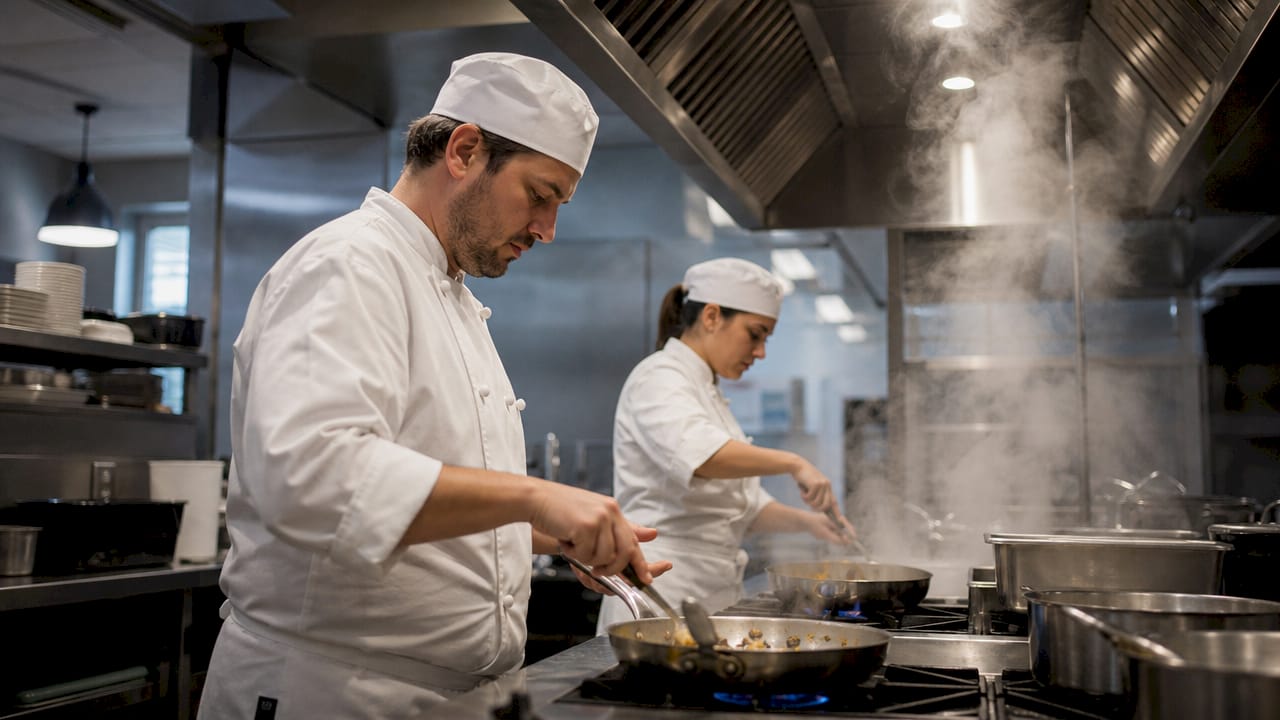
The foundation of any kitchen ventilation system is the exhaust hood. Hood design determines whether pollutants get captured or escape into the space. Kitchen exhaust hoods must maintain a capture velocity of at least 100 feet per minute across cooking surfaces to effectively pull smoke and grease into the exhaust stream. That 100 fpm standard is not a suggestion. Drop below it and grease migrates into the dining room regardless of how powerful your filters are.
The DW/172 method provides the engineering framework for sizing canopy hoods and calculating airflow balance. It accounts for the type of cooking equipment, heat output, and the geometry of the hood relative to the cooking surface. Skipping this calculation and guessing at hood size is the most common design mistake in restaurant HVAC.
Makeup air units (MAUs) are equally critical. Proper makeup air interlocked with exhaust hoods prevents the negative pressure that causes sewer gas infiltration and door resistance. When exhaust removes air from the kitchen, replacement air must enter at the same rate. Without that balance, your kitchen operates under negative pressure, pulling air from every gap and drain in the building.
Zoning your ventilation system separates kitchen and dining needs effectively. Separate zones allow heavy exhaust in the kitchen while maintaining steady conditioned air in the dining room for comfort and odor control. This separation prevents the kitchen’s aggressive exhaust from disrupting the dining room’s air balance.
Prioritizing capture efficiency over sheer airflow volume in open kitchens maintains air quality and guest comfort. A hood that moves enormous volumes of air but lacks proper capture velocity wastes energy and still lets grease escape. Size for capture first, then calculate total airflow.
Demand-controlled ventilation adjusts fan speed to match actual cooking activity, increasing energy efficiency and reducing noise during slow periods. This technology pays for itself quickly in energy savings while keeping the dining room quieter during off-peak hours.
What filtration and odor control methods work best in restaurants?
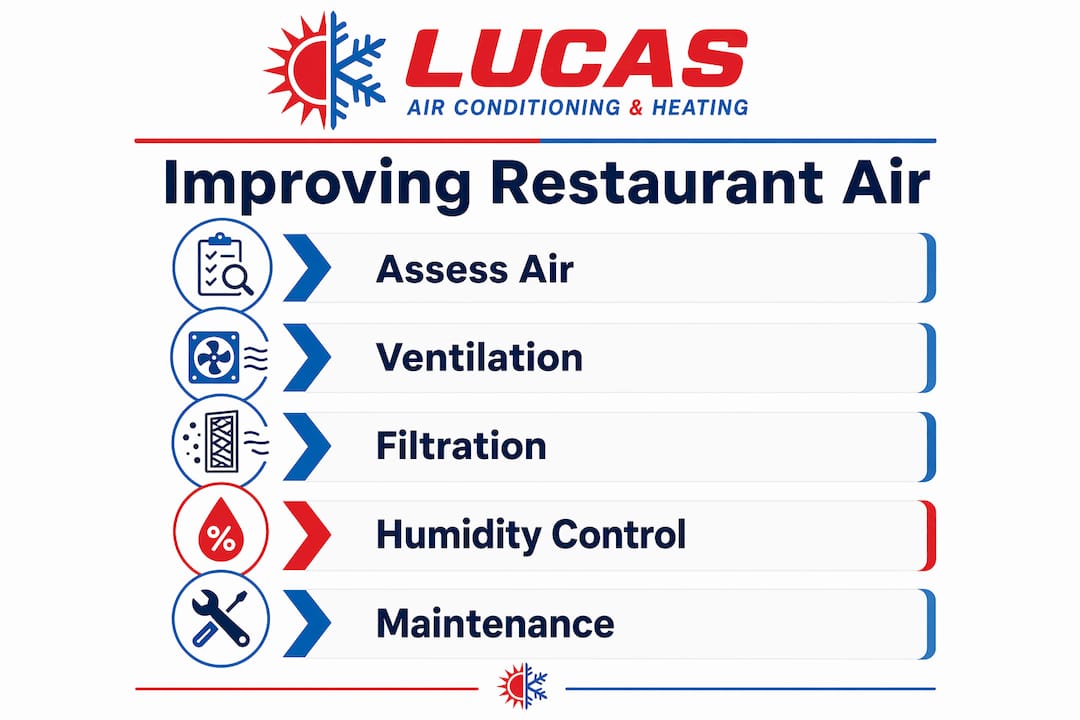
Filtration in a restaurant is not a single product decision. It is a staged system where each layer handles a specific pollutant type. Skipping a stage forces the next filter to handle work it was not designed for, shortening its life and reducing effectiveness.
The most effective restaurant air purification approach uses three sequential layers:
- Baffle grease filters in the exhaust hood capture the bulk of grease particles before they enter the ductwork. These are the first line of defense and require weekly cleaning in high-volume kitchens.
- Electrostatic precipitation or UV-C treatment handles the fine particles and smoke aerosols that pass through baffle filters. UV-C treatment breaks down organic compounds and reduces microbial contamination in the airstream. Electrostatic precipitators charge particles and collect them on plates, which need regular cleaning to maintain efficiency.
- Carbon filters at the final stage neutralize residual odors before air exhausts to the atmosphere or recirculates. Carbon polishing is what prevents the “restaurant smell” from saturating the neighborhood and your dining room.
Staged odor filtration preserves media life and controls smells effectively. When grease-laden air hits a carbon filter directly, the carbon saturates within days. The baffle and electrostatic stages protect the carbon, extending its service life from weeks to months.
Pro Tip: Track filter replacement dates in a log, not just by feel. Grease buildup is not always visible, and a clogged filter that looks clean from the outside can be 60% blocked internally.
| Filtration stage | Pollutant targeted | Maintenance frequency |
|---|---|---|
| Baffle grease filter | Grease particles | Weekly cleaning |
| Electrostatic or UV-C | Fine particles, smoke, microbes | Monthly plate cleaning or UV lamp check |
| Carbon filter | Residual odors, VOCs | Replace per manufacturer schedule |
For the dining room, high-efficiency pleated filters rated MERV 13 or higher in your HVAC air handlers capture fine particles before conditioned air reaches guests. MERV 13 filters stop particles down to 1 micron, covering most smoke aerosols and airborne allergens. Check these monthly and replace them on a fixed schedule, not when they look dirty.
How do you manage humidity to maintain comfort and air quality?
Humidity control is the most overlooked element of restaurant air quality management. Owners invest in exhaust hoods and filters but ignore the moisture pouring off dishwashers, steam tables, and open cooking pots. The consequences show up as mold in ductwork, peeling paint, and the clammy feeling that makes guests uncomfortable before they even look at the menu.
Maintaining humidity between 30–50% discourages mold and bacterial growth that directly affects indoor air quality and occupant health. That range applies to both the dining room and kitchen, though achieving it in a kitchen requires dedicated dehumidification rather than relying on the dining room HVAC.
Key humidity control practices for restaurants include:
- Monitor dew point, not just relative humidity. Relative humidity readings shift with temperature. Dew point gives you a stable measure of actual moisture content in the air, which is what drives mold growth.
- Use dedicated dehumidification in kitchen zones. Standard rooftop HVAC units are not designed to handle kitchen moisture loads. Hot gas reheat systems within commercial rooftop units remove moisture without overcooling the space.
- Inspect ductwork for condensation annually. Moisture inside ducts creates the conditions for mold colonies that then distribute spores throughout the dining room every time the fan runs.
- Seal kitchen penetrations. Every pipe, conduit, and duct penetration through kitchen walls is a path for humid air to enter wall cavities and cause hidden mold damage.
Ignoring humidity control invites mold growth and degrades occupant comfort, and most owners overlook it despite its direct operational impact. A single mold finding during a health inspection can trigger a temporary closure, which costs far more than a dehumidification upgrade.
What maintenance and monitoring practices keep air quality compliant?
A well-designed system that goes unmaintained degrades quickly. Restaurant HVAC and ventilation systems operate under far heavier loads than residential or office systems. Grease accumulates, filters clog, and belts wear faster. The maintenance schedule must reflect that reality.
Follow these steps to keep your system compliant and effective:
- Clean grease ducts per NFPA 96 schedules. High-volume kitchens require quarterly duct cleaning. Moderate-volume operations typically need semi-annual cleaning. The schedule depends on cooking type and volume, not calendar preference.
- Replace HVAC filters on a fixed schedule. Set calendar reminders rather than waiting for visible dirt. In a restaurant, filters reach capacity faster than the schedule on the packaging assumes.
- Service exhaust hood fans and belts every six months. A slipping belt reduces fan speed, which drops capture velocity below the 100 fpm minimum and lets grease escape into the duct system.
- Install and monitor CO2 and air quality sensors. Real-time data tells you when ventilation is underperforming before guests start complaining. Place sensors at seated height in the dining room, not near supply vents.
- Document everything. Health and fire inspections verify service records for duct cleaning and maintenance. Missing documentation can cause closure even when the equipment is actually clean. Keep dated service reports, filter replacement logs, and cleaning certificates on file.
Thorough documentation of duct cleaning and maintenance activities is as critical as performing them for passing inspections and avoiding business interruption. An inspector who cannot verify a cleaning happened will treat it as if it never happened. Learn more about restaurant duct cleaning requirements and how they connect to your compliance obligations.
Negative pressure is the most common maintenance-related air quality failure. When makeup air dampers fail or get blocked, the kitchen goes negative and begins pulling air from the dining room, bathrooms, and floor drains. Check makeup air unit operation every time you service the exhaust system.
Key Takeaways
Effective restaurant air quality management requires combining properly sized ventilation, staged filtration, active humidity control, and documented maintenance into a single coordinated system.
| Point | Details |
|---|---|
| Ventilation is the foundation | Exhaust hoods must hit 100 fpm capture velocity; makeup air must balance exhaust to prevent negative pressure. |
| Staged filtration protects media life | Use baffle filters, then electrostatic or UV-C, then carbon to control grease, particles, and odors in sequence. |
| Humidity range is 30–50% | Staying within this range prevents mold in ductwork and keeps dining conditions comfortable for guests. |
| Documentation is compliance | Inspection failures happen due to missing records, not just dirty equipment. Log every service visit. |
| Zone kitchen and dining separately | Separate ventilation zones let you run heavy exhaust in the kitchen without disrupting dining room comfort. |
What I’ve learned from years of restaurant HVAC work
The biggest mistake I see restaurant owners make is treating air quality as a one-time equipment purchase. They install a good hood system, check the box, and move on. Six months later, the grease filters are saturated, the makeup air damper is stuck, and the dining room smells like last Tuesday’s fish special. The hardware is only as good as the routine behind it.
The second pattern I see constantly is owners who focus on airflow volume instead of capture efficiency. Bigger fans do not fix a hood that is the wrong size or positioned too high above the cooking surface. The role of ventilation in kitchens is to capture pollutants at the source, not to dilute them after they escape. That distinction changes how you evaluate every upgrade decision.
Humidity also gets ignored until there is a visible mold problem. By that point, the remediation cost dwarfs what a dehumidification upgrade would have cost two years earlier. Monitor dew point, not just temperature, and treat moisture as seriously as you treat grease.
Finally, documentation is not paperwork for its own sake. It is your proof of due diligence when an inspector walks through the door. Restaurants that maintain clean records sail through inspections. Those that cannot produce a duct cleaning certificate from the past quarter face consequences regardless of how clean the duct actually is.
— Lucasair
Lucasair supports restaurant air quality from design to maintenance
Restaurant owners in Central Florida trust Lucasair for commercial HVAC work that goes beyond installation. Lucasair designs and installs ventilation systems sized to your kitchen’s actual cooking load, not a generic template.
From preventative maintenance agreements that keep your filters, fans, and makeup air units on schedule, to full commercial HVAC installation for new or renovated restaurant spaces, Lucasair covers the full scope. The team understands NFPA 96 compliance requirements and documents every service visit so your inspection records stay current. Call Lucasair to schedule a commercial air quality assessment for your restaurant.
FAQ
What causes poor air quality in restaurant dining rooms?
Poor dining room air quality most often results from negative pressure caused by exhaust running without balanced makeup air, which pulls kitchen pollutants and sewer gases into the dining space. Inadequate fresh-air supply and clogged filters compound the problem.
How often should restaurant grease ducts be cleaned?
NFPA 96 requires high-volume kitchens to clean grease ducts quarterly and moderate-volume operations semi-annually. The actual schedule depends on cooking type and hours of operation.
What is the ideal humidity level for a restaurant?
Indoor humidity between 30–50% prevents mold growth, discourages bacterial contamination, and keeps dining conditions comfortable for guests and staff.
Does UV-C filtration actually work in commercial kitchens?
UV-C treatment breaks down organic compounds and reduces microbial contamination in the airstream. It works best as the second stage in a layered filtration system, after baffle grease filters and before carbon odor polishing.
What documentation do health inspectors check for air quality compliance?
Inspectors verify dated records of grease duct cleaning, HVAC filter replacements, and hood system servicing. Missing documentation can result in closure even when the physical equipment meets standards.
Recommended
- How to Improve Indoor Air Quality at Home – Lucas Air Conditioning and Heating
- Indoor air quality: improve comfort and health at home – Lucas Air Conditioning and Heating
- Role of air quality in hospitality: a Central Florida manager’s guide – Lucas Air Conditioning and Heating
- Top HVAC Upgrades for Restaurants: Boost Efficiency – Lucas Air Conditioning and Heating
