
TL;DR: A proper new AC installation follows a clear sequence: load calculation, equipment selection, permitting, removal of the old system, installation, startup testing, and inspection. Knowing each step helps Lake and Orange County homeowners avoid common mistakes like oversized units, skipped permits, or mismatched components.
Replacing a central air conditioner in Central Florida is a bigger job than swapping an appliance. Between our heat, humidity, and the age of homes across Tavares, Clarcona, Astor, Paisley, Grand Island, and Zellwood, a correctly installed system makes the difference between years of reliable comfort and a unit that struggles, short-cycles, or fails early.
Here’s exactly what a proper new AC installation process looks like, step by step, so you know what to expect and what questions to ask before a crew ever touches your equipment.
What You’ll Need Before Installation Day
- Access to your attic, closet, or mechanical room where the air handler or furnace sits
- Clear space around the outdoor condenser pad
- Your most recent electric bill (helps estimate load and efficiency gains)
- Any HOA architectural guidelines, if you’re in a deed-restricted community like many in The Villages or Mount Dora
- A decision on financing if you’re using a plan like KwikComfort
The New AC Installation Process, Step by Step
-
Step 1: In-Home Load Calculation and System Sizing
A reputable contractor doesn’t guess at tonnage by square footage alone.
ACCA Manual J is the standardized procedure for computing the heating and cooling loads of a home, and it is referenced by the International Residential Code and required by most U.S. building departments
.
Manual J uses the location’s 1% cooling design dry-bulb temperature rather than the all-time record high, because sizing to the hottest hour in a decade would oversize the unit for the rest of the season
. In our climate, this calculation accounts for insulation, window exposure, ceiling height, and duct condition — not just the size of the house. ENERGY STAR itself
only requires that sizing, air flow, and refrigerant charge be verified
for a system to qualify as a top-tier, efficient installation. -
Step 2: Equipment Selection and Written Proposal
Based on the load calculation, your technician recommends a system type — split system, package unit, two-stage, inverter, or ductless mini-split — matched to your home’s layout and your budget. You should receive a written proposal listing the exact equipment model, SEER2 rating, warranty terms, and total price before any work begins. Lucas Air Conditioning and Heating provides free estimates on new installations, with pricing starting at $7,500 and including the unit, permit, a one-year labor guarantee, and a ten-year parts warranty.
-
Step 3: Permit Pulled With the County
The Florida Building Code is very clear that any work involving installing, removing, or replacing an air conditioning system requires a permit, whether it’s a full system swap or just replacing a major component like the condenser or air handler
.
Each Florida county maintains a different process for obtaining the permit, but if you’ve hired an HVAC contractor, the contractor will likely obtain it on your behalf
. Skipping this step isn’t a shortcut worth taking:
properties without a permit likely won’t pass inspection, and owners might be fined or required to redo the work at their own expense
. A licensed contractor pulling permits for Lake and Orange County jobs is non-negotiable, and it’s built into every Lucas Air installation. -
Step 4: Removal of the Old Equipment
Technicians recover refrigerant from the old system per EPA regulations, then disconnect and remove the old condenser, air handler or furnace, and any components being replaced. This is also when they’ll inspect existing ductwork, electrical disconnects, and the condensate drain line for issues that need addressing before the new unit goes in — common in older homes around Eustis, Leesburg, and Umatilla.
-
Step 5: Setting the New Equipment
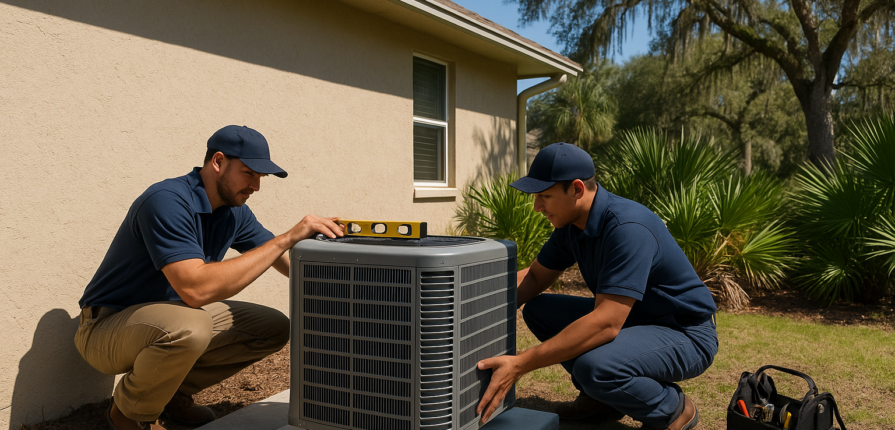
The outdoor condenser is set on a level pad with proper clearance for airflow and service access. The indoor air handler or coil is installed, matched to the outdoor unit per manufacturer specs. Split-system components must be a matched assembly to perform at their rated efficiency, which is why mixing an old indoor coil with a new outdoor unit is a mistake some unlicensed installers make to save money.
-
Step 6: Line Set, Electrical, and Ductwork Connections
New or flushed refrigerant line sets are connected and pressure-tested for leaks. Electrical disconnects, breakers, and low-voltage control wiring are installed or verified to code. If ducts are undersized, leaky, or contributing to uneven cooling, this is the point to address them — a new unit can’t overcome a bad duct system.
-
Step 7: Startup, Charging, and Airflow Verification
The system is powered on, refrigerant charge is verified against manufacturer specifications, and airflow is measured at the registers. This step matters more than most homeowners realize — proper charge and airflow are what separate a system that hits its rated SEER2 from one that underperforms and costs more to run every month.
-
Step 8: Thermostat Setup and Walkthrough
Your new or smart thermostat is installed and programmed. A good technician walks you through operation, filter location and size, and what regular maintenance looks like — including scheduling your first tune-up.
-
Step 9: Final County Inspection
The local building department inspects the completed installation against the permit. This independent check confirms the work meets Florida Building Code requirements for electrical, refrigerant, and structural safety.
-
Step 10: Paperwork and Warranty Registration
You should receive your permit closeout documentation, equipment manuals, and warranty registration confirmation. Keep these — they matter for insurance, resale, and any future warranty claims.
Common Mistakes to Avoid
- Skipping the load calculation. An oversized unit cools fast but doesn’t run long enough to remove humidity — a real problem in our climate.
- Hiring an unlicensed installer to save money.
Most major HVAC equipment manufacturers state their warranties only cover defective parts, and some warranties require that equipment be installed by a licensed HVAC contractor
. - Letting someone skip the permit.
Permits aren’t just paperwork — they’re your legal and safety safeguard
, and
permitted installs make inspection, appraisal, and buyer confidence easier down the road
. - Ignoring the ductwork. New equipment connected to old, leaky, or undersized ducts rarely performs as advertised.
- Not asking about matched components. Mismatched indoor and outdoor units can void efficiency ratings and warranties.
Local Factors That Affect Your Installation
Homes in Astor and Grand Island near the water often deal with higher humidity loads, which affects sizing. Older homes in Paisley, Zellwood, and Clarcona may need electrical panel upgrades to support newer high-efficiency equipment. And many communities in and around The Villages and Mount Dora have HOA rules about condenser placement and screening — worth checking before installation day.
If your current system is already struggling, it’s worth troubleshooting before assuming you need full replacement. Our guide on 8 reasons your AC isn’t cooling enough walks through common fixable issues, and if you’re hearing strange sounds, what different AC noises mean can help you figure out whether it’s a repair or a sign the system is done.
Ready to talk about a new system? Lucas Air Conditioning and Heating offers free estimates on new installations throughout Lake and Orange County, and seasonal specials are often available — check our current promotions before you book.
Recommended Reads
- HVAC Contractor in Tavares, FL
- Landing Page for Seasonal Specials – Online Booking – Lucas Air Conditioning and Heating
- Landing Page for Seasonal Specials – Lucas Air Conditioning and Heating
Sources
- energystar.gov
- mepcalculators.com
- floridahvacspecialists.com
- davidgrayonline.com
- hvac-replacement-broward-county-fl.com
- rolandoshvac.com
