
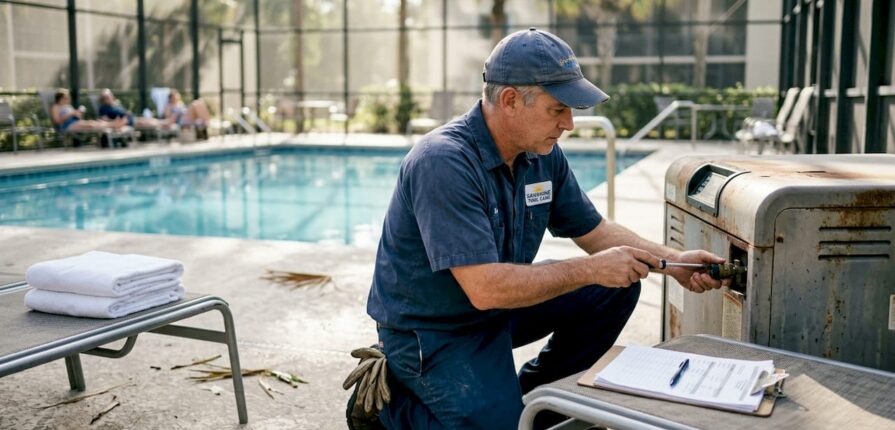
Many business owners in Central Florida assume pool heater repair is straightforward, treating commercial systems like residential units. This misconception leads to costly breakdowns, regulatory violations, and unhappy guests or residents. Commercial pool heaters operate under stricter Florida codes, face unique water quality challenges, and require specialized licensing. Understanding the nuances of repair methodologies, cost thresholds, and preventive maintenance specific to Central Florida’s climate protects your investment and ensures uninterrupted comfort. This guide clarifies definitions, technical processes, decision frameworks, and compliance requirements to help you maintain optimal pool heating performance.
Table of Contents
- What Is Pool Heater Repair For Businesses In Central Florida?
- Core Repair Methodologies And Common Technical Issues
- Making The Repair Versus Replacement Decision
- Best Practices For Maintaining Commercial Pool Heaters In Central Florida
- Explore Professional Pool Heater Repair And Maintenance Services
- Frequently Asked Questions
Key takeaways
| Point | Details |
|---|---|
| Definition and scope | Commercial pool heater repair covers gas, heat pump, and solar systems under Florida Administrative Code for hotels, HOAs, apartments, and gyms. |
| Common failure causes | Hard water scaling, low flow from dirty filters, and ignition faults dominate Central Florida commercial pool heater issues. |
| Repair versus replacement | Repair if cost is under 50-60% of replacement and unit age is below 7-12 years for gas or 10-15 years for heat pumps. |
| Permitting requirements | Florida DOH notifications and local authority permits are mandatory for commercial pool heater repairs and fuel changes. |
| Preventive maintenance value | Twice yearly inspections save $1,000-2,000 annually compared to emergency repairs costing $1,500-3,500 or more. |
What is pool heater repair for businesses in Central Florida?
Pool heater repair for businesses in Central Florida is defined as professional servicing of heating systems in public or semi-public pools under Florida Administrative Code Chapter 64E-9, including gas-fired, heat pump, and solar systems for hotels, HOAs, apartments, and fitness centers. This regulatory framework distinguishes commercial pool heating from residential work, imposing stricter safety, permitting, and licensing standards. Understanding this definition helps you recognize when specialized commercial expertise is necessary rather than relying on general residential contractors.
Commercial pool heaters fall into three primary categories. Gas-fired heaters burn natural gas or propane to heat water rapidly, making them ideal for facilities needing quick temperature recovery. Heat pump systems transfer ambient heat to pool water, offering energy efficiency in Florida’s mild winters. Solar heaters use collector panels to harness sunlight, providing sustainable heating with minimal operating costs. Each type requires distinct repair approaches, diagnostic tools, and replacement parts.
Business settings covered under commercial pool heater repair include:
- Hotels and resorts maintaining guest pool comfort year round
- Homeowner associations serving multiple residents with shared amenities
- Apartment complexes offering pool access as a rental feature
- Fitness centers and gyms providing aquatic exercise facilities
- Country clubs and recreational facilities with membership pools
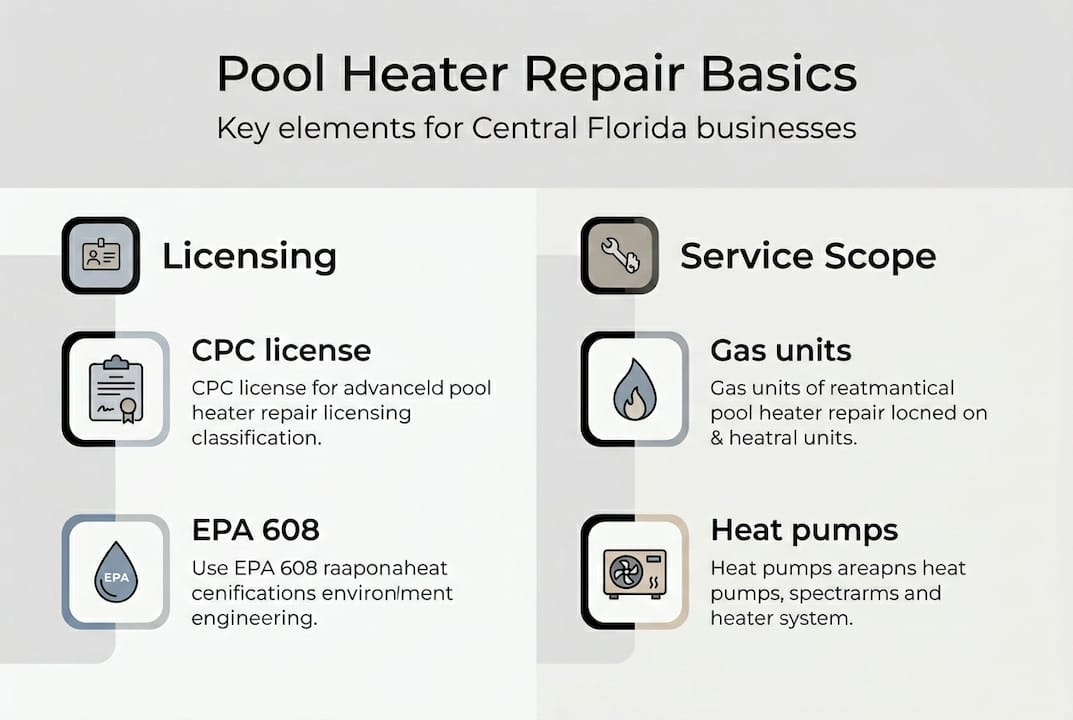
Licensing requirements separate professional commercial pool heater repair from amateur work. Technicians must hold a Certified Pool Contractor license, EPA 608 certification for refrigerant handling, and gas plumbing credentials when servicing fuel-burning systems. Local permitting by Seminole and Orange County authorities having jurisdiction adds another compliance layer. Business owners should verify contractor credentials before authorizing any commercial pool heater work to avoid liability and code violations.
Florida’s humid subtropical climate and hard water conditions create unique challenges for commercial pool heating systems. Mineral deposits accelerate corrosion, requiring more frequent maintenance than in other regions. Understanding these local factors helps you set realistic expectations for repair frequency and equipment lifespan.
Core repair methodologies and common technical issues
Professional repair methodologies follow a systematic five-step process: diagnostic assessment, scope determination, permitting, execution, and final testing. This structured approach ensures thorough problem identification and compliant repairs. Skipping steps or rushing diagnosis often leads to recurring failures and wasted repair dollars.
The diagnostic assessment phase involves comprehensive system evaluation. Technicians measure water flow rates, read fault codes from electronic controls, inspect heat exchangers for scaling or corrosion, and test ignition systems or compressor operation depending on heater type. Flow measurement is particularly critical because low flow from dirty filters or failing pumps triggers safety shutoffs in modern heaters. Many business owners mistake these protective shutdowns for heater failures when the root cause lies in circulation system neglect.
Scope determination requires analyzing diagnostic findings against cost and age benchmarks. Technicians evaluate whether repairs make financial sense or replacement offers better long-term value. This decision point prevents throwing good money after bad on aging equipment. Permitting follows scope determination when work involves fuel changes, major component replacement, or modifications affecting pool water circulation. Florida DOH notifications and local building permits protect public health and safety.
Execution encompasses the actual repair work:
- Isolate the heater from electrical and fuel sources following lockout/tagout procedures
- Drain water from heat exchanger to prevent spills and enable component access
- Replace failed parts using manufacturer-specified components for warranty compliance
- Clean heat exchanger surfaces, burners, or evaporator coils to restore efficiency
- Reassemble system with new gaskets and seals to prevent leaks
Final testing verifies repair success through operational checks. Technicians monitor ignition sequences, measure outlet temperatures, confirm proper flow rates, and document system performance. This validation step catches installation errors before they cause callbacks or safety hazards.
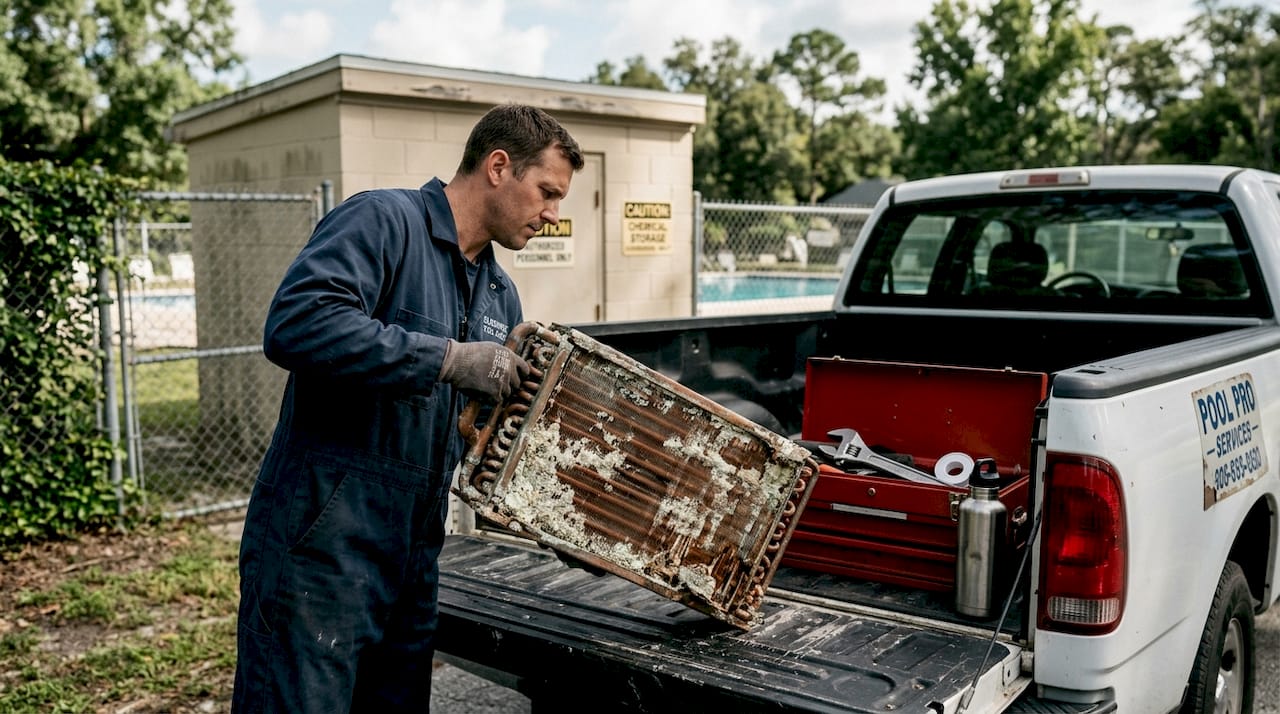
Central Florida’s environment creates predictable failure patterns. Heat exchanger corrosion and scaling from local hard water chemistry tops the list, reducing heat transfer efficiency and eventually causing leaks. Ignition system faults including failed pilot assemblies, faulty flame sensors, and defective pressure switches rank second. Heat pump compressors face stress from high ambient temperatures and humidity, leading to premature wear. Understanding these common issues helps you recognize symptoms early and schedule repairs before complete system failure.
Pro Tip: Schedule diagnostic assessments during mild weather when pool heating demand is lower. This timing allows thorough evaluation without pressure to rush repairs, often resulting in better problem identification and cost-effective solutions.
Making the repair versus replacement decision
Deciding whether to repair or replace commercial pool heaters requires analyzing cost thresholds, equipment age, and failure frequency. The industry standard suggests repair if cost remains under 50-60% of new unit price. Once repair estimates exceed this threshold, replacement typically offers better long-term value. Age guidelines recommend replacement when gas heaters surpass 7-12 years or heat pumps exceed 10-15 years, as major component failures become increasingly likely beyond these spans.
| Factor | Repair | Replace |
|---|---|---|
| Cost range | $150-800 typical | $1,500-8,500 installed |
| Best when | Under 50% replacement cost | Over 60% replacement cost |
| Age consideration | Under 7 years gas, 10 years heat pump | Over 12 years gas, 15 years heat pump |
| Pros | Lower immediate cost, faster turnaround | New warranty, improved efficiency, fewer breakdowns |
| Cons | Temporary fix, possible repeat failures | Higher upfront investment, installation time |
| Expected lifespan | Extends 1-3 years | 10-15 years new system |
Central Florida’s hard water accelerates corrosion, potentially shortening equipment lifespan by 20-30% compared to national averages. This local factor shifts replacement decisions earlier than manufacturers’ published lifespans suggest. Business owners should adjust age thresholds downward when evaluating heaters exposed to aggressive water chemistry without proper treatment.
Repair history analysis provides critical decision insight. Review maintenance records for the past two years, counting repair frequency and total costs. Three or more service calls within 24 months signals declining reliability, even if individual repair costs seem reasonable. Cumulative spending approaching 40-50% of replacement cost over two years justifies proactive replacement before catastrophic failure disrupts business operations.
Financial impacts extend beyond immediate repair or replacement costs. Failed heaters during peak season cause guest complaints, membership cancellations, or resident dissatisfaction that damage business reputation. Quantify these soft costs when evaluating options. Energy efficiency improvements in newer models reduce operating expenses by 15-30%, offsetting higher replacement costs through lower utility bills over the system’s lifespan.
Operational considerations include installation timelines and business disruption. Repairs typically complete within 1-3 days, minimizing pool downtime. Replacement installations require 3-7 days including permitting, equipment procurement, and installation labor. Schedule replacement during off-peak periods to reduce guest or member impact. Emergency replacements during high-demand periods cost 20-40% more due to expedited shipping and overtime labor.
Pro Tip: Request detailed repair estimates itemizing parts, labor, and permit fees before authorizing work. Compare line items against replacement quotes to make informed decisions. Hidden costs like additional permits or circulation system upgrades can shift the financial balance toward replacement.
Best practices for maintaining commercial pool heaters in Central Florida
Preventive maintenance during October and April reduces corrosion risk and repair costs significantly by aligning service with seasonal transition periods. October inspections prepare heaters for increased winter demand, while April checkups address wear from heating season operation before summer’s lighter loads. This twice-yearly schedule catches developing problems before they cause failures during peak usage.
Central Florida’s climate creates unique maintenance requirements. High humidity accelerates electrical component corrosion, requiring more frequent inspection of control boards, sensors, and wiring connections. Summer’s intense heat stresses heat pump compressors and refrigerant systems. Winter’s mild temperatures allow algae and biofilm growth in heat exchangers, reducing efficiency. Tailoring maintenance to these seasonal patterns optimizes equipment performance and longevity.
Comprehensive maintenance checklists should include:
- Filter cleaning or replacement to maintain proper water flow rates
- Heat exchanger descaling using appropriate chemical treatments for local water hardness
- Burner assembly cleaning and combustion tuning for gas-fired systems
- Refrigerant charge verification and leak testing for heat pump units
- Electrical connection tightening and corrosion treatment
- Control system calibration and sensor accuracy verification
- Safety device testing including pressure switches and high-limit controls
| Maintenance Approach | Annual Cost | Emergency Repairs | Total Annual Spend | System Reliability |
|---|---|---|---|---|
| No preventive maintenance | $0 | $1,500-3,500+ | $1,500-3,500+ | Poor, frequent failures |
| Twice yearly inspections | $400-600 | $200-800 | $600-1,400 | Good, predictable operation |
| Quarterly monitoring | $800-1,200 | $0-400 | $800-1,600 | Excellent, minimal downtime |
Empirical data shows preventive maintenance saves $1,000-2,000 annually versus emergency repairs costing $1,500-3,500 or more. These savings stem from catching minor issues before they cascade into major failures. A $75 pressure switch replacement during scheduled maintenance prevents a $1,200 emergency service call when the heater fails during a holiday weekend.
Licensing and permitting basics require business owner awareness even when delegating maintenance to contractors. Verify service providers hold current CPC licenses, EPA certifications, and proper insurance coverage. Request copies of permits for any work involving fuel system modifications, heat exchanger replacement, or circulation changes. Florida Administrative Code Chapter 64E-9 mandates DOH notification for commercial pool equipment changes, with penalties for non-compliance reaching thousands of dollars.
Water chemistry management directly impacts heater longevity. Maintain pH between 7.2-7.8, total alkalinity at 80-120 ppm, and calcium hardness at 200-400 ppm to minimize corrosion and scaling. Weekly testing prevents the aggressive water conditions that destroy heat exchangers prematurely. Consider installing automatic chemical feeders to maintain consistent water balance, reducing maintenance burden and extending equipment life.
Pro Tip: Partner with licensed local professionals for reliable and code-compliant maintenance. Established relationships with qualified contractors ensure priority service during emergencies and consistent care that maximizes equipment lifespan. Look for providers offering maintenance agreements with scheduled visits, discounted rates, and guaranteed response times.
Explore professional pool heater repair and maintenance services
Maintaining commercial pool heater performance requires expertise in Florida regulations, local water conditions, and business operational demands. Lucas Air brings specialized knowledge to Central Florida businesses seeking reliable pool heating solutions. Our licensed technicians understand the unique challenges facing hotels, HOAs, apartments, and fitness centers in Seminole and Orange counties.
Scheduled preventative maintenance agreements eliminate the guesswork from pool heater care. We coordinate twice-yearly inspections during optimal seasonal windows, handle all permitting requirements, and maintain detailed service records for your compliance documentation. Our proactive approach catches developing issues before they disrupt your business operations or disappoint guests and residents.
Our team holds current CPC licenses, EPA 608 certifications, and deep familiarity with local authority requirements. We navigate DOH notifications, building permits, and inspection processes efficiently, saving you administrative headaches. Whether you need emergency repairs, replacement consultation, or ongoing maintenance, our professional pool heater repair services keep your facility comfortable year round. Contact our trusted HVAC contractor services team to schedule a consultation and discover how proper pool heater care protects your investment while ensuring guest satisfaction.
Frequently asked questions
How often should businesses schedule preventive maintenance for pool heaters?
Businesses should schedule preventive maintenance twice yearly, typically in October and April, to align with seasonal demand changes and minimize failure risks. October inspections prepare systems for increased winter heating loads, while April checkups address wear from the heating season before summer’s reduced demand. This timing catches developing problems before peak usage periods when failures cause maximum business disruption.
What permits are required for commercial pool heater repairs in Central Florida?
Commercial pool heater repairs require DOH notifications under Florida Administrative Code Chapter 64E-9 for equipment changes affecting public pool safety. Local building permits from Seminole or Orange County authorities having jurisdiction apply when work involves fuel system modifications, major component replacements, or circulation changes. Licensed contractors typically handle permit applications and inspections as part of professional service, ensuring compliance with all regulatory requirements.
How do I decide between repairing or replacing a commercial pool heater?
Use the 50-60% cost rule as your primary guideline: repair if estimated cost stays under 50-60% of new unit price, replace if costs exceed this threshold. Consider equipment age, with replacement recommended when gas heaters surpass 7-12 years or heat pumps exceed 10-15 years due to increasing failure likelihood. Factor in repair frequency over the past two years, as three or more service calls signal declining reliability that justifies proactive replacement.
What are the main causes of pool heater failures in Central Florida businesses?
Hard water scaling and corrosion dominate commercial pool heater failures in Central Florida due to local water chemistry with high mineral content. Low flow conditions caused by dirty filters or failing circulation pumps trigger safety shutoffs that owners often mistake for heater malfunctions. Component-specific faults include ignition system failures in gas heaters, pressure switch defects across all types, and compressor wear in heat pump systems stressed by Florida’s heat and humidity.
