
TL;DR:
- Central Florida’s climate demands proactive pool maintenance due to heat, UV, and storms.
- Regular tune-ups prevent costly equipment failures and maintain water chemistry.
- Costs vary but are generally lower with scheduled inspections and professional support.
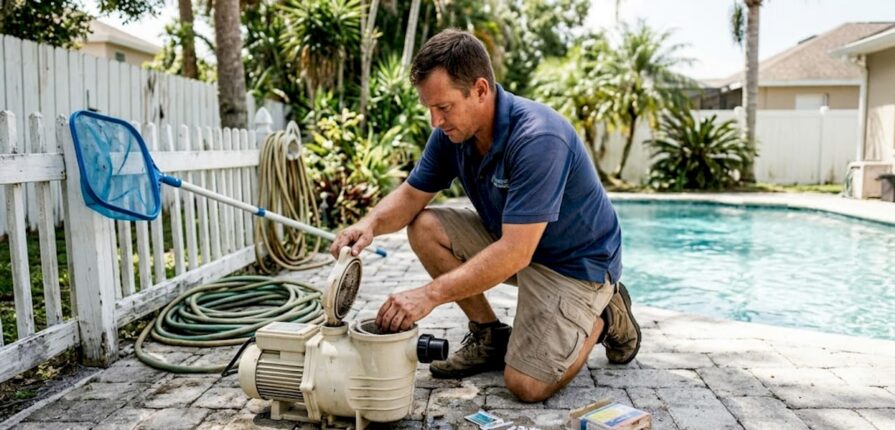
Many Central Florida pool owners believe their pools are mostly self-maintaining, especially during cooler months. That assumption costs real money. Florida’s relentless heat, UV intensity, and storm cycles create year-round stress on pumps, filters, and water chemistry that never truly lets up. A comprehensive equipment inspection covering circulation, filtration, and chemical balance is the foundation of smart pool ownership here. This article walks you through why tune-ups matter in this climate, what tasks to prioritize, how to handle Florida-specific challenges, and what realistic costs look like so you can plan ahead.
Table of Contents
- Why regular tune-ups matter in Central Florida
- Essential tune-up tasks every pool owner should prioritize
- Tackling special challenges: edge cases and advanced tune-ups
- What does it cost? Tune-up pricing in Central Florida
- Our take: What most pool owners miss about tune-ups
- Pool care made easier: Find professional tune-up support
- Frequently asked questions
Key Takeaways
| Point | Details |
|---|---|
| Tune-ups are essential | Regular maintenance prevents costly breakdowns and keeps pools safer in Central Florida’s climate. |
| Tasks vary seasonally | Adjust cleaning, chemical use, and inspection frequency based on the region’s sun, storms, and algae risk. |
| Edge cases need attention | Hurricane recovery, algae outbreaks, and aging pumps require specialized actions beyond routine care. |
| Costs are predictable | Expect monthly costs of $80-200 and annual ranges of $3,000-6,000 for professional support. |
| Professional support helps | Service agreements and expert tune-ups deliver peace of mind and extend pool equipment life. |
Why regular tune-ups matter in Central Florida
Central Florida is not a forgiving environment for pool equipment. Summer temperatures regularly push past 90°F, UV radiation is among the strongest in the country, and afternoon thunderstorms can dump inches of rain in under an hour. Each of these factors chips away at your pool’s balance and your equipment’s lifespan in different ways.
Heat accelerates chlorine burn-off. What might last three days in a northern state evaporates in under 24 hours here during peak summer. That means your water becomes a breeding ground for algae faster than you might expect. Seasonal adjustments in Central Florida for UV, algae pressure, and heat are not optional extras. They are the baseline.
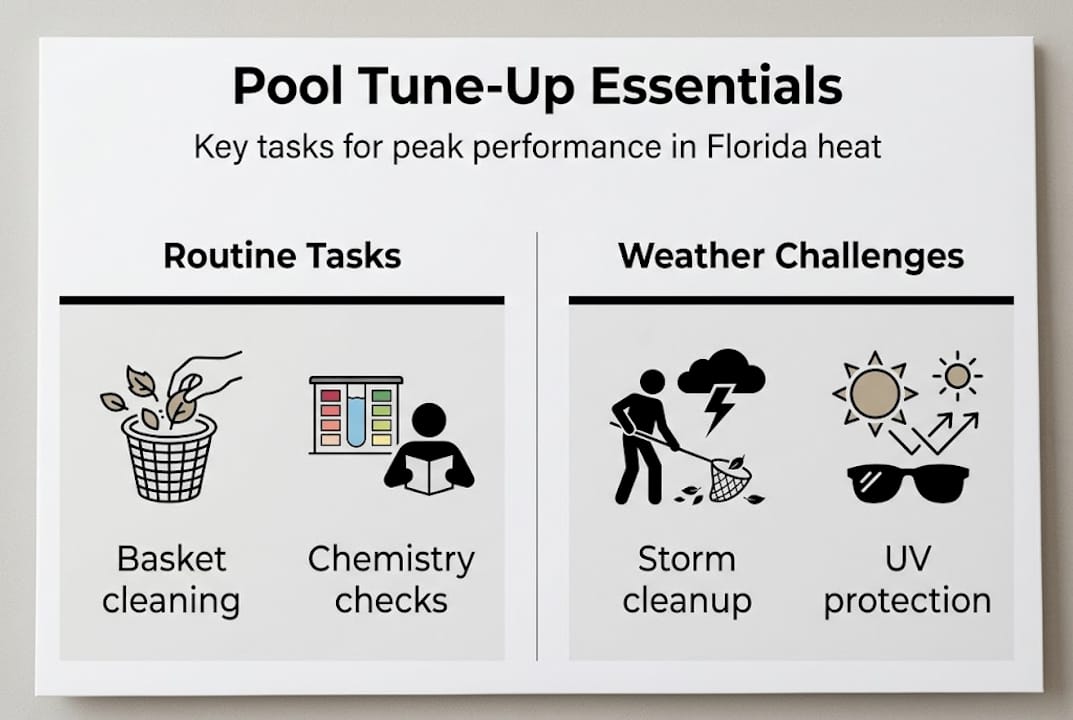
Storms introduce a different set of problems. Heavy rain dilutes your pool chemistry, raises water levels, and can wash debris, dirt, and even fertilizer runoff into the water. Each storm event is essentially a mini reset that demands a chemistry check and often a shock treatment.
Here is a quick look at how Central Florida’s climate stacks up against typical pool maintenance demands:
| Climate factor | Impact on pool | Tune-up response |
|---|---|---|
| High UV | Rapid chlorine loss | Increase stabilizer, adjust dosing |
| Summer heat | Algae blooms, pump strain | Extend run times, inspect motor |
| Heavy rain | Chemistry dilution | Test and rebalance after storms |
| Humidity | Corrosion on metal parts | Lubricate, inspect O-rings monthly |
Key areas that regular tune-ups address include:
- Filter wear: Sand and cartridge filters clog faster in Florida’s heavy-use season
- Pump motor stress: Longer daily run times mean more wear on bearings and seals
- Chemical imbalance: pH and alkalinity drift faster in warm water
- Algae prevention: Green and black algae thrive in warm, unbalanced water
Pro Tip: Build a pre-storm checklist that includes testing chemistry, securing loose equipment, and checking your pump basket. Running through this 30-minute routine before a big storm can save you hours of cleanup afterward.
You can also apply seasonal tune-up strategies from the HVAC world to your pool care mindset. The logic is identical: equipment under climate stress needs proactive attention, not reactive repairs. For climate-specific service tips that translate well to pool care thinking, the pattern is consistent. Tune-ups before peak season always outperform emergency calls during it.
Essential tune-up tasks every pool owner should prioritize
Knowing why tune-ups matter is one thing. Knowing exactly what to do and when is where most pool owners fall short. Here is a practical breakdown organized by frequency.
Cleaning, lubricating, checking pressures, and verifying pump and filter operation form the core of any proper tune-up. These are not complicated tasks, but skipping them compounds quickly.
Step-by-step tune-up checklist:
- Clean skimmer and pump baskets (weekly): Clogged baskets restrict flow and strain your pump motor
- Test water chemistry (weekly): Check pH, chlorine, alkalinity, and stabilizer levels
- Inspect filter pressure gauge (weekly): A rise of 8 to 10 PSI above baseline signals it is time to backwash
- Lubricate O-rings and lid gaskets (monthly): Use a silicone-based lubricant to prevent cracking and leaks
- Backwash or clean the filter (as needed, typically monthly): Restores flow rate and filtration efficiency
- Inspect pump lid, unions, and valves (monthly): Look for cracks, drips, or discoloration
- Full equipment inspection (seasonally): Check heater, timer, wiring, and all mechanical components
- Review run time settings (seasonally): Adjust for summer’s longer circulation needs
Here is what happens when you skip these steps versus staying on schedule:
| Task skipped | Short-term result | Long-term consequence |
|---|---|---|
| Basket cleaning | Reduced flow | Pump cavitation and motor burnout |
| Chemistry checks | Cloudy water | Scale buildup, surface damage |
| O-ring lubrication | Minor drips | Seal failure, air leaks in system |
| Filter backwash | Poor filtration | Algae blooms, increased chemical costs |
| Seasonal inspection | Undetected wear | Sudden equipment failure mid-summer |
Pro Tip: Keep a simple logbook or phone note with the date of each task completed. When something goes wrong, this record helps a technician diagnose the issue in minutes instead of hours.
For routine inspection tips that apply across equipment types, the principle is the same: document, check, and act early. If your pool uses a heater, pool heater maintenance deserves its own seasonal slot on your calendar, especially before and after winter months. Professional HVAC contractor tools can also be adapted for pool equipment diagnostics in a pinch.
Tackling special challenges: edge cases and advanced tune-ups
Routine tasks cover the basics, but Central Florida throws curveballs that standard checklists do not always address. Knowing how to handle these situations separates good pool owners from great ones.
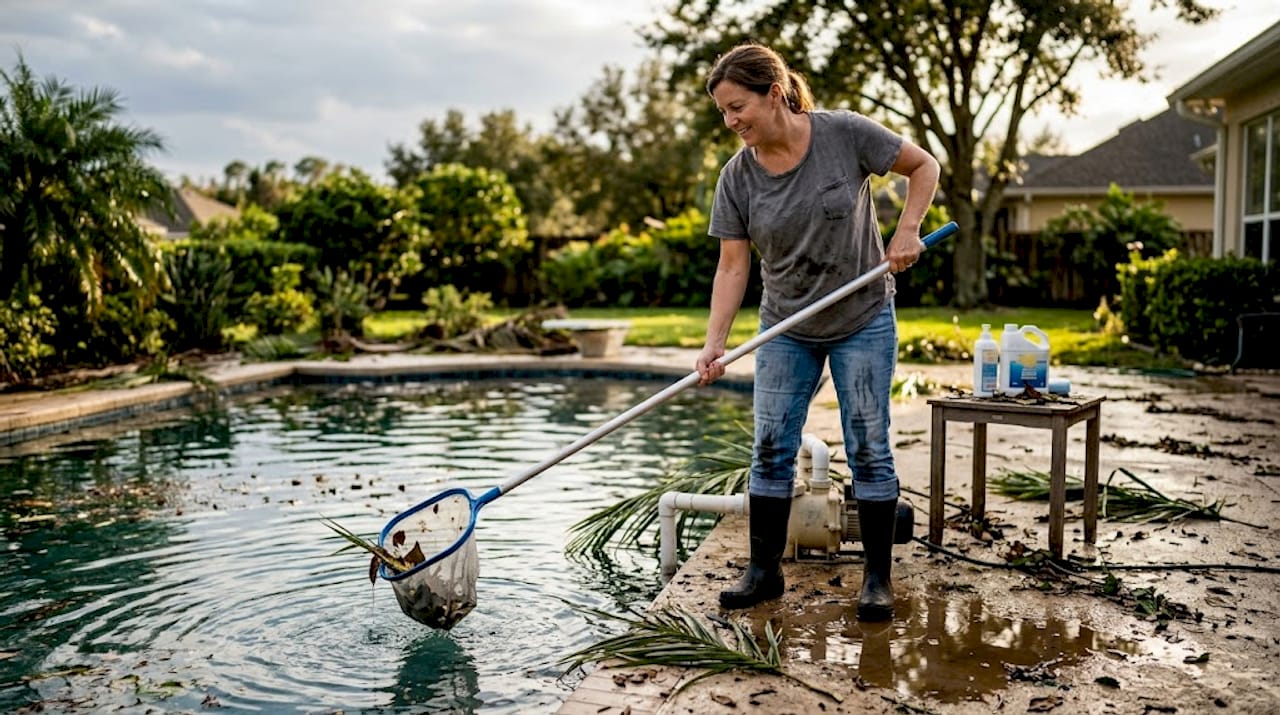
Hurricanes and major storms are the most disruptive events your pool will face. After a significant storm, do not just skim the debris and move on. Test your chemistry immediately because heavy rain can drop pH and dilute chlorine to unsafe levels. If your area has a high water table, avoid draining your pool during or after heavy rain. An empty or partially empty pool can actually float out of the ground when the water table rises, causing catastrophic structural damage.
High water table risks, black algae, and post-hurricane repairs are real concerns for Central Florida pool owners that require specific responses, not generic advice.
Black algae is a different beast from the green variety. It roots into plaster and grout lines, forming a protective layer that standard chlorine treatments cannot penetrate. Remediation requires physical brushing with a stainless steel brush, superchlorination, and often an algaecide specifically formulated for black algae. Catching it early during routine tune-ups is far easier than fighting an established colony.
Here are the key edge cases to watch for:
- Post-storm chemistry crash: Test within 24 hours of any major rainfall
- Black algae spots: Brush and treat aggressively at first sighting
- High water table: Never drain during or after heavy rain without consulting a professional
- Aging equipment: Pumps over 8 to 12 years old are candidates for replacement, not repeated repair
A useful rule of thumb: If a repair estimate exceeds 50% of the cost of a new unit, replacement almost always makes more financial sense. Older equipment is also less energy-efficient, so the savings on your electric bill can offset the replacement cost faster than you might expect.
For preventative maintenance steps that apply this same logic to HVAC systems, the math works identically. Proactive replacement beats emergency replacement every time.
What does it cost? Tune-up pricing in Central Florida
Budgeting for pool care is easier when you know what to expect. Costs vary based on pool size, equipment age, and service frequency, but the ranges below reflect what Central Florida owners typically pay in 2026.
Weekly service in Central Florida runs $80 to $200 per month, pump replacement costs $600 to $1,500, and annual maintenance totals $3,000 to $6,000 depending on the level of service and equipment involved.
Here is a breakdown of typical costs by service type:
| Service | Frequency | Typical cost range |
|---|---|---|
| Weekly cleaning and chemistry | Weekly | $80 to $200/month |
| Filter cleaning or backwash | Monthly/as needed | $50 to $150 per visit |
| O-ring and seal replacement | Annually | $30 to $100 in parts |
| Full seasonal inspection | Twice yearly | $150 to $300 per visit |
| Pump motor replacement | As needed | $300 to $700 (labor and parts) |
| Full pump replacement | Every 8 to 12 years | $600 to $1,500 |
| Annual total (full service) | Yearly | $3,000 to $6,000 |
The biggest cost variable is whether you handle routine tasks yourself or hire a weekly service. DIY chemistry checks and basket cleaning can cut your annual spend significantly. However, seasonal inspections and equipment repairs almost always benefit from a professional eye.
A pump that fails mid-July in Central Florida is not just inconvenient. Emergency service calls carry premium pricing, and a green pool can develop in under 48 hours without circulation. The cost of one emergency repair often exceeds an entire year of preventative service.
For a full look at what services are available and how they are priced, the pool service menu covers the range of options that make sense for Central Florida homeowners.
Our take: What most pool owners miss about tune-ups
After working with homeowners across Central Florida, the pattern we see most often is not neglect. It is optimism. People assume their pool is fine because the water looks clear. Clear water is not the same as balanced, well-maintained water. You can have perfect-looking water with a pump that is weeks away from failure.
The owners who spend the least over time are not the ones who skip maintenance to save money. They are the ones who follow seasonal maintenance wisdom and treat tune-ups as investments rather than expenses. A $150 seasonal inspection that catches a failing seal prevents a $900 pump replacement three months later.
Timing also matters more than most people realize. Scheduling your full equipment inspection in April, before the summer heat peaks, gives you time to order parts and schedule repairs without the urgency premium. Waiting until June means competing with every other pool owner who also just noticed a problem.
The uncomfortable truth is that reactive pool care always costs more than proactive care. Every time.
Pool care made easier: Find professional tune-up support
Applying everything covered here is straightforward when you have the right support behind you. At Lucas Air Conditioning and Heating, we understand what Central Florida’s climate demands from your equipment, whether that is your HVAC system or your pool heater.
Our tune-up service is built around catching problems before they become emergencies, and our preventative maintenance plans give you year-round coverage without the stress of remembering every task yourself. If you want a single place to manage both your home comfort and pool equipment needs, explore our full range of pool and HVAC tune-ups and see how scheduled maintenance pays for itself. Call us today to schedule your next inspection.
Frequently asked questions
How often should I tune up my pool equipment in Central Florida?
Weekly cleaning and chemistry checks are the baseline, with full seasonal equipment inspections recommended twice per year due to Florida’s demanding climate.
What signs indicate my pool pump needs replacement rather than repair?
If your pump is over 8 to 12 years old or repair costs exceed 50% of a new unit’s price, replacement is almost always the smarter financial choice.
How does Florida weather affect pool tune-up needs?
High UV, heat, and storms accelerate chlorine loss, promote algae growth, and increase mechanical wear, making more frequent tune-ups and chemistry adjustments necessary compared to other climates.
What does a typical pool tune-up cost in Central Florida?
Routine monthly service runs $80 to $200 per month, with total annual maintenance costs typically falling between $3,000 and $6,000 depending on equipment and service level.
