
TL;DR:
- A 14 SEER AC unit delivers 14 BTUs of cooling per watt-hour based on older energy standards. Florida now mandates a minimum of 14.3 SEER2, making legacy 14 SEER units non-compliant for new installations. Upgrading to higher SEER2 systems improves efficiency, reduces costs, and qualifies for federal tax credits.
A 14 SEER AC unit is defined as a central air conditioner with a Seasonal Energy Efficiency Ratio of 14, meaning it delivers 14 BTUs of cooling for every watt-hour of electricity consumed. As of january 2023, the Department of Energy replaced the old SEER testing standard with SEER2, which uses the stricter M1 protocol. Florida Building Code now mandates a minimum of 14.3 SEER2 for split-system installations. That shift makes a legacy 14 SEER air conditioner non-compliant for new residential installs across Central Florida. Lucasair serves homeowners and property managers throughout the region who need clarity on what these changes mean for their next system purchase or replacement.
What does a 14 SEER AC unit mean under 2026 Florida standards?
SEER and SEER2 measure the same thing: cooling output divided by energy input over a full season. The difference is in how each rating is tested. SEER2 ratings run 4.5%–4.7% lower than old SEER ratings because the M1 standard applies higher external static pressure during testing, which better reflects real ductwork conditions. That means a unit rated 14 SEER under the old method would score roughly 13.4 SEER2 under the new one.
Florida Building Code mandates a minimum of 14.3 SEER2 for split-system air conditioners, enforced through permitting since 2023. A legacy 14 SEER unit falls below that threshold. Installing one as a new system or a permitted replacement is not legal in Florida today.
The table below shows how the old 14 SEER baseline compares to current and higher SEER2 tiers:
| Rating tier | Approximate SEER2 equivalent | Typical use case |
|---|---|---|
| 14 SEER (legacy) | ~13.4 SEER2 | Below Florida minimum; not installable for new/replacement |
| 14.3 SEER2 | 14.3 SEER2 | Florida code minimum for split systems |
| 16 SEER2 | 16 SEER2 | Mid-efficiency; qualifies for most utility rebates |
| 18–20 SEER2 | 18–20 SEER2 | High-efficiency; variable-speed; longest payback period |
Pro Tip: If you are replacing a failed system under a permit, confirm the replacement unit carries a 14.3 SEER2 label, not just a 14 SEER label. The two are not the same, and a contractor who confuses them can leave you with a failed inspection.
How much does a 14 SEER air conditioner cost to run in Central Florida?
Central Florida’s cooling season runs roughly nine months out of the year. That extended runtime makes efficiency ratings matter more here than in northern states where air conditioners sit idle for half the year.
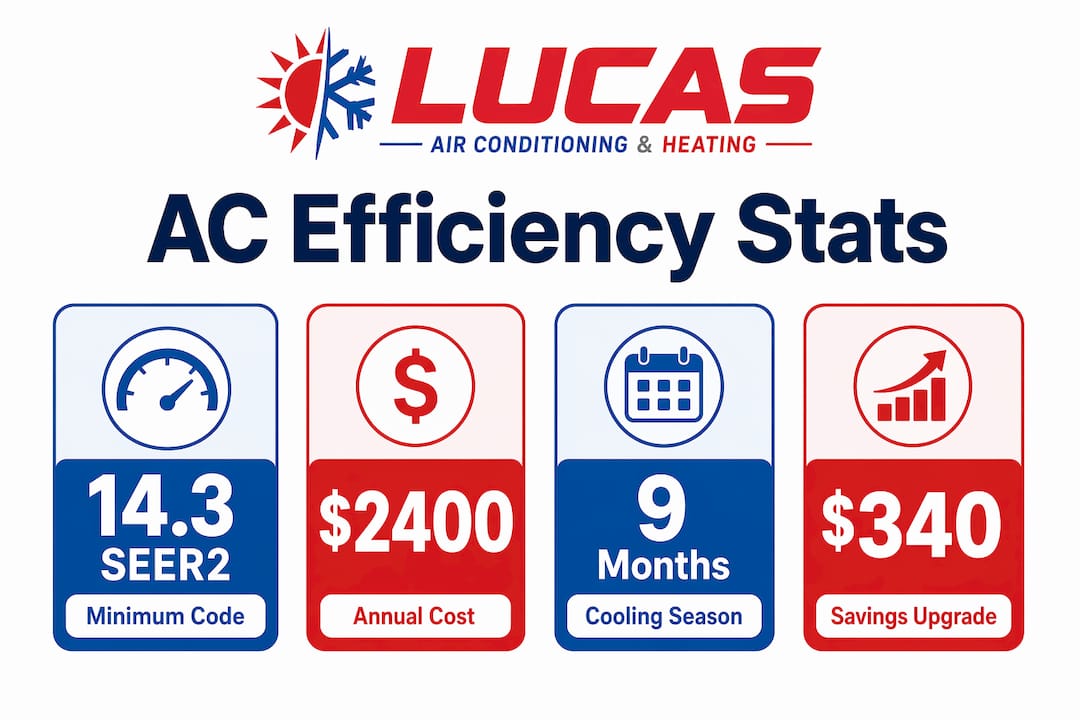
A typical 2,000-square-foot Florida home with a baseline 14.3 SEER2 system spends around $2,400 per year on cooling. Upgrading to a 16 SEER2 system cuts electricity use by approximately 14%, which translates to roughly $340 in annual savings. Over a 15-year equipment lifespan, that adds up to more than $5,000 before accounting for rising utility rates.
Utility costs have historically risen 2%–3% annually, which compounds the value of higher efficiency over time. A unit that saves $340 today saves more in year ten than it does in year one.
The payback math on a modest upgrade is straightforward:
- Upfront premium for 16 SEER2 over 14.3 SEER2: typically $800–$1,200
- Annual savings: approximately $340 at current Florida electricity rates
- Payback period: 3–7 years, depending on electricity rates and equipment pricing
- Remaining benefit years: 8–12 years of pure savings within a standard 15-year lifespan
Jumping to 18 or 20 SEER2 extends the payback period considerably. The efficiency gains are real, but the upfront cost premium grows faster than the annual savings at that tier. For most Central Florida homeowners replacing a standard split system, the 16 SEER2 range offers the strongest return.
Federal tax credits under IRA Section 25C can offset up to $2,000 for qualifying heat pump systems, but eligibility requires exceeding the base SEER2 minimum. A 14 SEER unit misses that threshold entirely. Choosing a higher-efficiency system at replacement time is the only way to capture those credits.
Does a 14 SEER system handle Florida’s humidity and heat reliably?
A 14 SEER air conditioner uses a single-stage compressor. It runs at full capacity or not at all. In Florida’s climate, that on-off cycling creates two problems: temperature swings and poor humidity control.
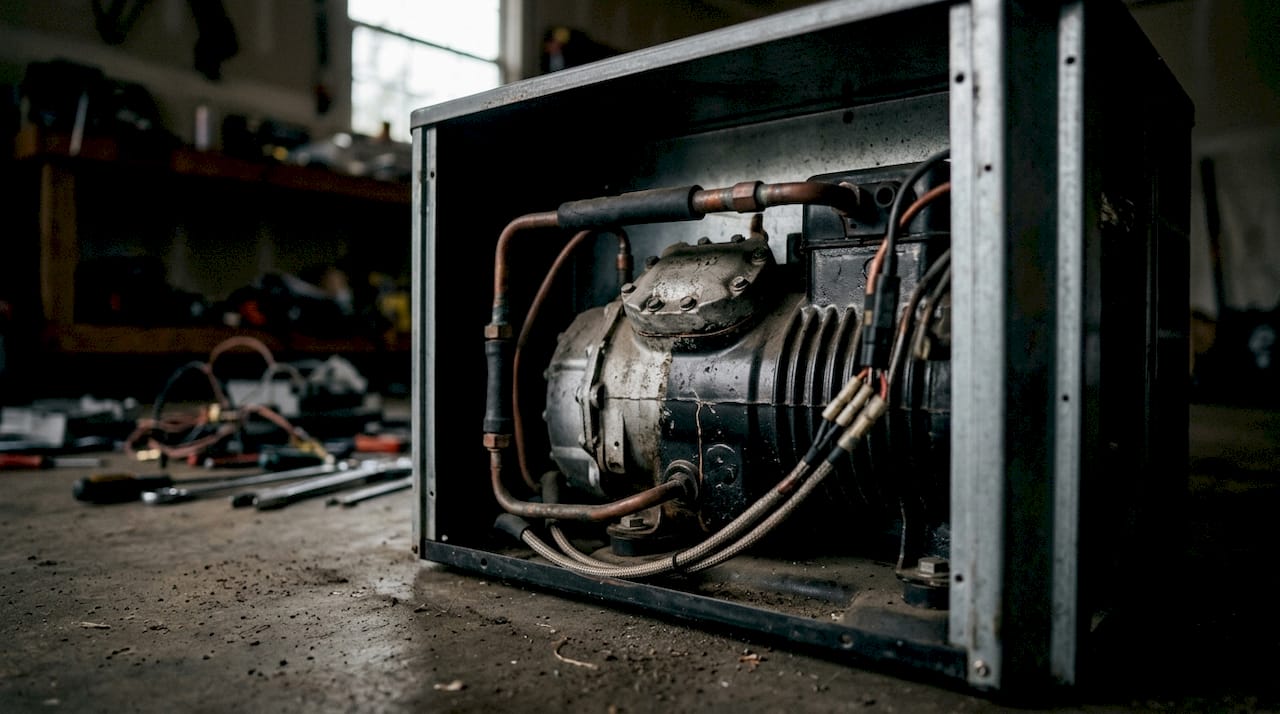
Variable-speed compressors in higher-SEER units significantly improve humidity control compared to single-stage systems. They run longer at lower capacity, which pulls more moisture out of the air without overcooling the space. In a state where indoor humidity above 60% promotes mold growth, that difference is not cosmetic.
That said, the efficiency rating alone does not determine comfort. Proper sizing, dehumidification, and routine maintenance often affect comfort more than the SEER number on the label. An oversized 18 SEER2 unit that short-cycles will leave a home feeling clammy. A properly sized 14.3 SEER2 unit with clean coils and sealed ducts will outperform it.
Key maintenance factors that determine real-world performance regardless of SEER rating:
- Coil cleanliness: dirty evaporator and condenser coils reduce heat transfer and force the compressor to work harder
- Refrigerant charge: even a small undercharge drops efficiency and shortens compressor life
- Duct condition: leaky ducts can waste 20%–30% of conditioned air before it reaches living spaces
- Filter replacement: a clogged filter restricts airflow and stresses the blower motor
Pro Tip: Schedule a professional AC tune-up before each cooling season. A technician who catches a low refrigerant charge or a dirty coil in march saves you from a breakdown in july when every HVAC company in Central Florida is fully booked.
A 14 SEER system that receives annual maintenance will outlast a neglected 18 SEER2 unit. The rating describes potential efficiency. Maintenance determines whether the system actually achieves it.
What should homeowners consider before installing or upgrading an AC system?
The first question is compliance. A legacy 14 SEER air conditioner cannot be installed as a new system or a permitted replacement in Florida in 2026. Any contractor who quotes you a 14 SEER unit for a new installation is quoting a non-compliant product. Verify that any proposed system carries a 14.3 SEER2 or higher label before signing a contract.
Once compliance is confirmed, the decision shifts to which efficiency tier fits your situation. Work through these factors in order:
- Get a Manual J load calculation. Proper sizing is more important than SEER rating. A qualified contractor calculates the exact cooling load for your home based on square footage, insulation, window area, and occupancy. Never accept a replacement quote based solely on matching the old unit’s tonnage.
- Inspect your ductwork first. Leaky or undersized ducts cap the real-world performance of any system. Fixing ducts before installing a new unit often delivers more comfort improvement than moving from 14.3 to 16 SEER2. Lucasair offers duct cleaning and inspection as part of system evaluations.
- Check utility rebates in your area. Duke Energy Florida and other regional utilities periodically offer rebates for systems above the minimum SEER2 threshold. These rebates can close the gap between a 14.3 and 16 SEER2 unit significantly.
- Factor in federal tax credits. Heat pump systems that exceed base SEER2 minimums may qualify for up to $2,000 under IRA Section 25C. A standard central AC unit at 14.3 SEER2 does not qualify.
- Consider your timeline. If you plan to sell the property within three years, a high-efficiency upgrade may not pay back before the sale. A code-compliant 14.3 SEER2 system is the practical choice in that scenario.
- Ask about financing options. Many HVAC contractors, including Lucasair, offer financing that spreads the upfront cost of a higher-efficiency system over time, making the 16 SEER2 tier accessible without a large cash outlay.
The only scenario where a 14 SEER unit remains relevant in 2026 is legacy equipment maintenance on an existing permitted system. Replacement parts and service are still available. But the moment a system requires a permitted replacement, the 14 SEER era ends.
Key Takeaways
A 14 SEER AC unit no longer meets Florida’s 14.3 SEER2 minimum standard, making proper sizing, duct condition, and a code-compliant efficiency tier the three factors that determine real-world cooling performance and cost in Central Florida.
| Point | Details |
|---|---|
| 14 SEER is below Florida’s minimum | Florida Building Code requires 14.3 SEER2 for split systems; legacy 14 SEER units cannot be installed as replacements. |
| SEER2 ratings test differently | SEER2 scores run 4.5%–4.7% lower than old SEER ratings due to the stricter M1 testing standard. |
| Upgrading to 16 SEER2 pays back in 3–7 years | Annual savings of roughly $340 offset a typical $800–$1,200 premium within the equipment lifespan. |
| Single-stage systems struggle with humidity | Variable-speed compressors in higher-SEER units control humidity better in Florida’s climate than single-stage 14 SEER systems. |
| Maintenance outperforms ratings alone | Proper sizing, clean coils, sealed ducts, and annual tune-ups determine real efficiency more than the SEER number. |
The rating on the label is not the whole story
After years of working with Central Florida homeowners, the most common misconception I encounter is this: people believe a higher SEER number automatically means a more comfortable home. It does not. I have walked into homes with 18 SEER2 systems that felt like a sauna in august, and into homes with 14.3 SEER2 units that were perfectly comfortable and running efficiently. The difference was always installation quality, duct condition, and maintenance history.
The regulatory shift away from 14 SEER is the right call. The old testing standard understated real-world energy use, and Florida’s climate demands more from a system than a northern state does. But homeowners who fixate on chasing the highest SEER number without addressing duct leaks or oversizing are spending money in the wrong place.
My honest recommendation: if you are replacing a system, choose a code-compliant 16 SEER2 unit, have your ducts inspected and sealed, and commit to annual maintenance. That combination will outperform a neglected 20 SEER2 system every time. The upgrade decision is not just about the unit. It is about the whole system working together.
— Lucasair
Lucasair serves Central Florida homeowners with code-compliant AC solutions
Lucasair has provided residential and commercial HVAC services across Central Florida since 2018, founded by Army Veteran Cameron Lucas. The team handles everything from system sizing and code-compliant installation to preventative maintenance plans that protect your investment year after year.
If you are weighing a system replacement or want to know whether your current setup meets Florida’s 2026 SEER2 requirements, Lucas Air’s technicians can assess your home, calculate the right load, and recommend a system that fits your budget and timeline. Property managers across the region rely on Lucasair for HVAC services in The Villages and surrounding Lake County communities. Schedule a consultation or request a quote through the Lucasair website to get started with a team that knows Central Florida’s climate and building codes.
FAQ
What does 14 SEER mean on an air conditioner?
SEER stands for Seasonal Energy Efficiency Ratio. A 14 SEER rating means the unit delivers 14 BTUs of cooling per watt-hour of electricity consumed over a full cooling season.
Is a 14 SEER rating good enough for Florida in 2026?
No. Florida Building Code requires a minimum of 14.3 SEER2 for new split-system installations, and a legacy 14 SEER unit falls below that threshold under the current M1 testing standard.
How much can I save by upgrading from a 14 SEER to a 16 SEER2 system?
Upgrading from a baseline 14.3 SEER2 to a 16 SEER2 system saves approximately $340 per year on cooling costs for a typical Florida home, with a payback period of 3–7 years.
Can I still get a 14 SEER unit repaired or maintained?
Yes. Existing 14 SEER systems can still be serviced and repaired. The restriction applies to new installations and permitted replacements, not to maintaining equipment already in place.
Do federal tax credits apply to 14 SEER air conditioners?
No. IRA Section 25C credits require systems to exceed the base SEER2 minimum. A 14 SEER unit does not qualify, making higher-efficiency systems the better financial choice at replacement time.
Recommended
- SEER 14 HVAC Systems: 2026 Efficiency Guide – Lucas Air Conditioning and Heating
- SEER rating explained: Maximize your HVAC efficiency and savings – Lucas Air Conditioning and Heating
- Essential AC Tune-Up Steps Every Florida Homeowner Needs – Lucas Air Conditioning and Heating
- HVAC considerations for real estate in Central Florida – Lucas Air Conditioning and Heating
