

TL;DR:
- The average central air conditioner lasts 15 to 20 years, depending on climate, maintenance, and installation quality. Proper professional upkeep and correct installation practices can extend system life beyond the median. Poor sizing, ductwork issues, and neglect accelerate premature failure, especially in hot, humid climates.
A central air conditioner’s service life is defined as 15–20 years under normal operating conditions, with the national median replacement interval sitting at 15.3 years as of 2026. That number shifts dramatically based on where you live, how well you maintain the system, and whether it was installed correctly in the first place. Homeowners and property managers who understand these variables can plan replacements before a breakdown forces the decision. Knowing how long air conditioners last is the difference between a planned budget line and an emergency expense.
How long does an air conditioner last in different climates?
Climate is the single most powerful variable in the lifespan of an air conditioner. Systems in cooler, drier climates can outlast identical units in hot, humid regions by up to 10 years. That gap exists because heat and humidity force the system to run longer cycles, which accelerates wear on compressors, fan motors, and capacitors.
Florida is a useful benchmark. A central AC unit in Eustis or Orlando runs nearly year-round, often 10–12 hours a day during summer. A comparable unit in Michigan might run 3–4 months a year. The Florida unit accumulates operating hours two to three times faster, which compresses its effective lifespan even if the equipment is identical.
The specific factors that climate affects include:
- Run time per day: Longer daily cycles burn through compressor life faster.
- Humidity load: High indoor humidity above 60% forces the system to work harder to dehumidify, stressing the evaporator coil.
- Corrosion risk: Coastal and humid environments accelerate corrosion on copper refrigerant lines and electrical contacts.
- Freeze-thaw cycling: In northern climates, seasonal shutdowns reduce total operating hours but introduce condensation risks during startup.
For Florida homeowners specifically, HVAC lifespan factors in Florida differ enough from national averages that planning around the 15-year mark is more realistic than expecting 20 years.
What role does maintenance play in extending AC life?
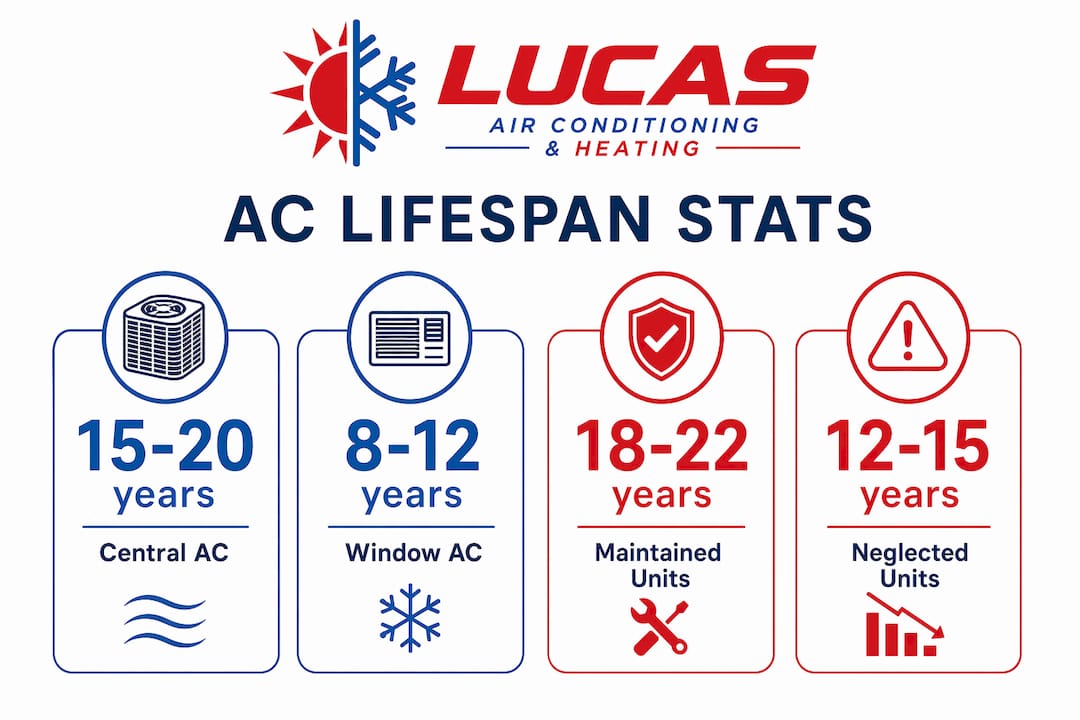
Regular professional maintenance is the most controllable factor in how long an air conditioner lasts. Well-maintained units average 18–22 years, while neglected systems typically fail between 12 and 15 years. That is a gap of up to 10 years, driven entirely by whether the system receives annual care.
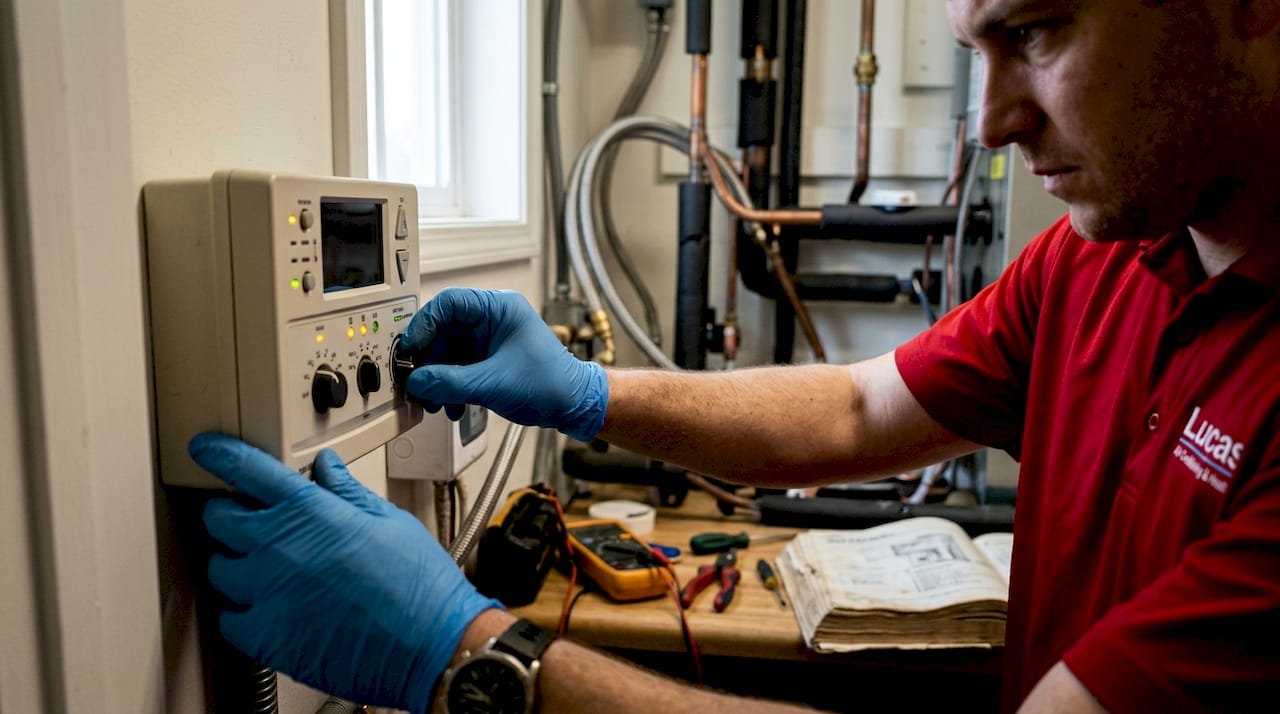
The mechanism is straightforward. Dirty coils reduce heat transfer efficiency. Low refrigerant causes the compressor to overwork. Clogged filters restrict airflow and raise static pressure. Each of these problems compounds over time, and systems over 10 years old without regular service often operate at only 80–85% efficiency. That efficiency loss means higher utility bills and faster component wear.
A standard annual tune-up covers:
- Cleaning evaporator and condenser coils
- Checking and adjusting refrigerant charge
- Inspecting electrical connections and capacitors
- Lubricating moving parts in fan motors
- Testing thermostat calibration and system controls
Pro Tip: Schedule your annual tune-up in the spring, before the first heat wave. Technicians are more available, and you will catch problems before the system runs at full load.
The benefits of regular AC maintenance extend beyond lifespan. Maintained systems hold their efficiency ratings longer, which directly reduces monthly energy costs. For property managers overseeing multiple units, a preventative maintenance agreement turns unpredictable repair costs into a fixed, manageable expense.
How does installation quality affect how long AC units last?
Installation quality often predicts lifespan more accurately than brand name. Manufacturer brand reliability is less predictive of longevity than installation quality, ductwork design, and local climate. A premium unit installed poorly will fail sooner than a mid-range unit installed correctly.
The four installation factors that matter most:
- Proper system sizing: An oversized unit short cycles, meaning it turns on and off frequently without completing a full cooling cycle. Short cycling stresses components and fails to remove humidity effectively, which creates both comfort and durability problems.
- Ductwork design: Undersized return ducts create high static pressure, which forces the blower motor to work against resistance on every cycle. Flawed ductwork degrades performance and accelerates failures even in new equipment.
- Refrigerant charge accuracy: Overcharging or undercharging refrigerant at installation stresses the compressor from day one.
- Electrical connections and disconnect sizing: Loose connections cause voltage fluctuations that shorten compressor and capacitor life.
A Manual J load calculation is the industry standard method for sizing residential AC systems. Any installer who skips this step and sizes by rule of thumb is guessing. That guess often costs the homeowner years of service life.
Before signing any installation contract, reviewing what to ask your HVAC contractor protects you from shortcuts that show up years later as premature failures.
When should you repair versus replace an aging unit?
The repair-versus-replace decision has a clear financial framework. Replace the system if repair costs exceed 50% of replacement cost or $5,000, especially for units over 10–12 years old. At that age, the system is past its efficiency peak and likely using refrigerants that are costly to service.
The repair-age formula makes this concrete. Multiply the estimated repair cost by the system’s age in years. If the result exceeds $5,000, replacement is the better financial decision. A $400 repair on a 10-year-old unit scores 4,000, which favors repair. A $600 repair on a 14-year-old unit scores 8,400, which favors replacement.
Watch for these signs that a system is approaching the end of its service life:
- Uneven cooling or persistent indoor humidity above 60% throughout the home
- Increasing compressor noise or vibration during startup
- Refrigerant type is R-22, which was phased out and is now expensive to source
- Repair frequency has increased to more than once per cooling season
- Monthly energy bills are rising without a change in usage habits
Checking current repair service rates against replacement quotes gives you the numbers to run the formula accurately.
| Scenario | Recommended action |
|---|---|
| Unit under 10 years, repair under $1,000 | Repair and schedule annual maintenance |
| Unit 10–15 years, repair $1,000–$2,500 | Evaluate efficiency loss; consider replacement |
| Unit over 15 years, repair over $2,500 | Replace; repair cost likely to recur |
| Any age, R-22 refrigerant needed | Replace; refrigerant cost makes repair uneconomical |
What are the lifespan ranges for different AC types?
Not all air conditioning systems age at the same rate. The average air conditioner life varies by system type, and knowing these ranges helps you set realistic replacement timelines.
| AC type | Typical lifespan | Key factor |
|---|---|---|
| Central air conditioner | 15–20 years | Climate and maintenance frequency |
| Heat pump | 12–15 years | Year-round operation shortens life |
| Window unit | 8–12 years | Limited serviceability accelerates wear |
| Ductless mini-split | 12–20 years | Maintenance quality is the primary variable |
The window air conditioner lifespan is notably shorter because these units are harder to service and often run without any professional maintenance. Heat pumps age faster than central AC units because they operate in both heating and cooling modes year-round, accumulating operating hours faster. Ductless mini-splits can reach the top of their range when coils are cleaned annually and refrigerant levels are checked regularly.
Key Takeaways
The average life of an air conditioner is 15–20 years, but climate, maintenance, and installation quality determine whether your system reaches that upper limit or fails years short of it.
| Point | Details |
|---|---|
| National median lifespan | The average replacement interval is 15.3 years, with a range of 12–18 years based on conditions. |
| Climate impact | Hot, humid climates like Florida can shorten AC life by up to 10 years compared to cooler regions. |
| Maintenance adds years | Well-maintained systems last 18–22 years; neglected units fail at 12–15 years. |
| Installation quality matters | Improper sizing and poor ductwork reduce lifespan more than brand choice. |
| Repair-age formula | Multiply repair cost by system age; replace when the result exceeds $5,000. |
What I’ve learned about AC lifespan after years in Central Florida
Most homeowners focus on brand when buying a new system. That is the wrong variable. After working with hundreds of homes in Central Florida, the pattern is clear: the systems that fail early almost always have one of two problems. Either they were oversized by an installer who skipped the load calculation, or they never received a single professional tune-up after installation.
The airflow issue is the one I see overlooked most often. A new unit installed into an old duct system with undersized returns will run hot and loud from day one. The homeowner assumes it is normal. Three years later, the compressor fails. The equipment gets blamed, but the ductwork was the real cause.
Timing replacement is also underappreciated. Replacing during spring or fall gives you better contractor availability and avoids the price premiums that come with peak summer demand. If your system is 13 years old and showing any of the warning signs above, plan the replacement for next spring rather than waiting for a July breakdown.
The homeowners who get the most from their systems treat maintenance like an oil change, not an emergency response. They schedule it annually, they address small problems before they compound, and they plan replacements based on system health rather than waiting for failure. That approach consistently produces systems that reach 20 years in Florida’s climate, which is genuinely impressive given the conditions.
— Results
Lucasair supports your AC lifespan and replacement planning
Lucasair serves homeowners and property managers across Central Florida with professional HVAC installation, preventative maintenance plans, and repair services. Every installation follows proper load calculations and ductwork assessment, so your new system starts with the conditions it needs to reach its full service life.
If your current system is aging or showing warning signs, Lucas Air’s technicians provide honest repair-versus-replace assessments based on the repair-age formula, not upsell pressure. For homeowners planning ahead, the HVAC installation guide for homeowners walks through every step of the process so you know exactly what a quality installation looks like. Lucasair also offers preventative maintenance agreements that protect your investment year-round.
FAQ
What is the average lifespan of a central air conditioner?
The average life of a central air conditioner is 15–20 years, with a national median replacement interval of 15.3 years. Climate and maintenance habits determine whether a unit reaches the high end of that range.
Does regular maintenance really extend AC life?
Yes. Well-maintained systems average 18–22 years of service life, compared to 12–15 years for neglected units. Annual professional tune-ups prevent the compounding efficiency losses that accelerate component failure.
How do I know when to replace instead of repair?
Use the repair-age formula: multiply the repair cost by the system’s age. If the result exceeds $5,000, replacement is the better financial decision. Units over 12 years old using R-22 refrigerant are almost always better replaced than repaired.
How long does a window air conditioner last?
The window air conditioner lifespan is typically 8–12 years. These units are harder to service professionally and accumulate wear faster than central systems.
Does the brand of AC unit determine how long it lasts?
Brand reliability is less predictive of lifespan than installation quality, ductwork design, local climate, and maintenance habits. A correctly installed and maintained mid-range unit will outlast a premium unit with poor installation.
Recommended
- The Evolution of the Air Conditioner: A Full History – Lucas Air Conditioning and Heating
- Step-by-step air conditioner assessment guide for homeowners – Lucas Air Conditioning and Heating
- Thermodynamics of Air Conditioning: How It Works – Lucas Air Conditioning and Heating
- Air Conditioner Invention History: A Complete Timeline – Lucas Air Conditioning and Heating
