
TL;DR:
- A heat pump charge is the precise amount of refrigerant inside the system necessary for efficient heating and cooling. Improper charging increases energy use, damages the compressor, and voids warranties, so only certified technicians should handle it legally and safely.
A heat pump charge is the precise amount of refrigerant inside your system that makes heating and cooling possible. Get it wrong by even a small margin, and your system works harder, costs more to run, and wears out faster. Overcharging or undercharging increases energy consumption, reduces capacity, and causes premature compressor failure. Understanding what a correct refrigerant charge looks like, and knowing when to call a certified technician, is one of the most valuable things you can do for your home’s comfort system. EPA Section 608 sets the legal framework for who can handle refrigerant in the United States, and that framework matters to every homeowner.
What is the heat pump charge process?
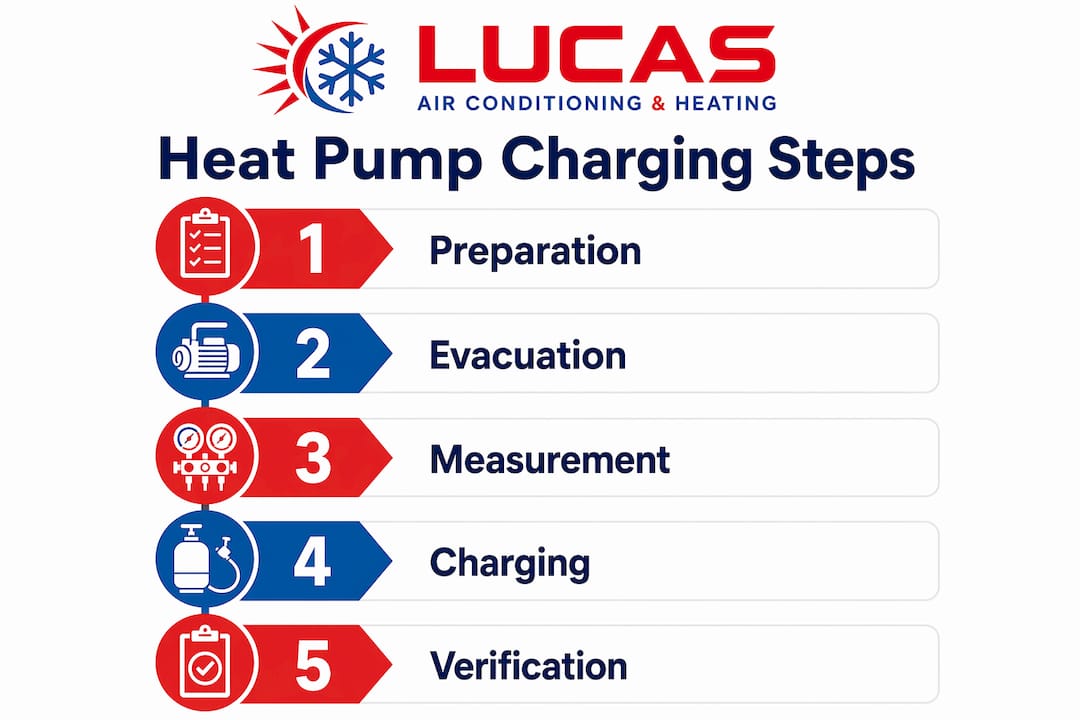
Charging a heat pump is not a single step. It is a measured, iterative process that requires specialized tools and a stable operating environment. Here is how certified technicians approach it.
- Force the system into cooling mode. Even in winter, accurate pressure readings require the system to run in cooling mode. Most heat pumps have a service override that allows this. Without it, pressure readings reflect heating cycle conditions and produce unreliable charge calculations.
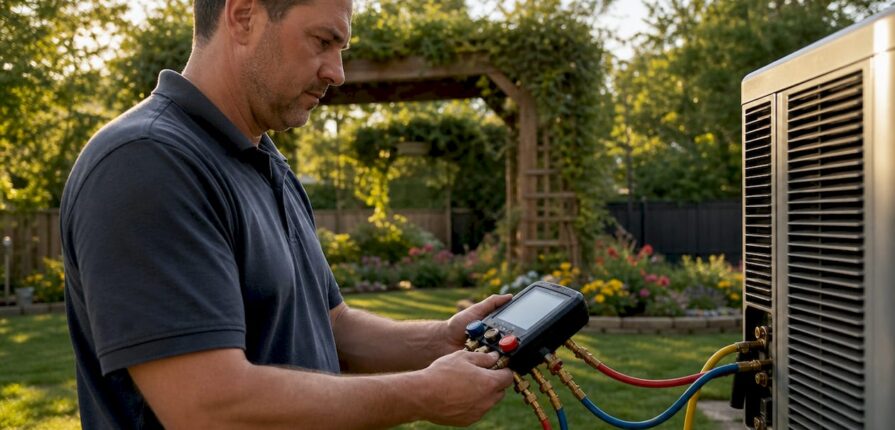
- Connect the manifold gauge set. A digital manifold gauge set attaches to the suction and liquid service ports. For R-410A systems, technicians look for suction pressures in the 60–80 PSI range and liquid line pressures of 250–300 PSI as diagnostic baselines.
- Measure temperatures for superheat or subcooling. Temperature clamps placed on the suction line and liquid line give the data needed to calculate superheat (for fixed-orifice systems) or subcooling (for TXV systems). These calculations tell the technician whether the charge is low, correct, or high.
- Add refrigerant in small increments. Refrigerant is added from a certified scale in measured amounts. Technicians pause 5–10 minutes between adjustments to let system pressures stabilize. Rushing this step causes overshoot, which is just as damaging as undercharging.
- Verify and document. Once pressures and temperatures hit target values, the technician records the final charge weight, pressures, and ambient conditions. That record becomes part of your system’s service history.
Pro Tip: Never adjust the charge while the system is still stabilizing. Pressure readings taken within the first few minutes of operation are not accurate. Wait for steady-state conditions before making any call on whether to add or recover refrigerant.
Why is professional charging required, not just recommended?
The short answer is the law. Handling refrigerant without EPA Section 608 certification carries penalties up to $37,500 per violation. That is not a fine reserved for commercial operators. It applies to any individual who purchases or uses regulated refrigerants without the proper credential.
Beyond the legal risk, the safety risks are real. Refrigerants like R-410A are stored under high pressure. Improper handling can cause frostbite, asphyxiation in enclosed spaces, and equipment damage from sudden pressure release. These are not theoretical risks. They happen when untrained people attempt to work with manifold gauges and refrigerant cylinders.
The technical complexity adds another layer. A charge that is off by even a few ounces shifts the operating pressures enough to stress the compressor. DIY refrigerant handling also voids most manufacturer warranties, leaving you fully exposed to repair costs that can run into thousands of dollars.
Here is what professional service actually covers that DIY cannot replicate:
- EPA 608 certification and legal compliance with refrigerant handling regulations
- Calibrated digital manifold gauges, refrigerant recovery machines, and vacuum pumps
- Leak detection equipment that identifies the source, not just the symptom
- Accurate superheat and subcooling calculations based on real-time data
- Service documentation that protects your warranty and tracks system history
“Precision in refrigerant charging is non-negotiable. Even small deviations create high head pressures and compressor strain that compound over time. Professional technicians use iterative adjustments and stabilization pauses specifically to avoid overshoot, because the cost of getting it wrong far exceeds the cost of getting it right.”
Professional diagnostic service calls typically run $80–$200. That cost covers the expertise, the equipment, and the legal compliance that no DIY approach can match.
How can you spot signs of low heat pump refrigerant charge?
Your heat pump gives you warning signs before it fails. Recognizing them early saves you from a full compressor replacement.
Common symptoms of improper charge include:
- Ice buildup on the indoor or outdoor coil. Ice on the coil during normal operation almost always points to low refrigerant or restricted airflow.
- Longer run times. If your system runs continuously without reaching the set temperature, the refrigerant level is a likely culprit.
- Reduced heating or cooling output. Rooms that used to reach temperature easily now feel stuffy or cold.
- Higher energy bills. An undercharged system works harder to move the same amount of heat, and that shows up on your utility statement.
- Oil residue near refrigerant lines or the outdoor unit. Refrigerant and compressor oil travel together. Oil stains on or near the lines indicate a leak.
- Hissing or bubbling sounds. These sounds near the refrigerant lines suggest refrigerant escaping through a crack or a loose fitting.
Homeowners can spot these red flags through visual inspection, but confirming the cause requires a manifold gauge set and EPA 608 certification. A visual check tells you something is wrong. Only a certified technician can tell you exactly what and fix it safely.
A note on energy costs: An improperly charged system does not just run less effectively. It runs inefficiently every single hour it operates. Over a full season in Central Florida, that inefficiency adds up to a meaningful increase in your electricity bill.
What tools do professionals use for accurate refrigerant charging?
The gap between what a homeowner can do and what a certified technician can do comes down almost entirely to equipment. Professional tools include digital manifold gauge sets, refrigerant recovery machines, vacuum pumps, and electronic leak detectors. Each one serves a specific function that cannot be substituted.
| Tool | Function |
|---|---|
| Digital manifold gauge set | Reads suction and liquid line pressures in real time |
| Refrigerant recovery machine | Removes refrigerant safely before repairs, as required by law |
| Vacuum pump | Evacuates moisture and air from the system before charging |
| Temperature clamps / thermocouples | Measure line temperatures for superheat and subcooling calculations |
| Calibrated refrigerant scale | Measures exact refrigerant weight added to the system |
| Electronic leak detector | Pinpoints refrigerant leaks by sensing trace gas concentrations |
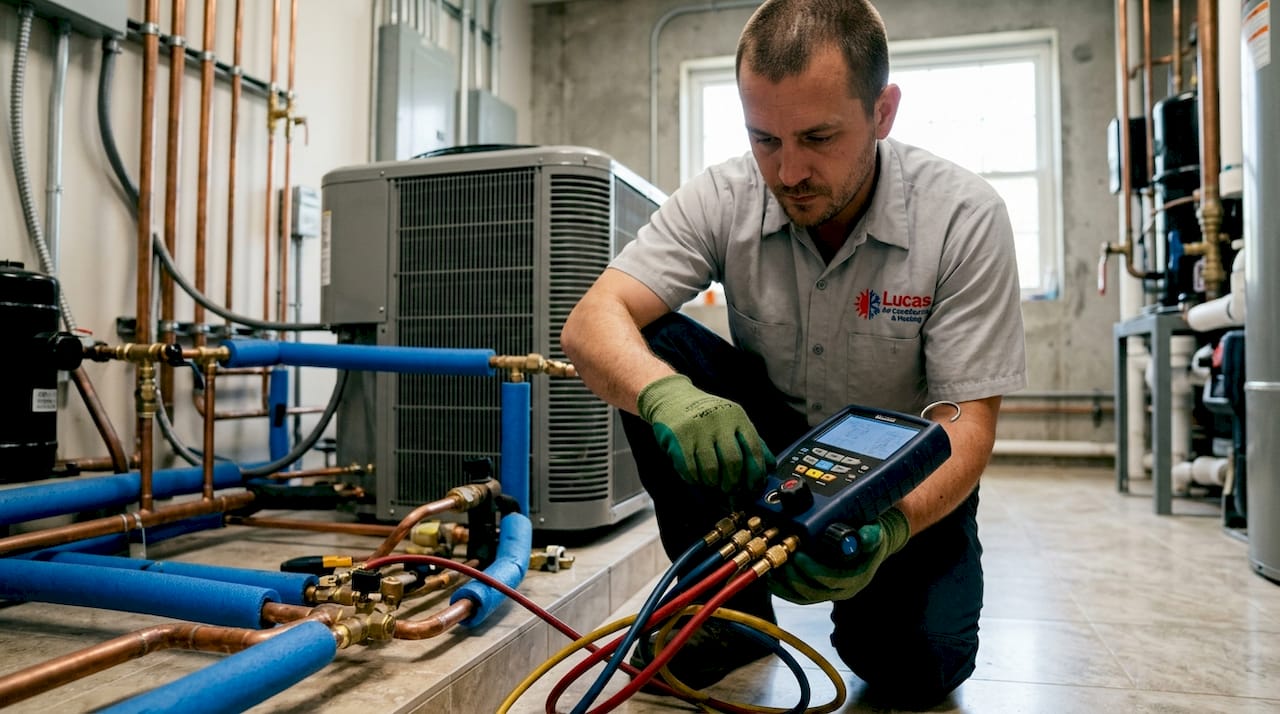
The vacuum pump step is one that DIY guides often skip. Charging a system that still contains air or moisture introduces non-condensables that raise head pressure and accelerate compressor wear. Professionals always pull a deep vacuum before adding refrigerant.
Pro Tip: Ask your technician for the vacuum level reading before they add refrigerant. A proper evacuation reaches 500 microns or below. If they skip this step or cannot provide the reading, that is a red flag about their process.
Forced cooling mode operation is another tool in the professional’s kit. Running the system in cooling mode during winter service, as required for accurate charge verification, produces the stable pressure conditions needed for reliable superheat and subcooling calculations. Without it, the numbers are guesswork.
Best practices for keeping your heat pump properly charged
Maintaining the correct refrigerant level is not a one-time event. It requires consistent attention and a relationship with a certified technician you trust.
- Schedule annual professional inspections. A yearly tune-up catches slow leaks before they become full charge losses. Technicians check pressures, inspect line connections, and test for leaks during every visit.
- Clean the outdoor coil regularly. Dirt and debris on the outdoor coil restrict airflow and force the system to work harder, which can mimic the symptoms of a low charge. A clean coil gives you accurate baseline performance.
- Monitor your system’s runtime. If your heat pump runs noticeably longer than it used to for the same outdoor temperature, schedule an inspection. Runtime creep is an early warning sign.
- Keep service records. Every time a technician services your system, ask for a written record that includes the refrigerant charge weight, pressures, and ambient temperature at the time of service. These records help future technicians diagnose problems faster.
- Understand your warranty terms. Most manufacturers require professional service by a certified technician to keep the warranty valid. DIY refrigerant work voids that protection immediately.
- Do not ignore small leaks. A slow refrigerant leak does not fix itself. A system that needs a top-off every season has a leak that needs to be found and repaired, not just refilled.
Consistent heat pump maintenance is the single most effective way to protect your refrigerant charge and extend your system’s life. In Central Florida’s climate, where heat pumps run year-round, skipping annual service is a false economy.
Key Takeaways
Correct refrigerant charge is the foundation of heat pump performance, and only EPA-certified technicians can legally verify or adjust it.
| Point | Details |
|---|---|
| Charge accuracy matters | Even a small refrigerant deviation increases energy use and accelerates compressor wear. |
| EPA Section 608 is the law | Non-certified refrigerant handling carries penalties up to $37,500 per violation. |
| Forced cooling mode is required | Accurate charge verification requires cooling mode operation, even in winter. |
| Professionals use specialized tools | Digital gauges, vacuum pumps, and leak detectors are not optional. They are required for a correct charge. |
| Annual inspections protect your investment | Yearly professional service catches slow leaks and keeps your warranty intact. |
The detail most homeowners miss about refrigerant charging
After years of seeing heat pump service calls, the pattern that stands out most is not dramatic failure. It is slow degradation. A system that is slightly undercharged does not stop working overnight. It runs a little longer, costs a little more, and stresses the compressor a little harder every single day. By the time the homeowner notices something is wrong, the compressor is already compromised.
The other mistake I see regularly is homeowners who had a technician “top off” the refrigerant without finding the leak. Topping off a leaking system is like refilling a tire with a nail in it. You will be back in the same situation within months, and the refrigerant that escaped has already done environmental damage.
My honest recommendation: ask every technician you hire whether they perform a leak search before adding refrigerant. A credible technician will always say yes. If they reach for the refrigerant cylinder before they reach for the leak detector, that is a problem. You can verify EPA 608 certification through the HVAC repair myths that circulate online often obscure this simple check, but it is the most important one you can make.
Balancing DIY enthusiasm with legal and safety reality is not about discouraging curiosity. It is about protecting your equipment, your wallet, and your family. The refrigerant charging process is one area where the professional advantage is not marginal. It is decisive.
— Lucasair
Lucasair’s certified heat pump services for Central Florida homeowners
Lucas Air’s EPA-certified technicians serve homeowners and property managers across Central Florida with the tools and training to verify, correct, and document your heat pump’s refrigerant charge properly.

Every service call includes a full system inspection, pressure testing, and a written service record you can keep for warranty purposes. Whether your system needs a refrigerant check, a leak repair, or a full HVAC installation, Lucasair handles it with the precision your system requires. You can also review service rates online before you book. Schedule your inspection today and get your heat pump running at the efficiency it was designed to deliver.
FAQ
What does “heat pump charge” mean?
A heat pump charge refers to the specific amount of refrigerant inside the system. The correct charge level is required for the system to heat and cool efficiently without stressing the compressor.
Can I add refrigerant to my heat pump myself?
No. Adding refrigerant without EPA Section 608 certification is illegal in the United States and carries penalties up to $37,500 per violation. Only certified technicians can legally handle refrigerants.
How often does a heat pump need to be recharged?
A properly sealed heat pump should never need recharging. If your system repeatedly loses refrigerant, a leak exists and must be located and repaired by a certified technician.
What are the signs of low refrigerant in a heat pump?
Ice on the coils, longer run times, reduced heating or cooling output, higher energy bills, and oil stains near refrigerant lines are the most common signs of an undercharged system.
How much does a professional heat pump charge service cost?
Professional diagnostic service calls typically cost between $80 and $200, depending on the scope of the inspection and any refrigerant or repairs needed.
Recommended
- Heat pump efficiency: A practical guide for Central Florida – Lucas Air Conditioning and Heating
- Types of HVAC Units: A Homeowner’s 2026 Guide – Lucas Air Conditioning and Heating
- HVAC Installation Step by Step for Homeowners
- What is a pool heat pump: Central Florida homeowner’s guide – Lucas Air Conditioning and Heating
