
TL;DR:
- Rack refrigeration systems use multiple compressors linked together to serve large refrigerated facilities efficiently. They stage compressor capacity dynamically and often include heat recovery, reducing energy costs and enhancing reliability. Facility size, refrigerant type, and maintenance skills influence whether a centralized rack or a distributed system best fits a given operation.
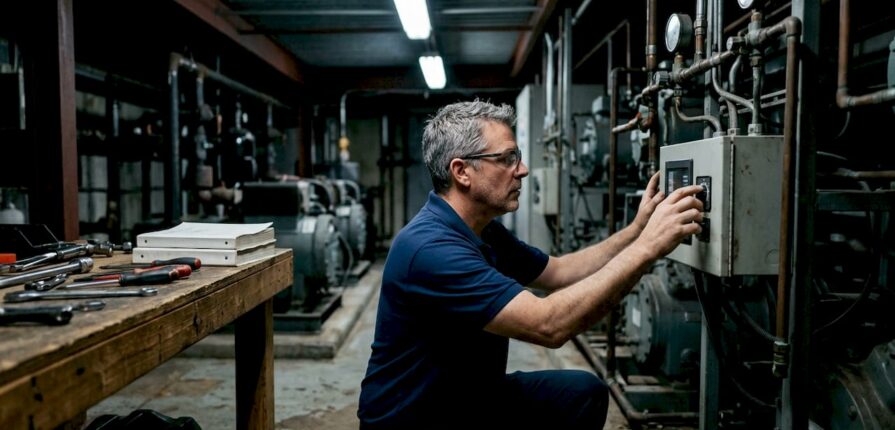
A rack refrigeration system is a centralized engine room configuration that coordinates multiple compressors piped in parallel to serve multiple refrigerated spaces from a single location. This architecture is the backbone of most large supermarket refrigeration systems, cold storage warehouses, and commercial food service operations. Unlike standalone units scattered across a facility, a commercial refrigeration system built on a parallel rack concentrates mechanical equipment in one place, making it easier to manage, monitor, and maintain. For facility managers in food service, healthcare, and retail, understanding how these systems work is the first step toward making smarter capital and operational decisions.
How do rack refrigeration systems work?
A parallel rack system uses one to six or more compressors connected to a common suction header. Multiple compressors stage dynamically to match the facility’s cooling load at any given moment. When demand drops overnight, only one or two compressors run. When the store opens and product pull-down begins, additional compressors stage on automatically.
The main components in a rack refrigeration system include:
- Compressors: The core of the rack, typically scroll or semi-hermetic reciprocating types, mounted together on a steel frame.
- Suction headers: Manifolds that collect low-pressure refrigerant vapor from multiple evaporator circuits and feed it to the compressors.
- Condensers: Usually roof-mounted air-cooled units that reject heat from the refrigerant to the outside air.
- Expansion devices: Electronic or thermostatic expansion valves that meter refrigerant flow into each evaporator.
- Evaporators: The coils inside display cases, walk-in coolers, or freezer rooms that absorb heat from stored product.
Suction groups separate the rack into temperature zones. A medium-temperature group serves produce and dairy cases, while a low-temperature group handles frozen food. Separating pull-down from holding loads prevents excessive compressor cycling, which is the single biggest cause of premature equipment failure in commercial refrigeration racks.
Heat recovery is a frequently overlooked feature. Rack systems can capture heat from the condenser circuit and redirect it to building heating or domestic hot water systems. This turns a waste stream into a useful energy source, particularly valuable in climates where heating costs are significant.
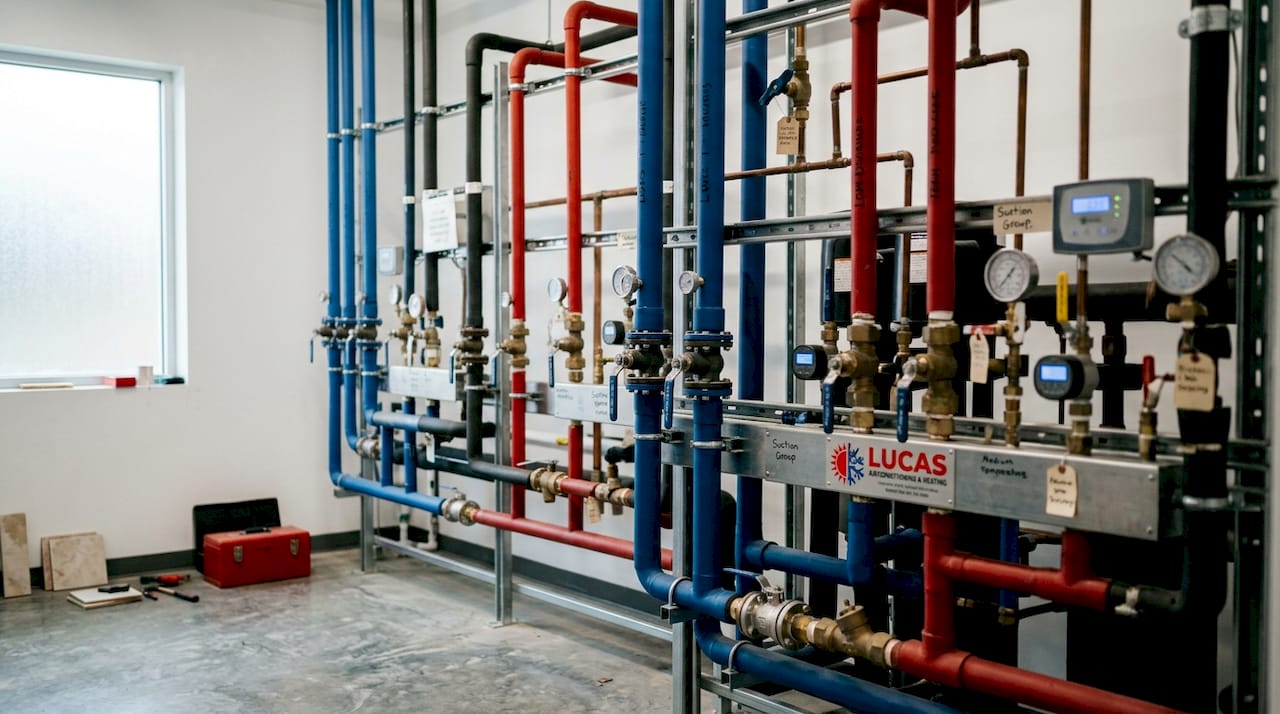
Pro Tip: Ask your contractor to specify suction group assignments in writing before installation. Mismatched groupings are one of the most common causes of temperature instability and short cycling in new rack installations.
What are the efficiency advantages of rack refrigeration systems?
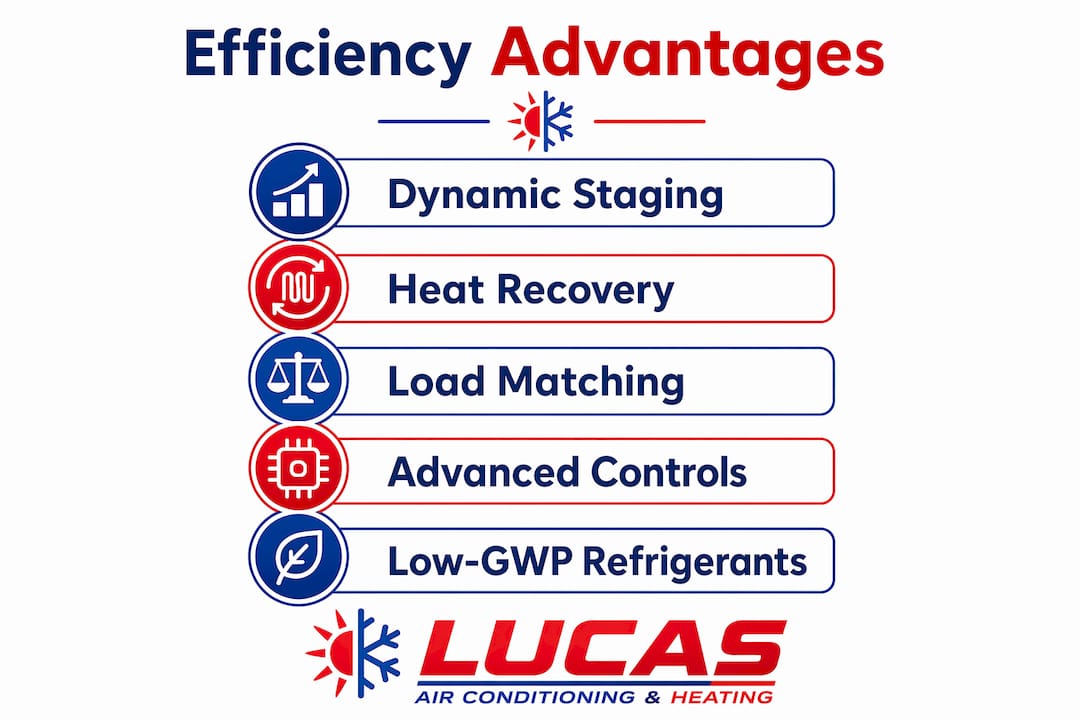
Dynamic capacity staging is the primary efficiency driver in a parallel rack setup. Staging compressors across multiple units prevents the energy waste and mechanical stress of constant on-off cycling that plagues single-compressor systems. Each compressor runs closer to its design point, which is where efficiency is highest.
The energy recovery potential is substantial. Approximately 50–70% of heat rejected by a rack system can be recovered for space heating, domestic hot water, or dehumidification. That recovered heat directly offsets gas or electric heating costs, improving the facility’s overall energy balance. Integrated CO2 rack systems can reduce energy intensity by 26–60% compared to conventional baselines, according to the same research.
Key efficiency advantages of centralized rack systems include:
- Part-load efficiency: Compressors run at higher load fractions, reducing energy waste at low-demand periods.
- Centralized controls: A single controller manages all circuits, enabling coordinated defrost cycles and demand response.
- Heat recovery integration: Waste heat feeds building systems rather than being dumped entirely to the roof condenser.
- Reduced duct and pipe losses: Centralized equipment means shorter refrigerant piping runs to the mechanical room, reducing pressure drop losses.
Retrofitting existing racks with advanced control logic is one of the most cost-effective moves available to facility managers. Intelligent sequencing controls can reduce compressor energy consumption by up to 40% without replacing the rack itself. That is a significant return on a relatively modest investment. For facilities looking at broader HVAC energy upgrades, refrigeration controls are often the fastest payback item on the list.
The AIM Act and EPA leak regulations are reshaping refrigerant choices. These rules push facilities toward lower global warming potential (GWP) refrigerants and tighter leak management. Rack systems designed today must account for these requirements from the start, not as an afterthought.
What should facility managers consider when selecting a rack system?
Selecting the right architecture starts with an honest assessment of your facility’s footprint and load profile. Centralized racks suit facilities over 75,000 square feet where economies of scale and in-house refrigeration expertise justify the operational complexity. Smaller facilities often get better total cost of ownership from distributed architectures.
The following factors drive the selection decision:
- Facility size and load profile: Large, single-tenant facilities with stable, predictable loads favor centralized racks. Multi-tenant or smaller sites favor distributed systems.
- Refrigerant inventory: A typical 50,000 sq ft supermarket with a centralized rack carries 1,500–3,000 lbs of refrigerant. Distributed systems carry 300–600 lbs, which simplifies EPA compliance significantly.
- Redundancy planning: Parallel racks provide N+1 compressor redundancy, meaning one compressor can fail without shutting down the system. However, a single controller or condenser failure can still take down the entire rack.
- Maintenance skill requirements: Centralized racks require technicians with deep refrigeration expertise. Distributed systems can often be serviced by general HVAC technicians, which broadens your service options.
- Refrigerant type: Low-GWP options like CO2 (R-744), R-448A, and R-449A are increasingly standard. Your system design must accommodate the operating pressures and safety requirements of the chosen refrigerant.
| Factor | Centralized rack | Distributed system |
|---|---|---|
| Best facility size | Over 75,000 sq ft | Under 50,000 sq ft |
| Refrigerant charge | 1,500–3,000 lbs | 300–600 lbs |
| Compressor redundancy | N+1 built in | Per-unit redundancy |
| Maintenance complexity | High, specialist required | Moderate, general tech |
| Heat recovery potential | High | Low to moderate |
Pro Tip: Never design a rack system for peak load alone. Build in suction group separation from day one so the system can stage efficiently across both pull-down and holding demands as your operation matures.
Coordinating refrigeration design with your building’s HVAC system is non-negotiable. Heat rejection location affects the store HVAC load directly. A rack that dumps heat to the roof keeps the sales floor cooler, while distributed units near display cases add heat to the conditioned space. Misaligned designs produce inflated energy bills and misleading contractor bids. Facilities in the food service sector can benefit from reviewing restaurant HVAC efficiency upgrades alongside refrigeration planning to catch these coordination issues early.
How do rack systems compare to other commercial refrigeration architectures?
Centralized racks, distributed systems, and self-contained units each occupy a distinct position in the commercial refrigeration market. The right choice depends on facility size, risk tolerance, and regulatory exposure.
Centralized rack failure can impact 25–33% of a facility’s refrigerated capacity in a single event. That means significant product loss risk during a compressor rack outage. Distributed systems limit failure impact to a smaller zone, though they require more frequent service visits. Self-contained units are the simplest to manage but offer no shared capacity or heat recovery benefits.
Key trends shaping the future of commercial refrigeration racks include:
- Lower-GWP refrigerants: AIM Act regulations push facilities toward architectures with smaller refrigerant charges, favoring distributed designs for compliance ease.
- IoT monitoring: Rack controllers now integrate with building management systems to provide real-time compressor performance data, leak detection alerts, and predictive maintenance signals.
- Retrofit controls: Upgrading sequencing logic on existing racks delivers up to 40% compressor energy savings without full replacement, making retrofits a high-value option for aging systems.
- Hybrid architectures: Some large retailers now combine a central rack for frozen loads with distributed units for medium-temperature cases, balancing efficiency with risk management.
Healthcare facilities face a different set of priorities. Pharmaceutical cold storage and laboratory refrigeration demand tighter temperature tolerances and more rigorous redundancy than a typical retail application. Managers in that sector should review HVAC and refrigeration options for clinics as part of their system selection process.
Key Takeaways
Rack refrigeration systems deliver the best efficiency and reliability when system design matches actual load profiles, refrigerant choices align with current regulations, and HVAC coordination is built into the project from the start.
| Point | Details |
|---|---|
| Staging prevents cycling | Dynamic compressor staging matches load and extends equipment life significantly. |
| Heat recovery adds value | Recovering 50–70% of rejected heat offsets building heating costs directly. |
| Facility size drives architecture | Centralized racks suit facilities over 75,000 sq ft; smaller sites favor distributed systems. |
| Refrigerant charge matters | Centralized racks carry far more refrigerant, increasing EPA compliance complexity. |
| Retrofits beat replacements | Upgrading control logic can cut compressor energy use by up to 40% without full system replacement. |
What I’ve learned from watching facilities get rack refrigeration wrong
The most common mistake I see is designing a rack system for peak load and then walking away. Facility managers assume that N+1 redundancy covers them. It covers compressor failures. It does not cover a failed controller, a condenser fan motor that seizes in July, or a suction group assignment that was never optimized after the initial commissioning. Those are the failures that cause real product loss and real downtime.
The second mistake is treating refrigeration and HVAC as separate projects with separate contractors. They are not separate systems. The heat your rack rejects goes somewhere, and if your HVAC designer does not know where, you will pay for it in energy costs for the life of the building. The best outcomes I have seen come from facilities that brought both contractors to the table before the design was finalized.
Phased upgrades also deserve more credit than they get. Replacing an entire rack is disruptive and expensive. Retrofitting advanced sequencing controls and variable speed drives on an existing rack can recover a substantial portion of the efficiency gains at a fraction of the cost. Start there before committing to a full replacement.
— Results
Lucasair can help with your commercial refrigeration installation
Commercial refrigeration and HVAC systems work together, and getting both right requires a contractor who understands the full picture. Lucasair, founded by Army Veteran Cameron Lucas and based in Eustis, Florida, brings that integrated expertise to food service, retail, and healthcare facilities across Central Florida.

Lucas Air handles commercial HVAC and refrigeration installation from initial design coordination through commissioning and ongoing service. The team also offers preventative maintenance agreements that keep rack systems running at peak efficiency year-round. Whether you are planning a new installation or evaluating a retrofit, Lucasair’s team is ready to assess your facility’s load profile and recommend the right approach. Contact Lucasair to schedule a commercial consultation.
FAQ
What is a rack refrigeration system?
A rack refrigeration system is a centralized setup using multiple compressors piped in parallel to serve several refrigerated spaces from one location. It stages compressor capacity dynamically to match the facility’s cooling load.
How many compressors does a rack system use?
Rack systems typically use one to six or more compressors, depending on facility size and load requirements. Each compressor stages on or off automatically based on real-time demand.
Are rack systems more efficient than standalone units?
Yes. Parallel rack systems run compressors at higher load fractions and enable heat recovery, making them significantly more efficient than multiple standalone units for large facilities.
What refrigerants are used in modern rack systems?
Modern commercial refrigeration racks increasingly use low-GWP refrigerants such as CO2 (R-744), R-448A, and R-449A to comply with AIM Act regulations and reduce environmental impact.
When does a distributed system make more sense than a rack?
Distributed systems are the better choice for facilities under 50,000 square feet, where lower refrigerant charge, simpler compliance, and reduced failure impact outweigh the efficiency advantages of a centralized rack.
Recommended
- How to maintain restaurant HVAC for efficiency and compliance – Lucas Air Conditioning and Heating
- Top HVAC Upgrades for Restaurants: Boost Efficiency – Lucas Air Conditioning and Heating
- Hospitality HVAC solutions for Central Florida facilities – Lucas Air Conditioning and Heating
- Step by Step Apartment HVAC Upgrade Guide for Managers – Lucas Air Conditioning and Heating
