
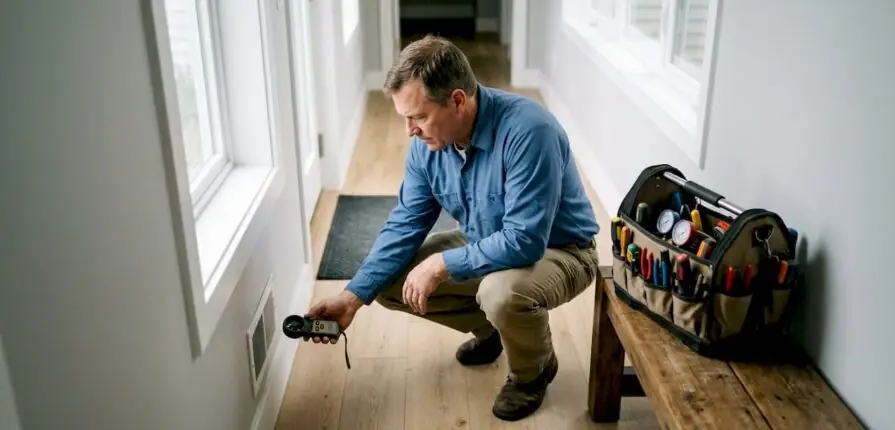
TL;DR:
- Most hot rooms result from airflow issues, attic heat gain, or local heat loads rather than HVAC failure.
- Correcting duct restrictions, sealing attics, and adjusting dampers can improve temperatures without equipment replacement.
One room being significantly hotter than the rest of your house is caused by airflow imbalances, insulation gaps, or localized heat gain, not a failing HVAC system. Most homeowners assume their AC is broken when a bedroom or bonus room stays stuffy, but the equipment is usually fine. The real culprits are duct restrictions, attic heat transfer, and room-specific heat loads. Understanding why is one room in my house so hot gives you a clear path to fix it without replacing expensive equipment.
Why is one room in my house so hot?
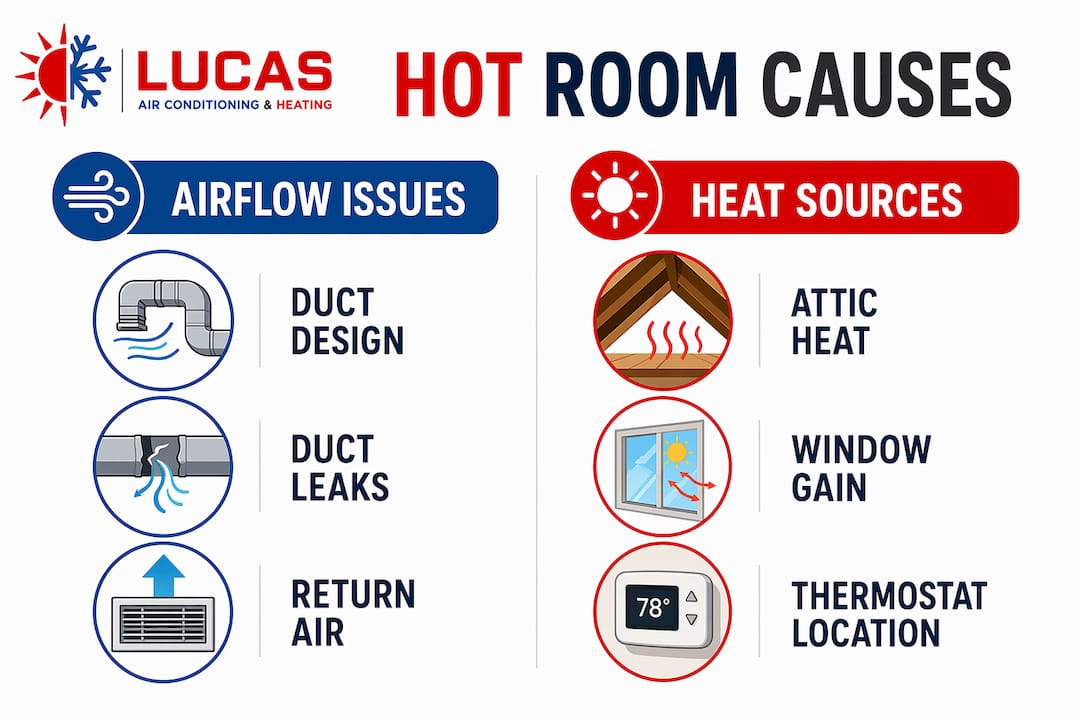
Airflow distribution problems cause over 80% of uneven room temperature cases. That number means your ductwork, not your AC unit, is the first place to investigate.
Duct design is the most common culprit. Rooms at the end of long duct runs receive less conditioned air because pressure drops as air travels farther from the air handler. A bedroom at the far end of a hallway will almost always get less airflow than a room directly off the main trunk line.
Duct leaks make this worse. Leaky ductwork loses 20–30% of conditioned air before it reaches the supply register. That lost air ends up in wall cavities or attic spaces instead of cooling your room. The result is a room that never quite reaches the thermostat setpoint, no matter how long the system runs.
Return air restrictions are a less obvious but equally damaging problem. Every room needs a path for air to return to the air handler. When you close a bedroom door without an adequate return vent, room pressurization blocks fresh cooled air from entering until pressure equalizes. This is why so many homeowners report that their bedroom feels like an oven at night.
A common mistake homeowners make is closing supply vents in cooler rooms to redirect airflow. Closing vents increases system pressure and can actually worsen airflow to the hot room. Proper air balancing uses damper adjustments inside the ductwork, not vent closures at the register.
Key airflow problems that cause hot rooms:
- Long duct runs with pressure drop before reaching the room
- Duct leaks losing conditioned air into unconditioned spaces
- Blocked or undersized return air grilles
- Closed interior doors without transfer grilles or undercut clearance
- Crushed or disconnected flex duct behind walls or in the attic
Pro Tip: Hold a tissue near a supply register with the system running. If the tissue barely moves, you have a significant airflow restriction in that branch of ductwork.
How does attic insulation affect room temperature?
The stack effect drives warm air upward through every gap in your ceiling, pulling hot attic air down into living spaces. This physics principle cannot be stopped by running your AC harder. Only proper attic air sealing and insulation address it at the source.
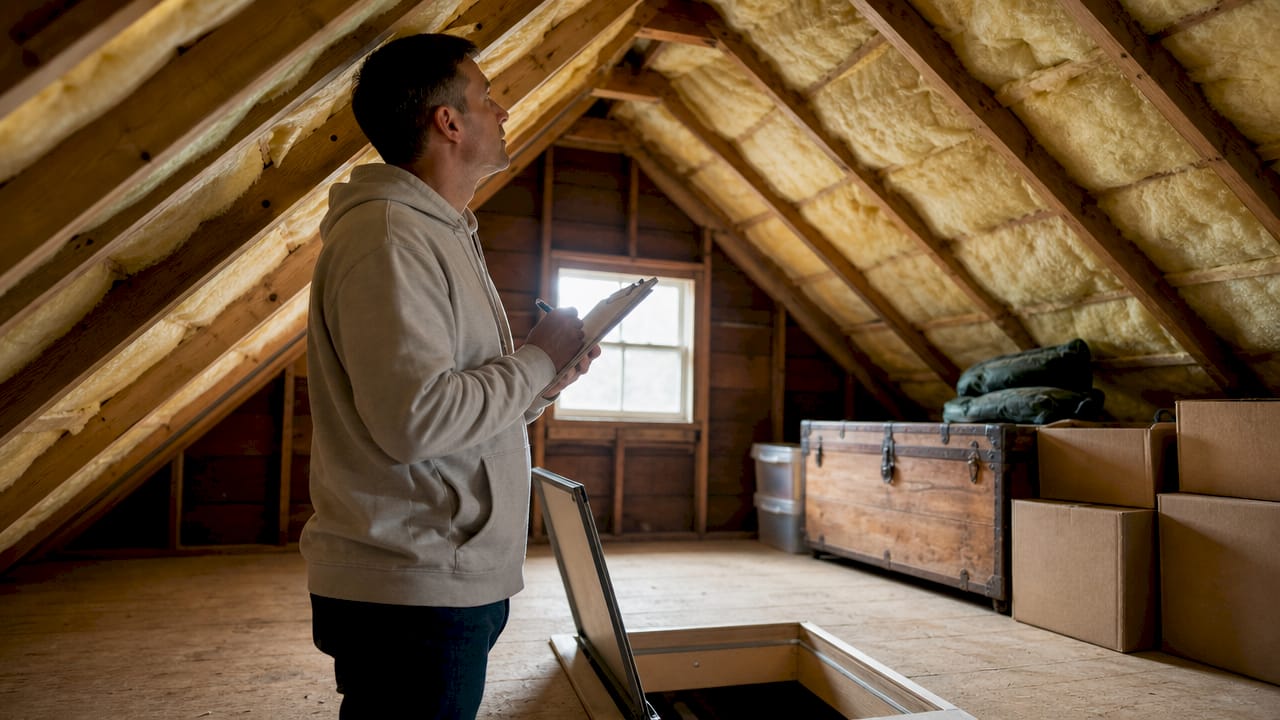
Attic temperatures in Central Florida regularly exceed 140°F in summer. That heat radiates directly through your ceiling into the rooms below, adding a constant thermal load that your AC must overcome on top of its normal cooling duty. Upstairs rooms and rooms with flat or vaulted ceilings are hit hardest.
Common attic bypass points where heat enters your living space:
- Recessed light fixtures with gaps around the housing
- Plumbing and electrical penetrations through the top plate
- Attic access hatches without insulation or weatherstripping
- HVAC duct connections where insulation has shifted
- Gaps around interior wall top plates
The difference between insulation and air sealing matters here. Insulation slows heat transfer. Air sealing stops air movement. You need both working together. Insulation alone without sealing the gaps underneath it still allows hot attic air to bypass the insulation entirely.
Proper attic air sealing and insulation can reduce the stack effect by 30–50%, which translates directly to cooler upstairs rooms and lower energy bills. That improvement also carries into winter, when the same gaps that let heat in during summer let conditioned air escape.
| Symptom | Likely Cause |
|---|---|
| Upstairs rooms always hotter | Attic heat gain through ceiling |
| High energy bills with little comfort | Air leaks bypassing insulation |
| Rooms feel humid despite AC running | Poor attic ventilation and air sealing |
| Ice dams in winter (northern climates) | Heat escaping through attic bypasses |
Pro Tip: Run your hand along the top of interior door frames on a hot day. Warmth radiating from above the drywall is a reliable sign of attic air bypassing your insulation.
What else makes a single room hotter than the rest?
Window orientation and size create major heat gain differences between rooms. A west-facing bedroom with a large window absorbs direct afternoon sun for three to four hours every day. That solar load can add thousands of BTUs of heat to a single room, far exceeding what a standard supply register can offset.
Rooms above garages and rooms with west-facing windows consistently run hotter than the rest of the house. Garages are unconditioned spaces with no insulation between the floor and the room above. Heat from a parked car, a hot concrete slab, and solar gain through the garage door all transfer upward.
Internal heat sources add to the problem in ways most homeowners overlook:
- Desktop computers and gaming consoles generate significant heat during use
- Large televisions add measurable heat load to a room
- Multiple occupants in a small room raise temperature through body heat
- Cooking appliances near open floor plans push heat into adjacent rooms
These heat sources affect your thermostat’s performance too. If the thermostat is in a cooler hallway, it reads a comfortable temperature and shuts the system off while the hot room is still struggling. The thermostat never “knows” the problem room is uncomfortable.
Simple mitigation steps make a real difference before you call a technician. Blackout curtains or cellular shades on west and south-facing windows can cut solar heat gain by a meaningful amount. Exterior shading from awnings or trees is even more effective because it stops heat before it hits the glass. Keeping electronics on power strips and turning them off completely when not in use also reduces the room’s baseline heat load.
How do you diagnose why a room stays hot?
Start with the tissue test. Hold a tissue near the supply register in the hot room with the system running. Strong airflow moves the tissue noticeably. Weak or no movement points to a duct restriction, leak, or blockage in that branch. This is a recognized DIY airflow diagnostic that costs nothing and takes two minutes.
Follow a structured diagnostic sequence:
- Check all supply registers in the hot room for physical obstructions like furniture, rugs, or closed damper levers.
- Measure the temperature in the hot room and in a comfortable room at the same time of day. A difference of more than 3–4°F points to a real imbalance.
- Open the door to the hot room and wait 15 minutes, then check if the temperature drops. If it does, return air restriction is the primary cause.
- Check the return air grille in or near the hot room. A clogged filter or undersized grille restricts the entire system.
- Look in the attic above the hot room for disconnected or crushed flex duct, missing insulation, or obvious air gaps around ceiling penetrations.
- Check indoor air quality and humidity levels. A room that feels muggy even at the right temperature often has a ventilation problem separate from the cooling issue.
Call a professional when the tissue test shows good airflow but the room still runs hot. That combination points to heat gain from the attic or windows, which requires a different fix than duct work. A professional can measure static pressure across the system, identify duct leaks with a blower door test, and assess attic conditions accurately.
What are the best fixes for a persistently hot room?
The right fix depends on the cause, but most hot room problems respond to one of three approaches: airflow correction, attic improvements, or zoning.
Manual duct damper adjustment is the lowest-cost starting point. Dampers inside the ductwork can redirect more airflow toward the hot room and reduce flow to rooms that are already comfortable. This is not the same as closing registers. A professional adjusts dampers with airflow measurements to balance the system properly without raising static pressure.
Attic air sealing and insulation upgrades deliver the most durable results for upstairs rooms. Sealing attic bypasses and bringing insulation up to current standards reduces the constant heat load that no amount of airflow can fully overcome. The airflow guide for Central Florida homes covers how attic conditions interact with duct performance in Florida’s climate specifically.
For homes with multiple problem rooms or large floor plan variations, HVAC zoning systems provide independent temperature control for different areas. Residential zoning upgrades typically cost $2,500–$5,000 and allow each zone to call for cooling independently based on its own thermostat. That cost is often less than replacing an entire HVAC system that was never the root cause of the problem.
Smaller fixes worth doing first:
- Add a return air grille or undercut the door by 1 inch to improve air circulation
- Install blackout curtains on west and south-facing windows
- Add attic hatch insulation and weatherstripping as a weekend project
- Schedule a professional tune-up to verify refrigerant charge and airflow measurements
Pro Tip: Ask your HVAC technician to measure supply airflow in CFM (cubic feet per minute) at each register. A room receiving significantly less CFM than its Manual J heat load requires is the clearest evidence of an airflow imbalance.
Key Takeaways
Uneven room temperatures almost always trace back to airflow restrictions, attic heat gain, or room-specific heat loads rather than HVAC equipment failure.
| Point | Details |
|---|---|
| Airflow causes most cases | Over 80% of hot room problems stem from duct restrictions, leaks, or return air issues. |
| Closing vents backfires | Shutting supply registers raises system pressure and worsens airflow to the problem room. |
| Attic sealing is foundational | Proper air sealing and insulation can cut the stack effect by 30–50%, cooling upstairs rooms durably. |
| Diagnose before spending | A tissue test and door-open comparison cost nothing and identify the cause before any repairs. |
| Zoning solves complex cases | HVAC zoning systems ($2,500–$5,000) provide independent control when multiple rooms have persistent issues. |
The fix most homeowners skip
After seeing hundreds of hot room complaints, the pattern is consistent. Homeowners spend money on new equipment or portable fans before anyone looks at the attic or measures duct airflow. Both of those steps are free to check and fix the problem in the majority of cases.
Attic air sealing is the single most underrated home comfort upgrade available. It costs a fraction of a new AC system, it works year-round, and it addresses the actual physics driving the heat into your rooms. Homeowners who seal their attic bypasses first and then balance their ductwork rarely need anything else.
The other mistake I see constantly is treating hot room issues as a thermostat problem. Adjusting the setpoint lower just runs the system longer without fixing the underlying imbalance. The hot room stays hot, the cool rooms get cold, and the energy bill climbs. Proper diagnostics, starting with airflow measurement and an attic inspection, save money and actually solve the problem.
If a technician recommends replacing your entire HVAC system before checking duct static pressure and attic conditions, get a second opinion. Equipment replacement is occasionally the right answer, but it is rarely the first answer for a single hot room.
— Lucasair
Lucasair can solve your hot room problem
Persistent hot rooms in Central Florida homes are a specialty at Lucasair. Cameron Lucas and the team provide professional airflow diagnosis and ductwork repair and installation for homeowners across Eustis, The Villages, and surrounding communities.

If one room in your home stays hot no matter what you try, a professional diagnosis from a trusted HVAC contractor is the fastest way to find the real cause and fix it for good. Lucas Air offers straightforward service with honest recommendations, backed by the same commitment to community that has defined the company since 2018. Schedule your assessment today and stop guessing which room will be uncomfortable next.
Need a hand? Lucas Air Conditioning and Heating offers ductless mini-split installation in Tavares, FL for homes and businesses across Lake County.
FAQ
Why is one room always hotter than the rest of my house?
The most common causes are duct restrictions reducing airflow to that room, attic heat radiating through the ceiling, or a high heat load from windows and electronics. Airflow distribution problems account for over 80% of uneven cooling cases.
Does closing vents in cool rooms help the hot room?
No. Closing supply vents increases system static pressure and typically worsens airflow to the problem room. Proper balancing requires damper adjustments inside the ductwork by a professional.
Can attic insulation really fix a hot upstairs room?
Yes. Proper attic air sealing and insulation can reduce the stack effect by 30–50%, which directly lowers the heat load on upstairs rooms and makes them easier to cool.
What is the tissue test for HVAC airflow?
The tissue test involves holding a tissue near a supply register while the system runs. Weak or no movement indicates a duct restriction or blockage in that branch of the system.
When should I call a professional about a hot room?
Call a professional when the tissue test shows good airflow but the room still runs hot, when temperature differences between rooms exceed 4°F, or when you suspect attic air leaks or duct damage behind walls.
Recommended
- Modern HVAC features that save money and boost comfort – Lucas Air Conditioning and Heating
- Air Volume in HVAC: What Homeowners Need to Know – Lucas Air Conditioning and Heating
- 6 Signs of HVAC System Issues Every Homeowner Should Know – Lucas Air Conditioning and Heating
- Why Apartment HVAC Matters: Boost Comfort, Cut Costs – Lucas Air Conditioning and Heating